
The village school in — History & Facts
What draws the eye first is not the teacher’s stern presence, but the restless energy that seems to hum beneath the surface of this crowded classroom. In The village school in, Albert Anker captures a moment of everyday life in 1896 with a warmth that invites us to linger. The teacher, pointer in hand, stands as the axis of attention, yet the true story unfolds in the faces and gestures of the children: some intent on their books, others whispering, a few lost in daydreams.
The rough wooden benches, the scuffed floorboards, and the patchwork of clothing all speak to a rural world where education is both a communal effort and a daily struggle. This painting belongs to a tradition of late nineteenth-century genre scenes that sought to document the quiet revolutions of ordinary life. In Switzerland, where Anker worked, images like this were both nostalgic and forward-looking, reflecting a society negotiating the values of the new federal state after 1848. Works such as this, now in the collection of the Kunsthaus Zürich and dated to 1896, offered viewers a mirror to their own childhoods or aspirations for their children.
History has kept few traces of the specific schools or pupils that inspired such canvases, but the universal language of curiosity and discipline remains—inviting us to find familiar faces in the crowd.
More Artworks by Albert Anker

Portrait Of A Girl
Albert Anker
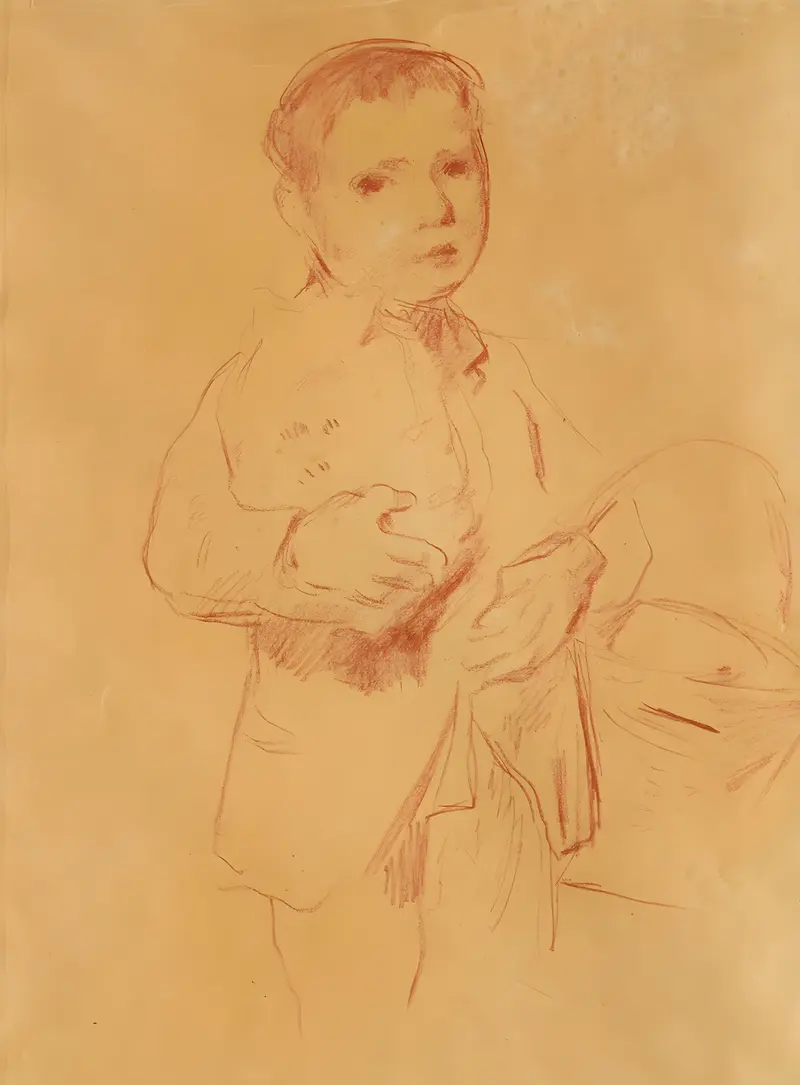
Boy with a basket
Albert Anker
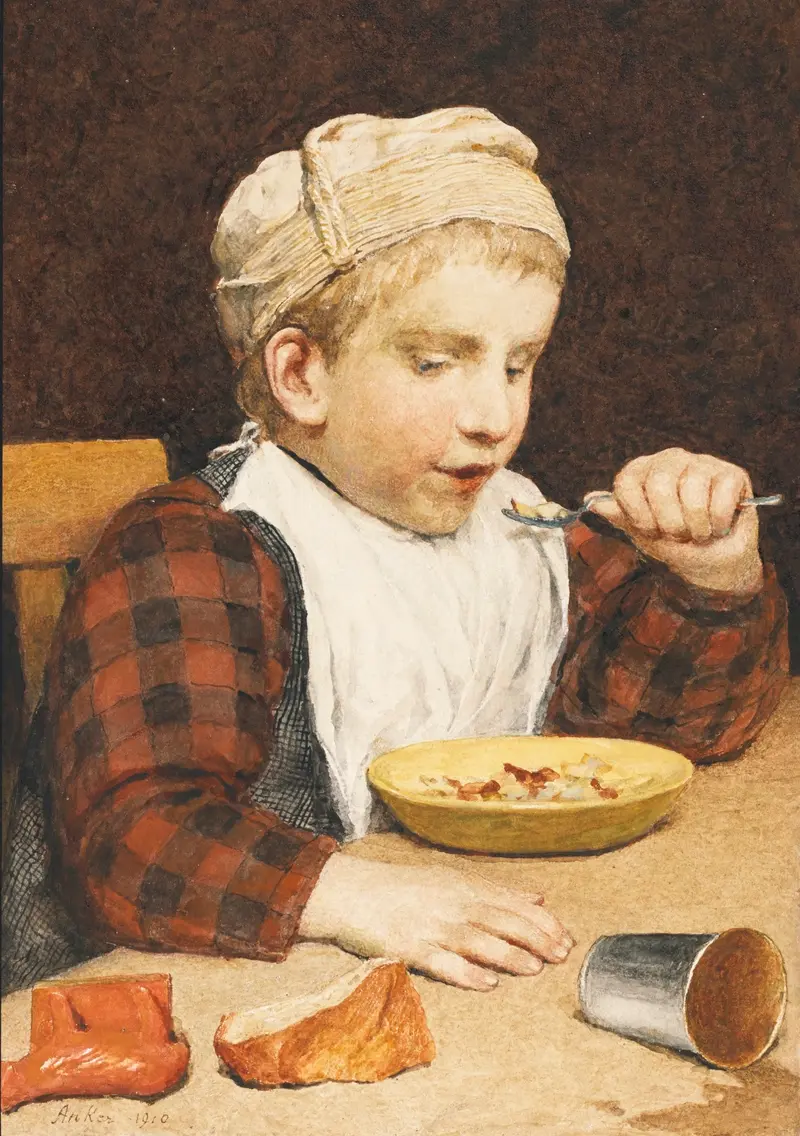
Knabe Mit Mütze Beim Essen
Albert Anker
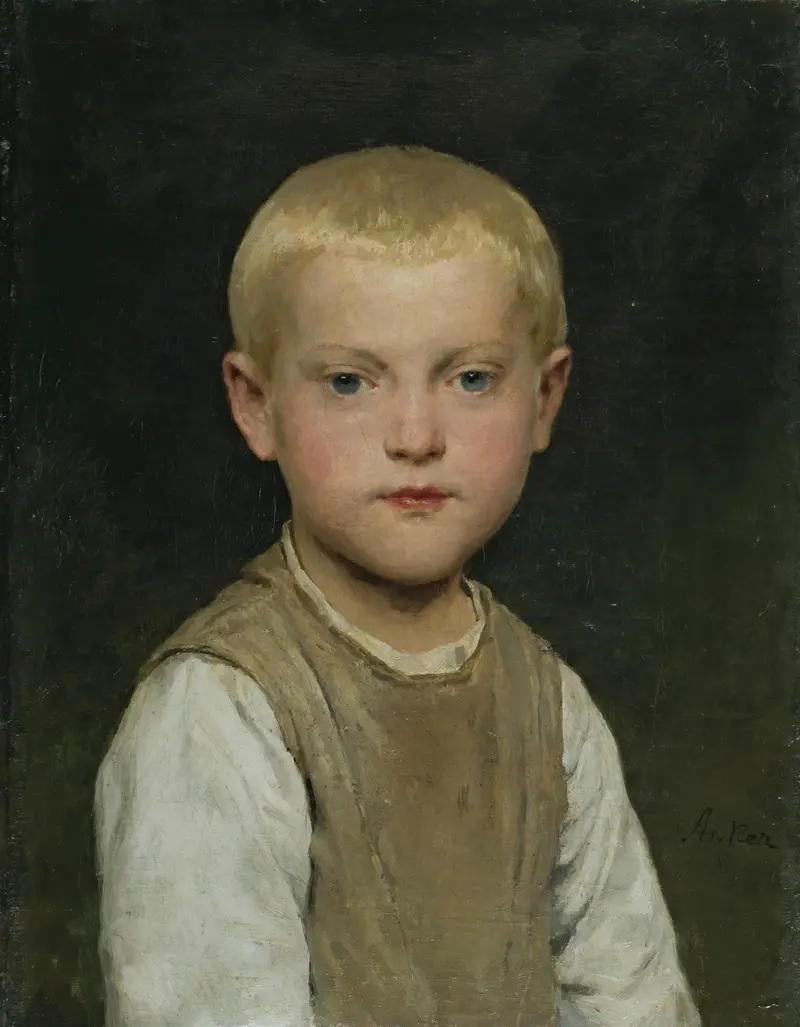
Knabenbildnis (Dr Heiri)
Albert Anker
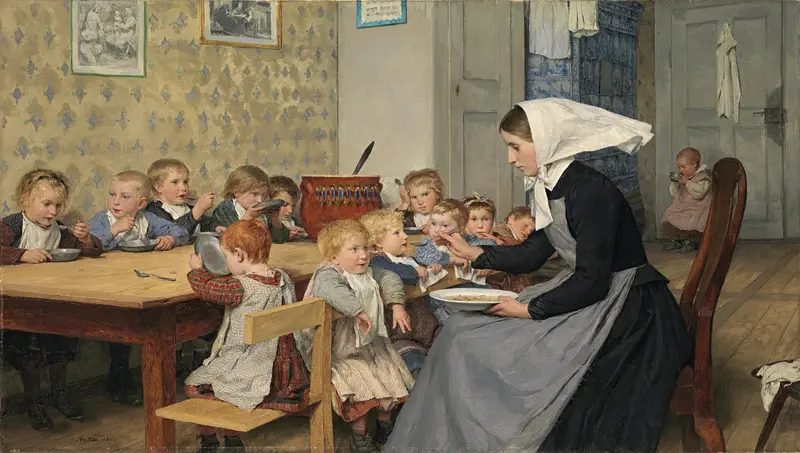
Die Kinderkrippe I
Albert Anker

L’instituteur et le pasteur
Albert Anker
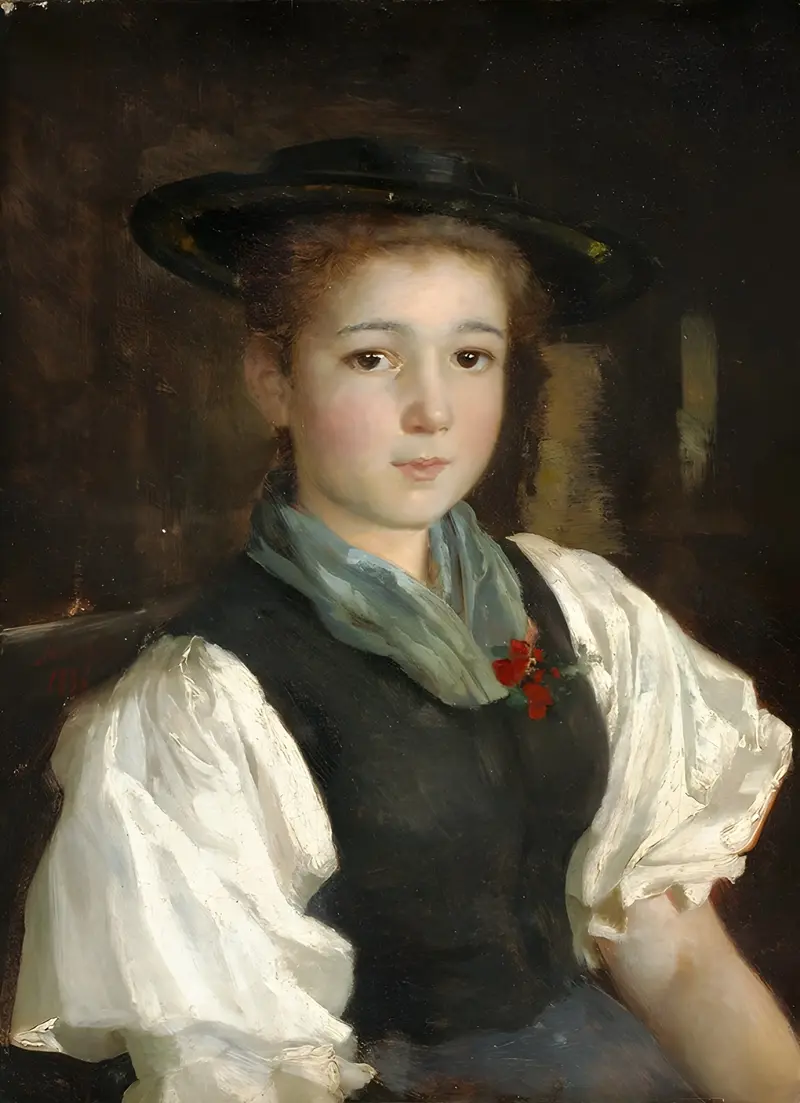
Bauernmädchen (Farm Girl)
Albert Anker
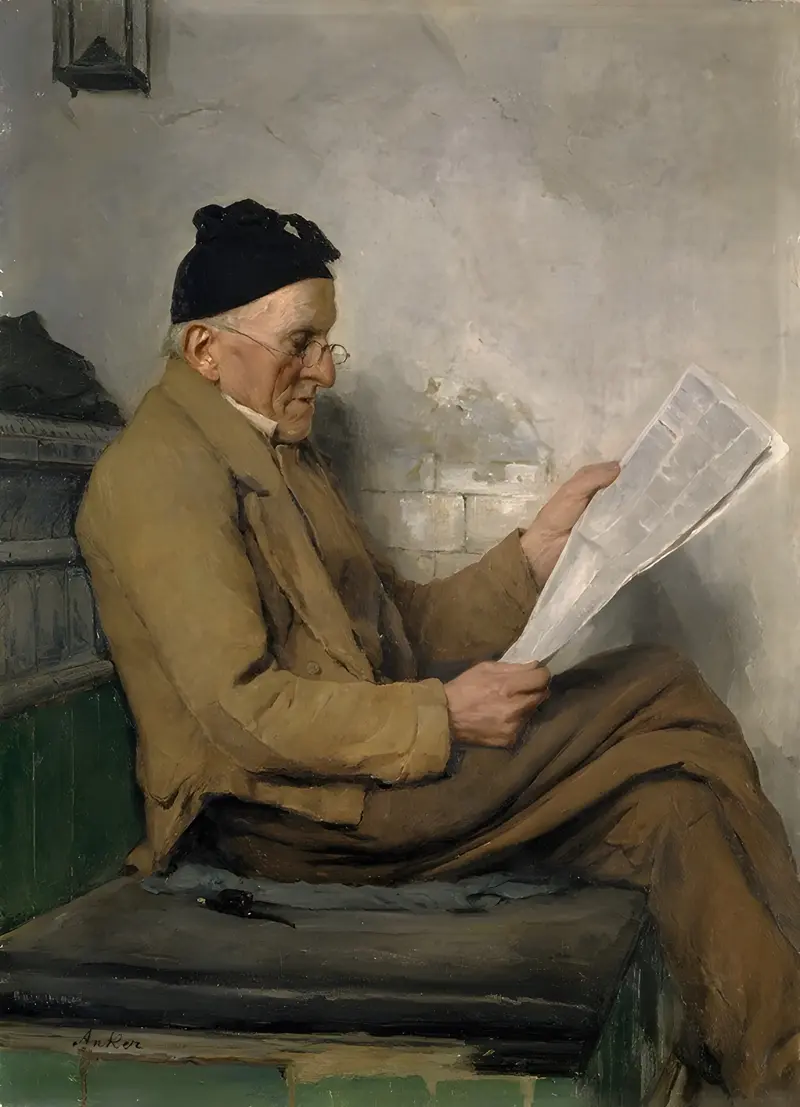
Farmer Reading on the Stove Bench
Albert Anker
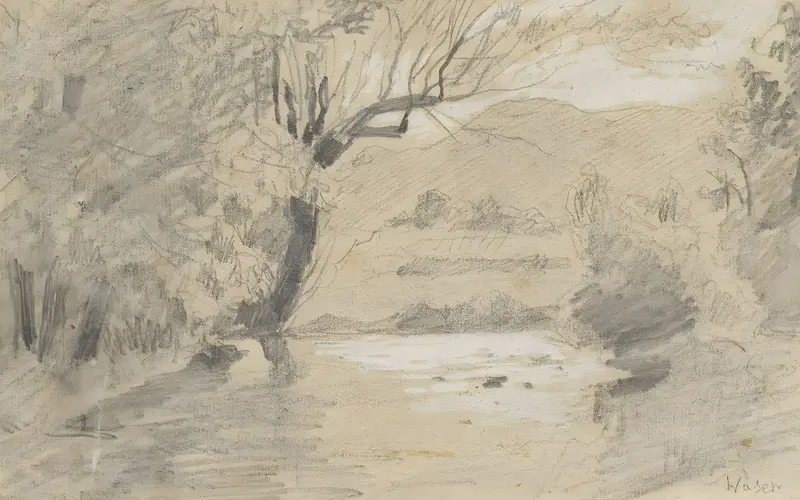
Flusslandschaft in Wasen (Emmental)
Albert Anker
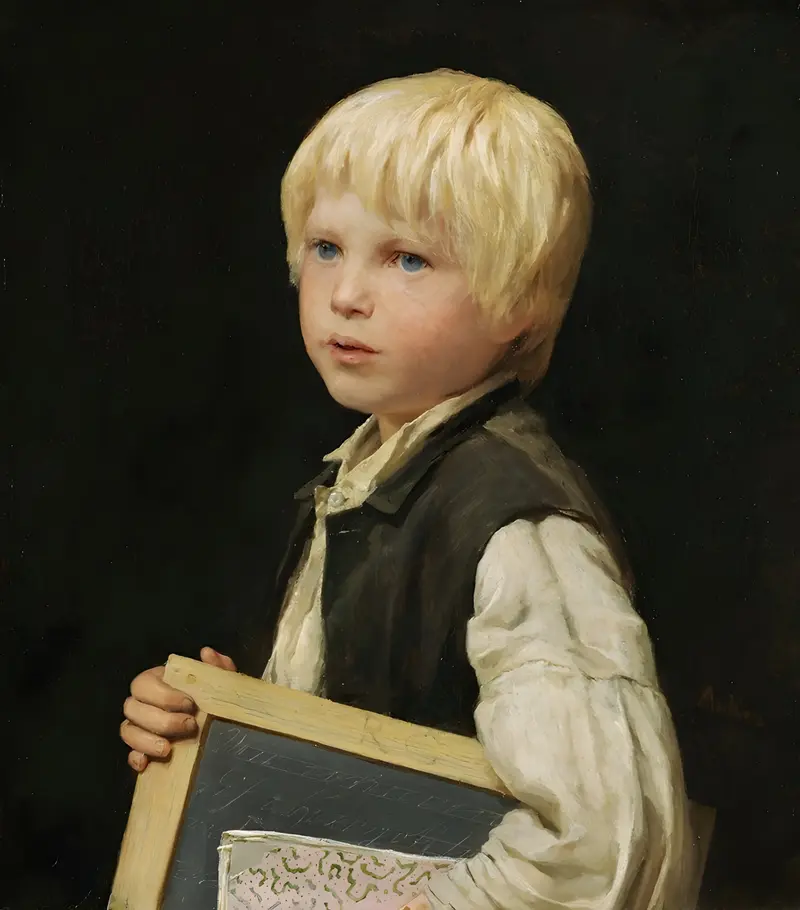
School Boy
Albert Anker
More Genre Scene Art

Banquet of the Officers of the St George Civic Guard
Frans Hals

Rembrandt and Saskia in the Scene of the Prodigal Son
Rembrandt van Rijn

Bal du moulin de la Galette
Pierre-Auguste Renoir

Quadrille at the Moulin Rouge
Henri de Toulouse-Lautrec

A Burial at Ornans
Gustave Courbet

When Will You Marry?
Paul Gauguin