The Washington Family — History & Facts
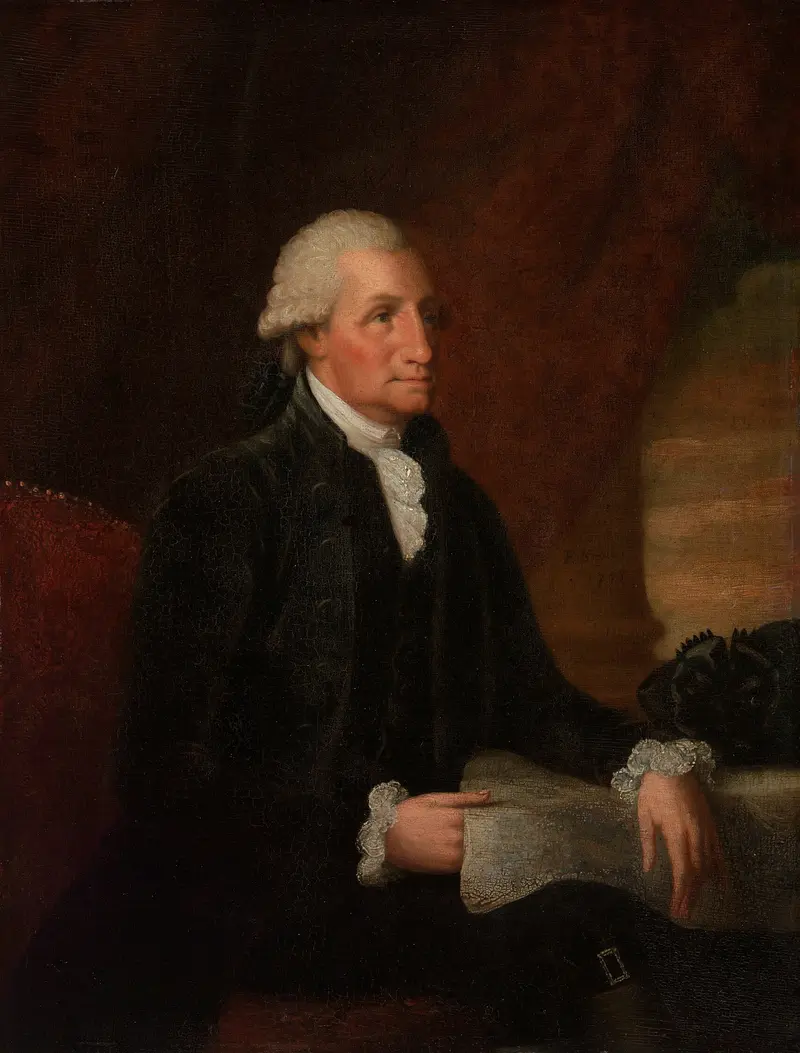
The Washington Family is an oil on canvas painting by Edward Savage, created between 1789 and 1796. The work presents a group portrait of George Washington, his wife Martha Washington, her grandchildren Eleanor Parke Custis and George Washington Parke Custis, and an enslaved servant whose identity was not recorded. Painted during the early years of the United States, this composition is one of the most widely recognized representations of the Washington family and was completed over several years, reflecting both the artist’s ambition and the historical significance of its subjects. The painting shows the family gathered around a table in an interior setting.
George Washington sits at the left, wearing a dark military uniform, while Martha Washington is seated at the table with a map before her. The two children stand nearby, and an African American servant stands at the right, slightly behind the group. The composition is formal, with each figure carefully arranged and lit to emphasize their individual presence.
The color palette is dominated by rich, deep tones, with attention to the textures of fabrics and the reflective surfaces of the table and objects. The Washington Family was commissioned by Edward Savage himself, who sought to create a grand portrait of the first President’s household. The painting was widely exhibited and reproduced in engravings, contributing to its fame in American art history. Multiple versions and copies were produced, and the painting became an important image in the visual culture of the early republic.
The work is now in the National Gallery of Art in Washington and remains a significant artifact of late eighteenth-century American portraiture.