
The watering place — History & Facts
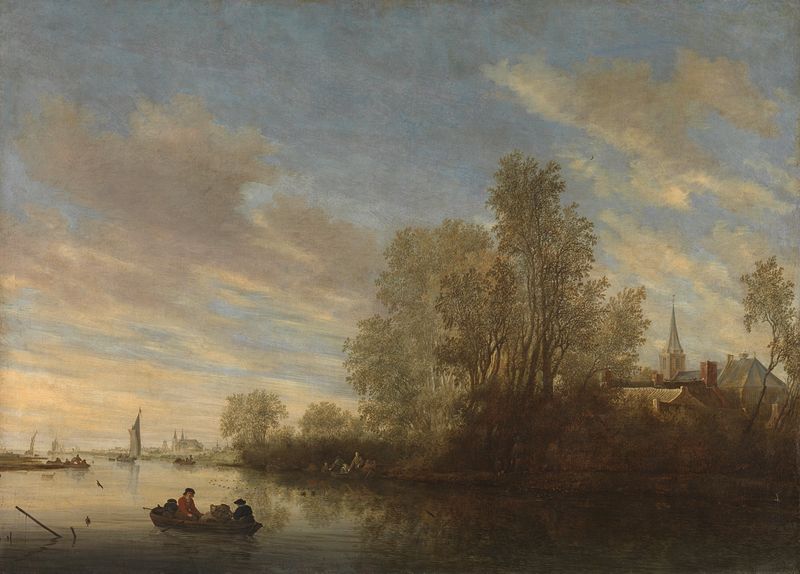
In the tranquil embrace of the natural world, yearning whispers between the lines of a serene landscape, inviting viewers to reflect on the deeper longing for connection and solace. Start by observing the gentle waters that dominate the foreground, their surface mirroring the soft hues of the sky. Look closely at the subtle interplay of light and shadow; the sun's golden rays delicately illuminate patches of grass, while the distant trees linger in a muted green, evoking a sense of peace. Notice how the figures engaged in their daily tasks remain almost spectral, their presence merging harmoniously with the landscape, suggesting that life itself is an ephemeral moment captured in time. The contrasts in this piece speak volumes—a tension between activity and stillness, between the vibrant life of the scene and the quiet introspection it encourages.
The workers, though diligent, seem to embody a deeper yearning for something beyond the earthly toil of their labor. The calm waters serve as a reflective pool, echoing the soul's desire for connection, tranquility, and understanding amidst the chaos of existence. In 1660, the artist found himself in the Netherlands during a period marked by prosperity and a growing appreciation for landscape painting. Van Ruysdael, a master of atmospheric effects and natural scenes, painted The Watering Place in a context where the Dutch Golden Age was flourishing, and artists like him were exploring themes of nature and human interaction within it.
This painting reflects both personal and collective experiences, encapsulating the artistry and introspection of a transformative era.
More Artworks by Salomon van Ruysdael
Browse all →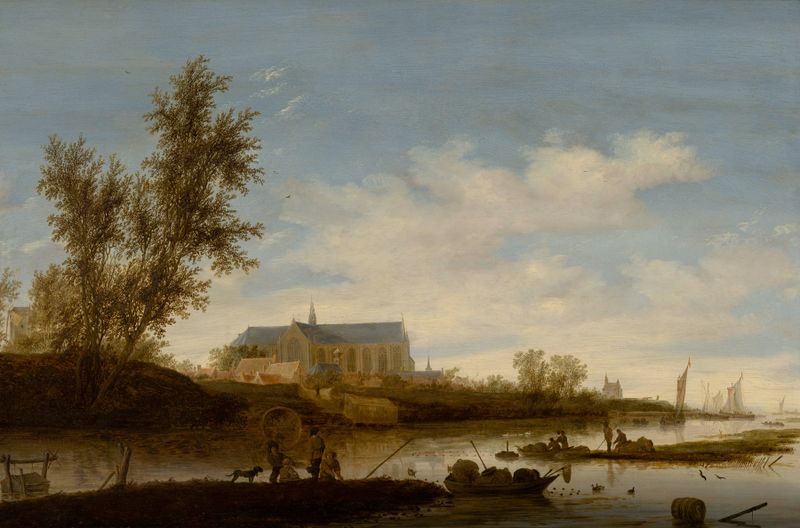
River landscape with fishermen in the foreground, the Laurenskerk in Alkmaar beyond
Salomon van Ruysdael

River Landscape with a View of Naarden
Salomon van Ruysdael
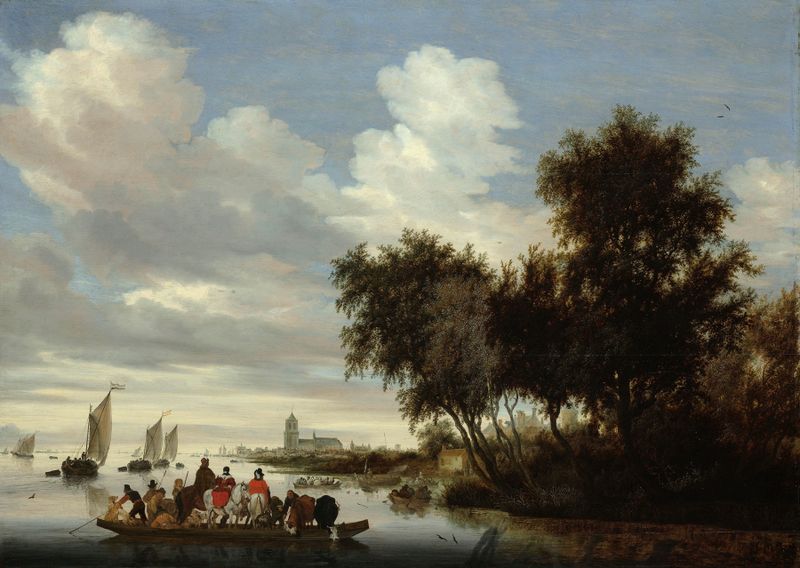
River Landscape with Ferry
Salomon van Ruysdael
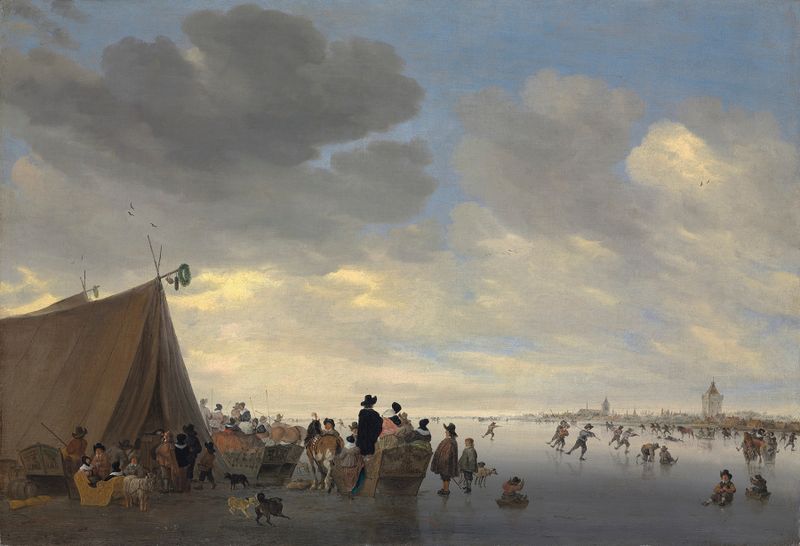
Skaters on the frozen river Lek, the town of Vianen beyond
Salomon van Ruysdael
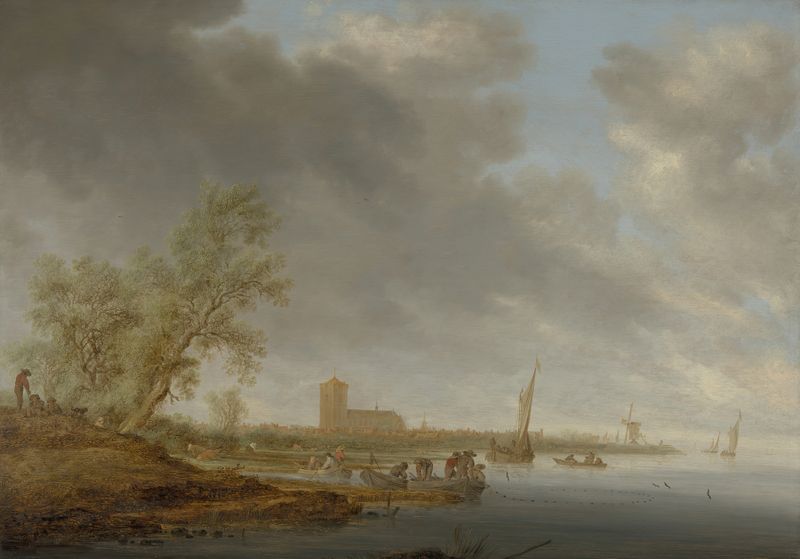
River Landscape with a View of Naarden
Salomon van Ruysdael
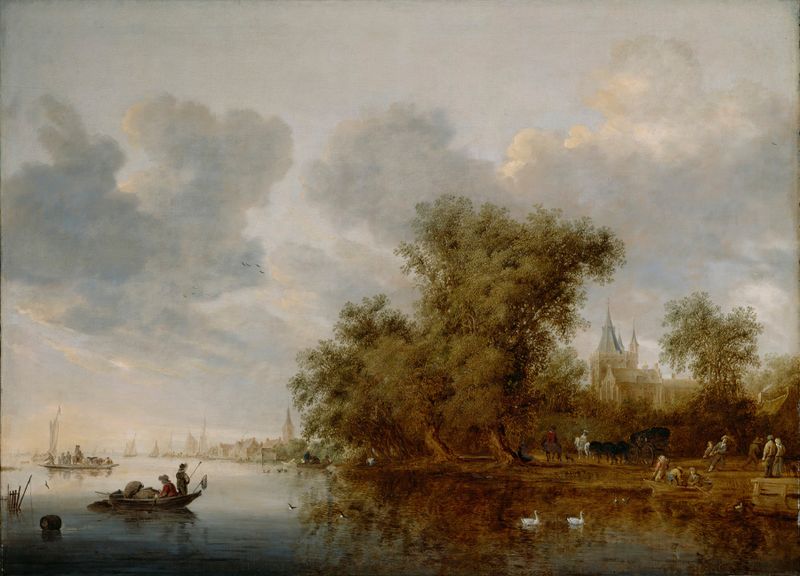
River Landscape
Salomon van Ruysdael
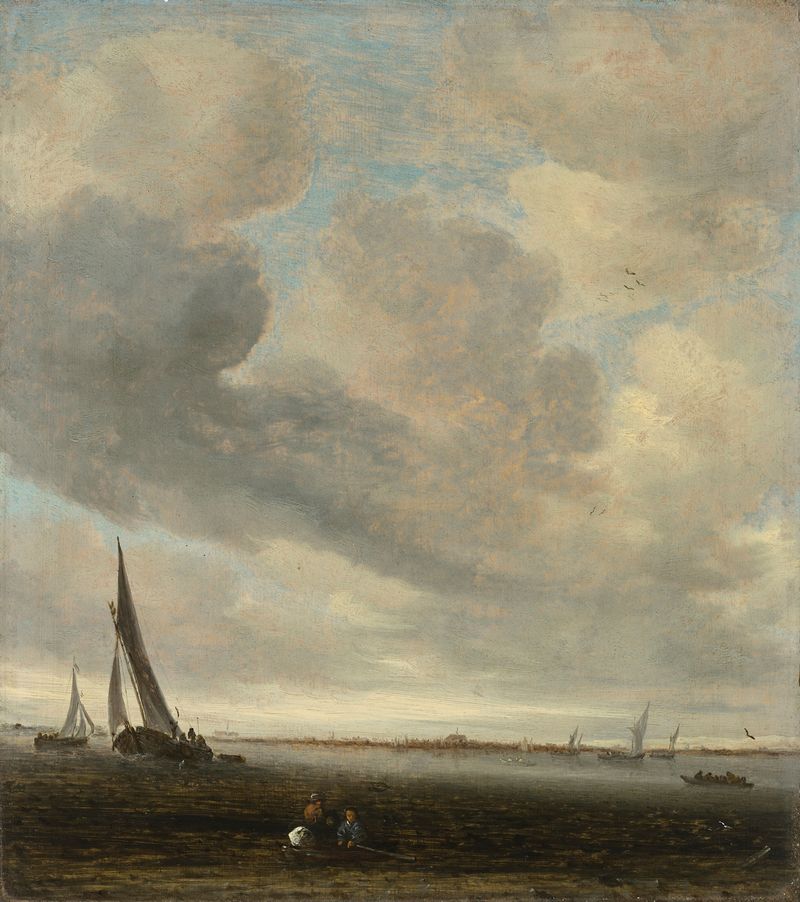
An estuary scene with a distant view of Haarlem
Salomon van Ruysdael
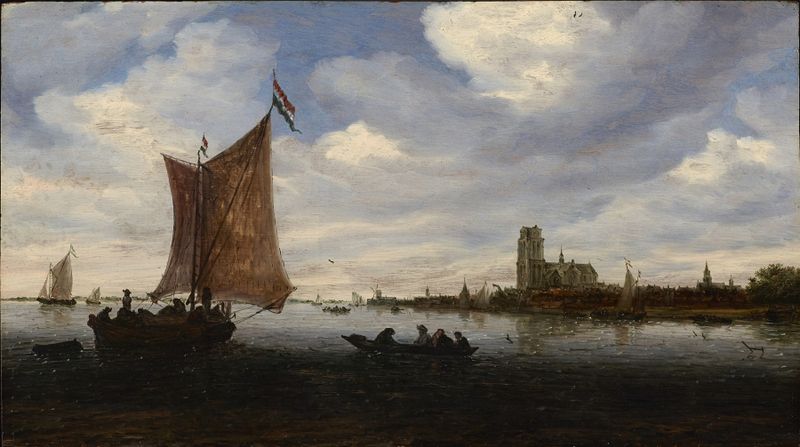
View of Dordrecht
Salomon van Ruysdael
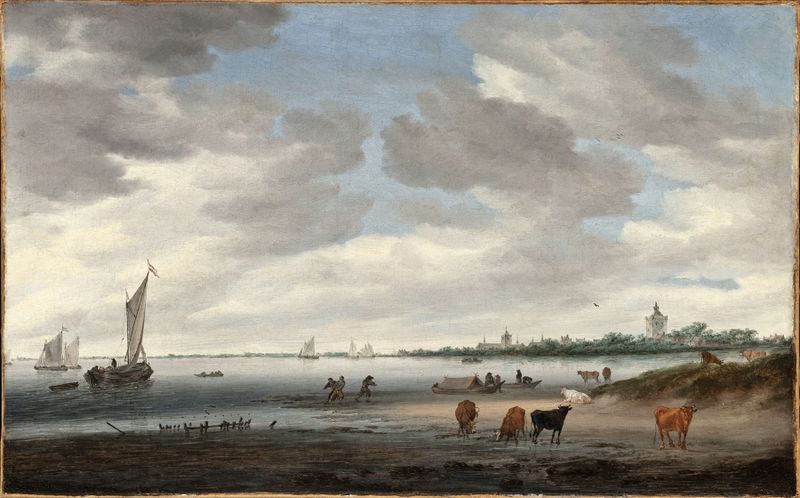
View of the River Lek and the Town of Vianen
Salomon van Ruysdael
River View near Deventer
Salomon van Ruysdael





