
The west portal of the church Kirche Maria am Gestade in Vienna — History & Facts
In the stillness of a moment captured in paint, we confront the fragile boundary between life and mortality, where existence unfurls as both fleeting and profound. Look to the left at the ornate archway, its intricate details inviting you to consider the passage between realms. The muted palette evokes a sense of somber reflection, while the soft light plays across the stonework, revealing subtle textures that hint at age and decay. Notice how the careful composition draws the eye upward, leading into the depths of the portal, suggesting both an entrance and an exit — a threshold resonating with the echoes of countless souls who have traversed it. Beneath the surface, the painting speaks of transience and the weight of history.
The shadows that linger in the arches mirror the uncertainties of life, while the light that spills through hints at hope or perhaps the specter of the unknown. Each motif, from the weathered stones to the delicate carvings, presents a dialogue between permanence and ephemerality, inviting contemplation on how we navigate our own existence. Ernst Graner painted this work in Vienna in 1928, a time marked by a complex interplay of modernity and tradition in the art world. Coming off the heels of World War I, the city was grappling with its identity amid rapid societal changes.
Graner’s focus on architectural subjects reflects his deep connection to the past, as he sought to capture the beauty of a world in transition, where every stone and shadow tells a story of those who have come before.
More Artworks by Ernst Graner
Browse all →
The Departure of Emperor Francis Joseph, near the Schweizertor in Hofburg residence
Ernst Graner

Old Albrechtsplatz (today Albertinaplatz) in Vienna with the Philipphof and the Mozart monument
Ernst Graner
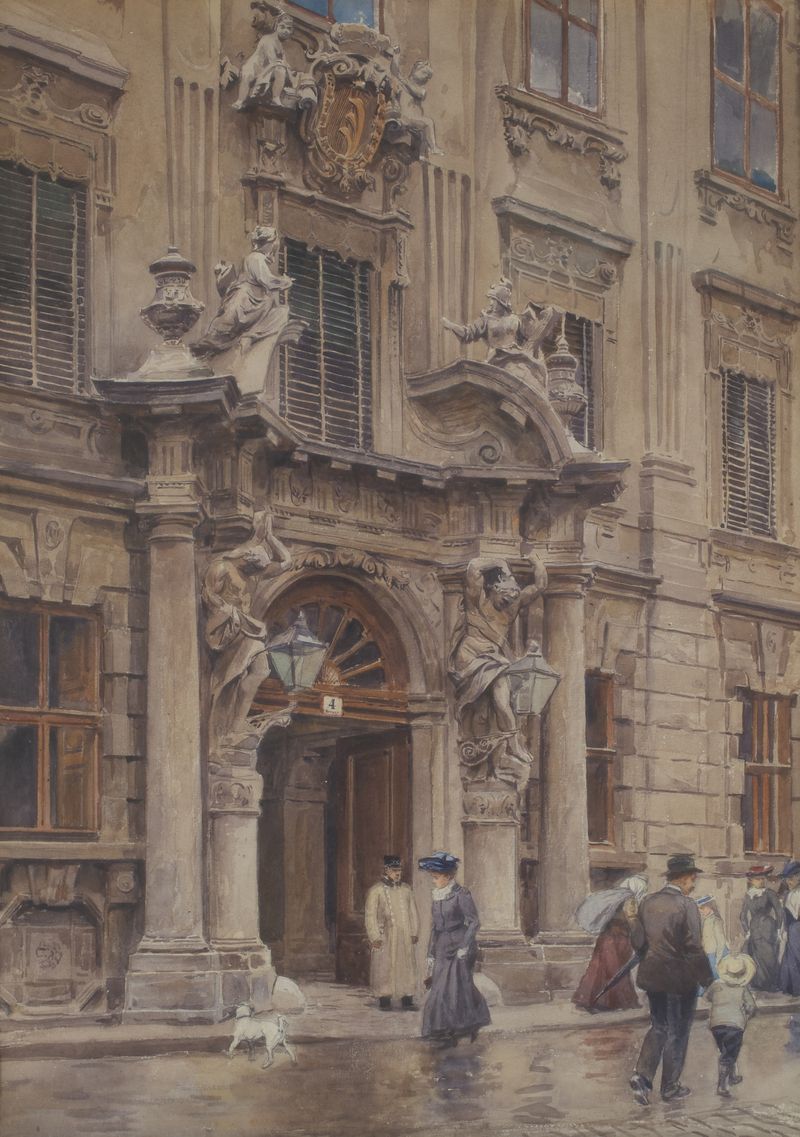
Das Portal Des Palais Kinsky
Ernst Graner
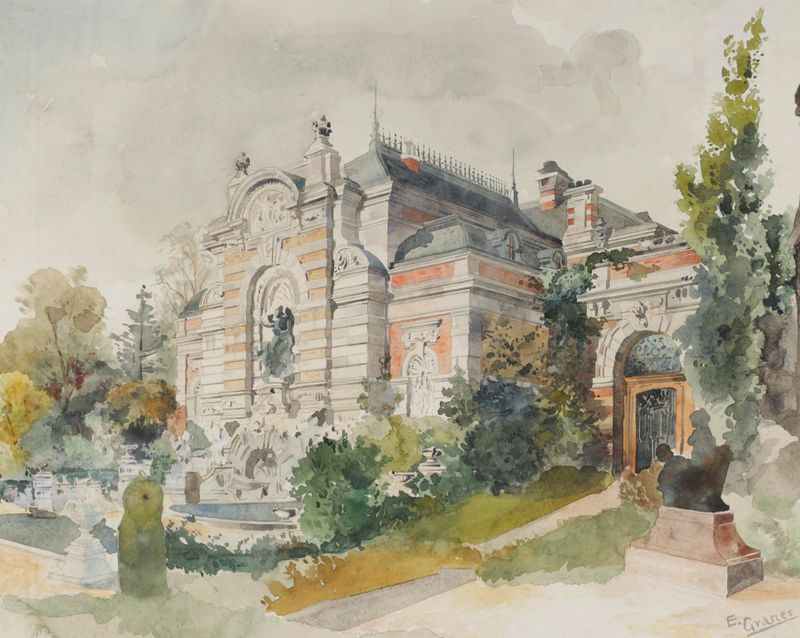
Villa in einem Park
Ernst Graner

Karlskirche
Ernst Graner

Kaiser Franz Joseph überquert den Naschmarkt
Ernst Graner

Palais des Prinzen Eugen in der Himmelpfortgasse
Ernst Graner

Die Schwendergasse In Wien Mit Schwenders Colosseum
Ernst Graner
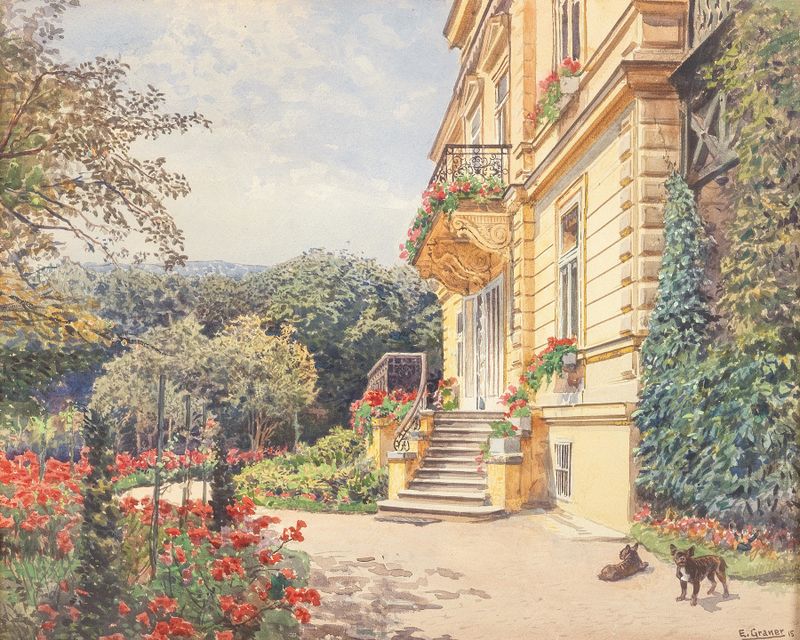
Villa in gepflegtem Garten
Ernst Graner
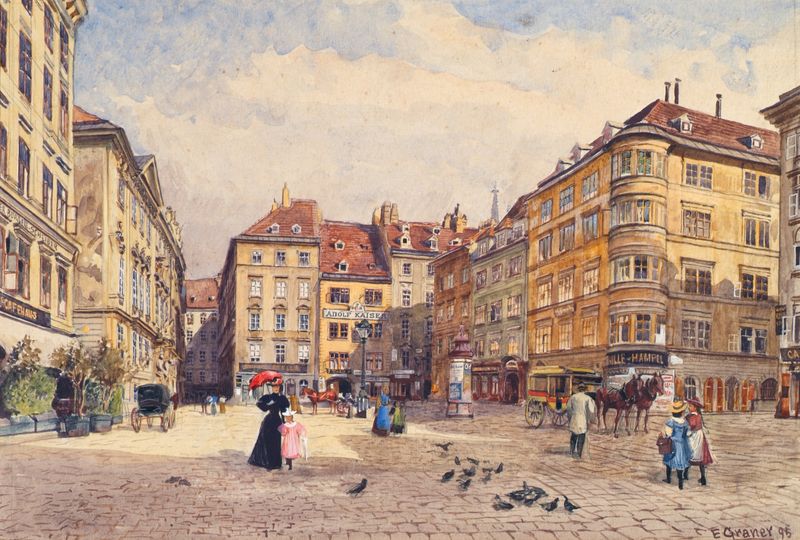
Der Judenplatz In Wien
Ernst Graner
More Architecture Art
Browse all →
The statue of Liberty
Frédéric Auguste Bartholdi

View of Houses in Delft, Known as ‘The Little Street’
Johannes Vermeer

View of Houses in Delft, Known as ‘The Little Street’
Johannes Vermeer

The Cathedral in Rouen. The portal, Grey Weather
Claude Monet

The yellow house
Vincent van Gogh

The Church in Auvers-sur-Oise, View from the Chevet
Vincent van Gogh