The White Boat — History & Facts
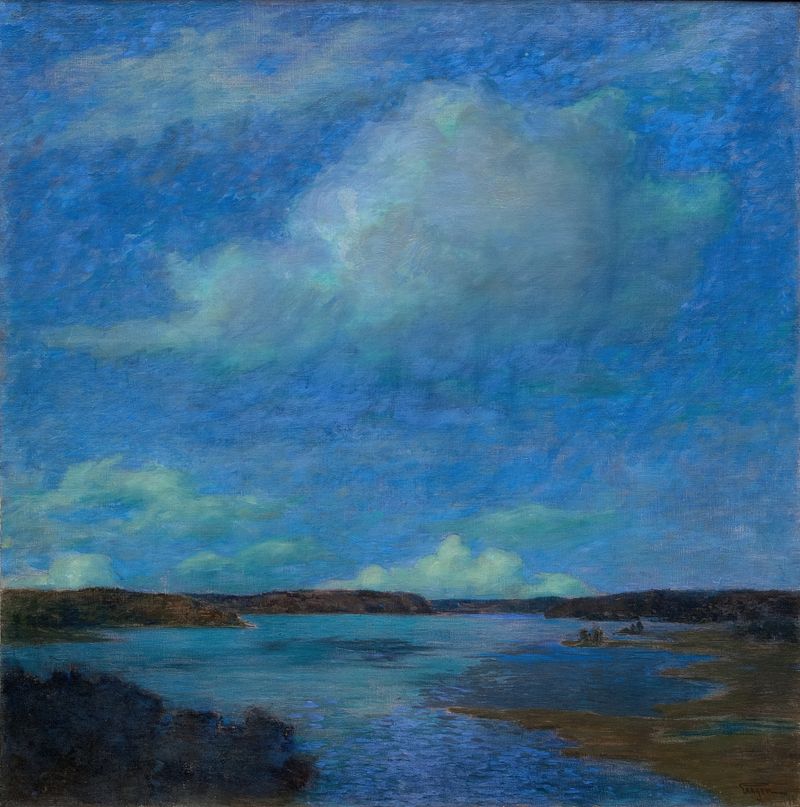
In the heart of solitude lies a vast expanse, inviting yet desolate, whispering stories of emptiness and reflection. How do we navigate the void that silence brings? Look to the left, where a lone white boat rests gently upon the tranquil water, its pristine form stark against the muted hues of the surrounding landscape. Notice how the artist employs soft brush strokes to blend the pale blues and grays of the sea, creating an atmosphere of stillness.
The horizon blurs, merging sky and water, drawing the viewer's gaze toward the infinite, while the subtle shifts in light evoke a sense of both melancholy and serene acceptance. As you explore the composition, consider the tension between the boat and the expansive emptiness it occupies. The vessel, a symbol of human endeavor, floats silently in an expanse that feels almost alive, yet eerily vacant. This juxtaposition evokes a profound sense of longing, questioning the relationship between isolation and freedom.
The calm water mirrors a stillness that speaks to the human condition—the search for meaning amidst the void. Created in 1906, this piece emerged during a transformative time for the artist, who was deeply influenced by the Romantic ideals of nature and introspection. At this point in his life, he was largely focused on capturing the essence of landscapes, reflecting his own contemplative spirit within the broader context of a rapidly industrializing world. The painting serves not only as a personal expression but as a timeless exploration of emptiness through the lens of early 20th-century sensibilities.