Nocturnal Cloud — History & Facts
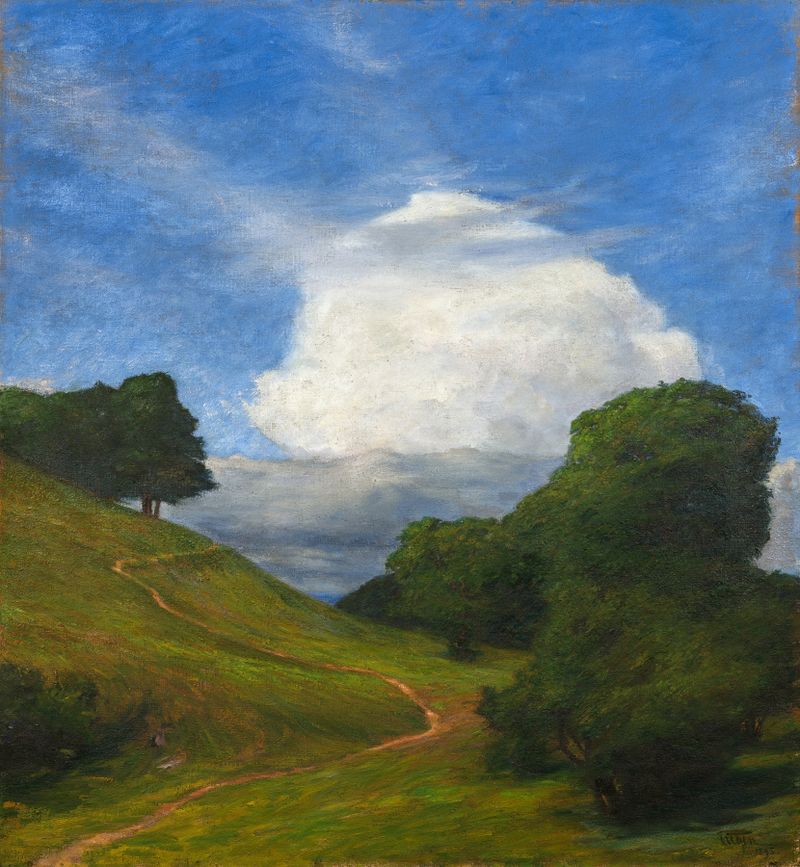
This sentiment resonates deeply within the shadows of life, where every shade tells a story waiting to be uncovered. Focus on the deep, swirling blues and blacks that dominate the canvas, drawing your eyes toward the center where the clouds seem to dance against an ethereal backdrop. Notice the delicate interplay of light and shadow, as if the artist meticulously crafted each brushstroke to express the tension between the known and the mysterious. The gentle gradations invite you to explore the hidden recesses of the night sky, while the soft whispers of color evoke a sense of tranquility and introspection. Yet, within this serene tableau lies an undercurrent of emotion.
Consider how the tumultuous clouds suggest an impending storm, representing not just the chaos of nature but the inner turmoil that often accompanies stillness. The contrasting hues are reminiscent of fleeting moments, where shadows linger just beyond reach, hinting at the multifaceted nature of existence. Each element in this composition speaks of a duality—calmness versus chaos, clarity versus obscurity—reflecting our own struggles with understanding. Painted in 1901, this work emerged during a time when the artist was navigating the shifting tides of personal and societal challenges.
Living in Sweden amidst burgeoning artistic movements, he sought to capture the essence of his surroundings, focusing on the beauty and mystery present in nature. His experimentation with light and shadow in Nocturnal Cloud exemplifies a deep connection to the world around him and a departure from traditional representational styles, marking a significant evolution in his oeuvre.