
The willow alley — History & Facts
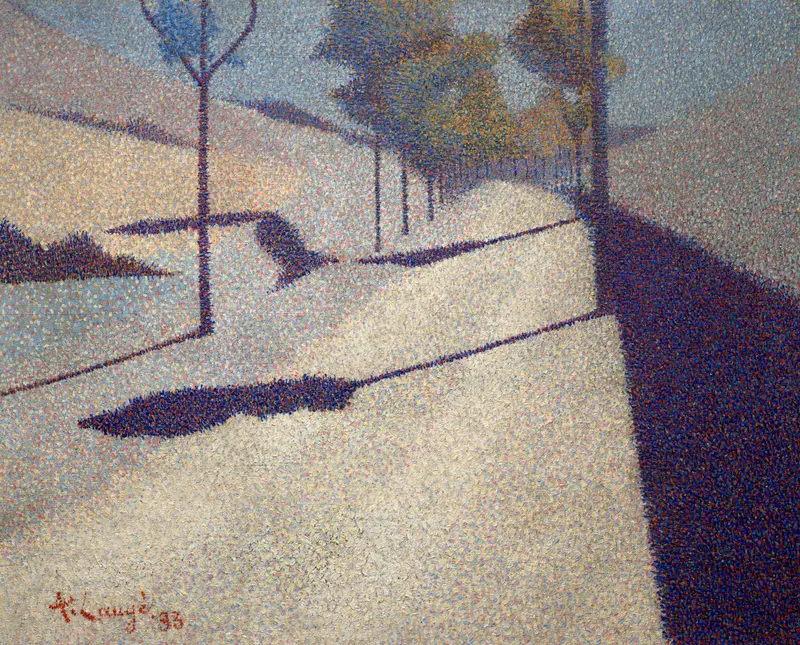
A hush seems to settle over the scene, as if the world has paused to let the viewer wander down this pale, winding path. The eye is drawn first to the row of pollarded willows, their trunks dark and sturdy, their crowns a haze of pinkish, feathery brushwork that dissolves into the sky. Each tree stands like a sentinel, marking the gentle curve of the lane as it slips away into the soft fields beyond.
The artist’s technique—delicate, rhythmic strokes laid side by side—creates a shimmering vibration, giving the landscape a sense of quiet movement, as if the air itself were gently stirring. The palette is restrained, yet full of life: greens and mauves mingle, and the earth seems to breathe beneath the surface. Painted in 1896, The willow alley belongs to a world on the cusp of modernity, when artists like Achille Laugé were experimenting with the new language of color and light. This was the era of Neo-Impressionism, when painters, inspired by science and sensation, sought to capture not just the appearance but the experience of a place.
Such works were often made for private collectors or progressive exhibitions, offering viewers a window onto the changing countryside and the fleeting moods of nature. The present image was documented on 2 November 2018 and is part of a private collection, a reminder that history has kept few traces of many such quiet marvels. Stand before this painting, and let your gaze follow the path—the promise of discovery lies just beyond the last willow.
More Artworks by Achille Laugé

Ruelle au balcon fleuri
Achille Laugé
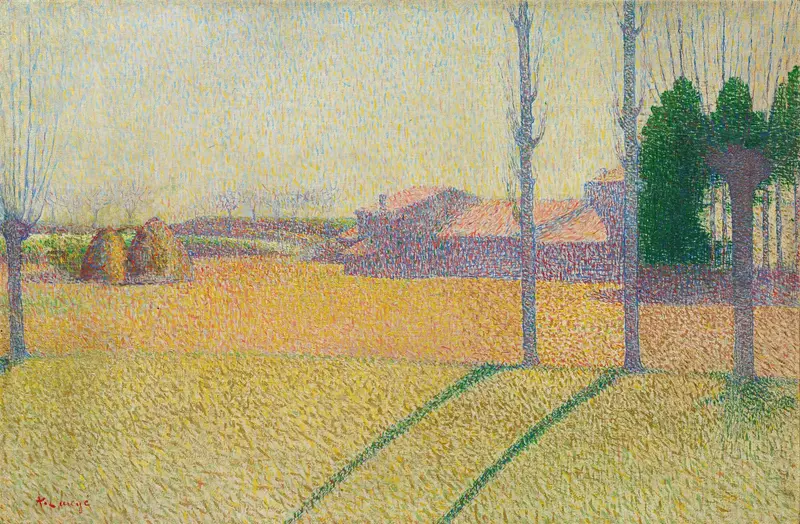
L’hort À Cailhau
Achille Laugé
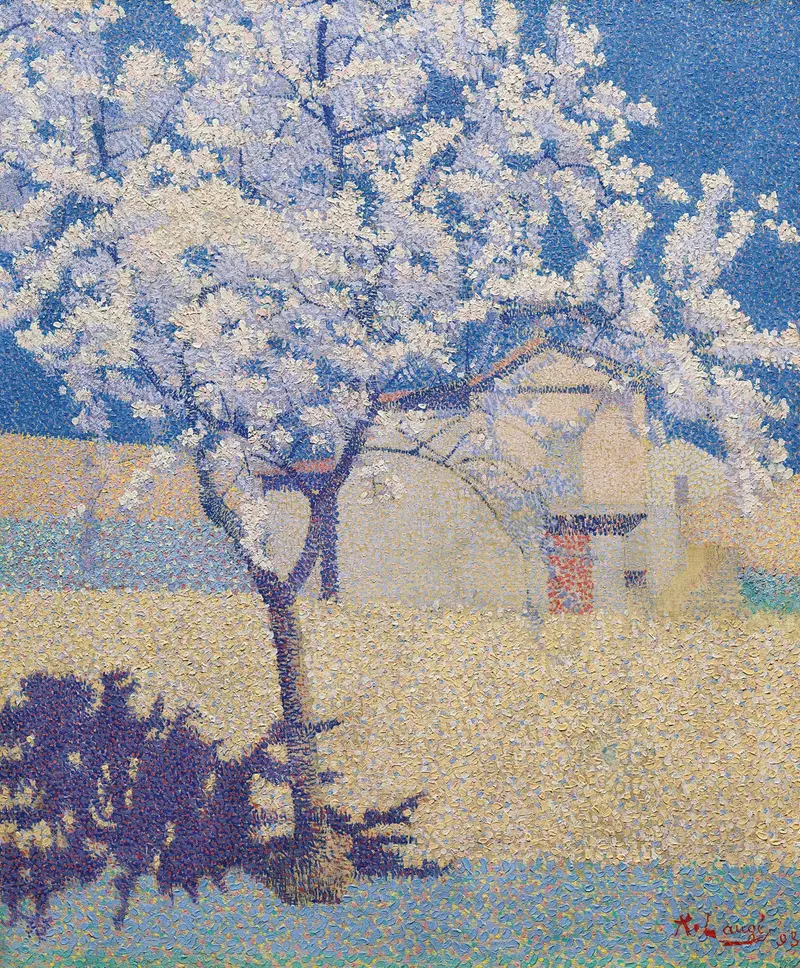
L’Arbre En Fleur
Achille Laugé
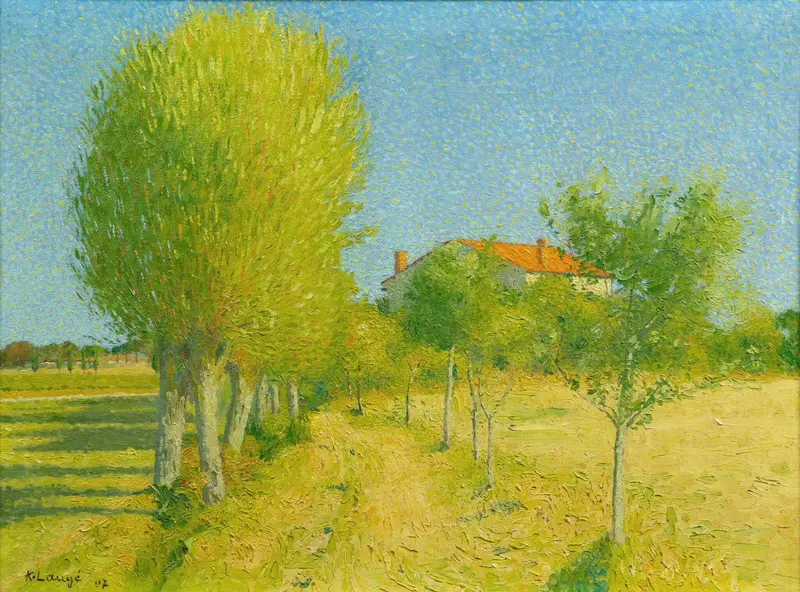
L’allée de saules derrière l’Alouette à Cailhau
Achille Laugé
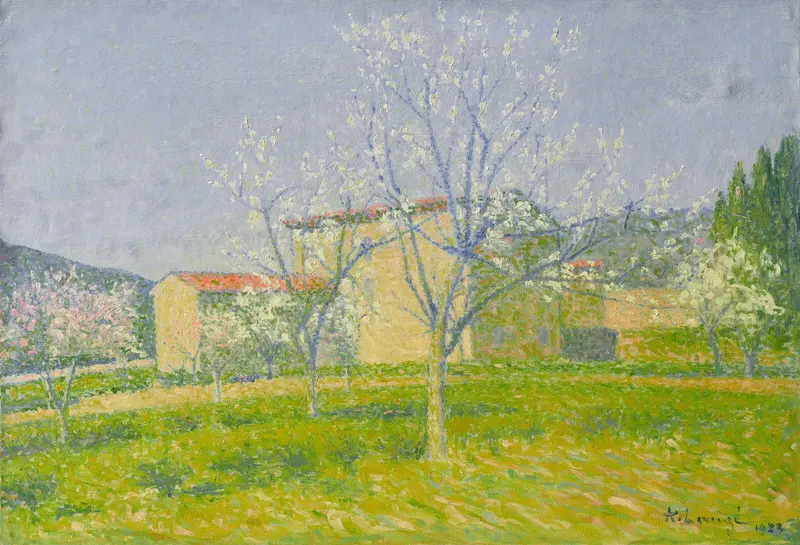
Verger en fleurs à Alet-les-Bains (Aude)
Achille Laugé
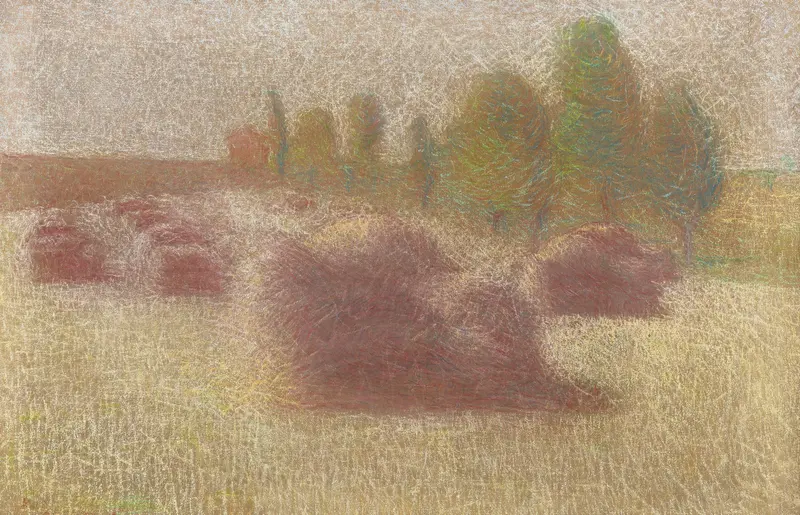
Les Gerbes
Achille Laugé
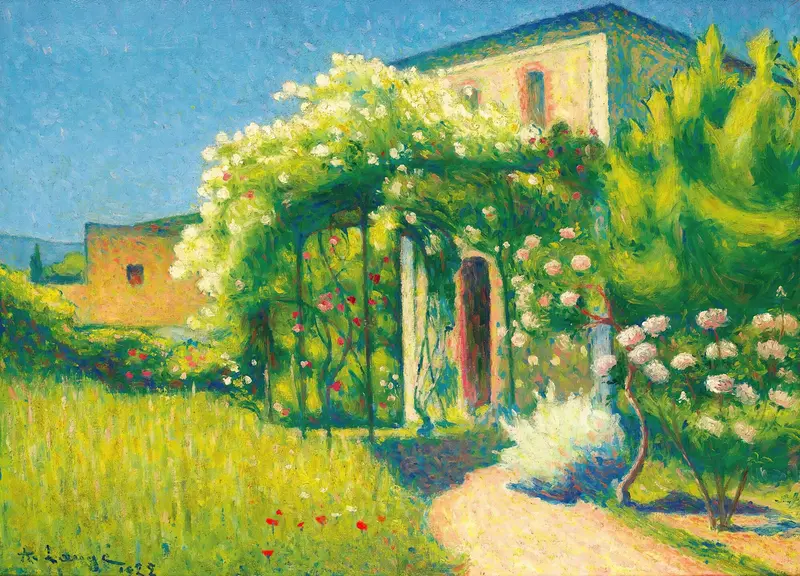
L’Atelier À Alet-Les-Bains
Achille Laugé
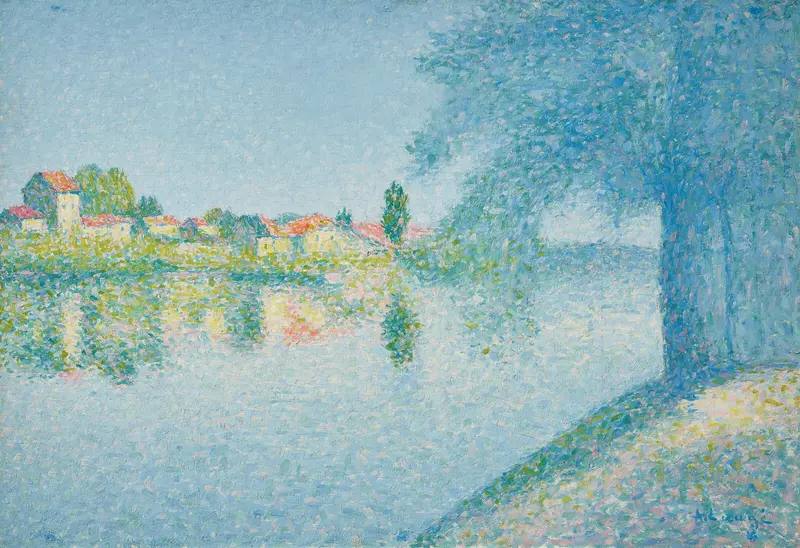
Vue des quais de la Garonne
Achille Laugé
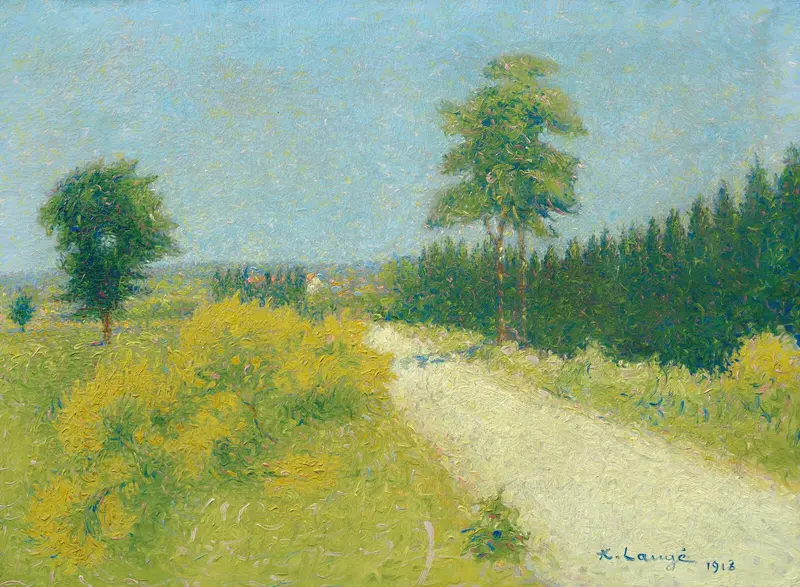
La route de Belvèze vers le relais
Achille Laugé
La route (The Road)
Achille Laugé
More Landscape Art

The Starry Night
Vincent van Gogh

View of Delft
Johannes Vermeer

Water Lilies
Claude Monet

The Grand Canal, Venice, looking north-west from the Ca' Corner to the Ca' Contarini degli Scrigni, with the campanile of Santa Maria della Carità
Canaletto

Windsor Castle
Canaletto

The Grand Canal looking North-East from the Palazzo Dolfin-Manin to the Rialto Bridge
Canaletto