
The Woodcutter’s House (Vendée) — History & Facts
In the stillness of a world reclaimed by nature, a simple house stands as a testament to memories both cherished and forgotten. It whispers of days gone by, where the echoes of laughter and toil linger amidst the surrounding trees. Look to the foreground where the house rests, its weathered façade a collage of warm ochres and soft browns, blending seamlessly with the earthy tones of the landscape. Notice how the brushwork captures the rough textures of the wooden beams and the gentle caress of light filtering through the leaves, creating a dance of shadow and illumination.
The composition invites the eye to wander, revealing the delicate interplay of organic forms: the sturdy house against the gentle curves of the trees, evoking a sense of harmony and belonging. Hidden within the layers of paint are sentiments of nostalgia and solitude. The absence of human figures invites contemplation, suggesting a space once alive with spirit, now quiet and reflective. The overgrown foliage embraces the structure, symbolizing nature’s reclamation of what was once dominated by human hands.
This tension between abandonment and the beauty of decay resonates deeply, evoking feelings of longing for simpler times and the inevitability of change. In 1915, Lepère painted this work while living in France, during a tumultuous period marked by the shadows of World War I. This era of uncertainty and upheaval influenced many artists, prompting a yearning for the pastoral and the idyllic. Lepère, an advocate for the Impressionist movement, sought solace in the rural landscapes, capturing their essence as a refuge from the chaos of modern life.
More Artworks by Auguste Louis Lepère
Browse all →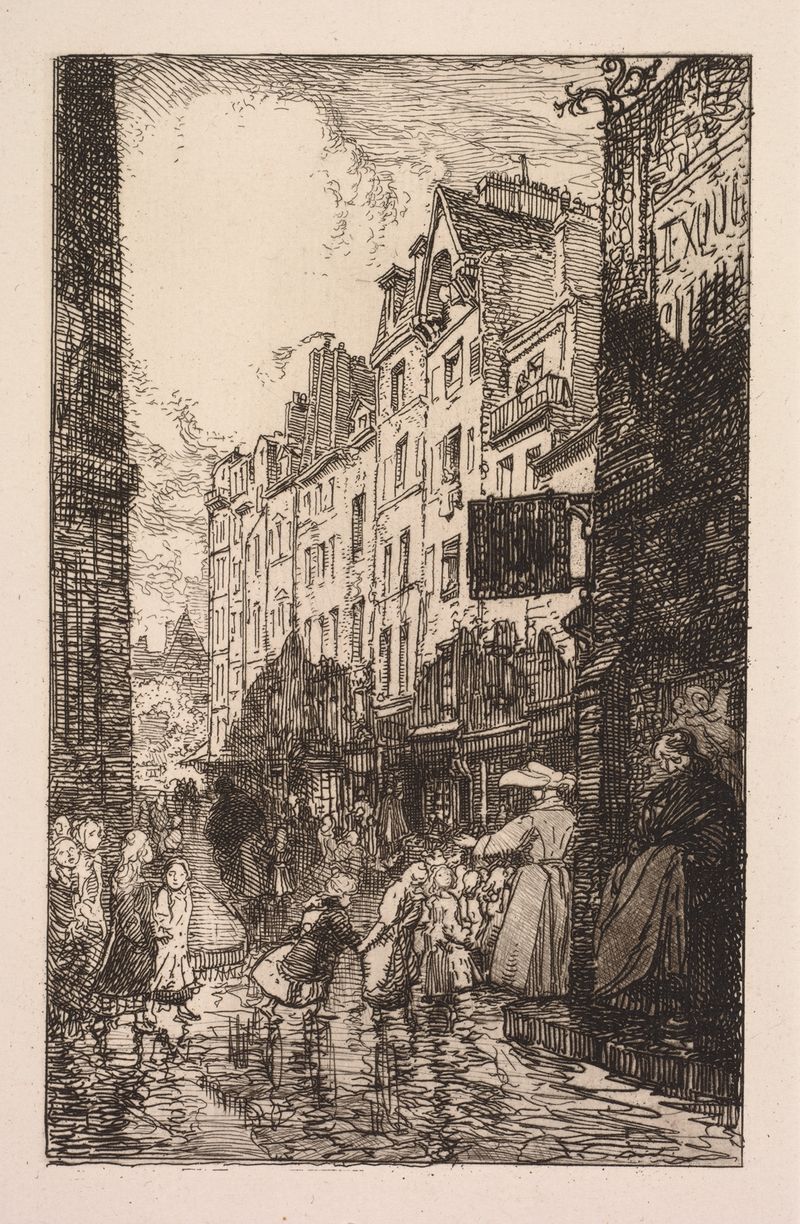
La Rue des Prêtres Saint-Séverin
Auguste Louis Lepère
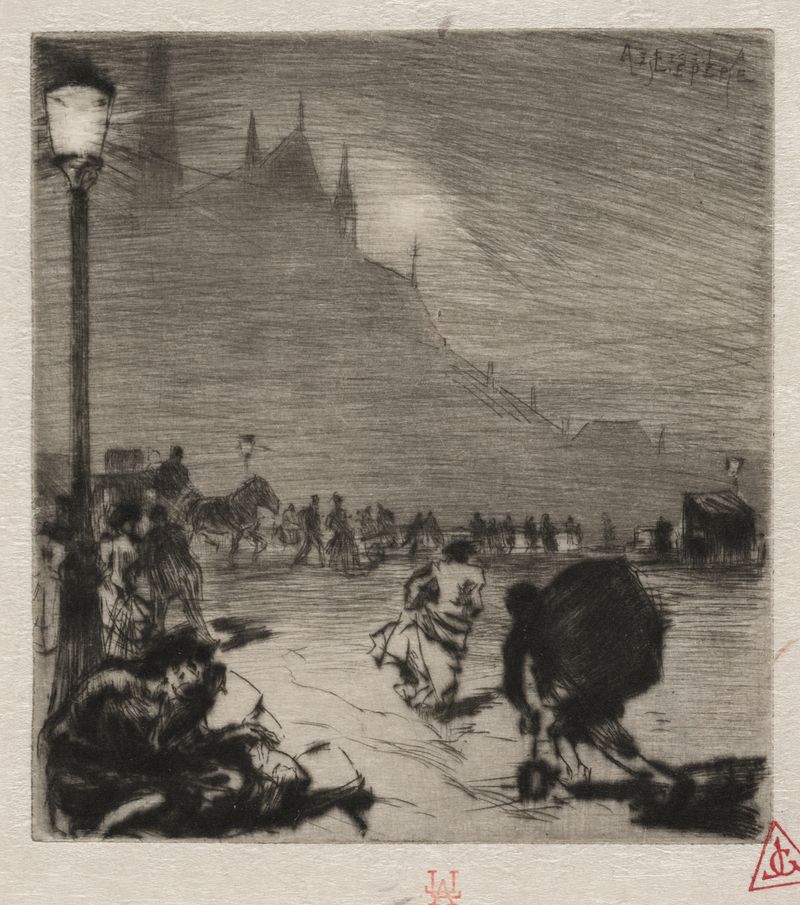
Au Coin du Pont-aux-Doubles
Auguste Louis Lepère
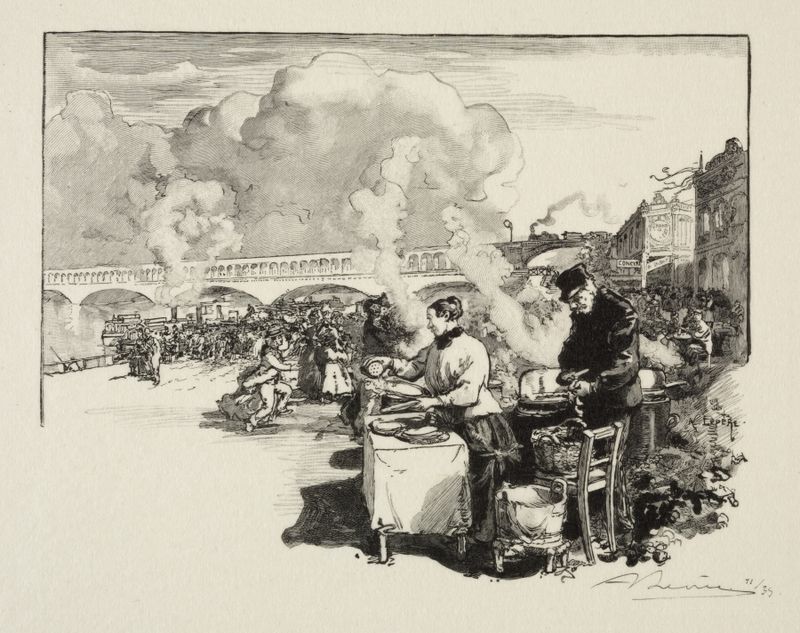
Debarcadère des bateaux-omnibus
Auguste Louis Lepère

La Seine, au quai de la Rapée
Auguste Louis Lepère
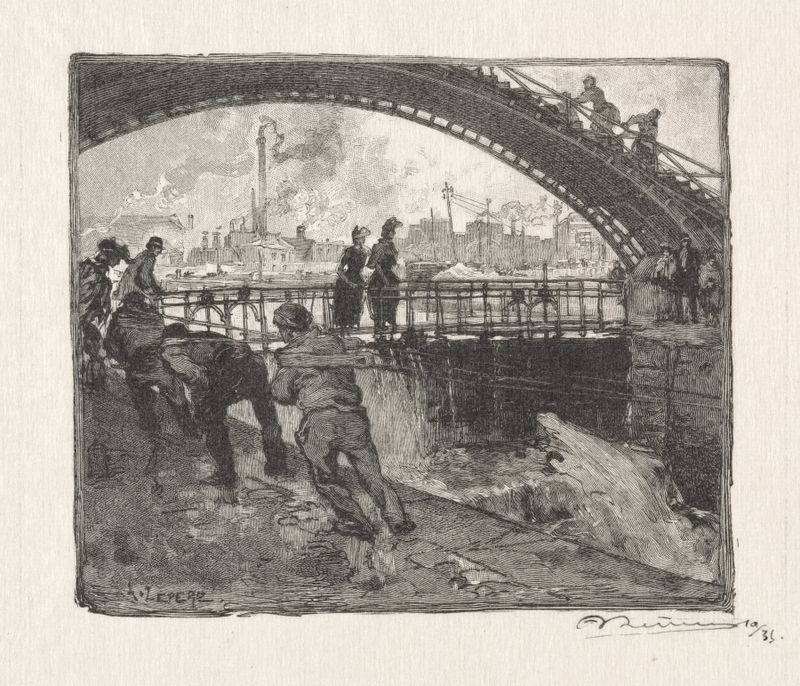
L’Ecluse du Canal St. Martin
Auguste Louis Lepère

Le Boulevard Montmartre, le Soir
Auguste Louis Lepère

Une Chasse au Mont Gérard
Auguste Louis Lepère
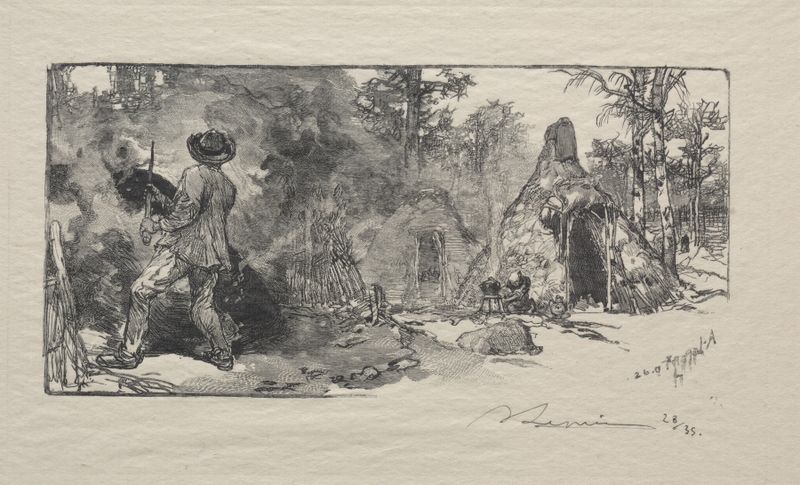
Les Charbonniere
Auguste Louis Lepère
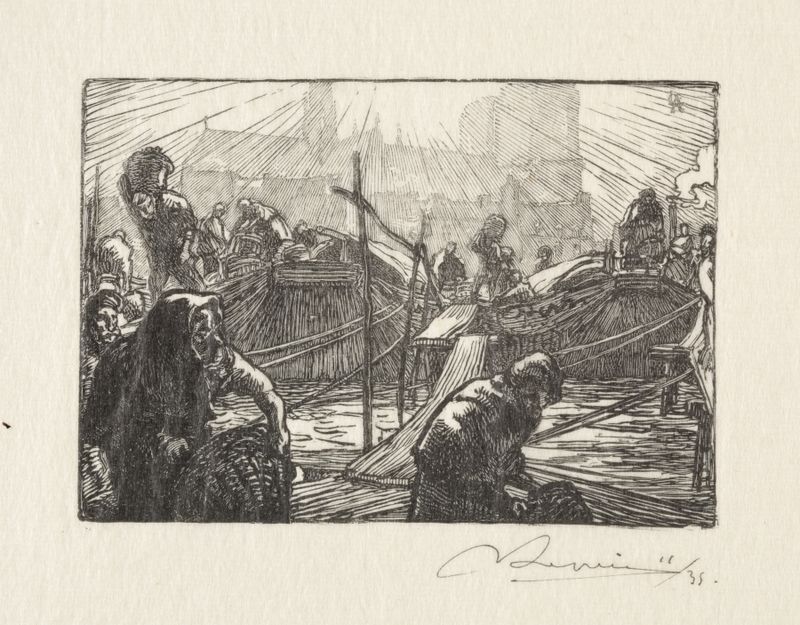
Notre Dame vue du Marché aux pommes
Auguste Louis Lepère

Le Palais des Arts Liberaux, Intèrieur
Auguste Louis Lepère





