
The Wooden Bridge — History & Facts
Did the painter know this moment would outlive them? In The Wooden Bridge, time is captured in a delicate balance between nature and human endeavor, whispering of legacy and the fleeting passage of life. Focus on the tranquil water below the bridge, where soft ripples reflect the dappled sunlight filtering through the canopy of trees. Notice how the rich greens and earthy browns of the landscape harmonize with the warm hues of the wooden structure, creating an inviting yet contemplative scene. The careful brushwork reveals both texture and movement, leading the eye across the bridge and inviting you to imagine the stories of those who may traverse it. Delve deeper into the subtle contrasts at play: the solidity of the bridge juxtaposed against the fluidity of water, the permanence of wood meeting the impermanence of nature.
Each stroke carries an emotional weight, suggesting not just the physical crossing between banks, but also a metaphorical passage between memory and nostalgia. The painting evokes a sense of yearning for connection, not only with the landscape but also with the past, symbolizing how moments can transcend time. During the years 1887 to 1893, the artist worked on this piece in Connecticut, a period marked by personal introspection and the rise of American Impressionism. Weir embraced nature as both subject and muse, reflecting a broader movement among artists seeking authenticity in their work.
In a rapidly changing world, he sought to capture not just a moment but a legacy, ensuring that the beauty of the everyday might resonate with future generations.
More Artworks by Julian Alden Weir
Browse all →
My Back Yard no. 1
Julian Alden Weir
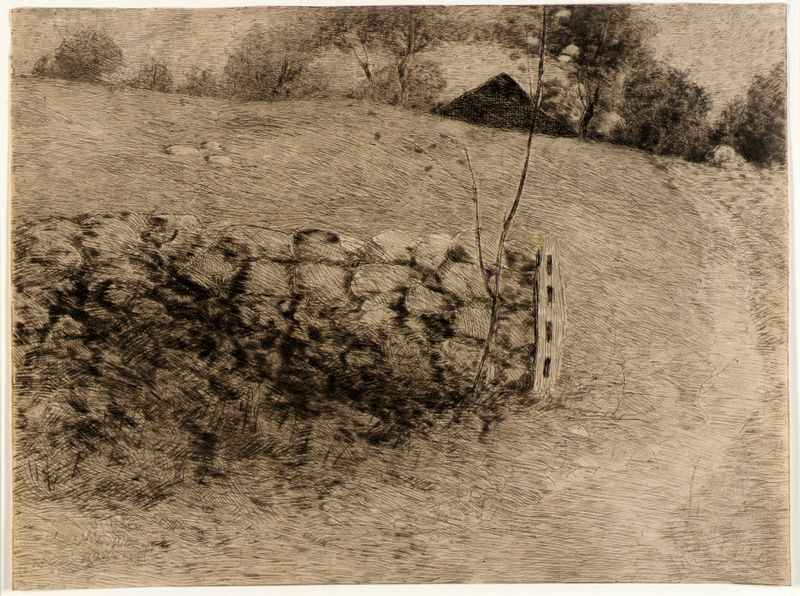
The Barn Lot
Julian Alden Weir

The Webb Farm
Julian Alden Weir
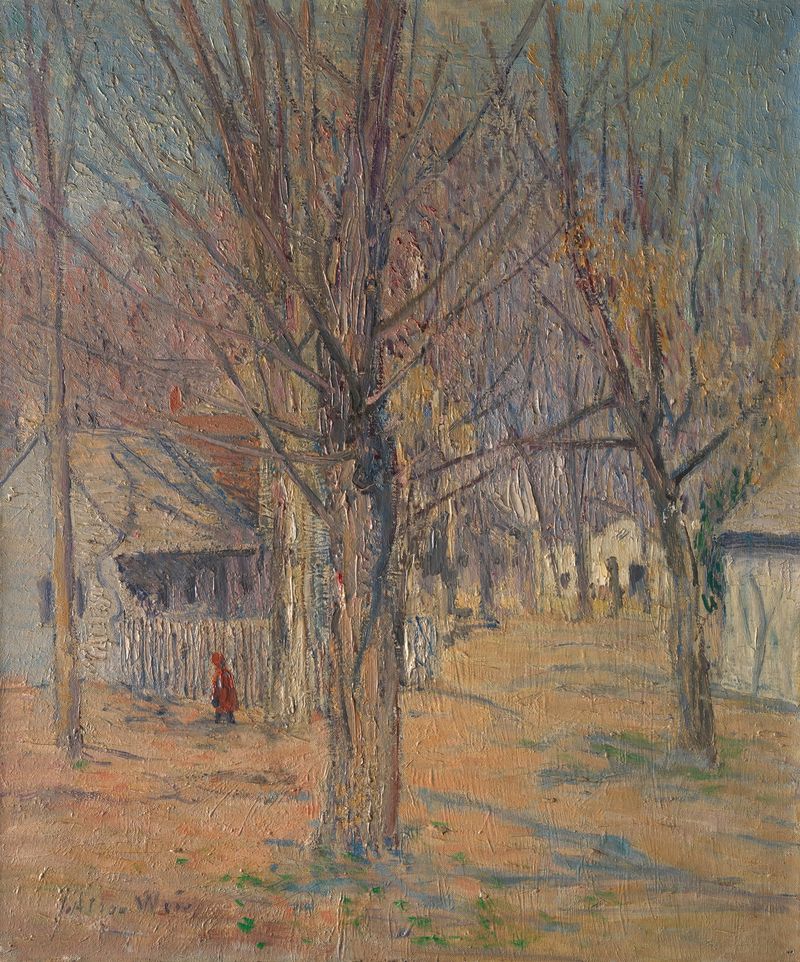
Connecticut Village (Going to School)
Julian Alden Weir

The Stone Bridge
Julian Alden Weir

The Webb Farm 2
Julian Alden Weir
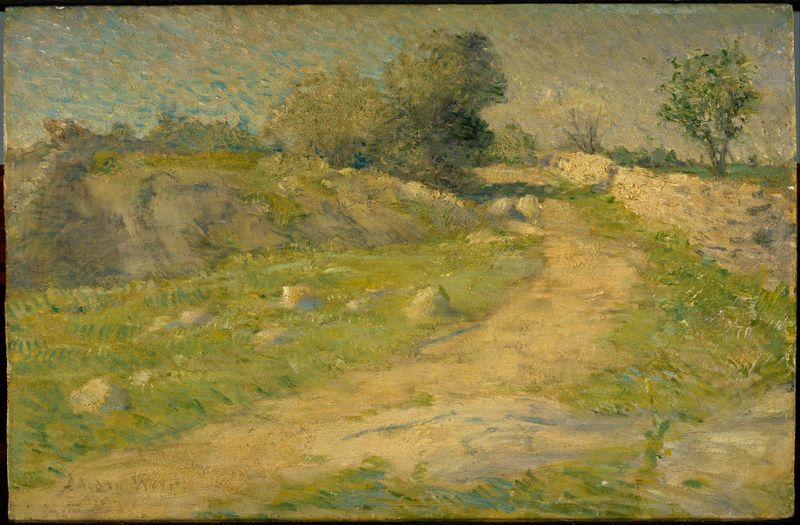
The Lane
Julian Alden Weir
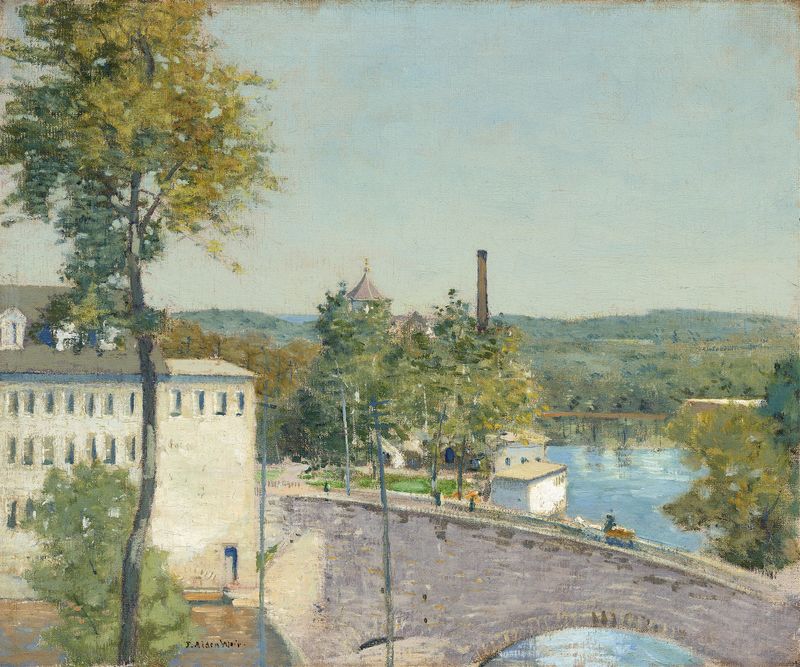
U.S. Thread Company Mills,Willimantic,Connecticut
Julian Alden Weir

Neighboring Farm
Julian Alden Weir

Coon Alley
Julian Alden Weir





