
The yacht squadron at Newport — History & Facts
Can paint confess what words never could? In The Yacht Squadron at Newport, vibrant sails dance upon shimmering waters, a tale of camaraderie shrouded in an undercurrent of unrest. Look to the left at the elegantly painted yachts, their crisp white sails capturing the sunlight in a playful ballet. The deep blues and greens of the sea contrast sharply with the bright hues of the boats, guiding your eye toward the rhythmic movement of the waves. The composition draws you in, creating a sense of cohesion among the vessels, yet their stark individuality hints at the underlying tensions among the sailors—each striving for glory amidst the beauty of the day. Amidst the idyllic scene, the viewer can sense the madness lurking beneath the surface.
The joyful atmosphere is laced with a competitive spirit, as the yachts race toward an invisible finish line, evoking a sense of urgency and ambition. The meticulous details, from the billowing sails to the frothy waves, reveal a world where harmony coexists with an innate desire for supremacy, encapsulating the duality of leisure and rivalry. Currier & Ives created this piece in 1872 during a period when American printmaking was flourishing, reflecting an era of increasing leisure and affluence among the upper class. The artists aimed to capture the essence of American life, particularly the allure of maritime pursuits, at a time when the nation was grappling with its identity following the Civil War.
This vibrant depiction of Newport's yacht culture serves as a testament to both the beauty and complexity of the human experience.
More Artworks by Currier & Ives.
Browse all →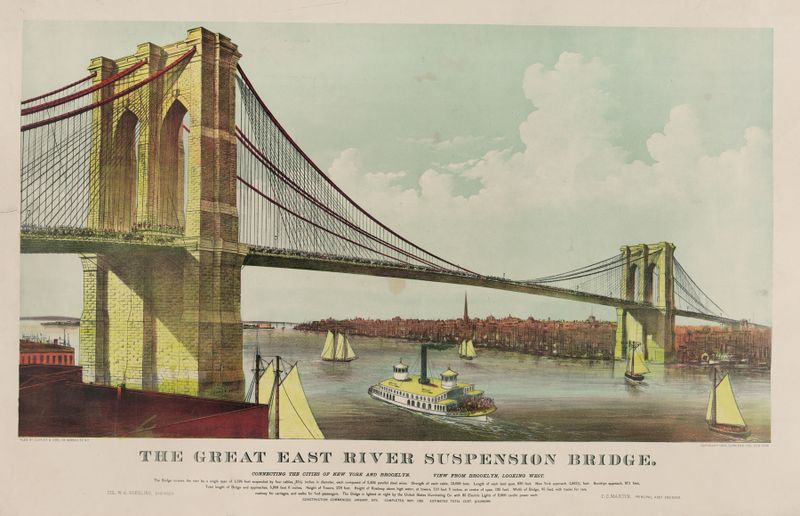
The great East River suspension bridge; connecting the cities of New York and Brooklyn View from Brooklyn, looking west.
Currier & Ives.
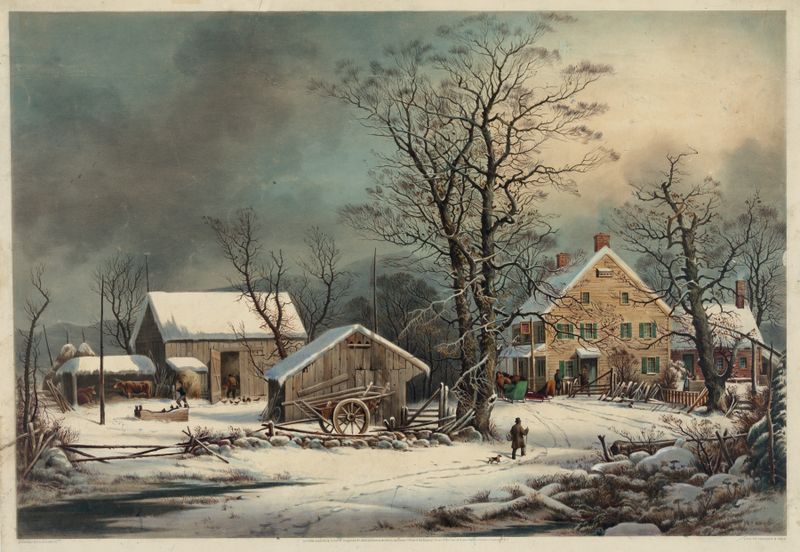
Winter in the country; a cold morning
Currier & Ives.
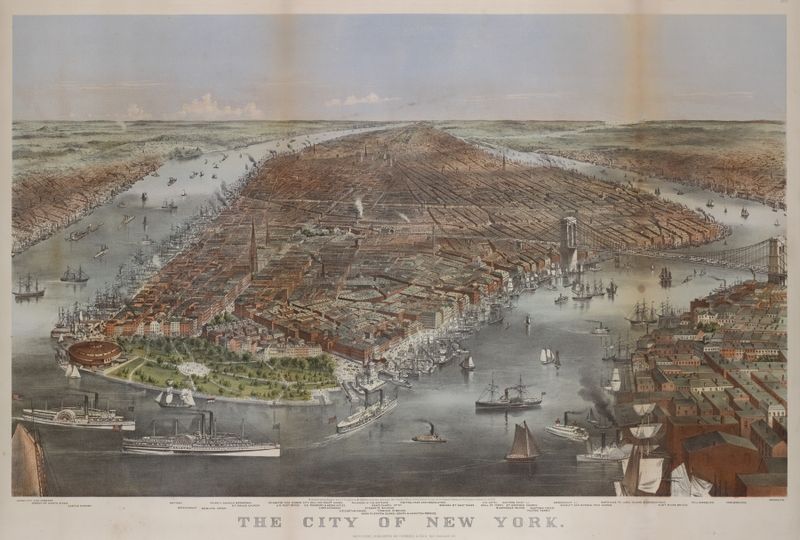
The City of New York
Currier & Ives.
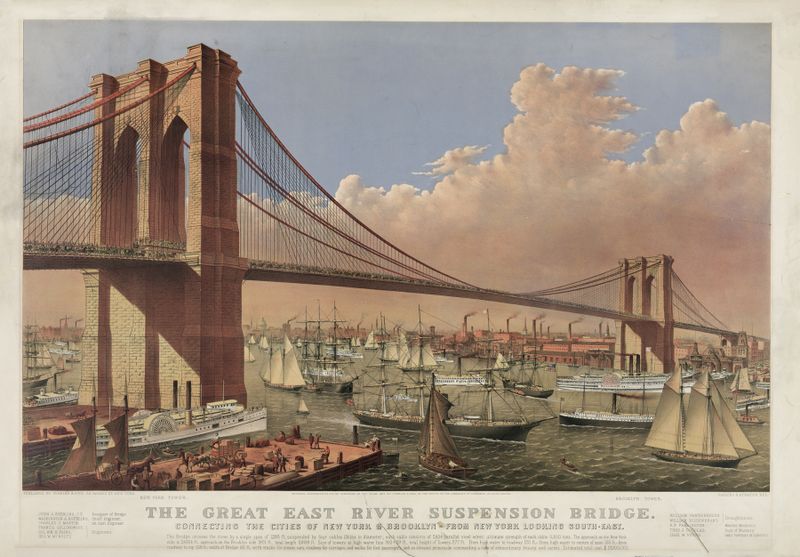
The great East River suspension bridge; connecting the cities of New York & Brooklyn From New York looking south-east.
Currier & Ives.
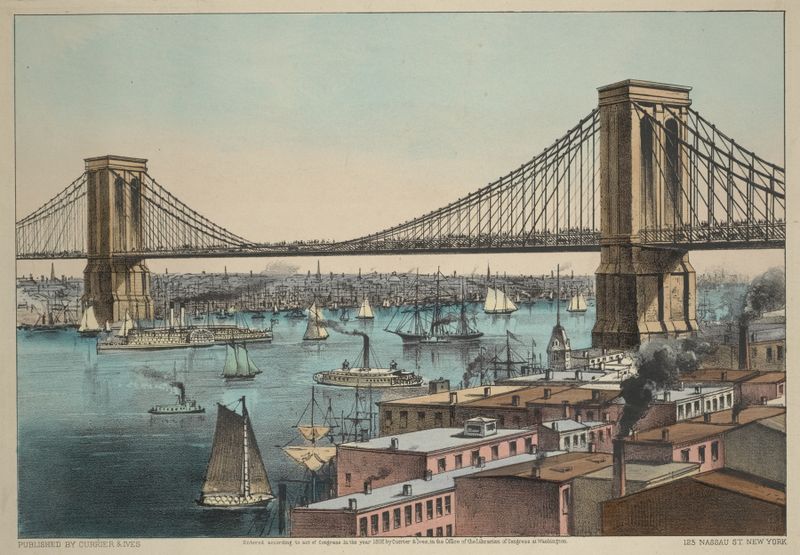
The Great East River Bridge. To connect the cities of New York & Brooklyn
Currier & Ives.
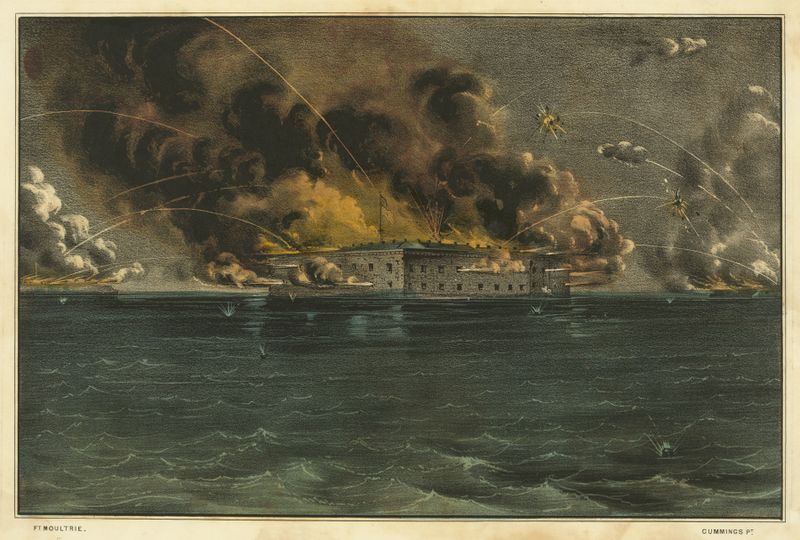
Bombardment of Fort Sumter, Charleston Harbor; 12th & 13th of April, 1861
Currier & Ives.
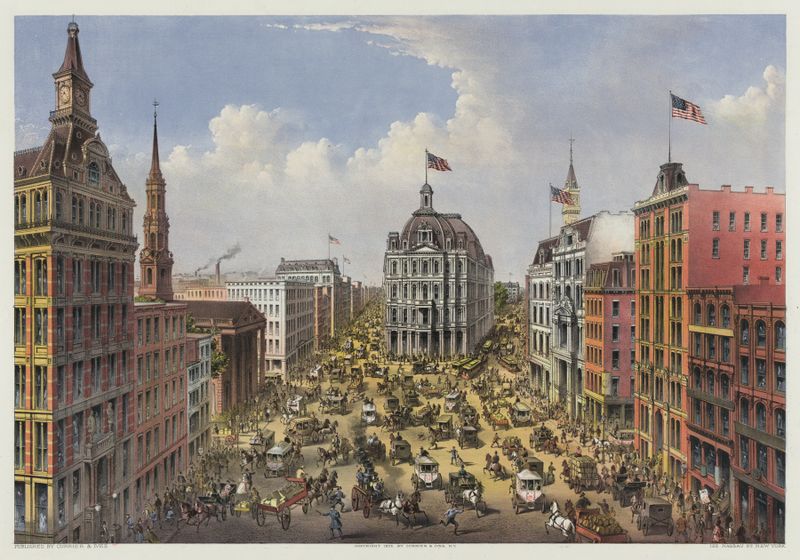
Broadway, New York; From the western union telegraph building looking north
Currier & Ives.
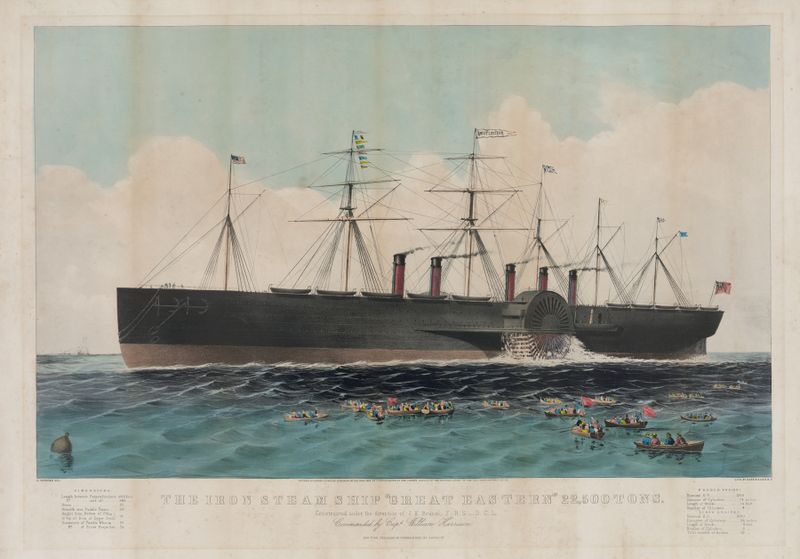
The iron steam ship ‘Great Eastern’ 22,500 tons; constructed under the direction of I.K. Brunel, F.R.S. — D.C.L. commanded by Capt. William Harrison
Currier & Ives.
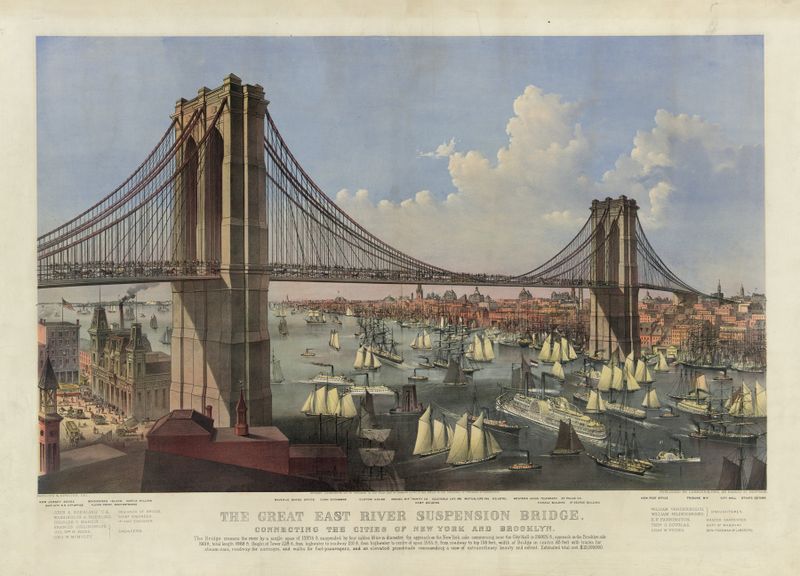
The great East River suspension bridge–Connecting the cities of New York and Brooklyn
Currier & Ives.
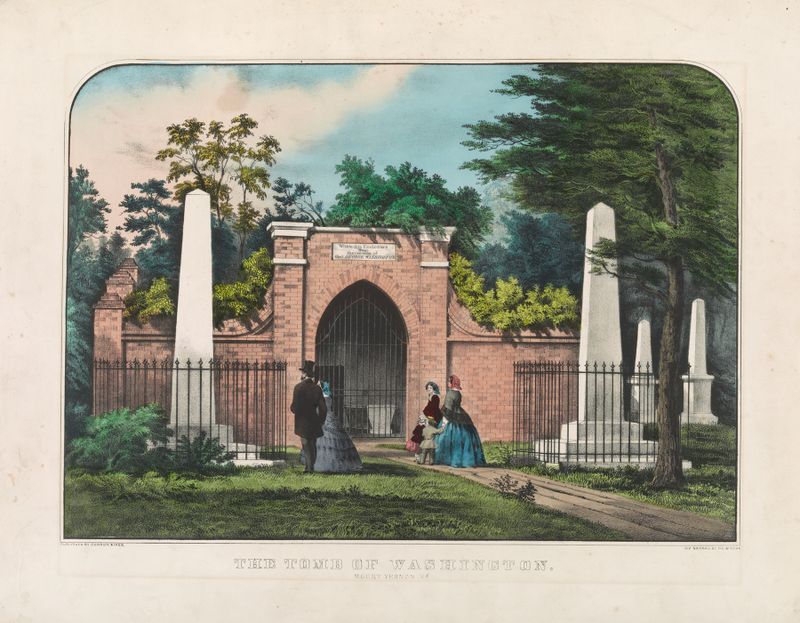
The tomb of Washington; Mount Vernon, Va.
Currier & Ives.





