Theekop — History & Facts
Could beauty survive in a century of chaos? A delicate teapot, seemingly untouched by time, rests at the center of exquisite craftsmanship, poised to offer a serene respite amidst a tumultuous world. Look closely at the elegant curves of the porcelain, the intricate hand-painted floral motifs that dance around its surface. Notice how the light captures the delicate glaze, creating a luminous sheen that invites admiration. The teapot's handle flows gracefully into the body, a testament to the mastery of design — each angle and line deliberately chosen to evoke harmony and finesse. Beneath the surface, one can sense a dialogue between fragility and resilience.
The teapot stands as a symbol of domestic tranquility, a stark contrast to the social upheaval of its time. The vibrant flowers, while beautiful, may also represent the fleeting nature of beauty itself, reminding us that such elegance can be lost in the chaos that surrounds it. Manufacture Oud-Loosdrecht created this piece between approximately 1774 and 1778 in the Netherlands, during a period marked by significant artistic and political shifts. As Europe grappled with Enlightenment ideas and shifting social structures, the pursuit of beauty in ceramics flourished, reflecting a desire for stability and aesthetic pleasure amidst uncertainty.
This teapot embodies that ethos, inviting viewers to appreciate the transient beauty in their own lives.
More Artworks by Manufacture Oud-Loosdrecht
Browse all →
Tea service
Manufacture Oud-Loosdrecht

Terrine met blad- en bloemslingers.
Manufacture Oud-Loosdrecht

Vaas met deksel, beschilderd met putti
Manufacture Oud-Loosdrecht
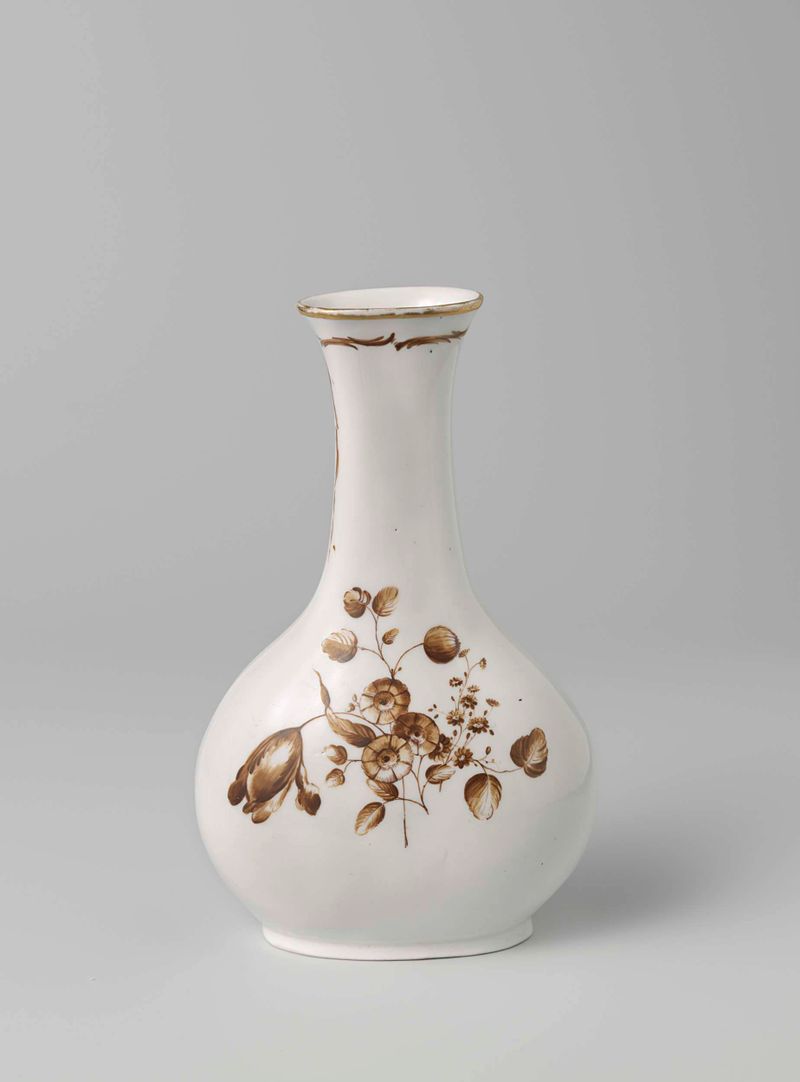
Vaas of jachtfles van beschilderd porselein
Manufacture Oud-Loosdrecht

Geschulpte schotel of bord van beschilderd porselein
Manufacture Oud-Loosdrecht

Koffiekan
Manufacture Oud-Loosdrecht
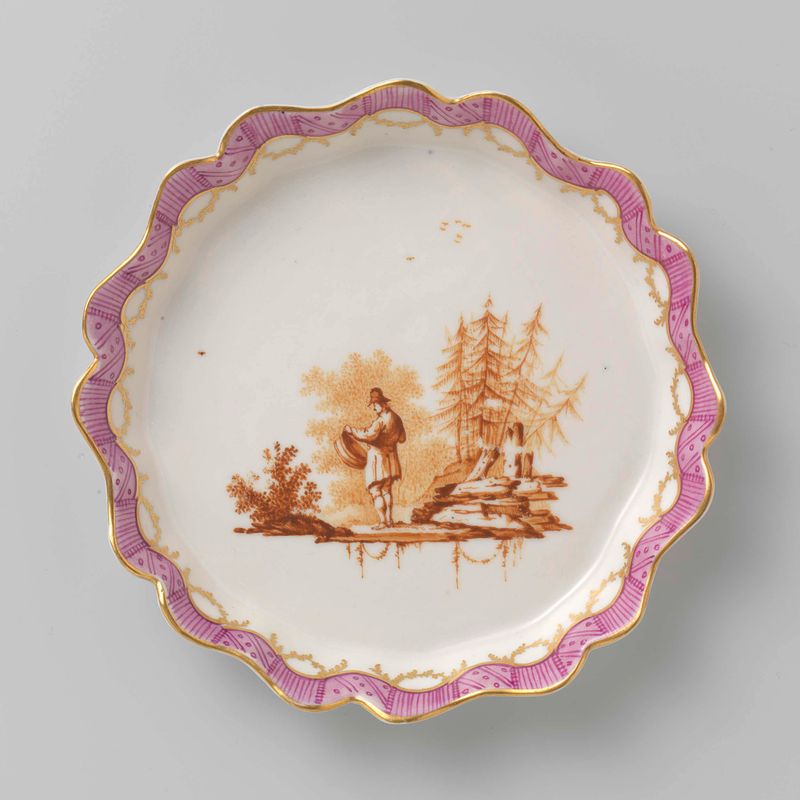
Tea service
Manufacture Oud-Loosdrecht

Schotel, veelkleurig beschilderd bamboe en andere planten op grondje. Kakiemon-decor
Manufacture Oud-Loosdrecht

Vaas beschilderd met parelhoenders in landschap
Manufacture Oud-Loosdrecht

Tea service
Manufacture Oud-Loosdrecht