
Thora Ingebretsdatter Gulsvig — History & Facts
It is the quiet dignity of the figure that first draws the eye in Thora Ingebretsdatter Gulsvig by Adolph Tidemand. The woman stands in profile, her hands gently clasped, her gaze fixed somewhere beyond the frame. Every detail of her traditional costume—embroidered apron, silver brooch, and richly textured bodice—speaks of identity, heritage, and the rituals of daily life.
The muted background serves not just as a stage, but as a deliberate silence, allowing the sitter’s presence and the craftsmanship of her dress to command the viewer’s full attention. Light falls softly across her face and garments, picking out the glint of metal and the subtle folds of fabric, suggesting both the weight and the pride of tradition. Painted in 1848, this work belongs to a period when artists across Scandinavia, including Tidemand, turned their focus to the lives and customs of rural people, seeking to preserve and elevate them in the face of rapid modernization. Portraits like this were often commissioned or collected by those eager to document local identities, or by urban patrons fascinated by the perceived authenticity of country life.
History has kept few traces of Thora Ingebretsdatter Gulsvig herself, but in this image, she stands as both individual and emblem, her presence a bridge to the world of mid-19th-century Norway. Let your eye linger on the careful rendering of her attire—the painting’s true subject may well be the enduring artistry of everyday life.
More Artworks by Adolph Tidemand

Bridal Procession on the Hardangerfjord
Adolph Tidemand
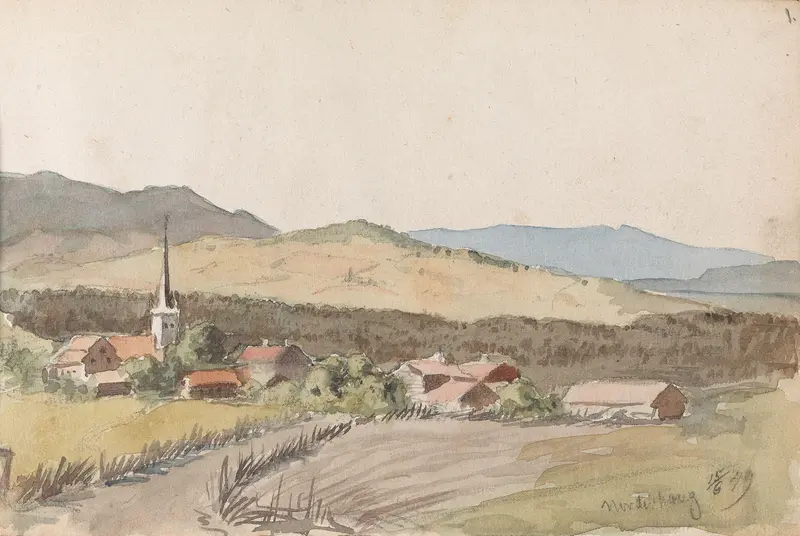
Fra Haugsbygd
Adolph Tidemand
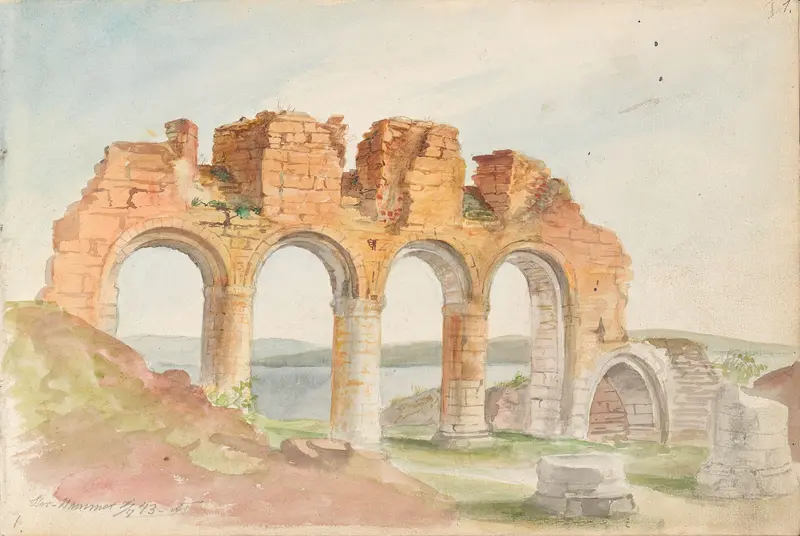
Domkirkeruinen, Hamar
Adolph Tidemand
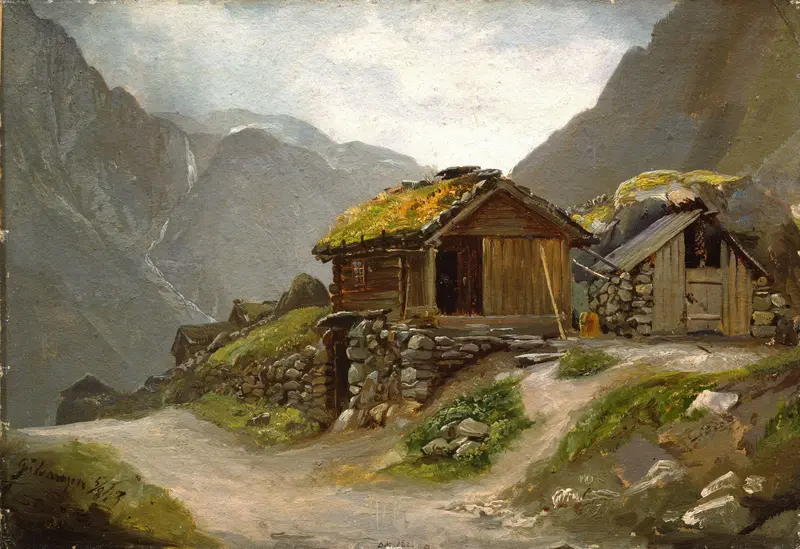
View from Gudvangen
Adolph Tidemand
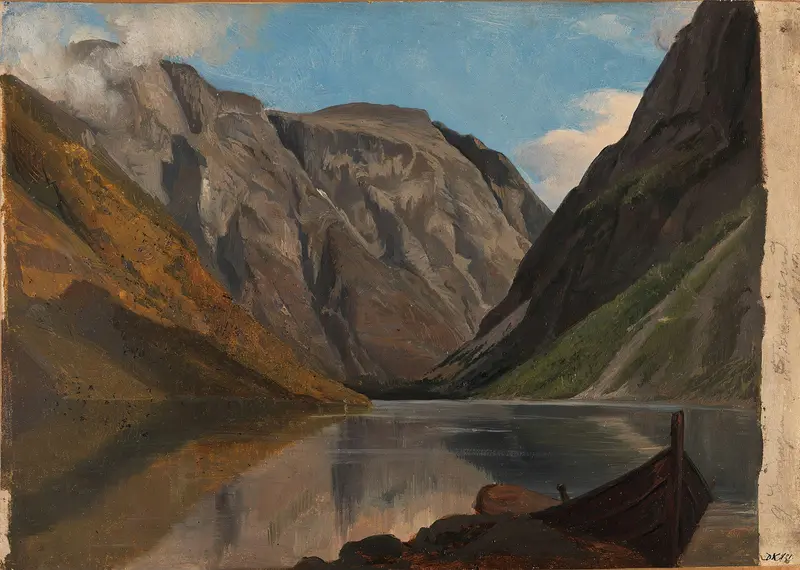
View of Gudvangen
Adolph Tidemand
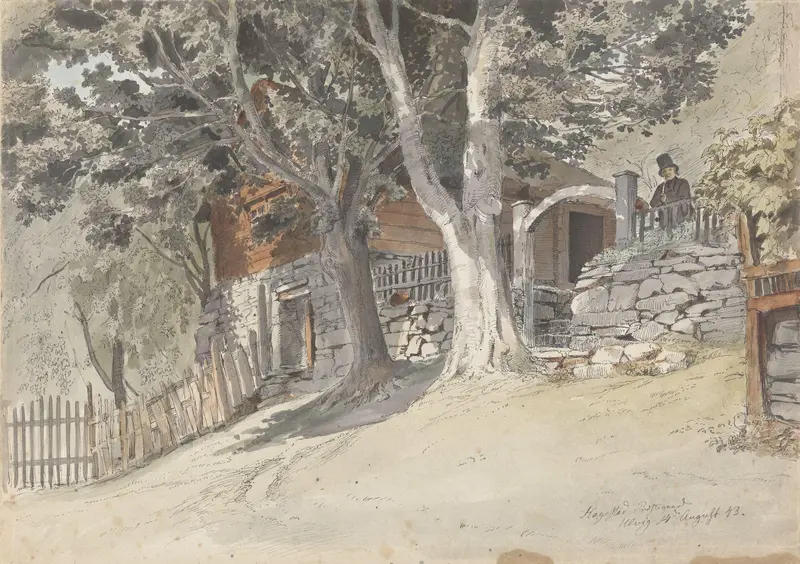
Hagestad prestegård, Ulvik i Hardanger
Adolph Tidemand
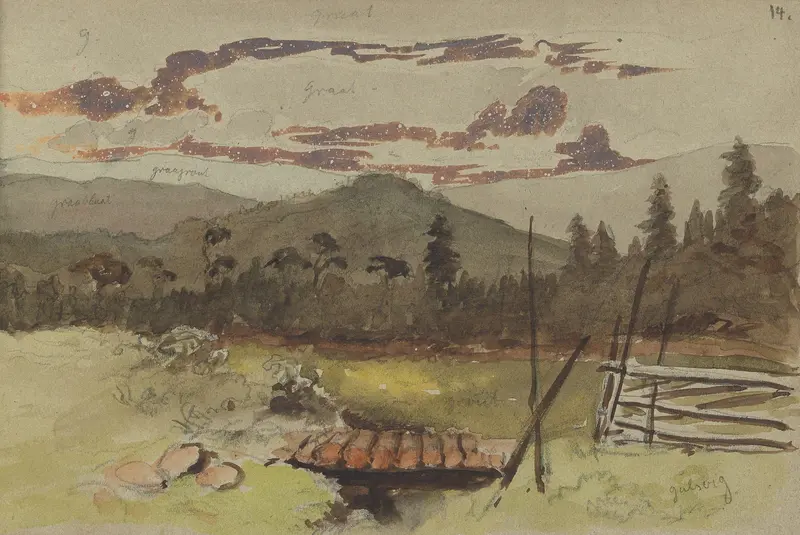
Fra Gulsvik
Adolph Tidemand
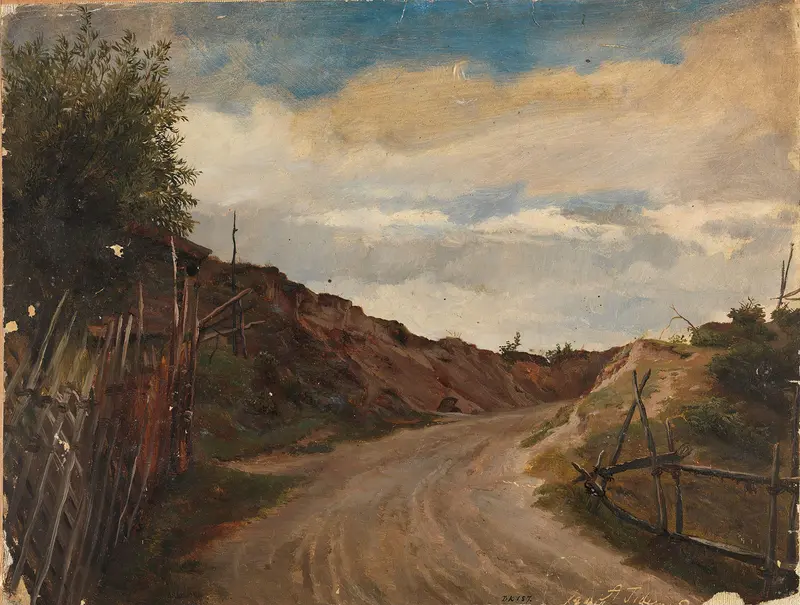
Country Road
Adolph Tidemand
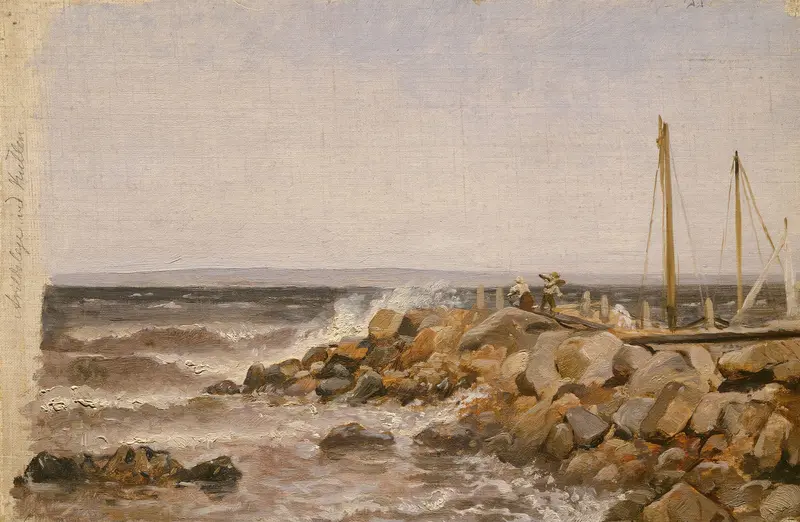
From Kullen in Sweden
Adolph Tidemand
Untitled
Adolph Tidemand





