
Three Peaches on a Stone Plinth — History & Facts
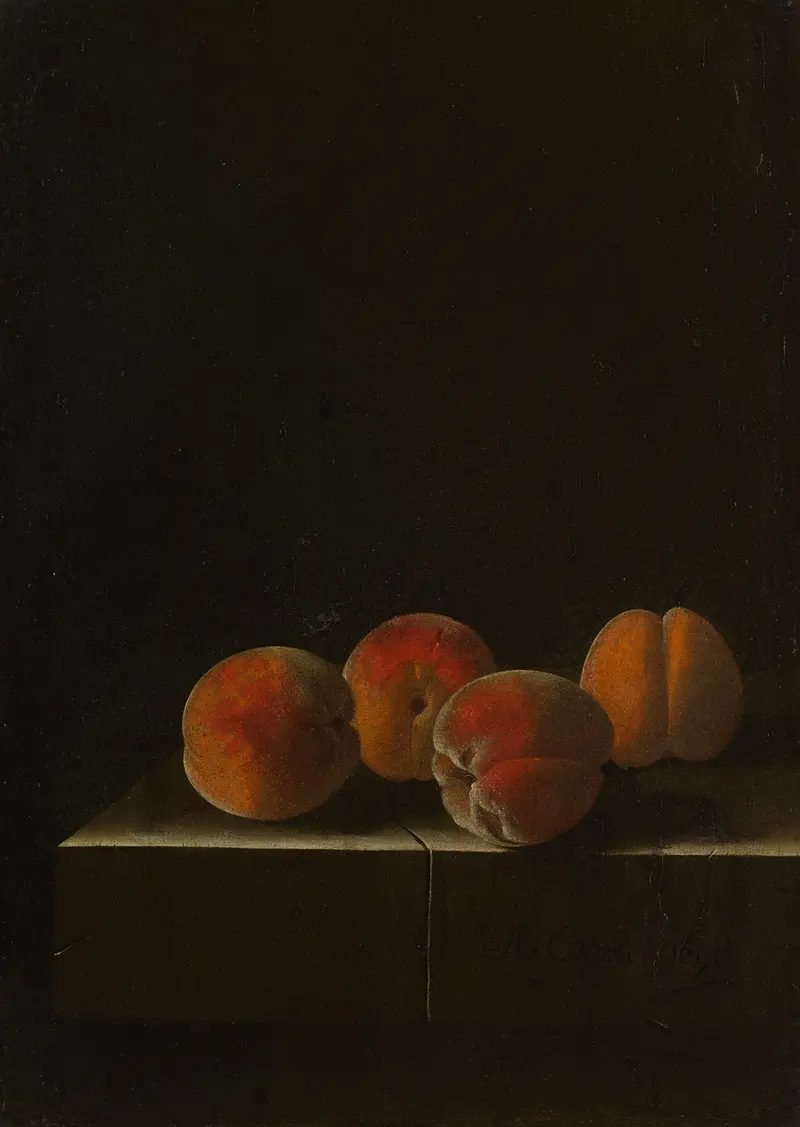
What holds the eye here is not abundance, but restraint: three peaches, arranged with almost mathematical care on a cool stone plinth, each glowing softly against a background as dark as midnight. The fruit is not merely placed, but presented—each curve and blush of red caught in a gentle, raking light that makes the fuzz of their skins almost tangible. The stone ledge anchors them, its edge sharp and unyielding, a silent contrast to the peaches’ fragile ripeness.
The space around them is vast and empty, so that every blemish and dimple becomes a world unto itself, every shadow a quiet drama. The artist’s signature, tucked into the lower left, is a whisper of presence—reminding us that this stillness is deliberate, a moment held in suspense. This painting belongs to the world of late seventeenth- and early eighteenth-century Dutch still life, a genre where painters like Adriaen Coorte found poetry in the humblest of subjects. While grand banquets and overflowing platters dominated the tables of wealthier patrons, works like this—dated 1705 and now in the Rijksmuseum—offered a quieter meditation on nature’s gifts.
Such paintings were often destined for private homes, their simplicity a kind of luxury in itself, reflecting a culture that prized both observation and restraint. Little is recorded about the journeys of this particular work, but its survival invites us to linger, to see how much life can be found in the soft bloom of a peach, set against the hush of a shadowed wall.
More Artworks by Adriaen Coorte
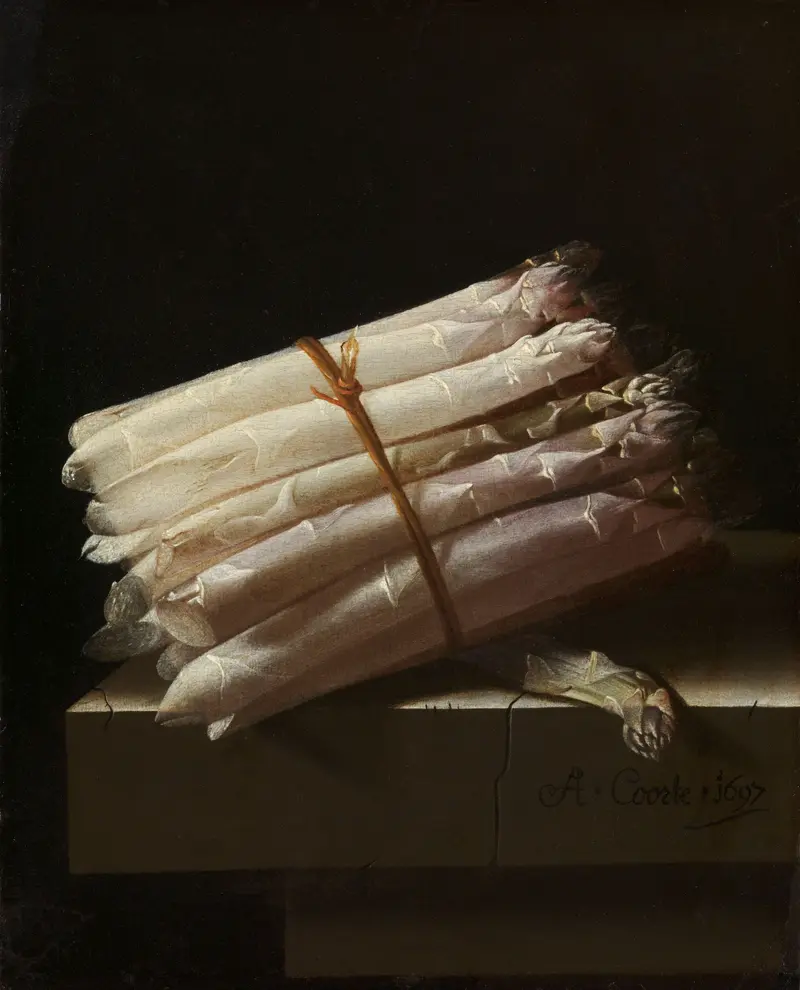
Still Life with Asparagus
Adriaen Coorte
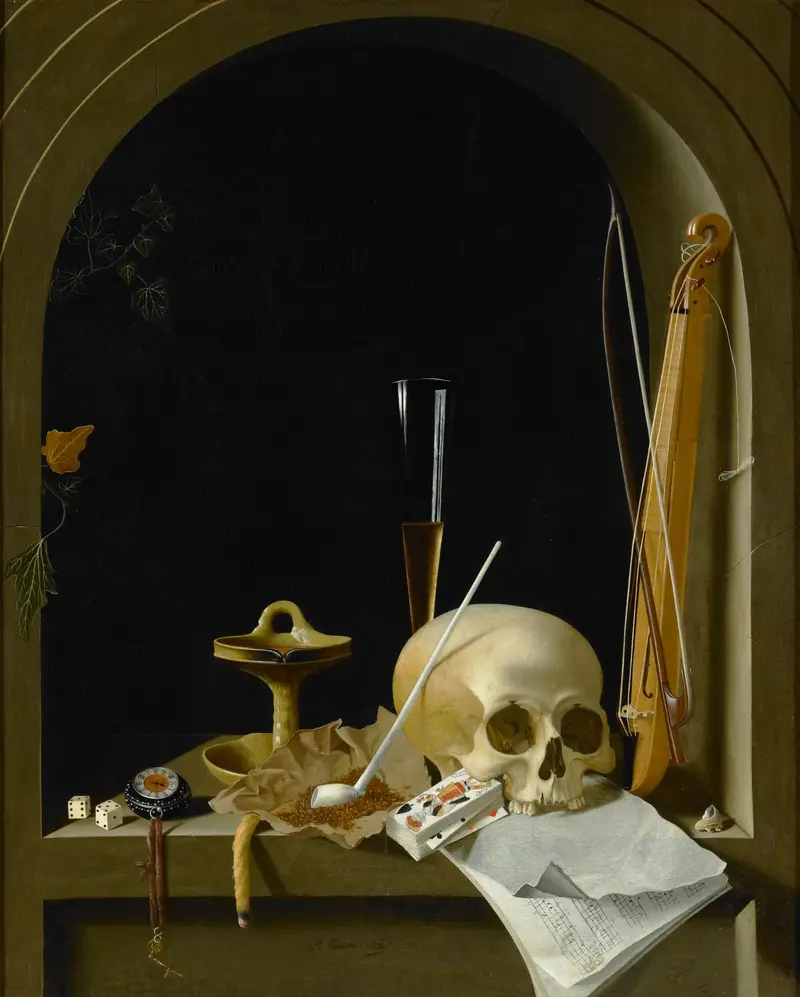
Vanitas still life in a niche
Adriaen Coorte
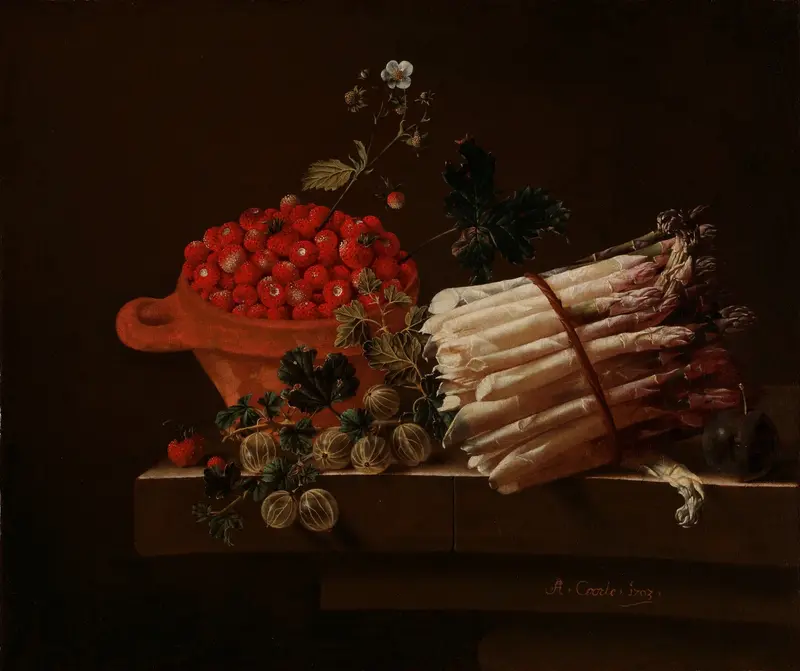
A Pot of Strawberries, Gooseberries, and a Bundle of Asparagus on a Stone Plinth
Adriaen Coorte
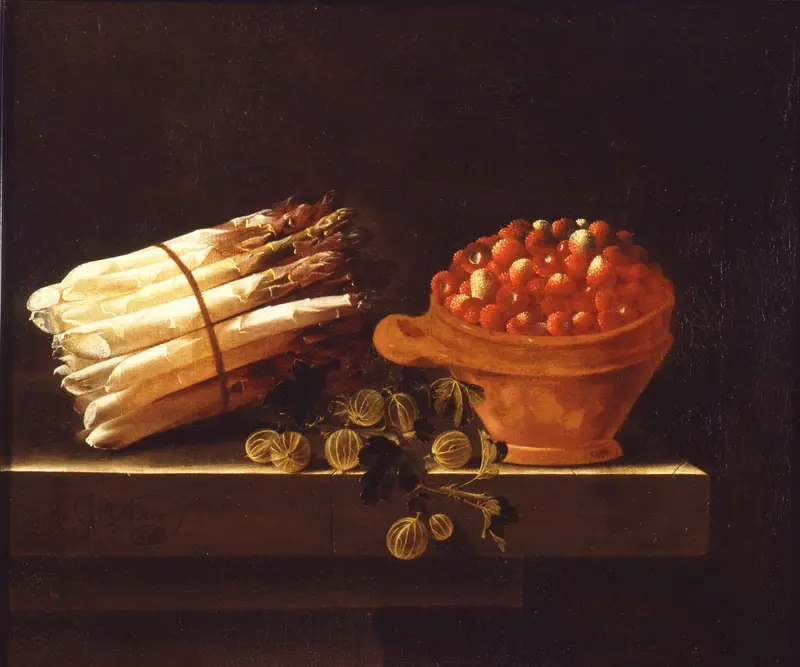
Asparagus, Gooseberries and Strawberries on a Stone Ledge
Adriaen Coorte
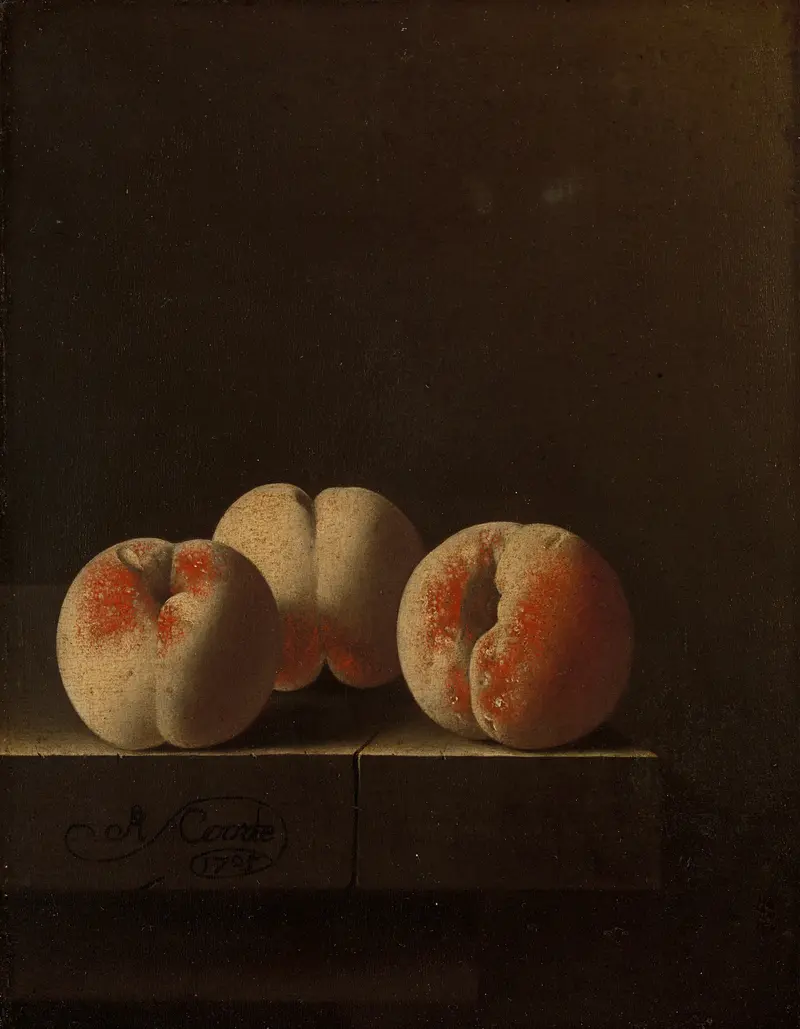
Drie perziken op een stenen plint SK A 5101 Rijksmuseum
Adriaen Coorte
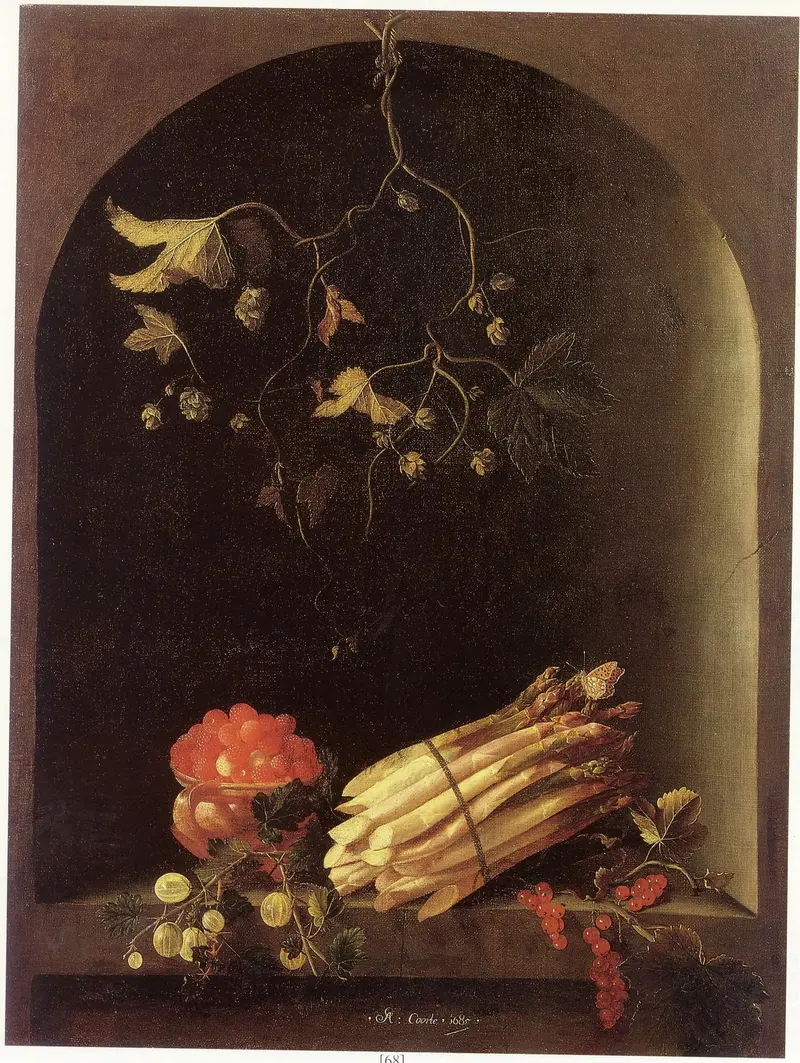
Strawberries, Asparagus, and Gooseberries in a Niche
Adriaen Coorte
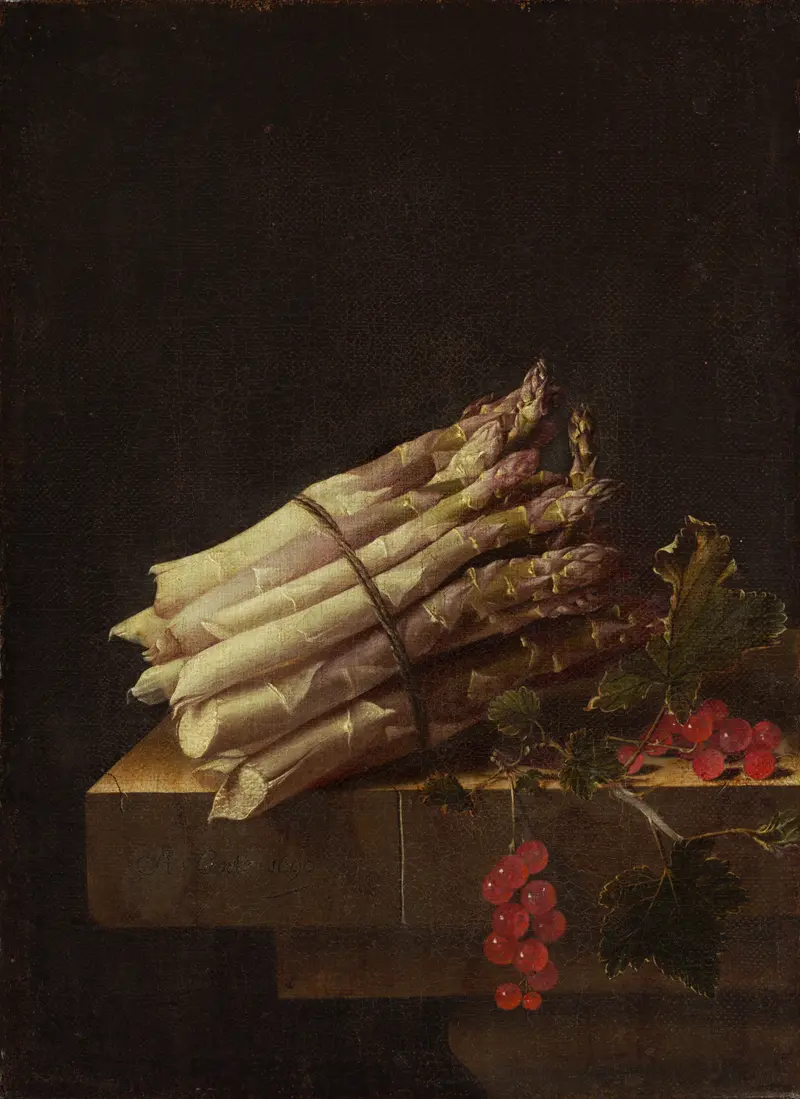
Still Life with Asparagus and Red Currants
Adriaen Coorte
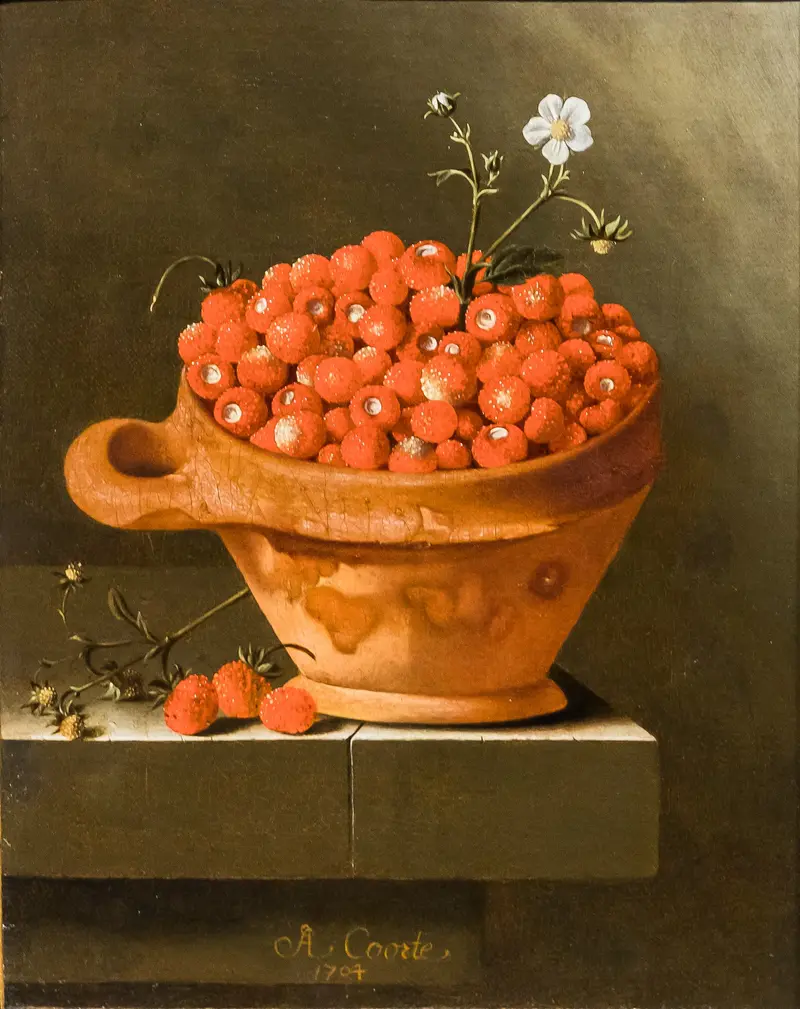
Still life with strawberries in a terracotta pot
Adriaen Coorte
Strawberries, Asparagus, and Gooseberries with a Tablecloth
Adriaen Coorte
Four Apricots on a Stone Plinth
Adriaen Coorte





