
Tortoise Suspended By String — History & Facts
In 1799, the same year that the Edo period’s appetite for the supernatural reached fever pitch, Katsushika Hokusai produced Tortoise Suspended By String, a work that continues to puzzle historians. No one is certain whether it was intended as a study for a larger composition, an illustration for a story, or a stand-alone meditation on fate. What is clear is that Hokusai, already famed for his restless experimentation, here turned his attention to a motif rarely seen in Japanese art: the tortoise, not as a symbol of longevity on solid ground, but dangling in midair, caught between earth and sky. The image captures a moment of tension: a tortoise, its shell rendered with careful attention, hangs from a thin cord tied around its middle.
The animal’s limbs splay outward, and its head strains forward, eyes wide, as if searching for escape or understanding. In Japanese folklore, the tortoise is a creature of wisdom and endurance, often associated with good fortune and the passing of ages. Yet here, suspended and vulnerable, it seems to embody the precariousness of luck itself.
The string, delicate but unyielding, may hint at the invisible threads of fate or the consequences of human intervention in the natural world. Unlike the stately, grounded tortoises in Chinese scrolls or the celebratory creatures in Utagawa Kuniyoshi’s prints, Hokusai’s tortoise is caught in a moment of uncertainty. The original purpose and commission of Tortoise Suspended By String remain unknown, as does its original medium—some scholars suggest ink on paper, others watercolor or even a lost woodblock print. The work is rarely seen in public collections and has not been definitively traced through sales or exhibitions, making its journey through history as enigmatic as its subject.
Within Hokusai’s prolific career, it stands as a testament to his fascination with the odd and the overlooked, a small but telling example of his willingness to challenge both artistic convention and the viewer’s expectations. Today, the image survives mainly in reproductions and catalogues, its meaning still dangling just out of reach.
More Artworks by Katsushika Hokusai

The Great Wave off Kanagawa
Katsushika Hokusai
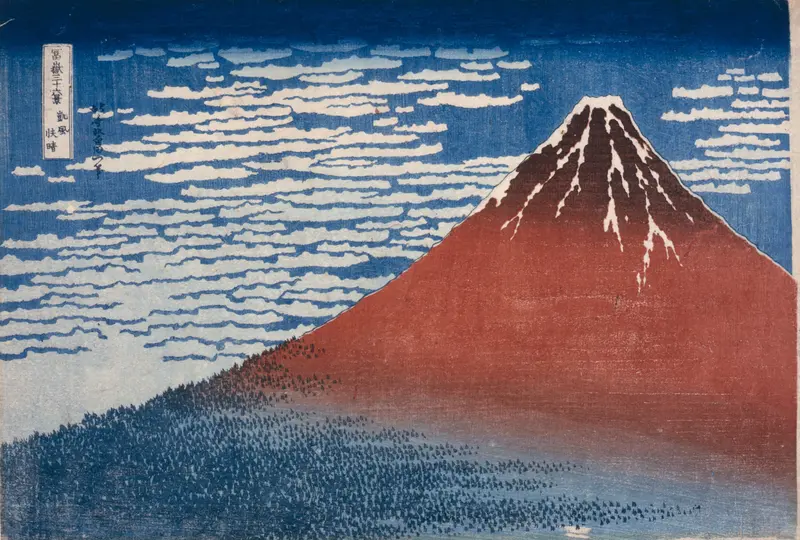
Fine Wind, Clear Morning (Red Fuji)
Katsushika Hokusai
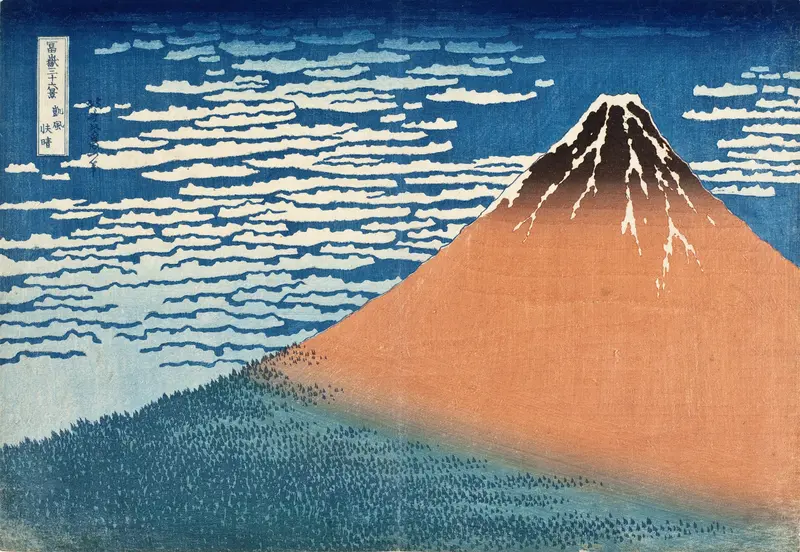
South Wind, Clear Dawn
Katsushika Hokusai
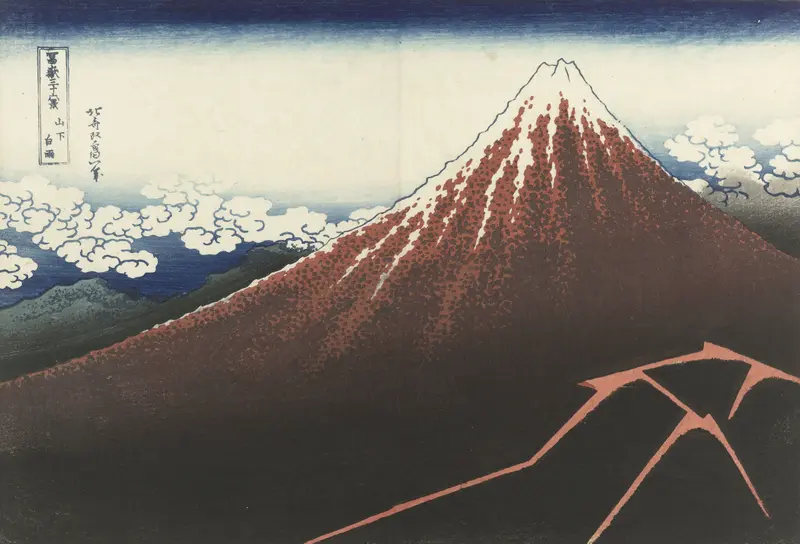
Rainstorm Beneath the Summit
Katsushika Hokusai
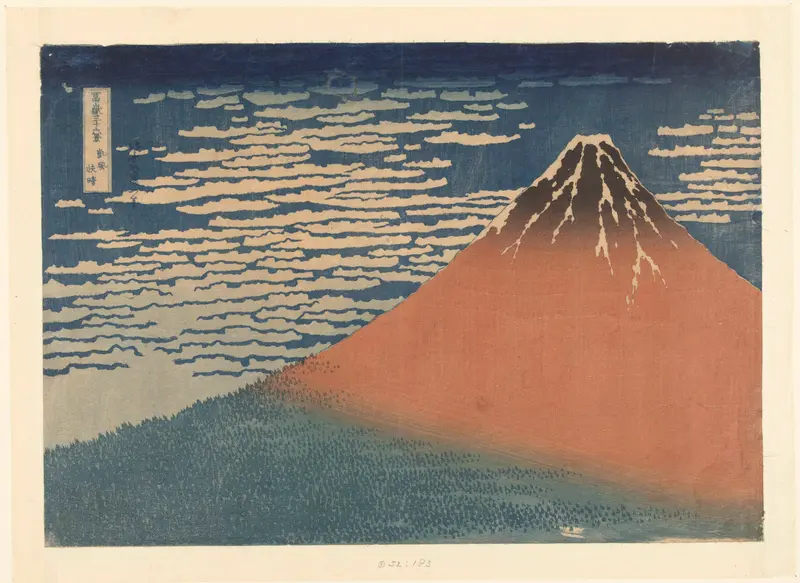
Clear Weather with a Southerly Wind
Katsushika Hokusai
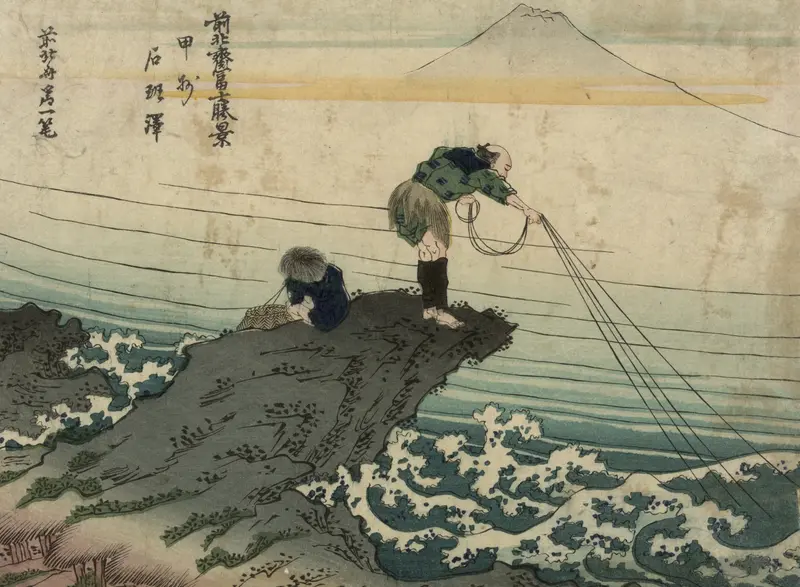
Kōshū kajikazawa
Katsushika Hokusai
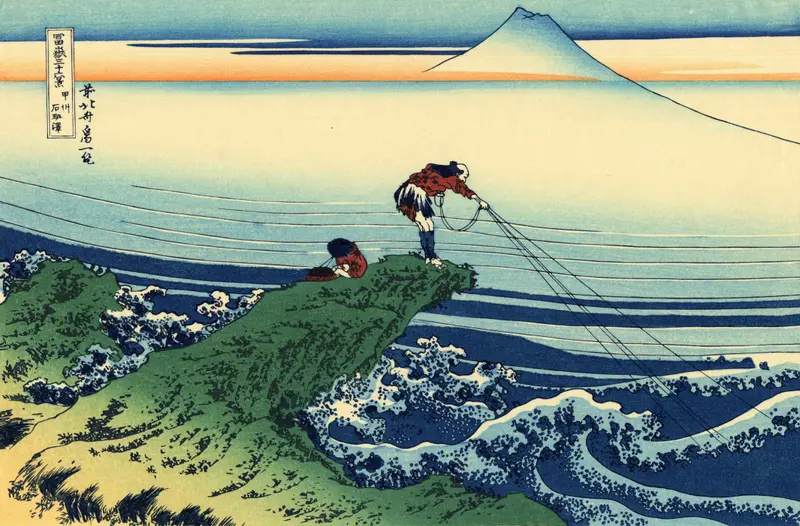
Kōshū kajikazawa 2
Katsushika Hokusai
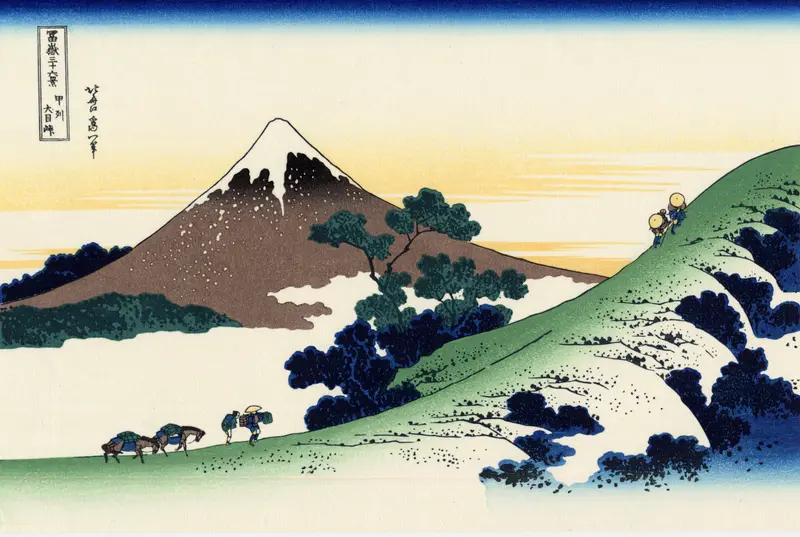
Inume Pass in Kai Province (Kôshû inume-tôge)
Katsushika Hokusai

Yoro Falls in Mino Province (Mino no Yoro no taki), from the series "A Tour of Waterfalls in Various Provinces (Shokoku taki meguri)"
Katsushika Hokusai
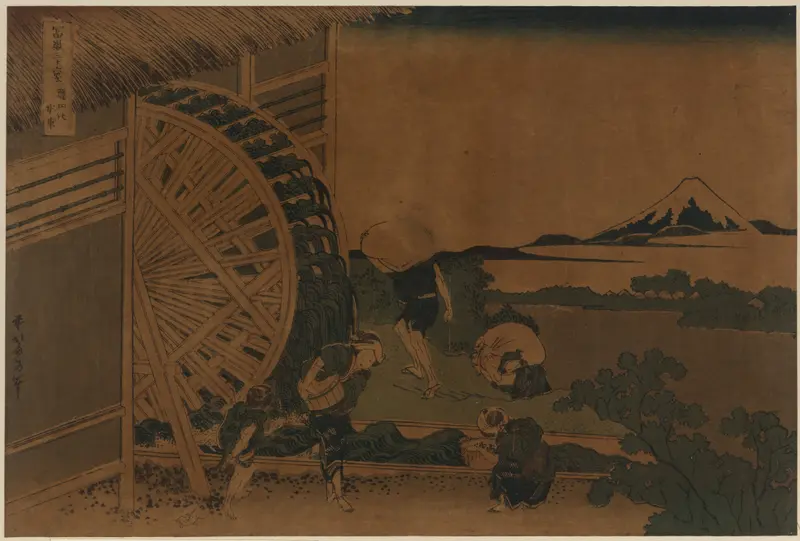
Onden no suisha
Katsushika Hokusai





