
Trinity Gate. — History & Facts
In the stillness of this artwork, an unsettling tension hangs in the air, urging us to confront the darker corners of human experience. The layers of brushstrokes whisper secrets of violence—both seen and unseen—echoing through the tranquil facade. Look to the center where the grand archway stands, a striking focal point drawing your gaze with its majestic yet foreboding presence. The muted earth tones envelop the scene like a shroud, while the soft play of light emphasizes the intricate details of the stonework.
Streaks of darker shades linger in the crevices, hinting at a turbulent past, while the surrounding landscape remains deceptively serene, inviting contemplation. Beneath the surface, emotional tensions unfold with each glance—the juxtaposition of beauty and brutality evident in the landscape's calmness overshadowed by the arch's imposing structure. The contrast between the light illuminating the gate and the shadows creeping at its base evokes a sense of foreboding, suggesting not just a passageway but a threshold to darker truths. What lies beyond is left to our imagination, inviting questions about the stories etched into the stones, the violence that haunts the very air we breathe. In 1815, while residing in the picturesque English countryside, the artist was immersed in a world that oscillated between Romantic ideals and the stark realities of life.
This period followed the tumultuous years of the Napoleonic Wars, during which themes of conflict and loss permeated the cultural landscape. Westall's decision to capture this moment reflects his engagement with Romanticism, seeking to explore the intersection of beauty and darkness in all its forms.
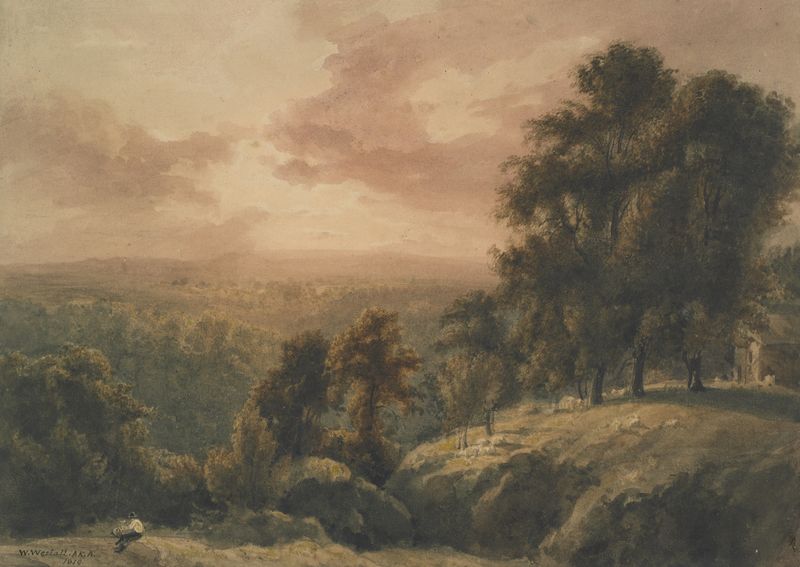
More Artworks by William Westall
Browse all →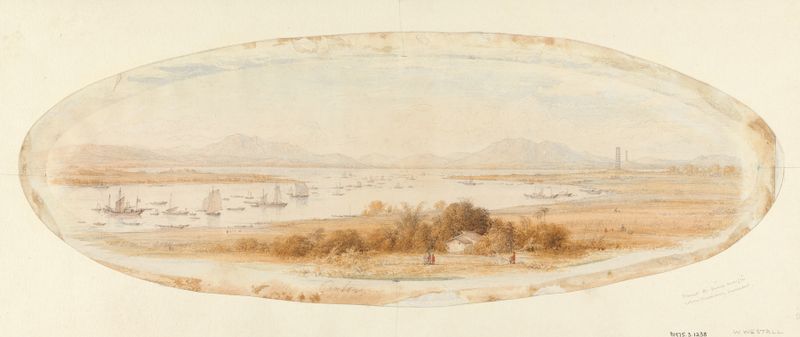

More Architecture Art
Browse all →
The statue of Liberty
Frédéric Auguste Bartholdi

View of Houses in Delft, Known as ‘The Little Street’
Johannes Vermeer

View of Houses in Delft, Known as ‘The Little Street’
Johannes Vermeer

The Cathedral in Rouen. The portal, Grey Weather
Claude Monet

The yellow house
Vincent van Gogh

The Church in Auvers-sur-Oise, View from the Chevet
Vincent van Gogh