Whampoa and the Canton River — History & Facts
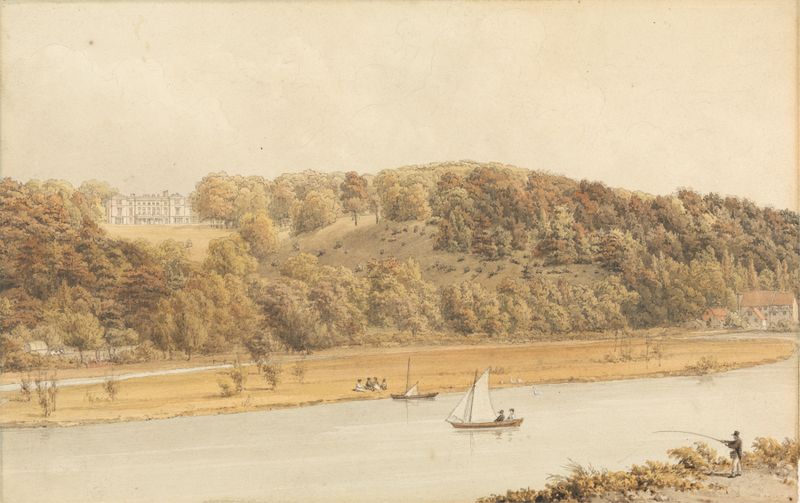
In the stillness of an untouched landscape, the air is thick with unvoiced fears and uncharted territories, as if the brush strokes dare the viewer to confront what lies beneath the surface. Focus on the horizon where the river meets the sky, a merging of blues that evoke a sense of both tranquility and trepidation. Notice the way the soft light dances over the boats gently bobbing in the water, casting elongated shadows that seem to stretch into the unknown. Each vessel, an emblem of exploration, contrasts against the looming, darkened hills in the backdrop.
The palette, dominated by cool hues, elicits a feeling of foreboding, creating a tension between the serene water and the mysterious land beyond. The juxtaposition in this piece reveals layers of complexity—the peaceful river, a mirror of dreams, yet shadowed by the encroaching land that whispers of danger and the fear of what lies ahead. The meticulously rendered foliage suggests both life and potential peril, hinting at the duality of nature as a nurturing force and a fierce adversary. This interplay evokes a profound contemplation on the human spirit's desire to explore, even when faced with the uncertain. In the mid-19th century, while painting this work in England, the artist found himself amidst a burgeoning interest in landscape and the sublime, reflective of a society both captivated and anxious about the unknown.
Westall, having already established his reputation through various travels and exhibitions, painted Whampoa and the Canton River in 1845, at a time when the world was expanding in both knowledge and colonial ambition.