
Triumph of Stoffel Brinkerhoff, on His Return from His Conquests in the East — History & Facts
When did color learn to lie? In the hands of the skilled, it can convey a story that belies its hues, drawing the viewer into a world of aspiration and achievement. Focus on the central figure, Stoffel Brinkerhoff, clad in vibrant attire that speaks to his triumph. Notice how the rich reds and golds of his garments contrast sharply with the muted blues and greens of the landscape behind him. The dynamic brushwork captures the movement of his outstretched arm, inviting the viewer to share in his victorious moment, while the surrounding figures—each painted with meticulous attention to detail—reveal reactions ranging from awe to admiration. As you explore the composition further, pay attention to the interplay of light and shadow, which heightens the emotional resonance of the gathering.
The bright sunlight illuminates Brinkerhoff's face, signaling not just a hero's return but a deeper commentary on the ambition of man against the backdrop of the unknown. The hesitancy of those surrounding him, their varied postures, subtly hints at the complexities of conquest—victory is not without its burdens and uncertainties. Created in 1835, this work emerged during a period when American art was striving for recognition. Chapman, who lived and painted in Washington, D.C., sought to elevate historical themes within his art, reflecting the nationalistic fervor of the time.
His ambitious portrayal of Brinkerhoff's return serves not only as a celebration of individual achievement but also as a commentary on America's growing identity amid its evolving artistic landscape.
More Artworks by John Gadsby Chapman
Browse all →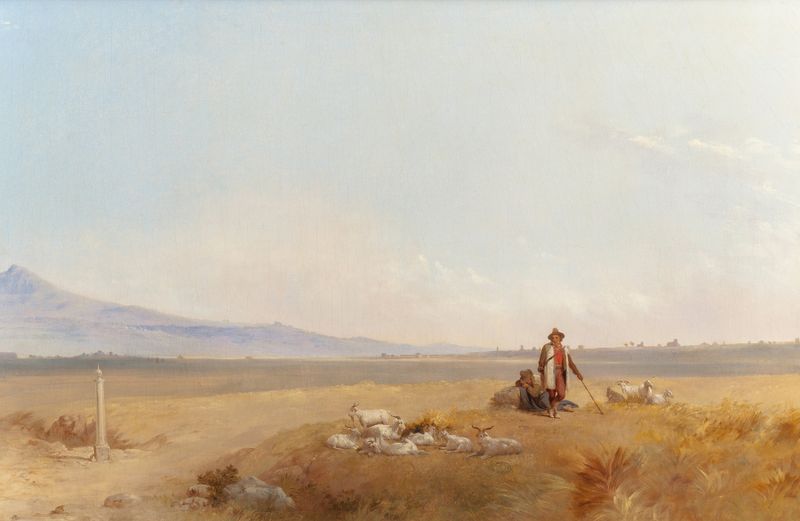

More Historical Art
Browse all →
The Night Watch Militia Company of District II under the Command of Captain Frans Banninck Cocq
Rembrandt van Rijn

Lincoln Memorial
Henry Bacon

The Third of May 1808
Francisco de Goya

Isaac and Rebecca, Known as ‘The Jewish Bride’
Rembrandt van Rijn

The Charge of the Mamelukes (1814)
Francisco de Goya

De vier ruiters van de apocalyps
Albrecht Dürer