Tulip Fields — History & Facts
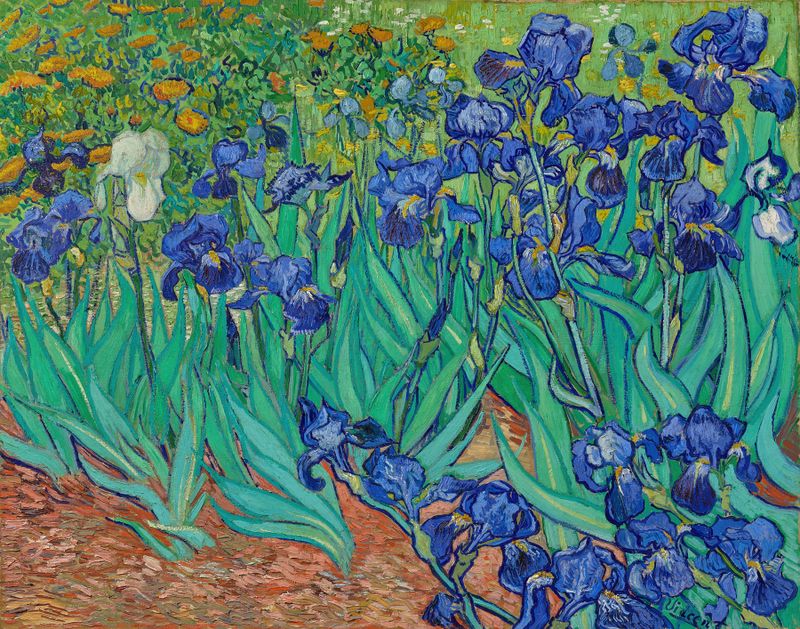
In Tulip Fields, the delicate blooms stand tall, yet a deeper tension simmers beneath their vibrant colors. This artwork serves as both a celebration and a poignant reminder of the fragility of beauty, hinting at the betrayal that often underlies nature’s allure. Focus your attention on the left side, where a riot of colors emerges. The reds, yellows, and purples of the tulips create a stunning tapestry that draws the eye inward.
Notice how the brushstrokes dance across the canvas with an almost reckless abandon, yet they coalesce into a symphony of form and light. The interplay between shadow and brightness evokes a sense of movement, suggesting that the fields are alive — not just with flowers, but with stories waiting to be unearthed. Look closely at the subtle depiction of wilted petals mingling with their vibrant companions. This juxtaposition reveals a hidden narrative: the inevitable decay that follows beauty, a reminder of mortality lurking among the lively colors.
As one contemplates the lush landscape of tulips, the emotional undercurrent of betrayal becomes evident — the confident blooms deceive the viewer, promising eternal vibrance while concealing their fleeting existence. Painted during the peak of his career in the late 1930s, the artist was influenced by the burgeoning movement of Expressionism in Europe, reflecting a blend of hope and disillusionment in a world on the brink of war. In this era of rapid change and uncertainty, Tulip Fields encapsulates not just the essence of nature but also the artist's own confrontation with the beauty and betrayal intrinsic to life and art alike.