Tulip Fields — History & Facts
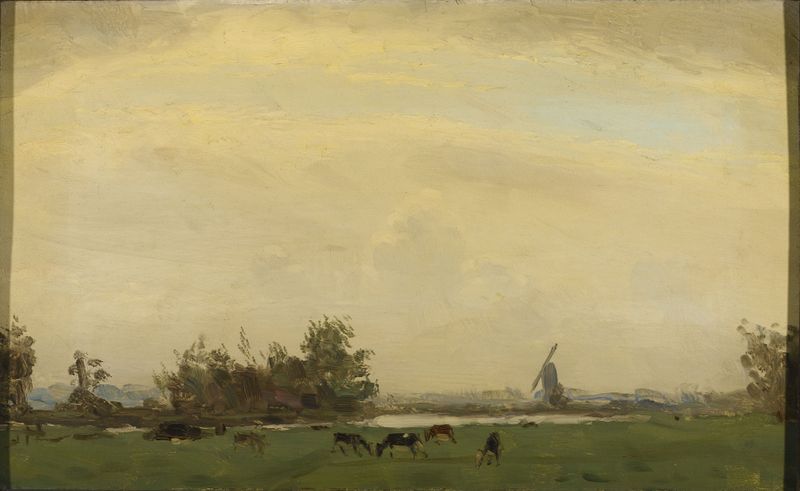
In the vibrant embrace of nature, ecstasy and melancholy intertwine, revealing the complex emotions that flowers evoke in the human spirit. Look to the foreground, where a tapestry of tulips bursts forth in every hue imaginable. The artist’s brushwork almost dances across the canvas, capturing the delicate petals as they sway in a gentle breeze, each stroke infused with life. Notice how the sunlight bathes the flowers, lending them a luminous quality that seems to pulsate with energy, while the darker shadows invite contemplation, creating an emotional interplay between joy and sorrow. As you gaze deeper, observe the subtle gradations in color, a testament to the ephemeral nature of beauty.
There is a tension in the juxtaposition of vibrant blooms against the muted background, suggesting both the transience of life and the fleeting moments of happiness that we grasp at so desperately. The lush tulips, though stunning, serve as a reminder that the most radiant joys can carry an undercurrent of pain, echoing the cycles of existence. Gerrit Willem Dijsselhof painted this work between 1890 and 1922, a time marked by significant transitions in both his life and the art world. Living in the Netherlands, he was part of the vibrant artistic movements exploring impressionism and symbolism.
During these years, the Netherlands was grappling with modernity, and artists like Dijsselhof sought to capture not just the beauty of the world but also the complex emotions that accompany it.