Twee bokken — History & Facts
In a world on the brink of transformation, moments of beauty often conceal layers of turmoil and change. The stillness in Twee bokken beckons us to uncover the silent stories woven into its pastoral charm. Focus your gaze upon the two goats at the center of the composition, their forms rendered with remarkable detail against a sun-drenched landscape. Notice how the soft, muted colors harmonize with the gentle brushwork, creating an atmosphere that feels both tranquil and vibrantly alive.
The delicate play of light captures the texture of their fur, while the lush grass beneath them invites you to feel the earthiness of the scene. The goats, seemingly at peace, stand as a quiet testament to nature’s resilience amidst the shifting tides of human affairs. Delve deeper, and you’ll uncover a subtle contrast: the idyllic serenity of the moment juxtaposed with the era's undercurrents of revolution and change. The goats symbolize both freedom and the fragility of existence, hinting at the socio-political tensions brewing in the Netherlands during this period.
It’s a reminder that even in peaceful settings, the world outside is rife with conflict, an unsettling tension held within the tranquil beauty of the landscape. During the years spanning 1648 to 1652, the artist was engaged in a prolific period marked by the end of the Eighty Years' War. The peace treaty had just been signed, yet the art world was in flux, with new styles and ideas emerging. This painting reflects a moment of pause, capturing the essence of a society on the brink of redefinition, while Berchem himself navigated the evolving landscape of Dutch art and its growing emphasis on pastoral and natural themes.
More Artworks by Nicolaes Pietersz Berchem
Browse all →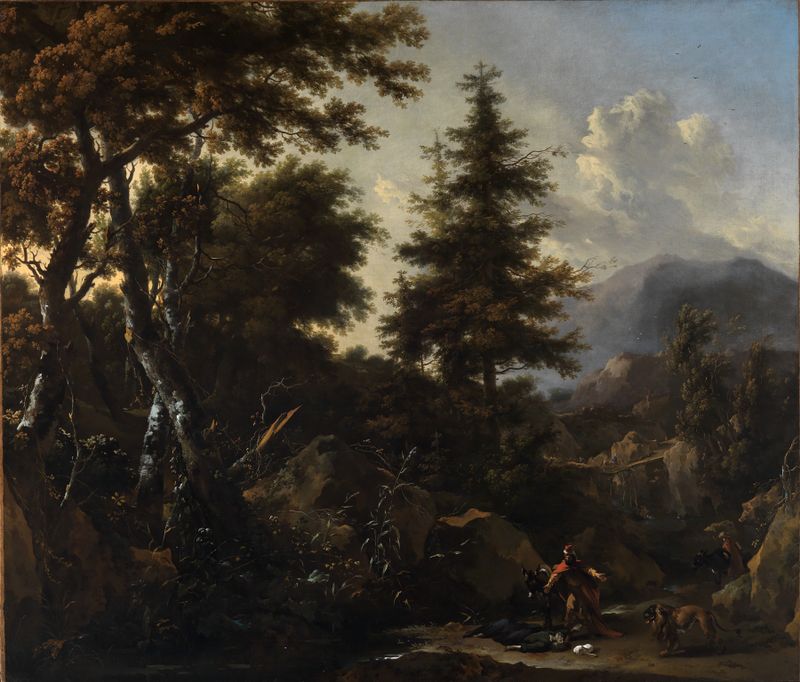
Schlucht im Bergwald mit alttestamentlicher Staffage
Nicolaes Pietersz Berchem
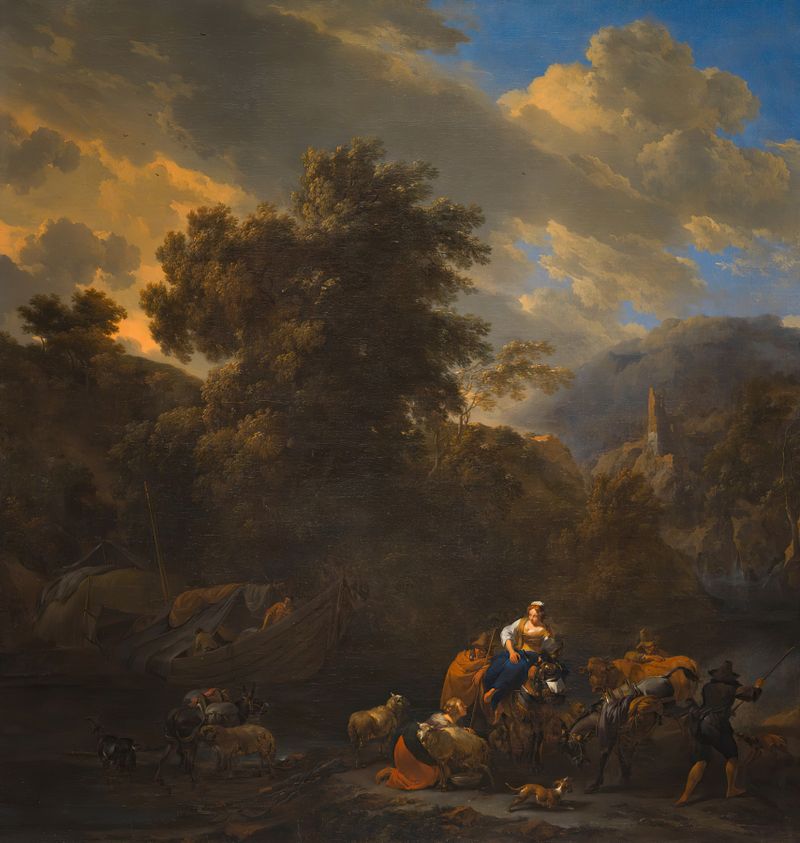
Italianate Landscape with Figures and Pack Animals on the Banks of a River
Nicolaes Pietersz Berchem
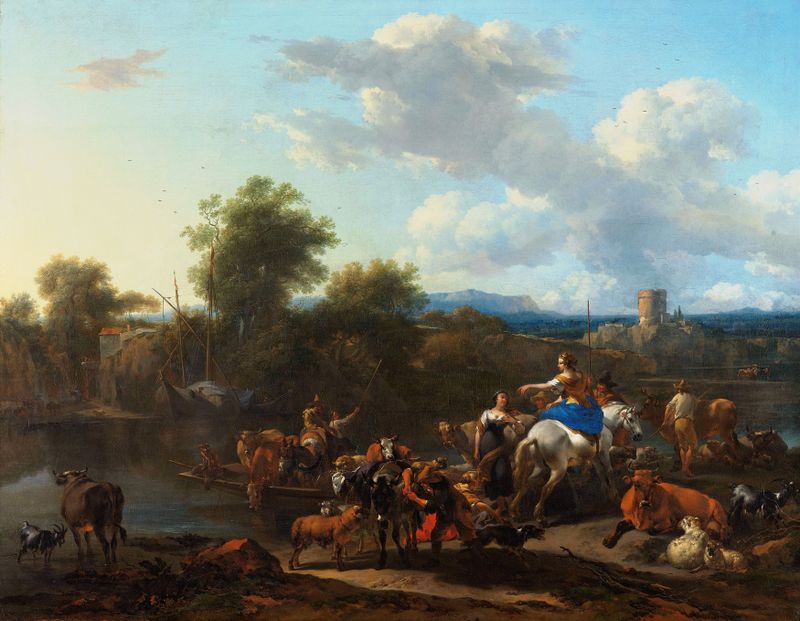
The Cattle Ferry
Nicolaes Pietersz Berchem
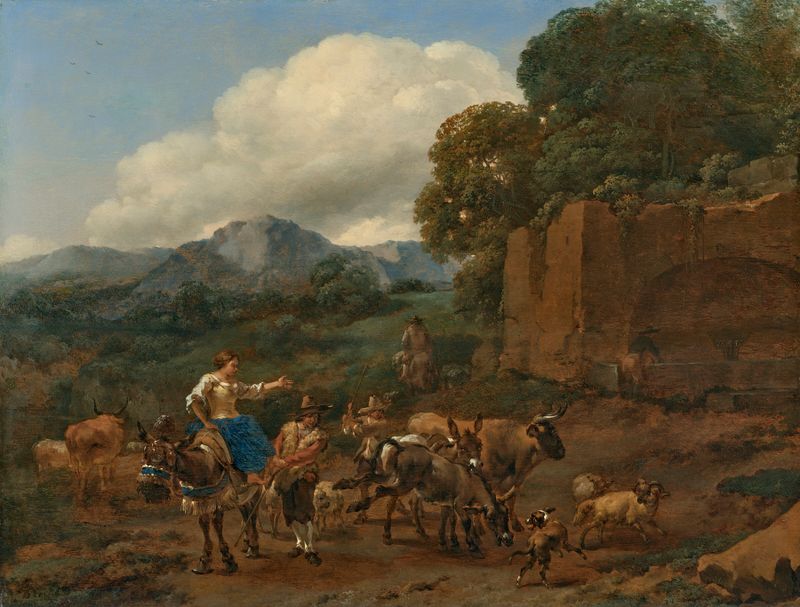
An Italianate landscape with a shepherdess on a mule and a shepherd, herding cattle, sheep, donkeys and dogs on a mountain track next to ruins
Nicolaes Pietersz Berchem
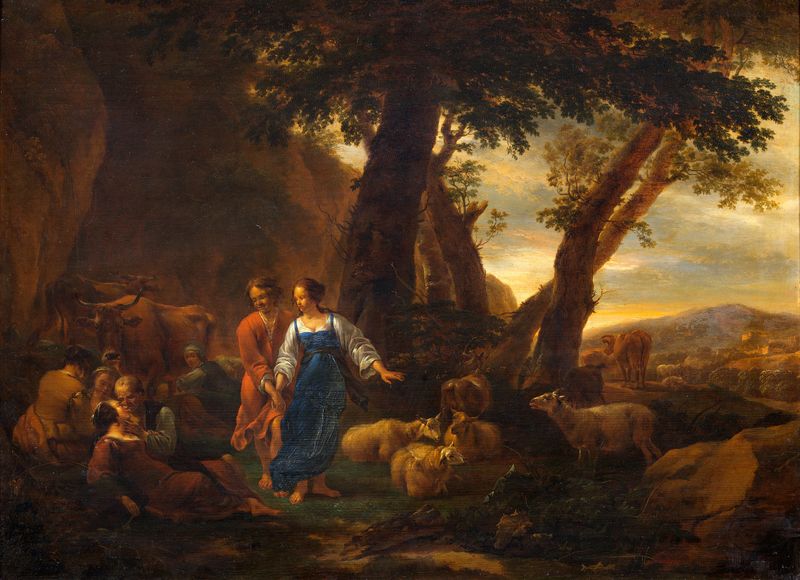
Landscape with Peasants and Cattle
Nicolaes Pietersz Berchem
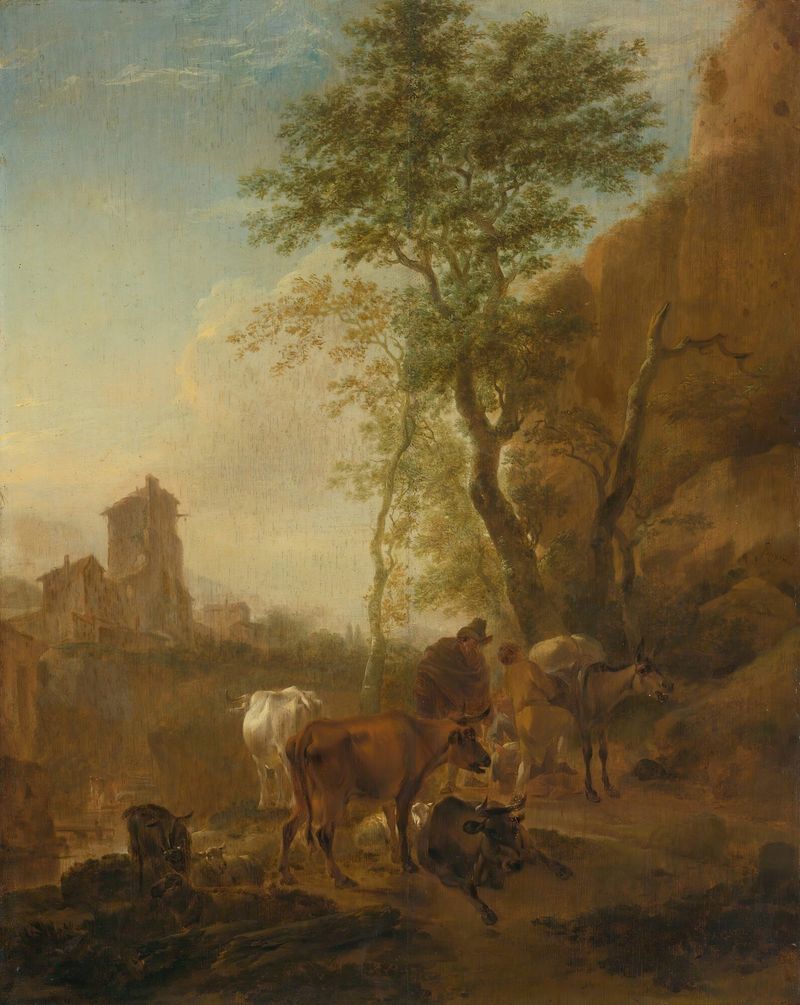
Italianate Landscape With Cows
Nicolaes Pietersz Berchem
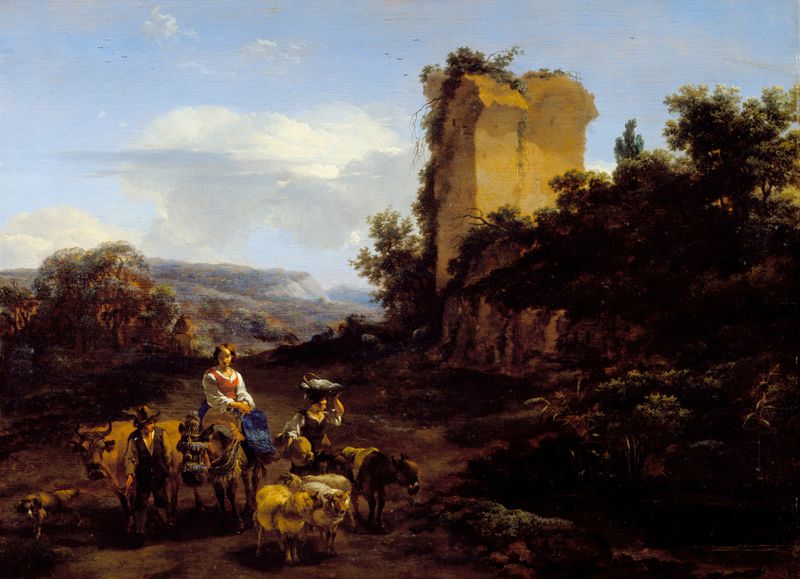
Landscape with Ruins and Travelers
Nicolaes Pietersz Berchem
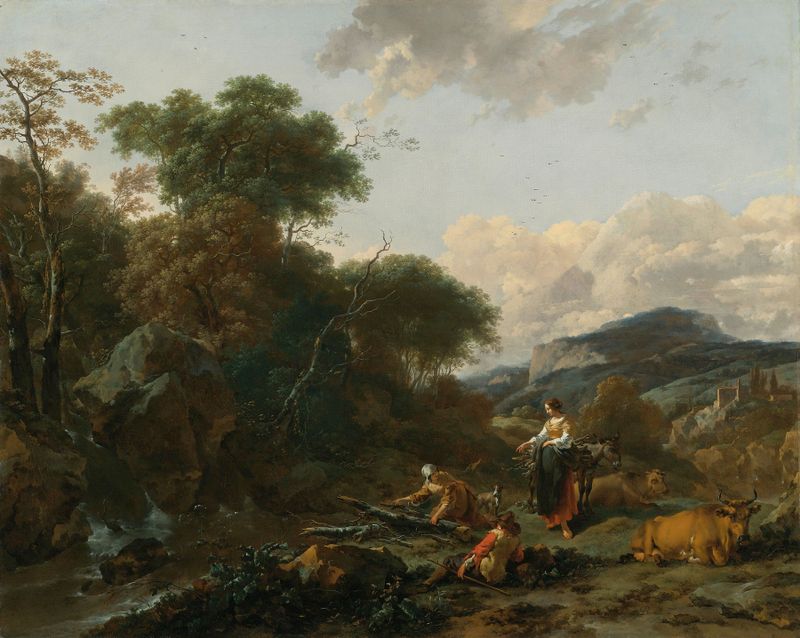
A Landscape With Figures
Nicolaes Pietersz Berchem
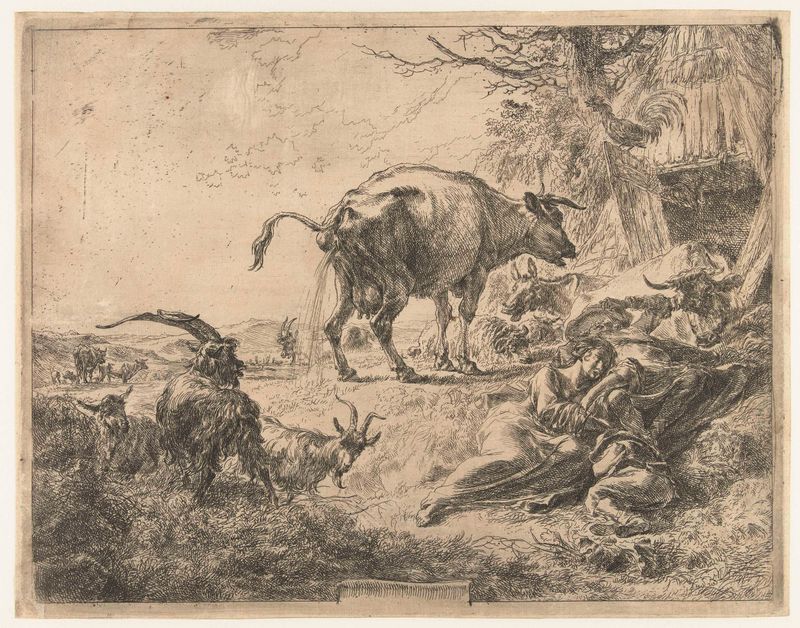
Slapende herdersfamilie en rustend vee
Nicolaes Pietersz Berchem
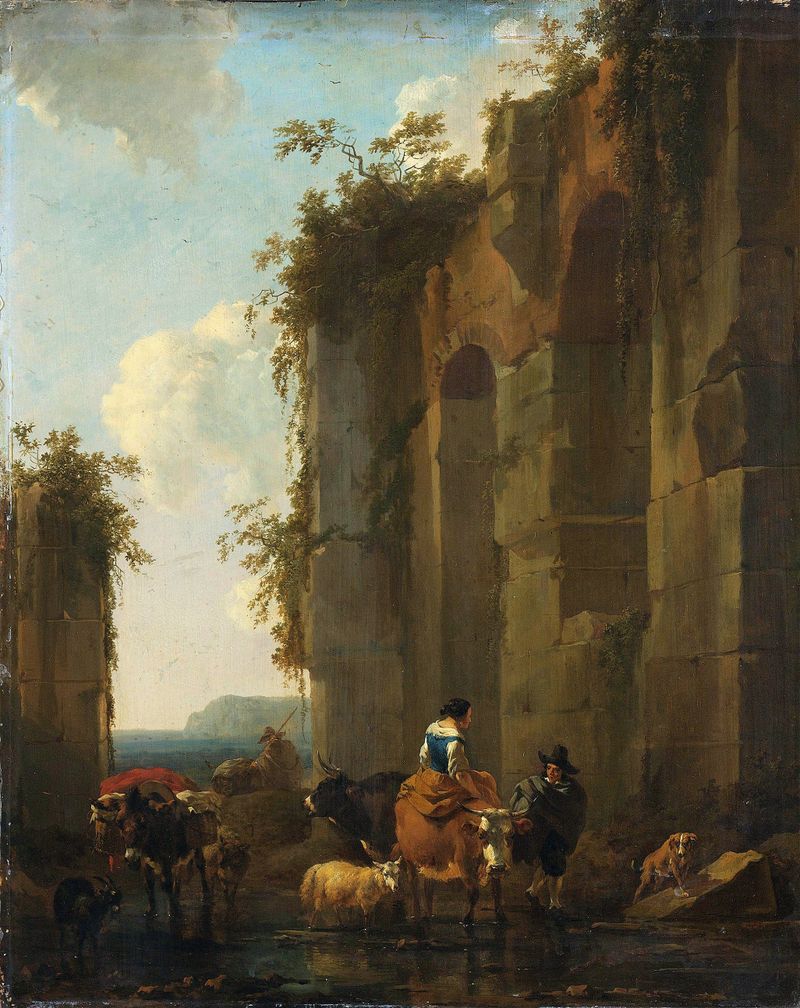
Ruins in Italy
Nicolaes Pietersz Berchem