Twee geiten — History & Facts
Who listens when art speaks of silence? In Twee geiten, the quietude of a pastoral landscape invites introspection and a sense of emptiness that resonates deeply within the viewer. Look to the foreground where two goats, seemingly frozen in time, embody the stillness of the moment. Their fur is rendered with delicate brushstrokes, contrasting beautifully with the verdant backdrop that flutters softly under the golden light. Notice how the gentle strokes convey texture and warmth, while the subtle color palette evokes a serene atmosphere, allowing the viewer to feel the tranquility that envelops the scene. This work encapsulates the tension between presence and absence.
While the goats are alive and animated in their space, the surrounding landscape remains devoid of human presence, suggesting a peaceful solitude. The horizon stretches infinitely, hinting at an untold story beyond the frame. The choice of light—filtered and soft—imparts a sense of time suspended, where every breath and every moment feels significant yet transient. Created between 1648 and 1652, this piece emerged during Berchem's prolific years in the Dutch Golden Age, a time when landscapes flourished alongside genre scenes.
Living in Haarlem, Berchem was inspired by the natural world and often infused his works with a sense of serenity and pastoral charm. This period marked a shift in artistic focus, as artists began to explore the beauty of everyday life and the allure of the rural landscape, making this painting a phenomenal representation of the evolving art scene of his time.
More Artworks by Nicolaes Pietersz Berchem
Browse all →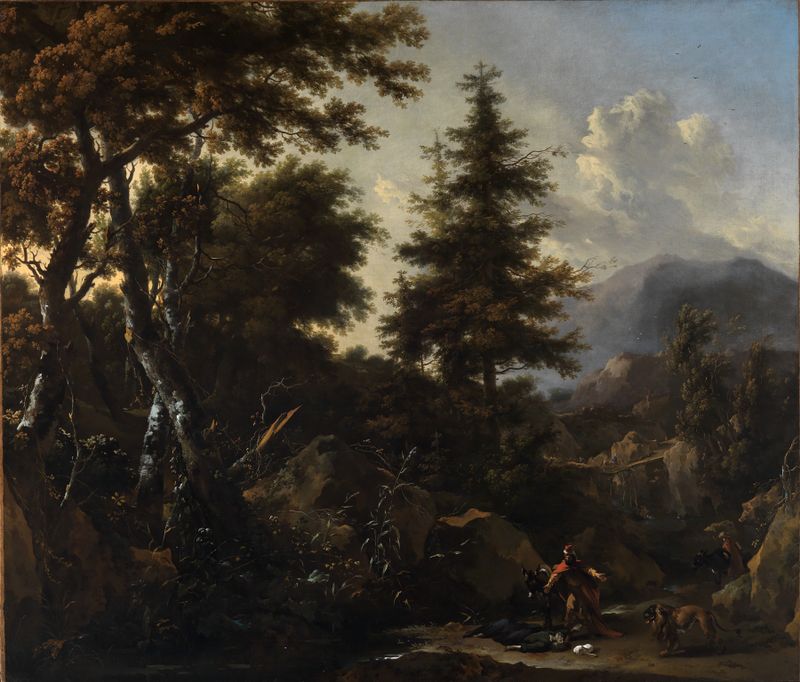
Schlucht im Bergwald mit alttestamentlicher Staffage
Nicolaes Pietersz Berchem
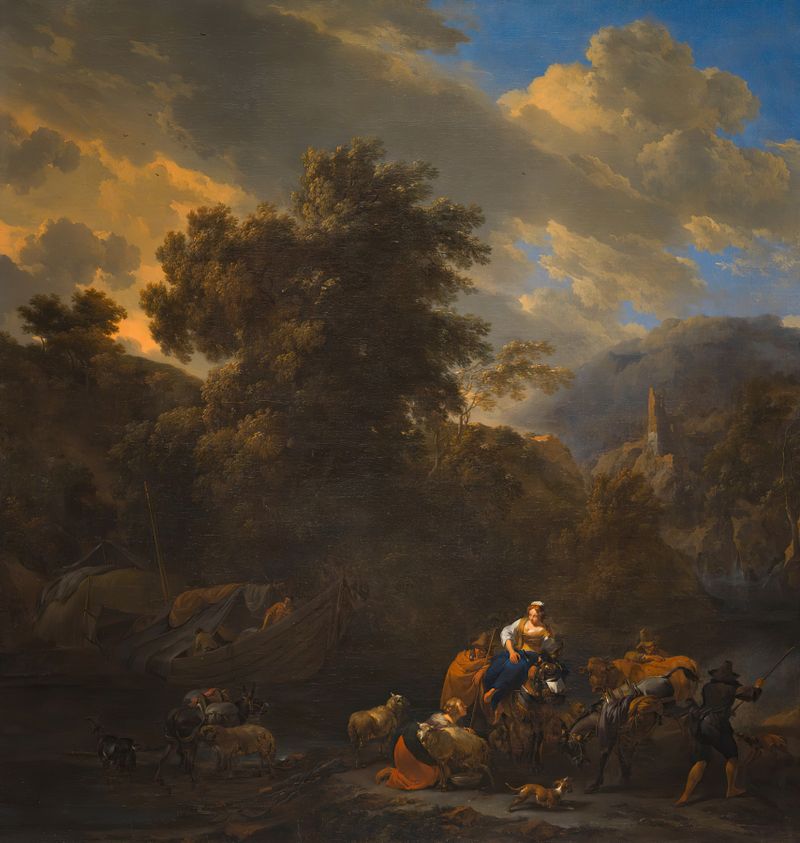
Italianate Landscape with Figures and Pack Animals on the Banks of a River
Nicolaes Pietersz Berchem
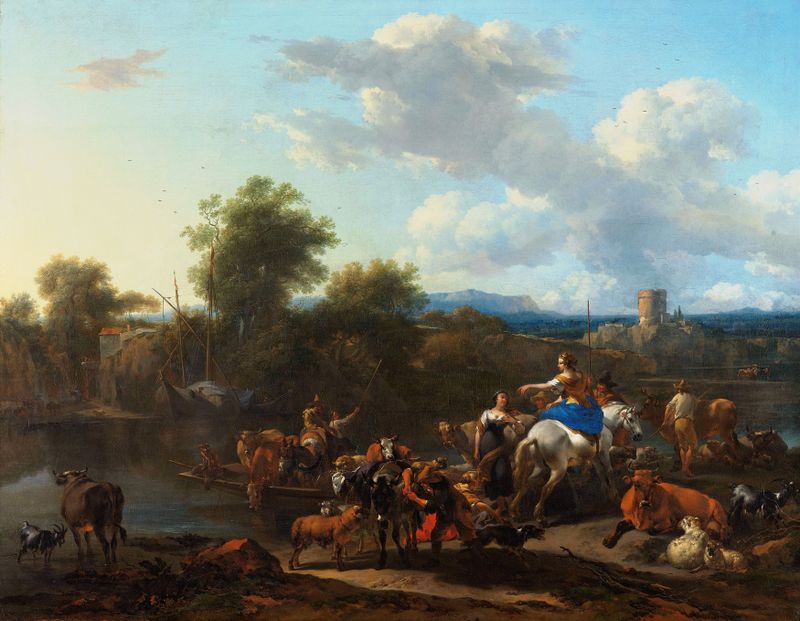
The Cattle Ferry
Nicolaes Pietersz Berchem
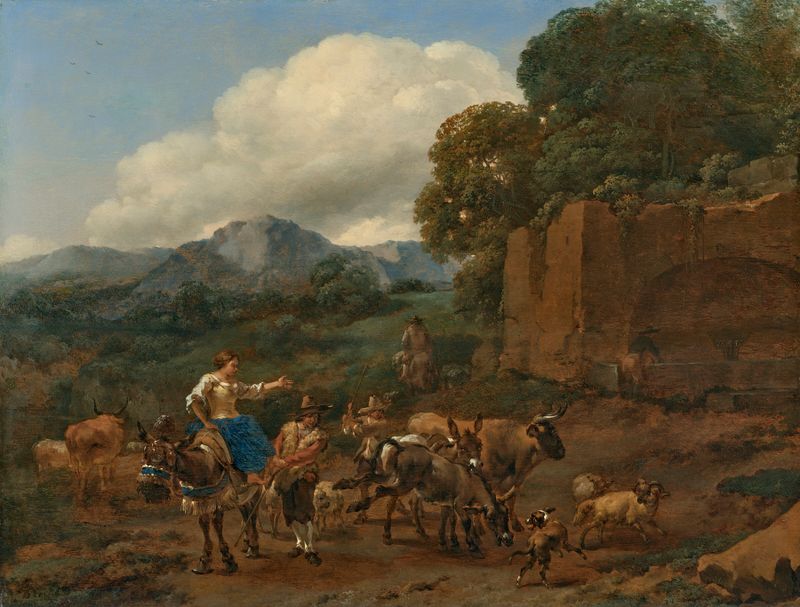
An Italianate landscape with a shepherdess on a mule and a shepherd, herding cattle, sheep, donkeys and dogs on a mountain track next to ruins
Nicolaes Pietersz Berchem
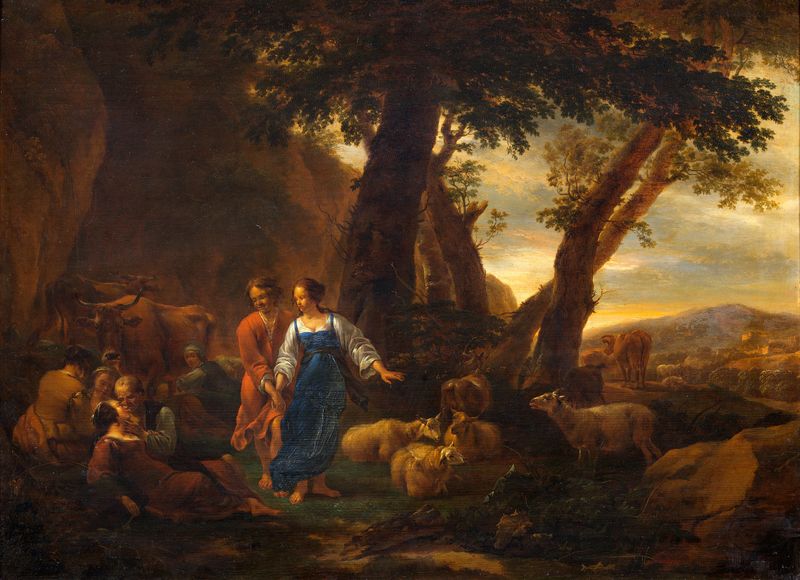
Landscape with Peasants and Cattle
Nicolaes Pietersz Berchem
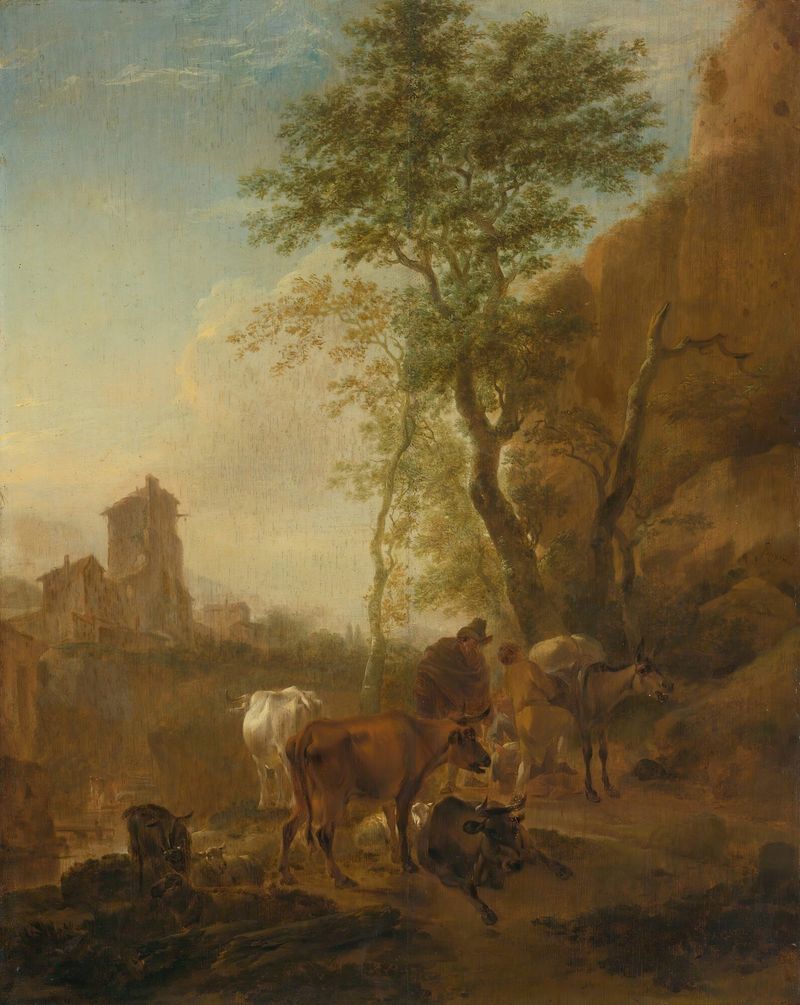
Italianate Landscape With Cows
Nicolaes Pietersz Berchem
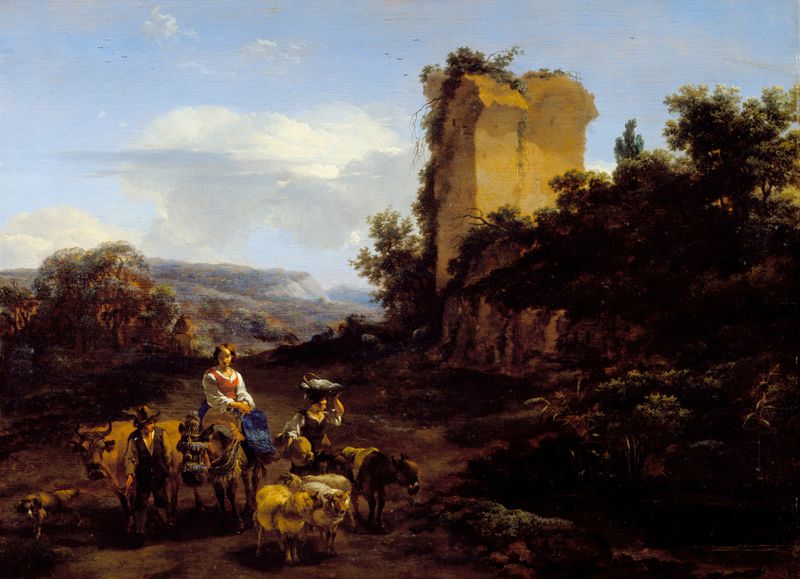
Landscape with Ruins and Travelers
Nicolaes Pietersz Berchem
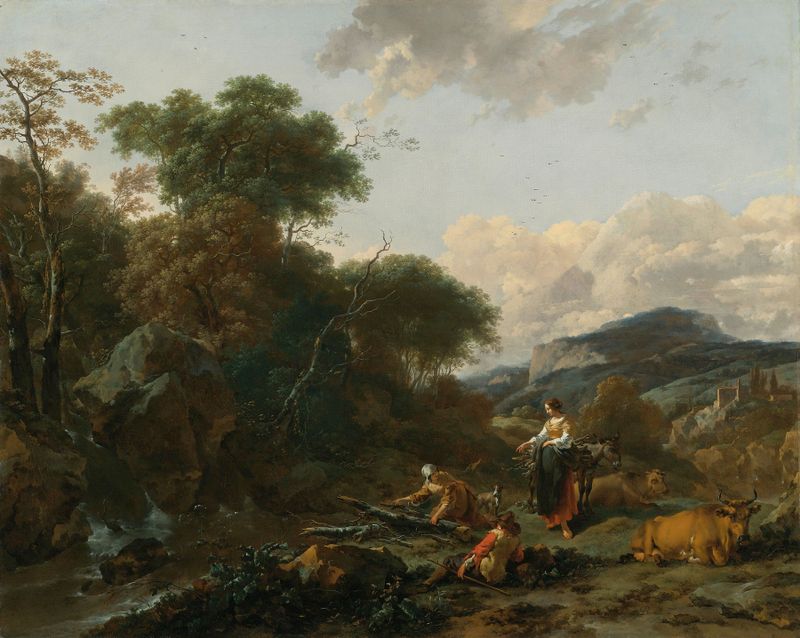
A Landscape With Figures
Nicolaes Pietersz Berchem
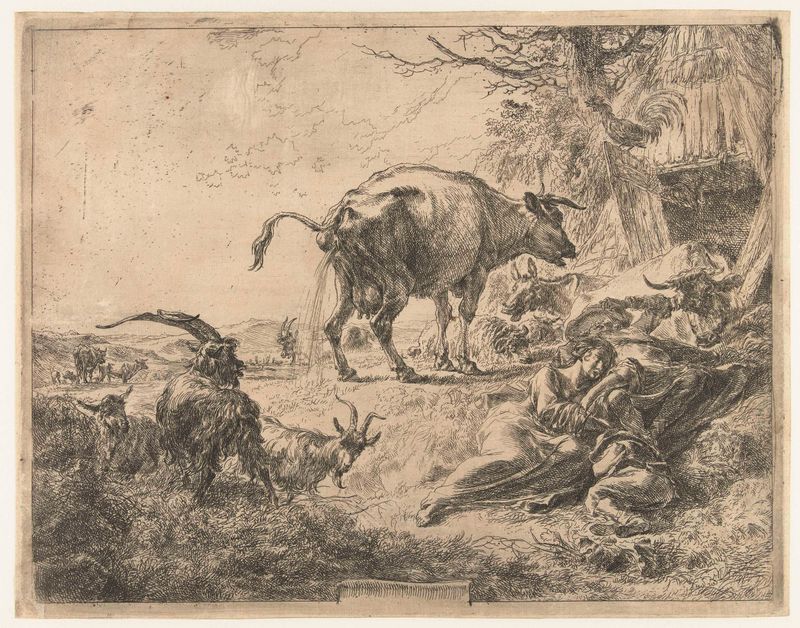
Slapende herdersfamilie en rustend vee
Nicolaes Pietersz Berchem
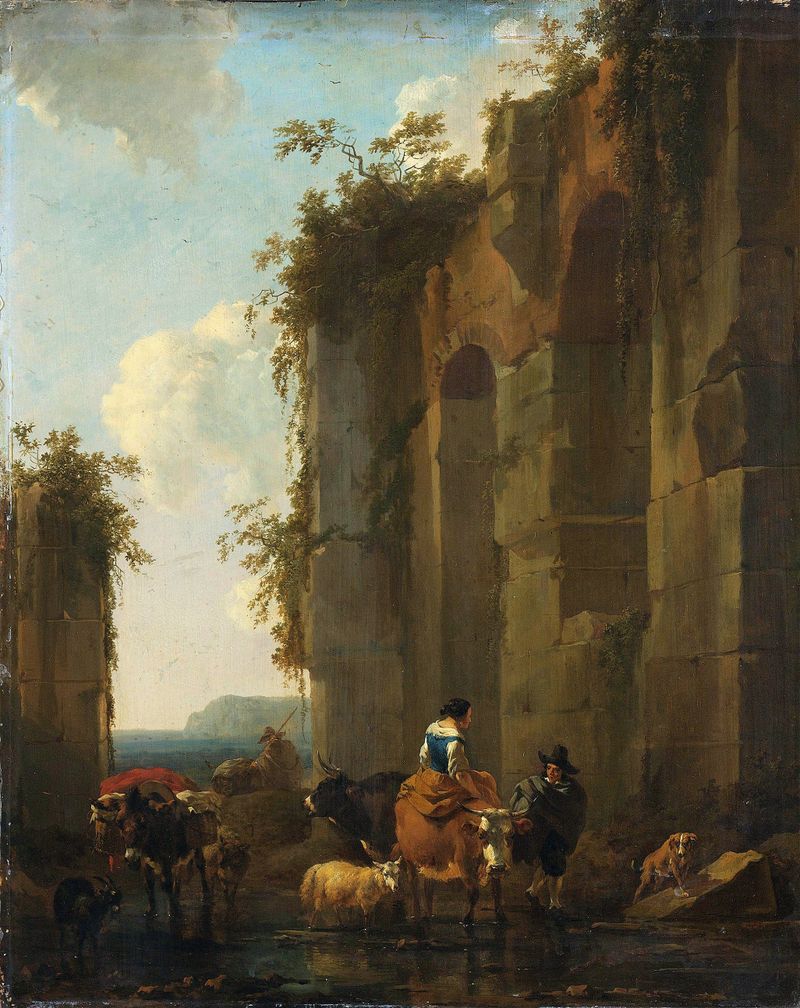
Ruins in Italy
Nicolaes Pietersz Berchem