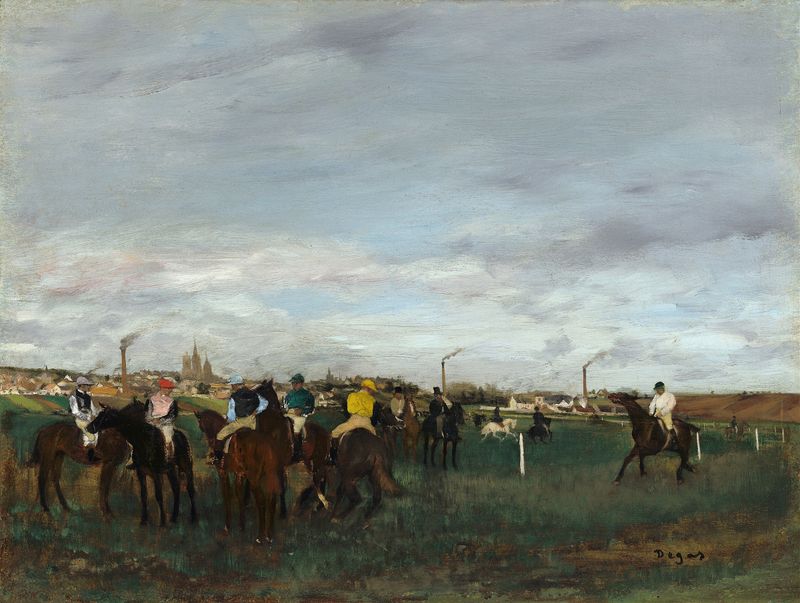
Twee geiten of bokken — History & Facts
When did color learn to lie? The vibrant hues in this work evoke a reality that feels almost tangible, yet beneath the surface lies an intricate web of illusion and artistry. Focus on the central goats, their coats painted with masterful strokes that blend the earthy browns and soft whites, creating an exquisite play of texture. The lush green landscape surrounding them draws the eye outward, while the soft, dappled light harmonizes with the composition. Notice how the artist balances the forms, allowing the goats to emerge as both subjects and symbols of pastoral serenity amidst a world seemingly lost in its own chaos. Delve into the delicate contrasts here—between the stillness of the animals and the restless, swirling brushstrokes that suggest a gentle breeze.
The serene demeanor of the goats belies the artist's underlying commentary on nature's simplicity amid human complexity. There is a silent dialogue between the seen and the unseen, urging the viewer to question what is real and what is an artist's interpretation. Created between 1648 and 1652, this piece emerged during a period of burgeoning artistic exploration in the Netherlands. Nicolaes Pietersz Berchem, influenced by the natural landscapes surrounding him, sought to capture the essence of rural life.
As the Baroque movement flourished, artists like him began to weave narratives into their works, shifting away from mere representation to a more emotive, contemplative approach that would resonate for generations.
More Artworks by Nicolaes Pietersz Berchem
Browse all →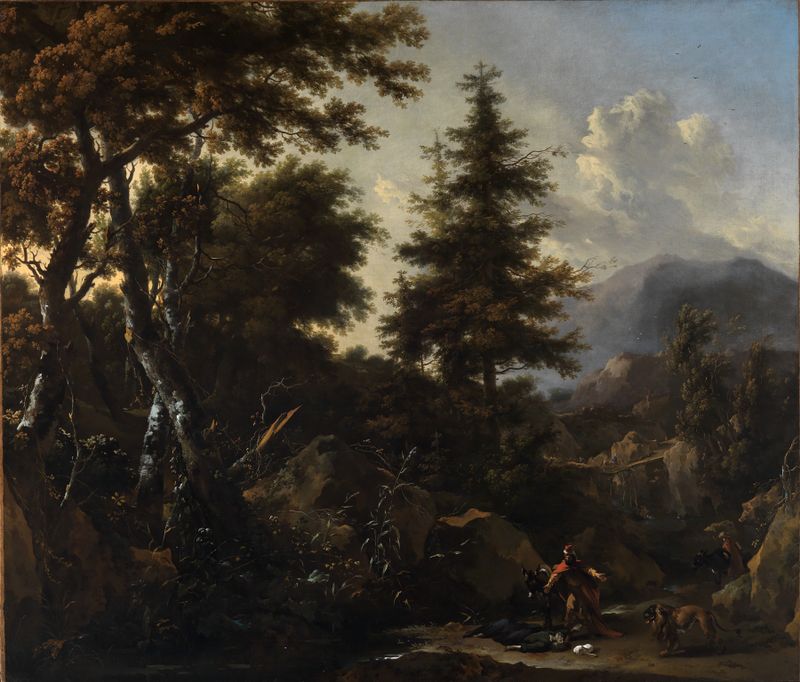
Schlucht im Bergwald mit alttestamentlicher Staffage
Nicolaes Pietersz Berchem
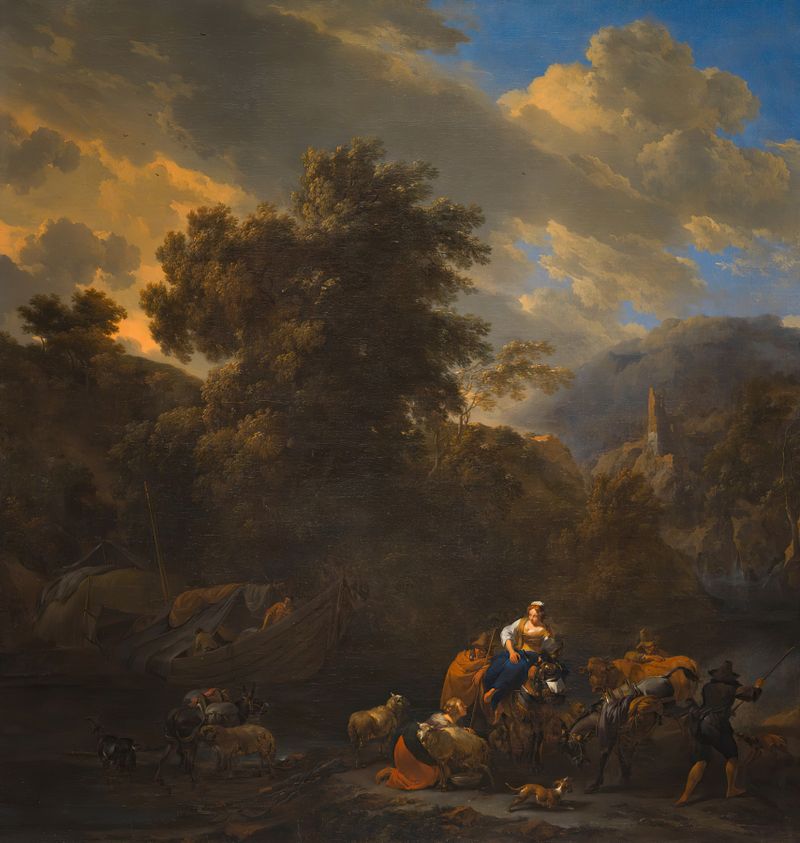
Italianate Landscape with Figures and Pack Animals on the Banks of a River
Nicolaes Pietersz Berchem
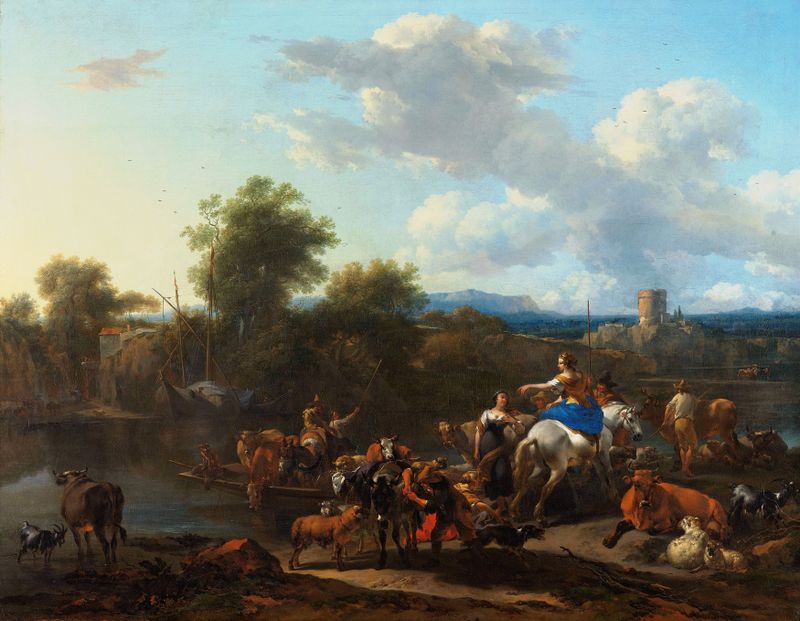
The Cattle Ferry
Nicolaes Pietersz Berchem
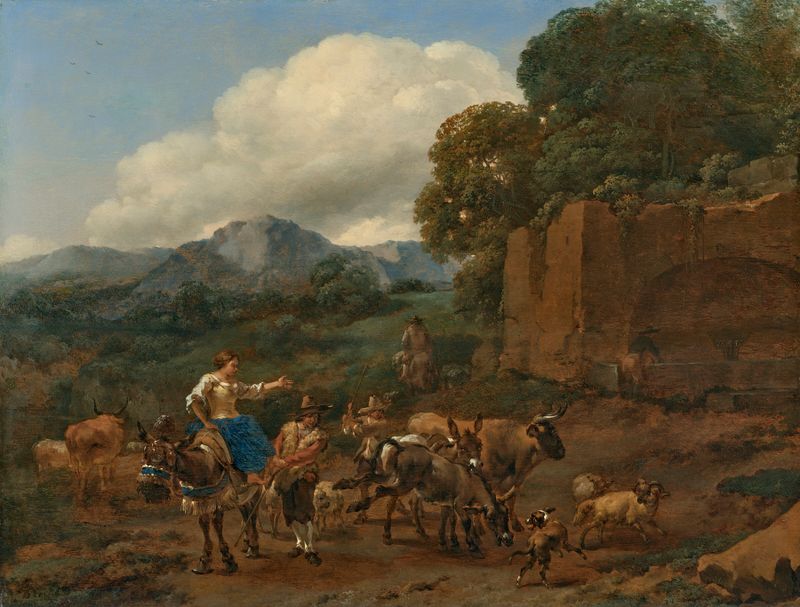
An Italianate landscape with a shepherdess on a mule and a shepherd, herding cattle, sheep, donkeys and dogs on a mountain track next to ruins
Nicolaes Pietersz Berchem
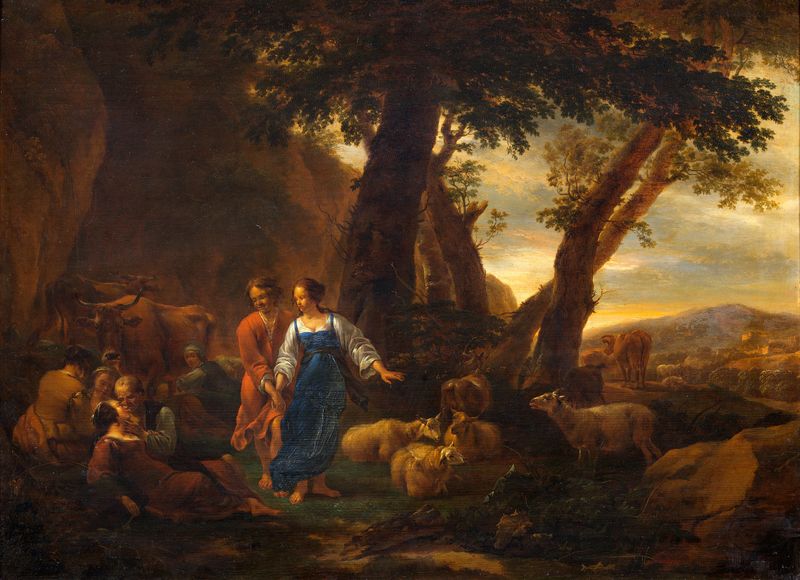
Landscape with Peasants and Cattle
Nicolaes Pietersz Berchem
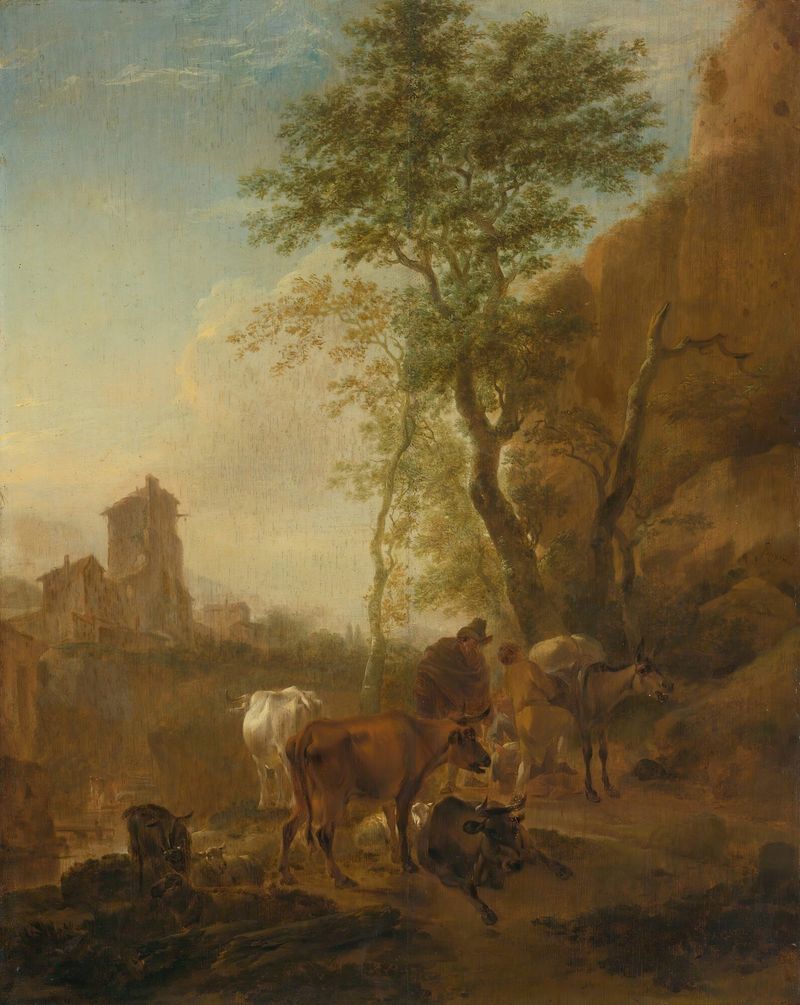
Italianate Landscape With Cows
Nicolaes Pietersz Berchem
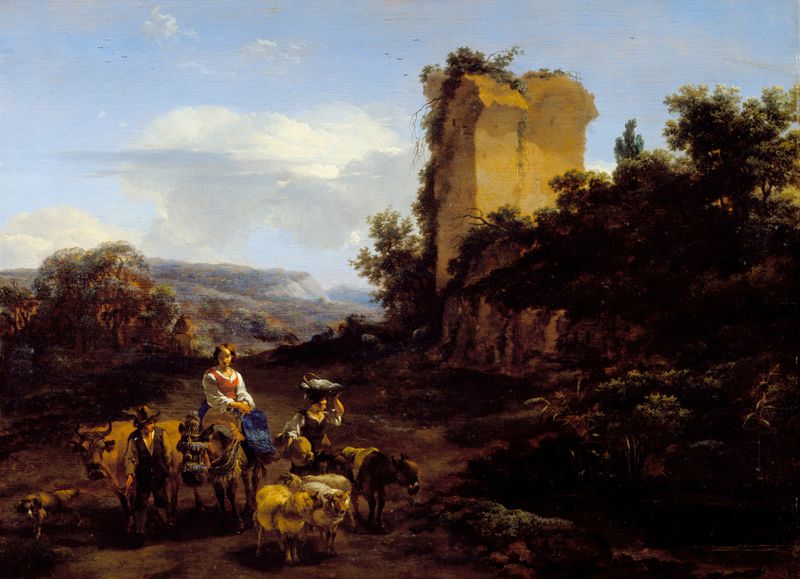
Landscape with Ruins and Travelers
Nicolaes Pietersz Berchem
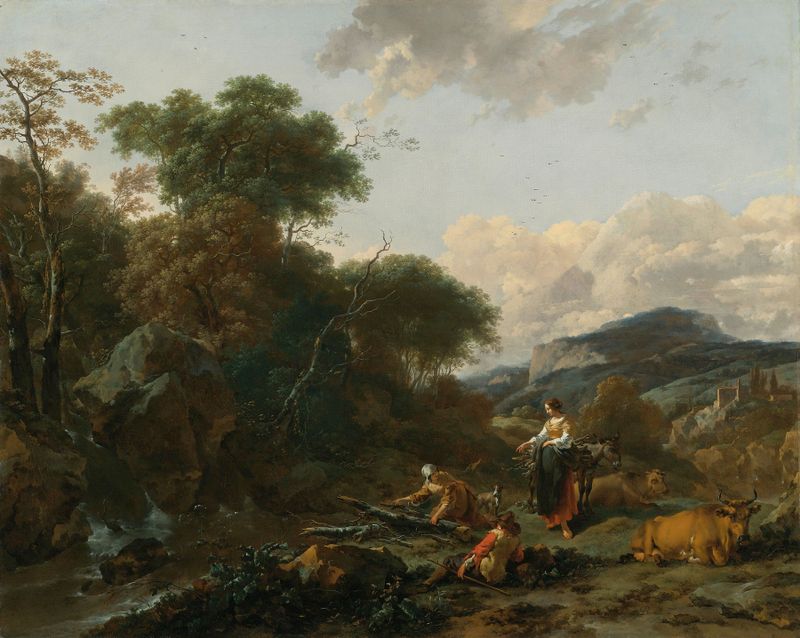
A Landscape With Figures
Nicolaes Pietersz Berchem
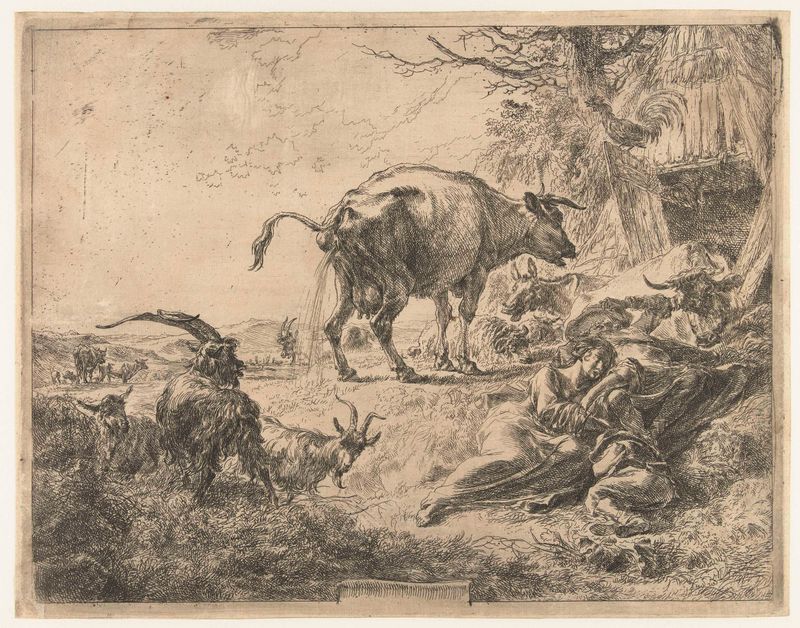
Slapende herdersfamilie en rustend vee
Nicolaes Pietersz Berchem
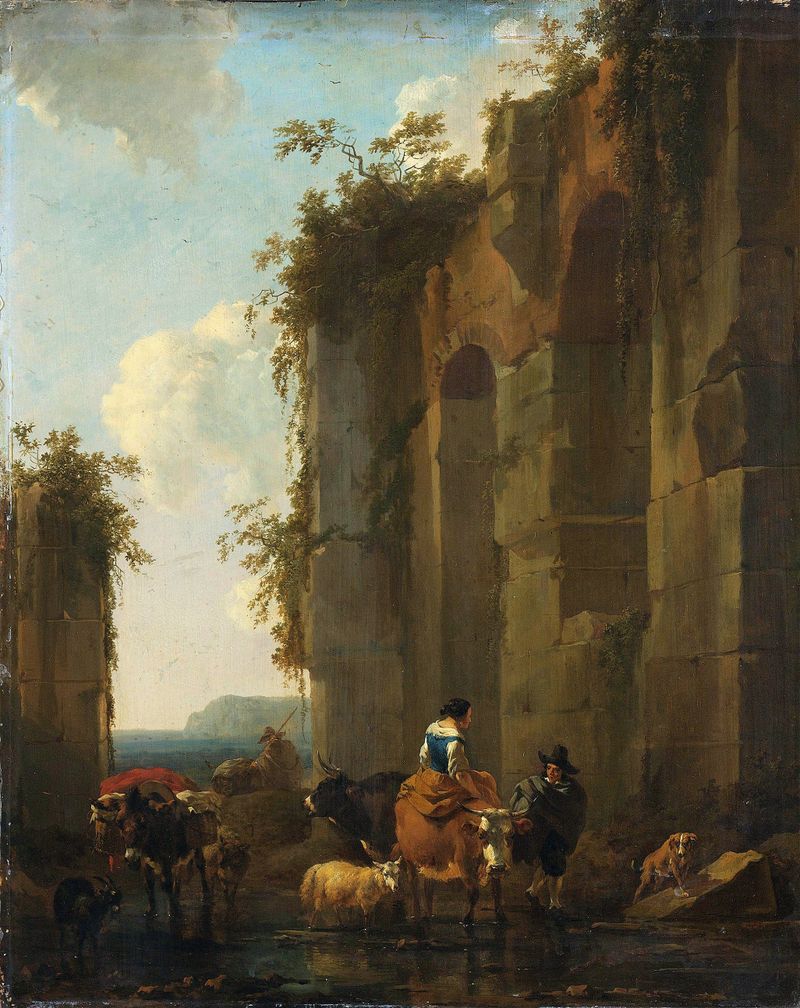
Ruins in Italy
Nicolaes Pietersz Berchem