Twee geiten of bokken — History & Facts
In the harmony of a pastoral landscape, we find chaos simmering underneath, challenging the tranquility of the scene. Focus on the lower left, where a pair of goats appear at first glance innocent but reveal a playful turbulence in their stance. Their horns twist and curl, opposite yet equal, mirrored by the wild strokes of grass that seem to dance around them. The warm earth tones of the background contrast sharply with the cool hues that cloak the goats, drawing attention to their chaotic energy.
Notice how the layered brushwork captures not just forms, but an ever-shifting tension that holds the viewer’s gaze captive. Delve deeper into the details, where every element teeters on the brink of serenity and unrest. The goats, with their lively expressions, suggest unease, contrasting with the serene blue sky overhead, suggesting that even in beauty, there is a lurking disarray. This interplay reflects the dualities of life itself, where calm gives way to the unpredictable, nudging the viewer to recognize the delicate balance between order and chaos in nature. In the years between 1648 and 1652, the artist painted this piece during a time of artistic flourishing in the Dutch Golden Age.
Berchem, known for his landscapes and pastoral scenes, was influenced by the rise of genre painting and the naturalistic style that celebrated everyday life. Amidst this trend, Twee geiten of bokken encapsulates the complexity of existence, illustrating not just a moment in time, but a myriad of emotions intertwined within the calm of rural simplicity.
More Artworks by Nicolaes Pietersz Berchem
Browse all →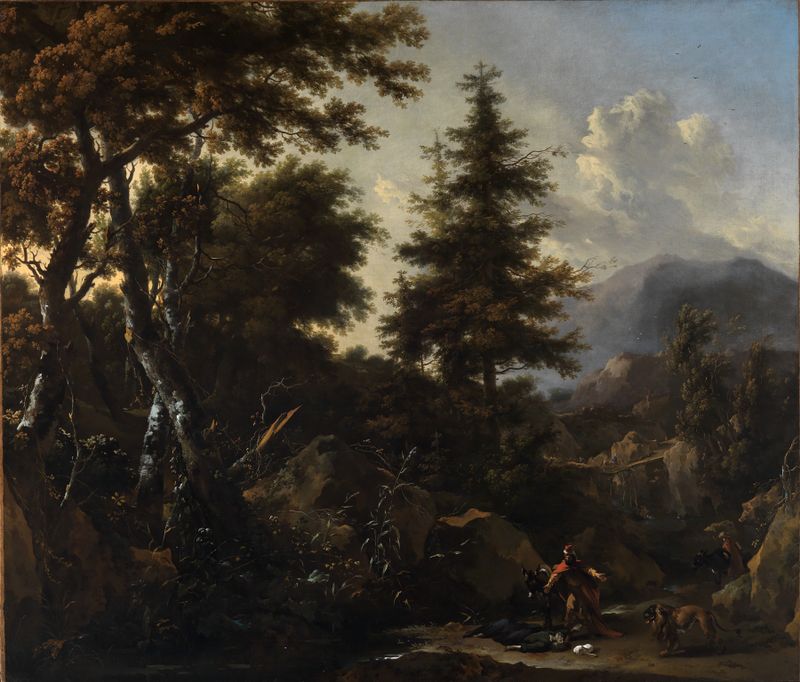
Schlucht im Bergwald mit alttestamentlicher Staffage
Nicolaes Pietersz Berchem
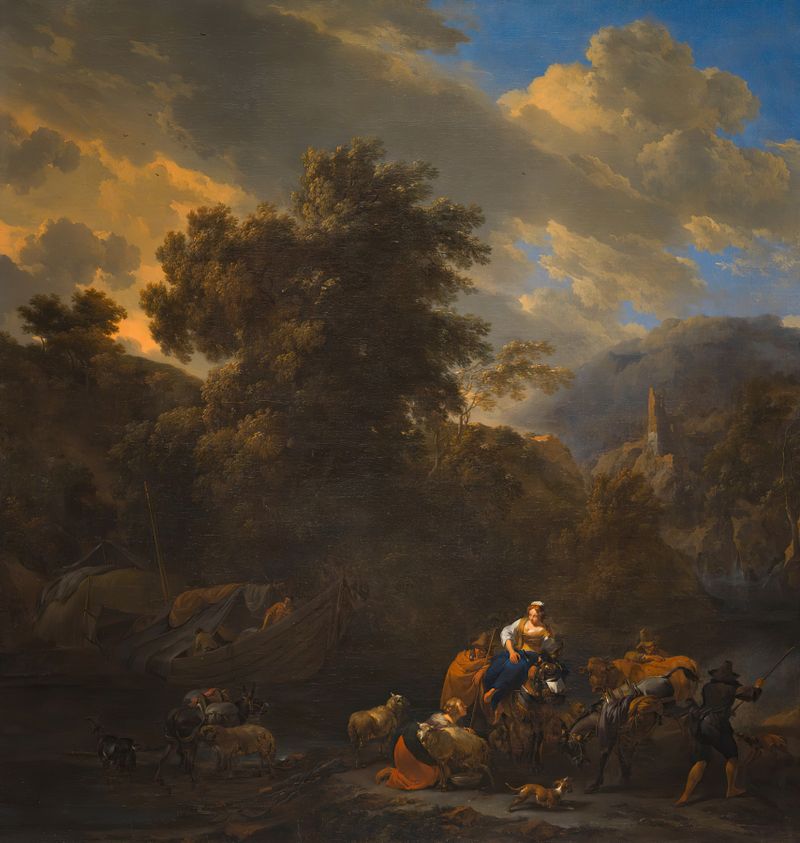
Italianate Landscape with Figures and Pack Animals on the Banks of a River
Nicolaes Pietersz Berchem
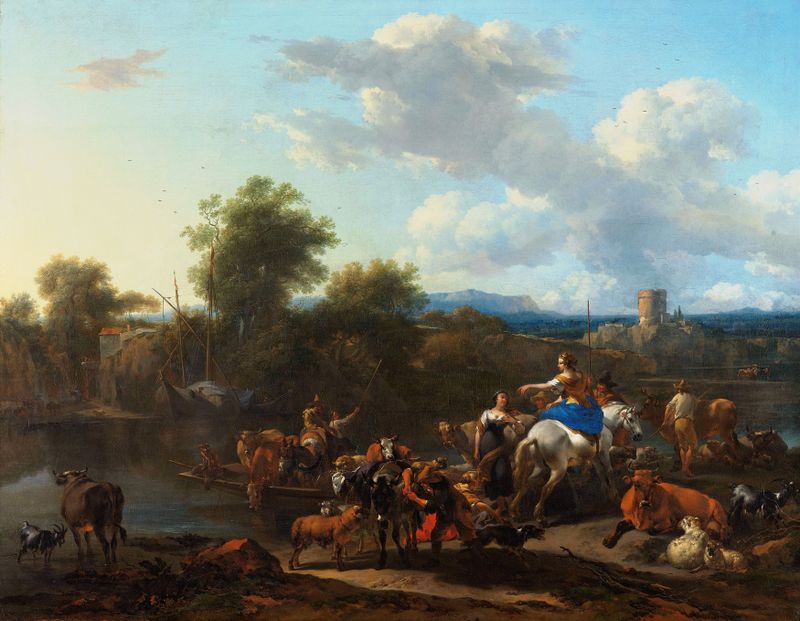
The Cattle Ferry
Nicolaes Pietersz Berchem
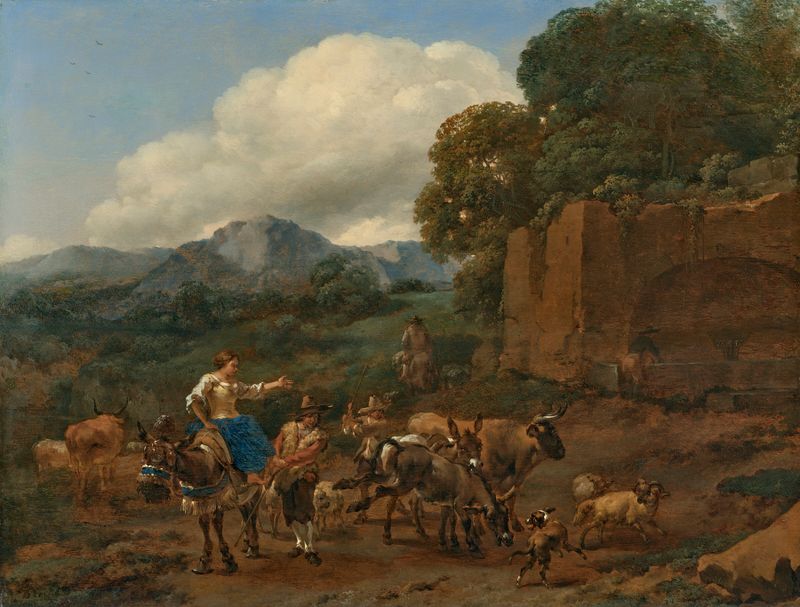
An Italianate landscape with a shepherdess on a mule and a shepherd, herding cattle, sheep, donkeys and dogs on a mountain track next to ruins
Nicolaes Pietersz Berchem
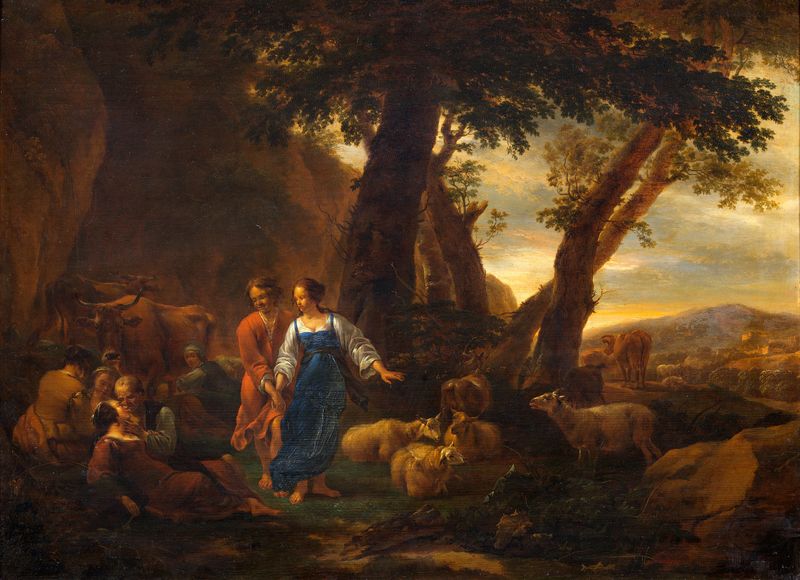
Landscape with Peasants and Cattle
Nicolaes Pietersz Berchem
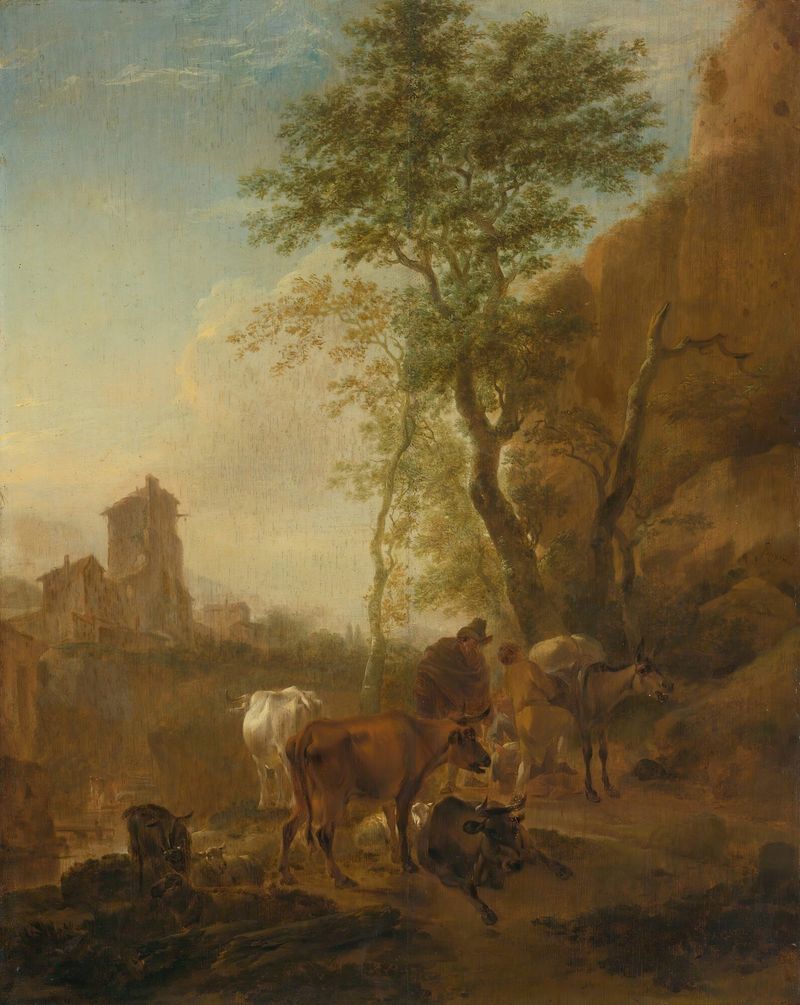
Italianate Landscape With Cows
Nicolaes Pietersz Berchem
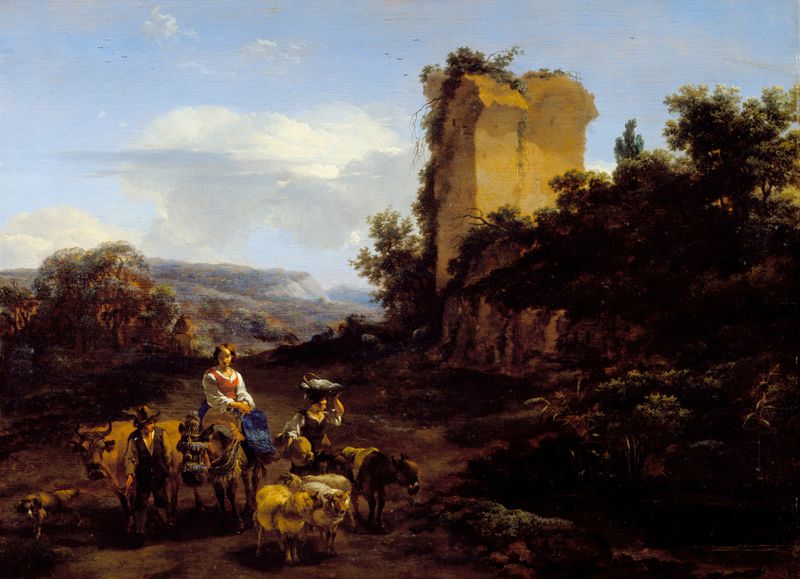
Landscape with Ruins and Travelers
Nicolaes Pietersz Berchem
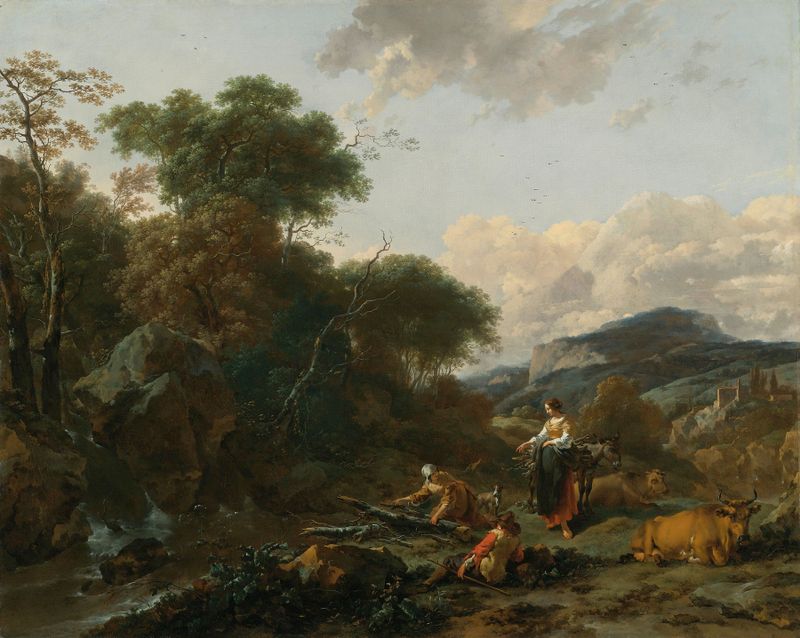
A Landscape With Figures
Nicolaes Pietersz Berchem
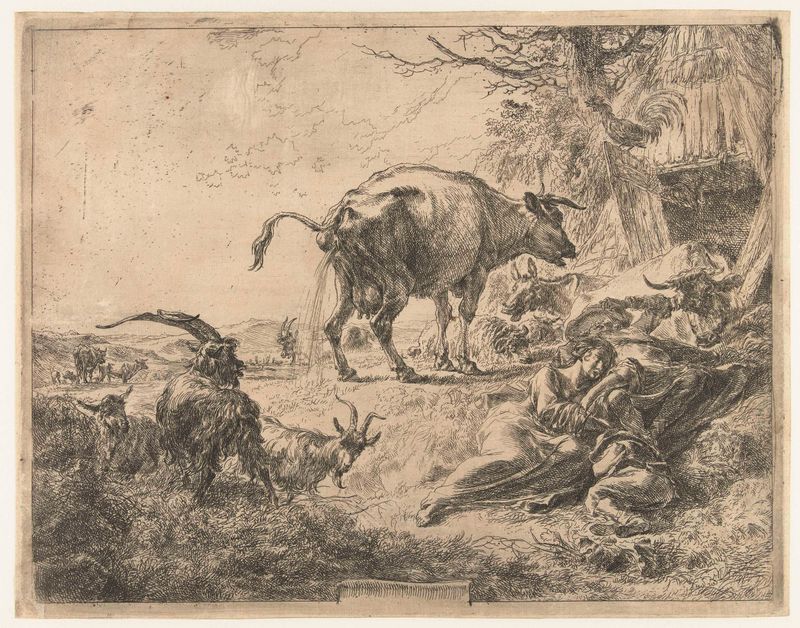
Slapende herdersfamilie en rustend vee
Nicolaes Pietersz Berchem
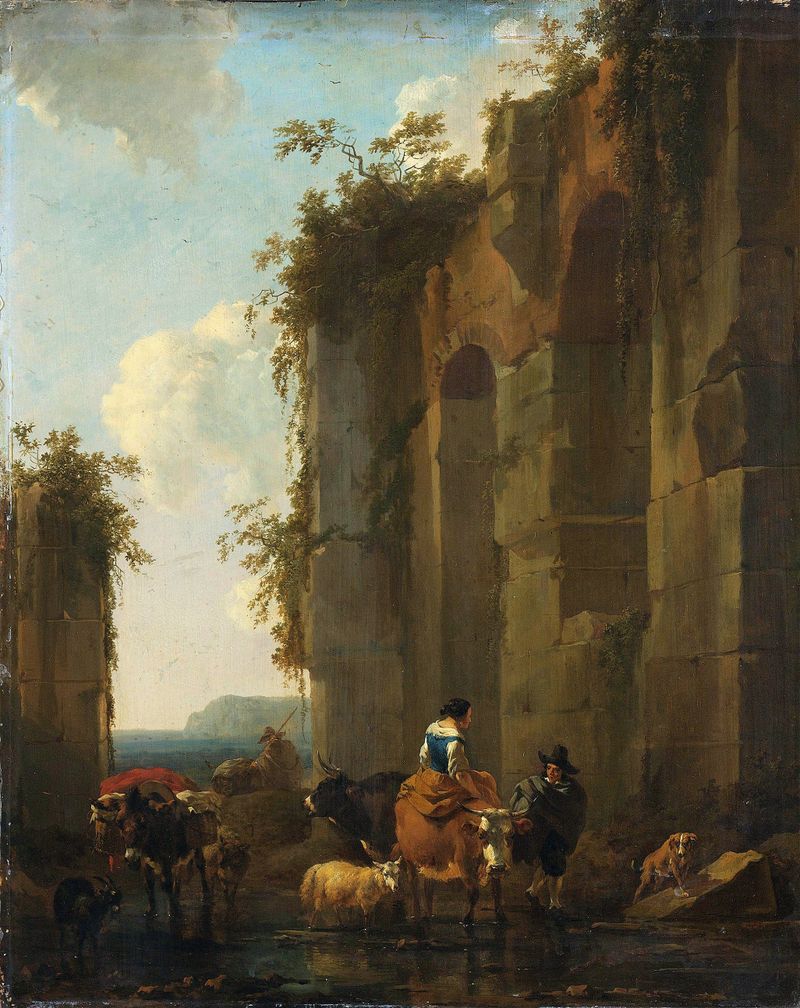
Ruins in Italy
Nicolaes Pietersz Berchem