
Twilight Landscape (Flight Into Egypt) — History & Facts
Can beauty exist without sorrow? In Twilight Landscape (Flight Into Egypt), a poignant landscape invites us to explore the delicate balance between the two. Look to the left at the spectral silhouette of a distant mountain range, its peaks kissed by the last light of day. The soft blend of lavender and gold fills the sky, radiating warmth that contrasts with the cool shadows creeping across the terrain. Notice how the flowing brushstrokes create a sense of movement, pulling the eye toward the horizon where the figures of Mary and Joseph can be seen in quiet contemplation, their journey carrying the weight of both hope and fear. This painting embodies a profound nostalgia, as the tranquil beauty of the landscape holds echoes of sacrifice and longing.
The gentle interplay of light and shadow not only highlights the family's vulnerability but also symbolizes the passage of time and the burdens we carry throughout our lives. The deep greens of the foreground, punctuated by delicate hints of blooming flora, further emphasize the connection between life and the inevitable sorrow that accompanies it. In 1878, Moran painted this piece during a time when his reputation as a leading landscape artist was solidifying. Living in New York City, he was influenced by the burgeoning American scene, which sought to capture the vastness and majesty of the country’s natural beauty.
The emergence of the Hudson River School's ideals in American art marked a shift toward deeply emotional landscapes, and Moran's work during this period reflects both the environmental splendor and the underlying tensions tied to humanity’s place within it.
More Artworks by Thomas Moran
Browse all →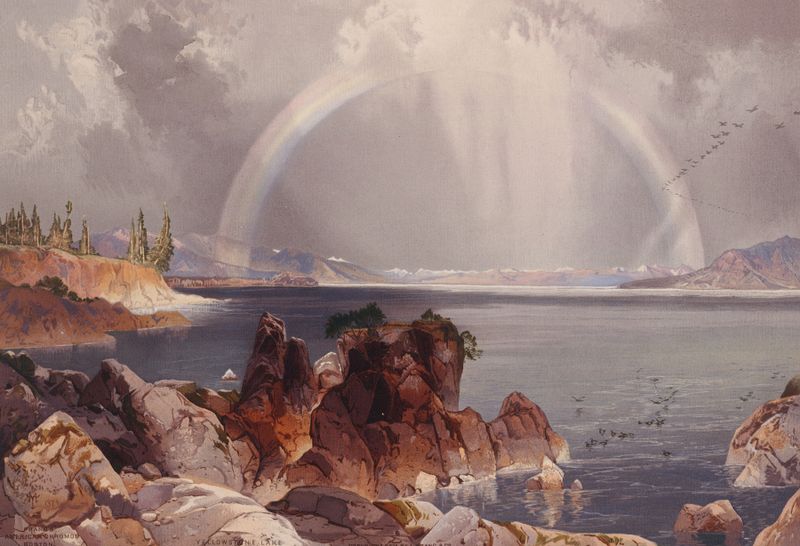
Yellowstone Lake
Thomas Moran

Grand Canyon of the Colorado River
Thomas Moran

Grand Canyon, Colorado River
Thomas Moran

The Towers of Tower Falls, Yellowstone
Thomas Moran
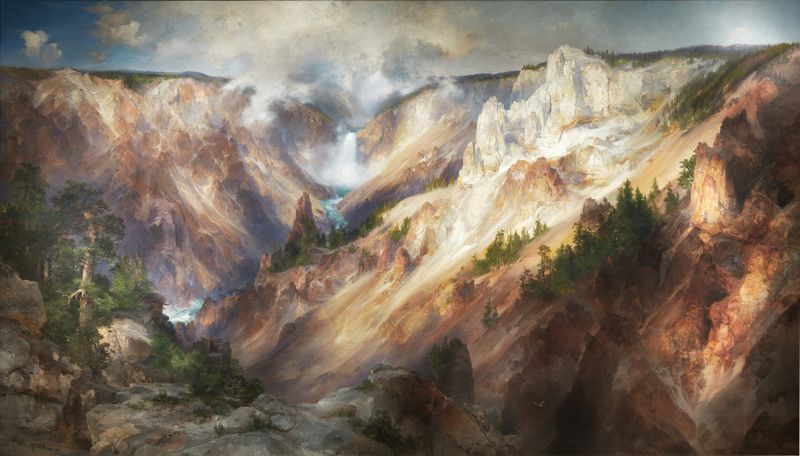
The Grand Canyon Of The Yellowstone
Thomas Moran

Mountain of the Holy Cross
Thomas Moran

Cliffs Of The Upper Colorado River, Wyoming Territory
Thomas Moran
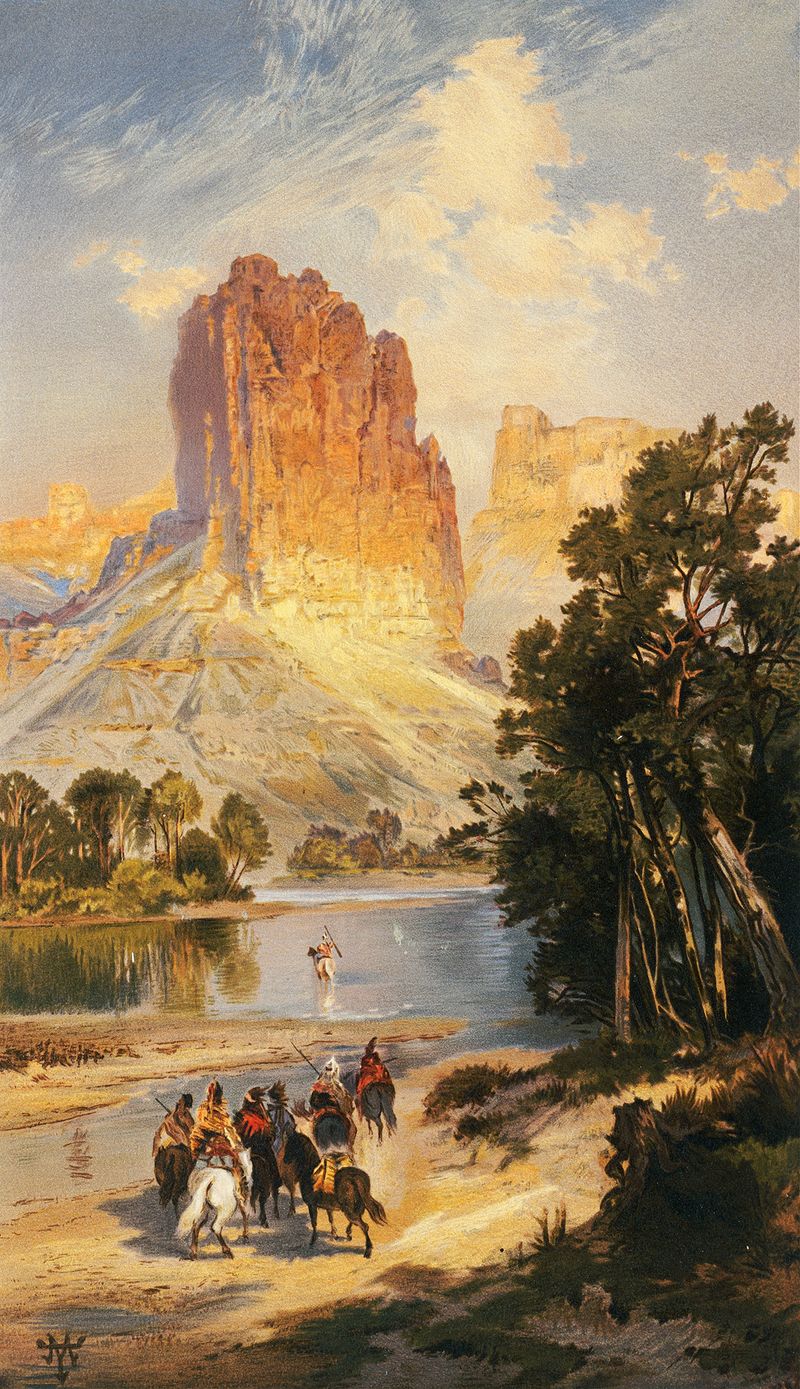
Cliffs of the Upper Colorado River, Wyoming Territory
Thomas Moran

Mammoth Hot Springs, Yellowstone
Thomas Moran
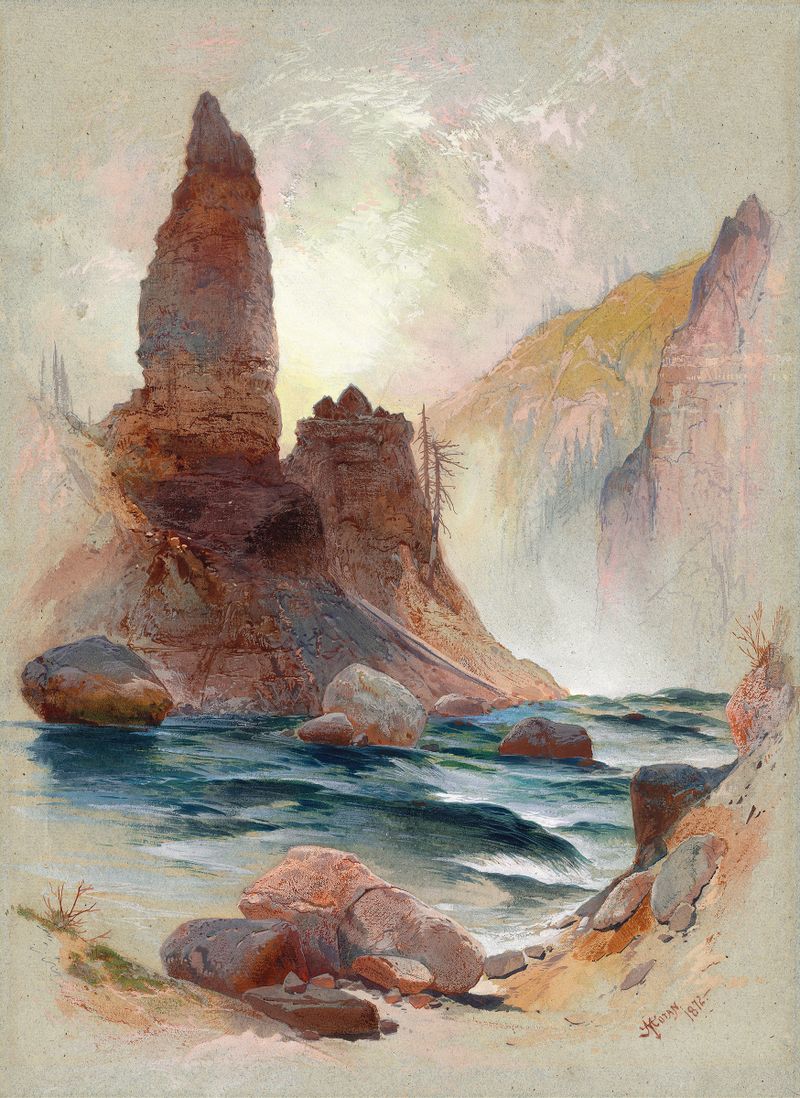
Tower at Tower Falls, Yellowstone
Thomas Moran





