
Two cockney girls — History & Facts
In Two Cockney Girls, we see two young women dressed in colorful, fashionable attire typical of the early 20th century. Their expressions are lively, suggesting a moment of joy and camaraderie. The background features a bustling urban setting, likely in London, filled with hints of daily life.
The use of bright colors enhances the vibrancy of the scene, drawing the viewer into their world. The painting is executed in oil on canvas, a medium that allows for rich textures and depth. Israëls employs loose brushwork, characteristic of Impressionism, to convey movement and spontaneity. The light plays across the figures, creating a sense of warmth and liveliness.
Viewers can appreciate the artist's skill in capturing the essence of urban life through his brushstrokes. Isaac Israëls was a prominent Dutch painter known for his depictions of urban life and social scenes. Two Cockney Girls reflects his interest in the everyday experiences of people, particularly women in the city. An interesting fact about this work is that it showcases Israëls' ability to blend realism with impressionistic techniques, making it a notable piece in his oeuvre.
This painting exemplifies the lively spirit of the early 1900s in urban settings.
More Artworks by Isaac Israëls

Interieur van een glasblazerij 2
Isaac Israëls
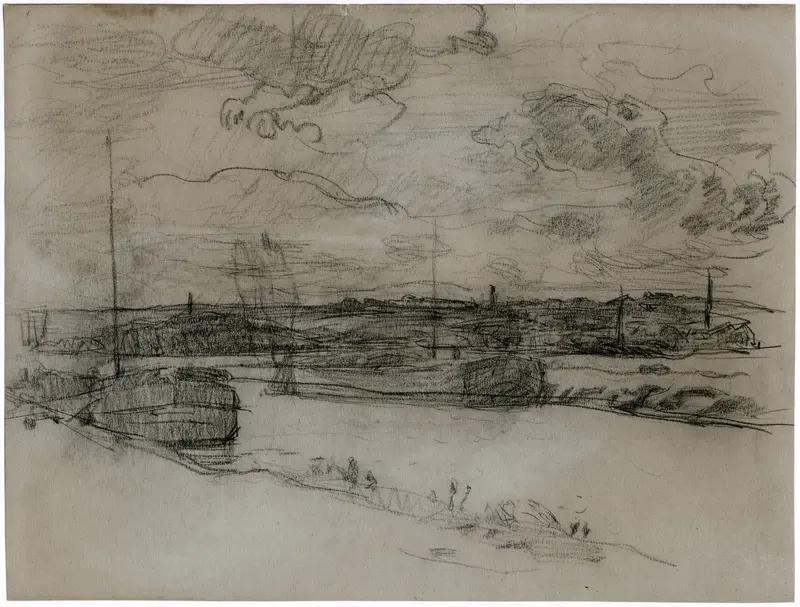
Kanaal met aan de oever fabrieksterrein
Isaac Israëls
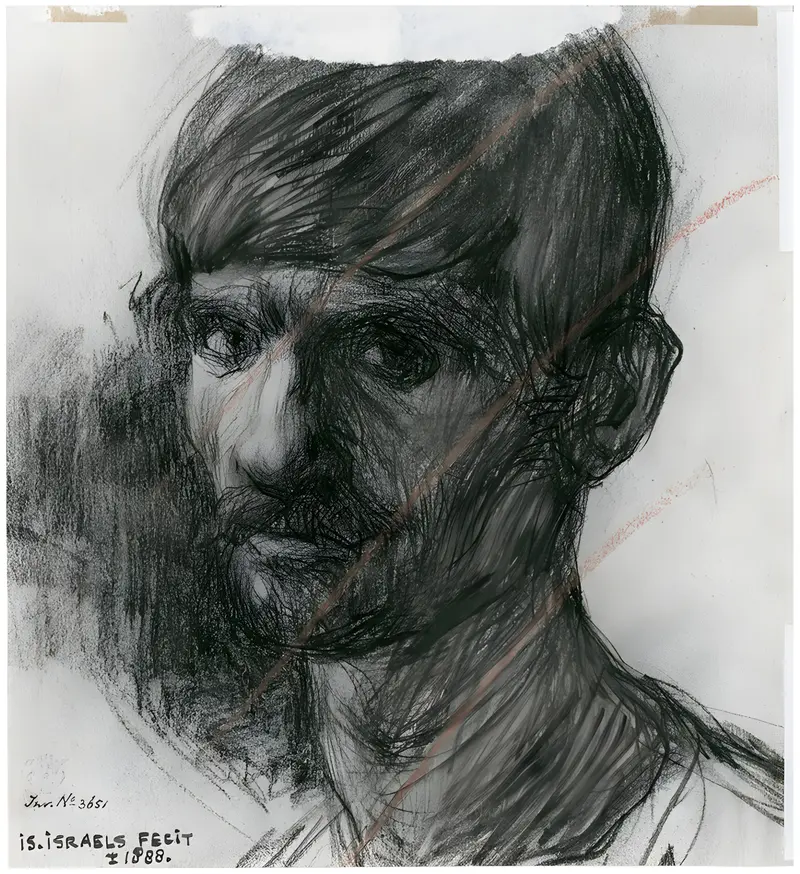
Kop van een man, portret van een arbeider 2
Isaac Israëls
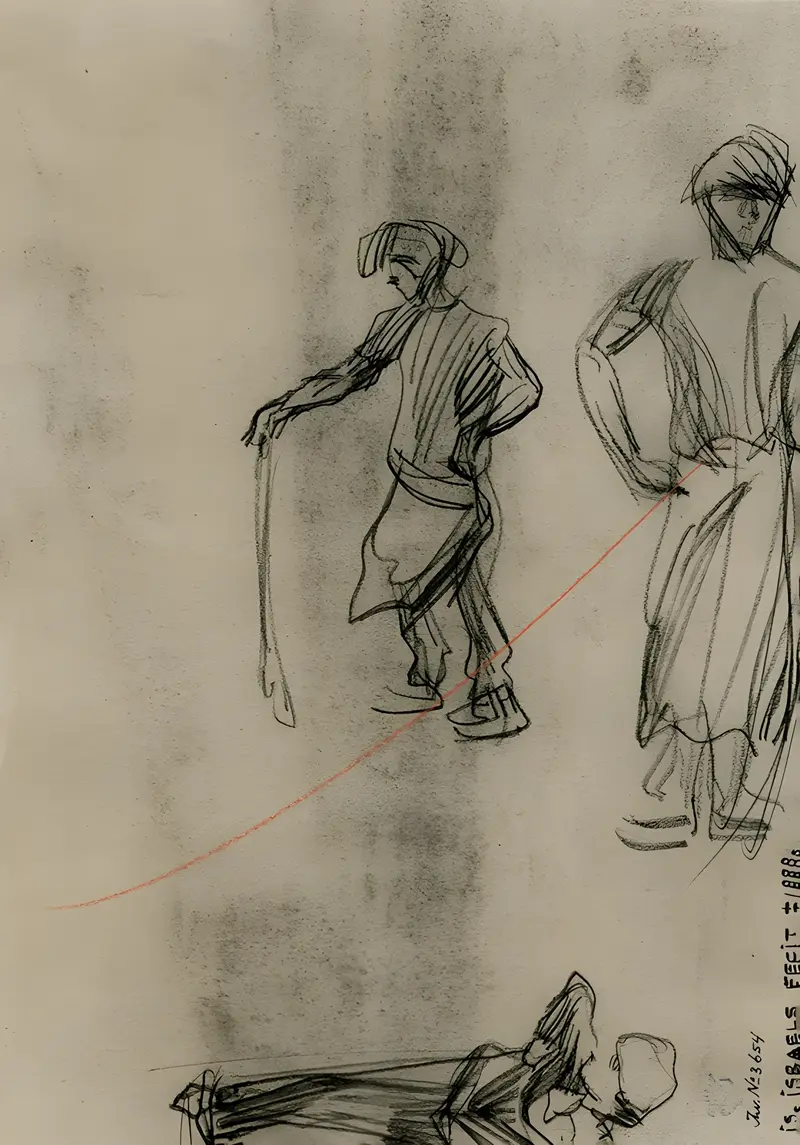
Glasblazers
Isaac Israëls
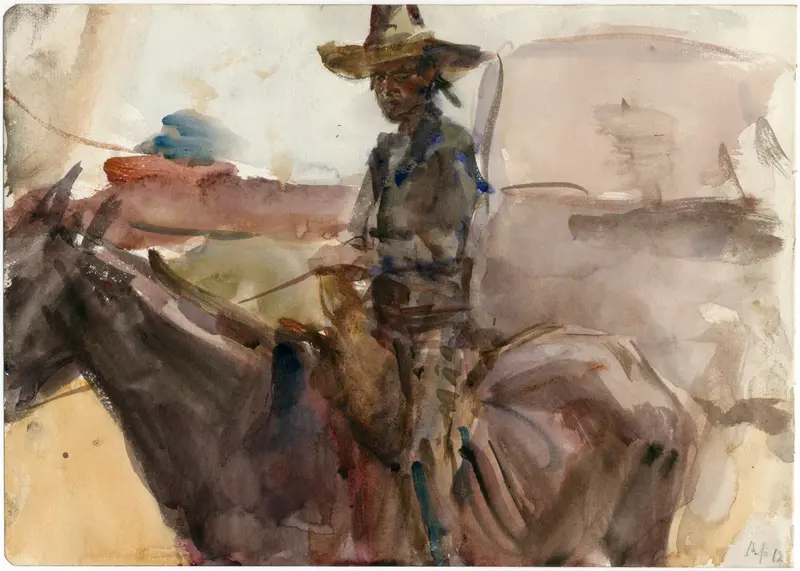
Cowboy te paard
Isaac Israëls

Mensen in de Venestraat te Den Haag bij avond
Isaac Israëls
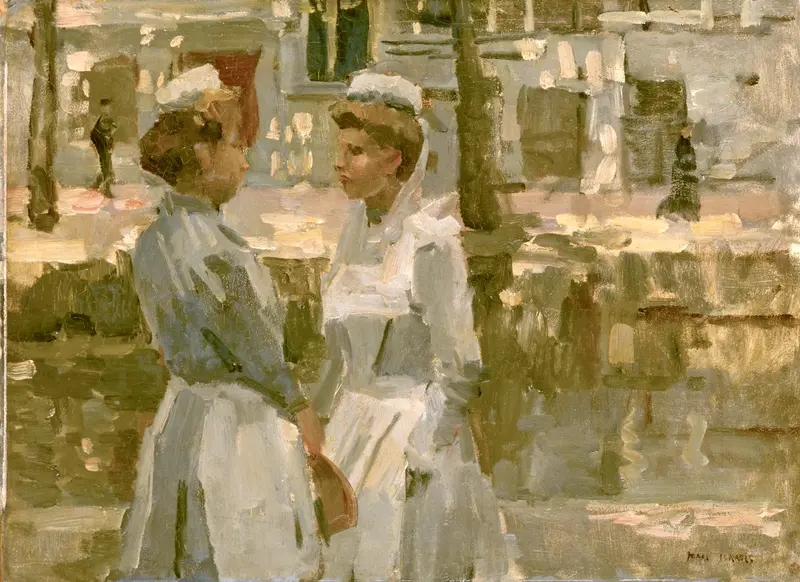
Dienstmeisjes op de Leidsegracht
Isaac Israëls
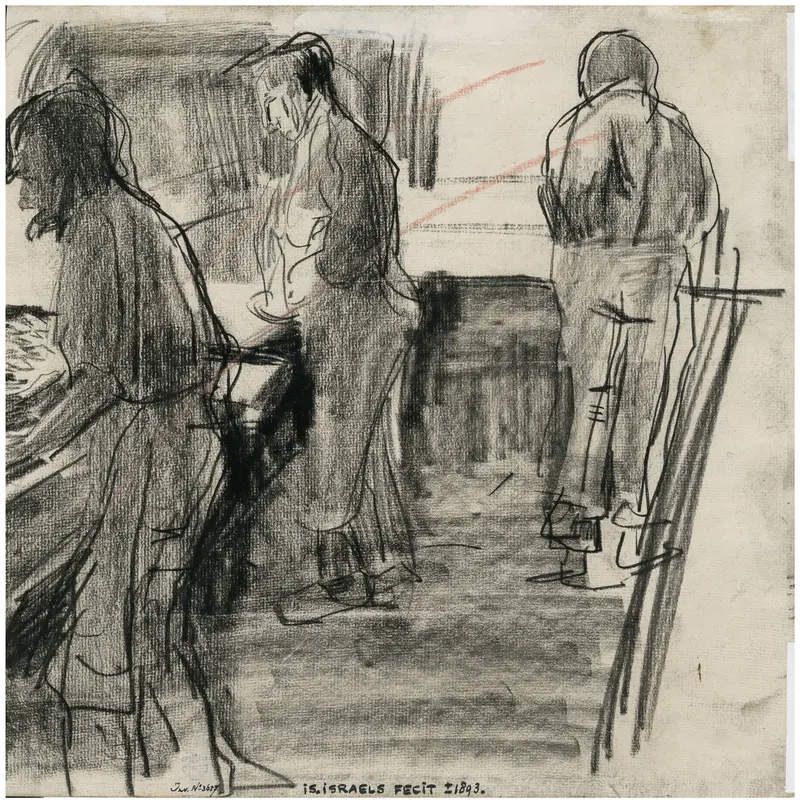
Drie keukenhulpen aan het werk
Isaac Israëls
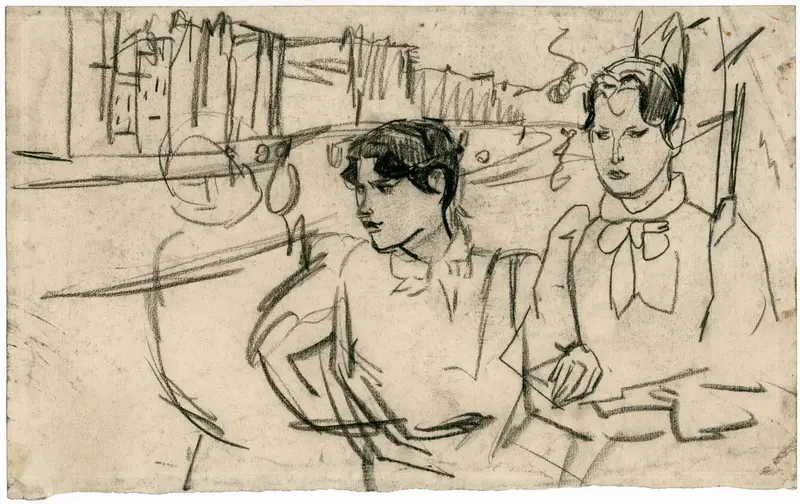
Drie vrouwen wandelen langs een gracht
Isaac Israëls
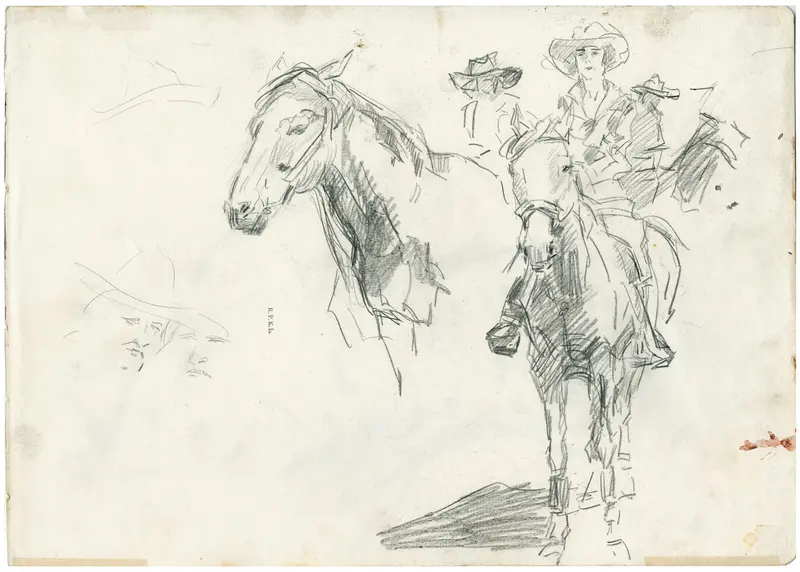
Vrouw te paard
Isaac Israëls
More Genre Scene Art

Banquet of the Officers of the St George Civic Guard
Frans Hals

Rembrandt and Saskia in the Scene of the Prodigal Son
Rembrandt van Rijn

Bal du moulin de la Galette
Pierre-Auguste Renoir

Quadrille at the Moulin Rouge
Henri de Toulouse-Lautrec

A Burial at Ornans
Gustave Courbet

When Will You Marry?
Paul Gauguin