
Two Men in a Landscape and a Castle on a Hill — History & Facts
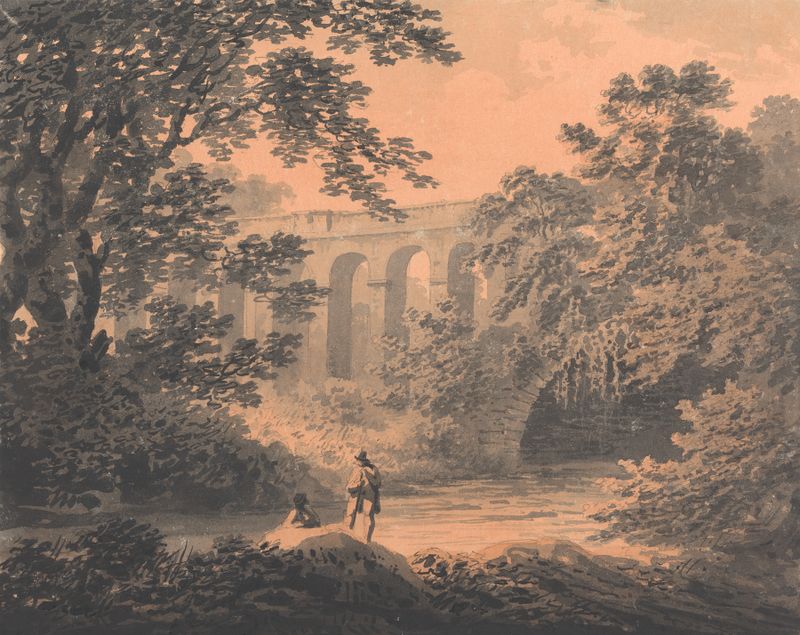
In the realm of art, color weaves a story that transcends the canvas, beckoning us to explore what lies beneath the surface. Look to the left at the deep greens of the rolling hills, contrasting with the silhouette of a castle perched triumphantly on the right. The two men, seemingly insignificant against the vastness of the landscape, are adorned in muted tones that blend seamlessly into their surroundings. The gentle blues of the sky offer a stark juxtaposition to the darker hues of the foreground, drawing our eyes toward the distance where both men and castle exist in a fragile harmony, captured by the artist's delicate brushwork. Beneath this picturesque serenity lies an undercurrent of tension.
The castle may represent safety and power, yet its isolation hints at a loneliness that pervades the landscape. The two figures, whose postures convey a sense of contemplation, might embody the human struggle against the vastness of nature and existence itself. Their muted presence speaks to the quiet desperation that often accompanies beauty, while the vibrant colors enveloping them create an emotional landscape that invites deeper reflection. In 1769, William Gilpin painted this work during a time marked by the burgeoning Romantic movement that sought to capture the sublime in nature.
Living in England, Gilpin was inspired by the picturesque ideals that celebrated natural beauty and the emotional resonance it could evoke. The painting reflects his own experiences with the evolving landscape of art, where color and composition were becoming vital to expressing the complexities of the human experience.
More Artworks by William Gilpin
Browse all →
Bridgnorth Bridge, Shropshire
William Gilpin
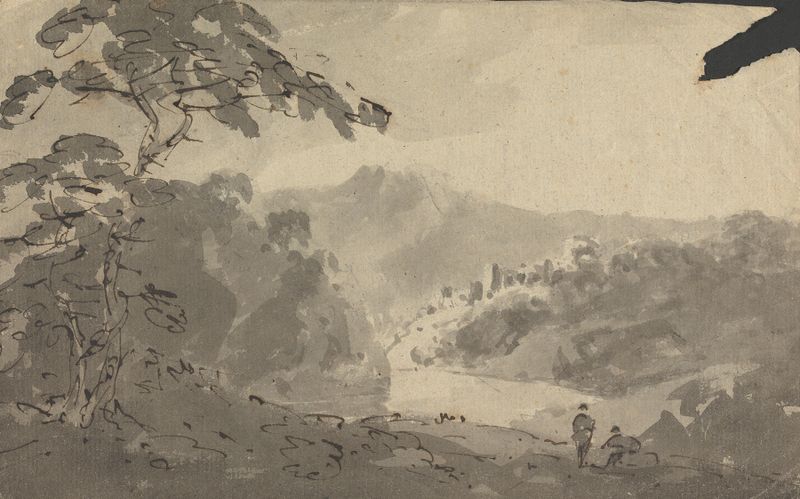
Two Men Looking Into Landscape with Castle, River and Mountain Scene
William Gilpin
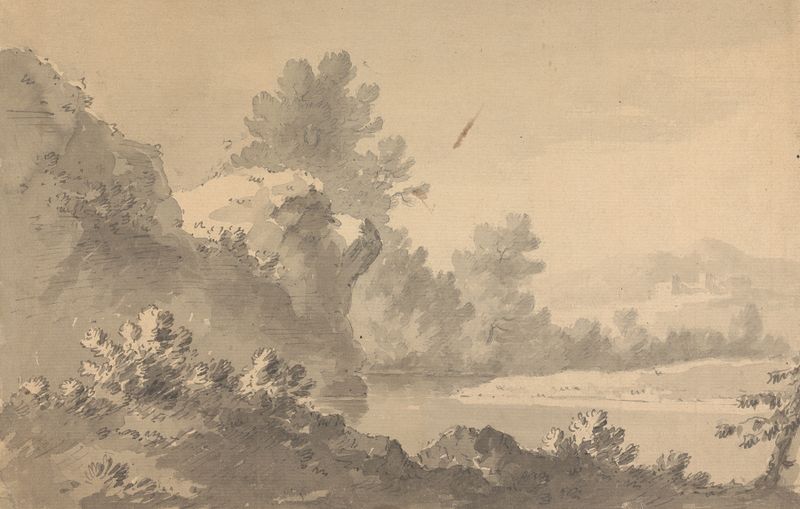
River Landscape with Castle in the Distance
William Gilpin
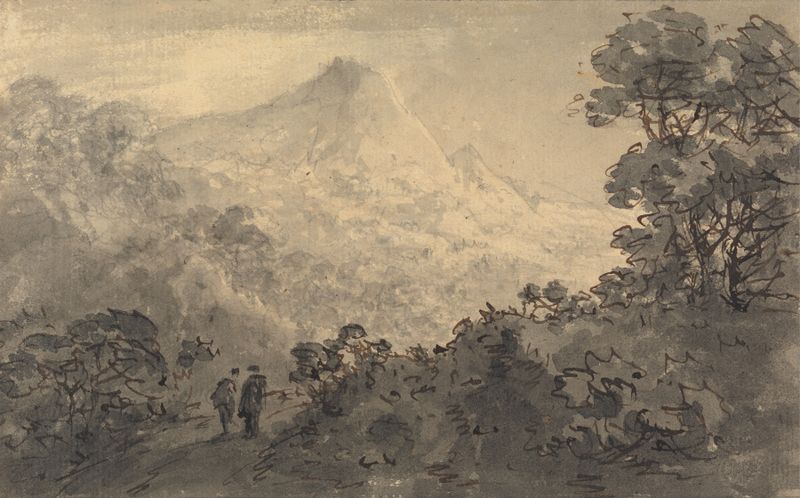
Snowdon
William Gilpin

Hilly Landscape
William Gilpin
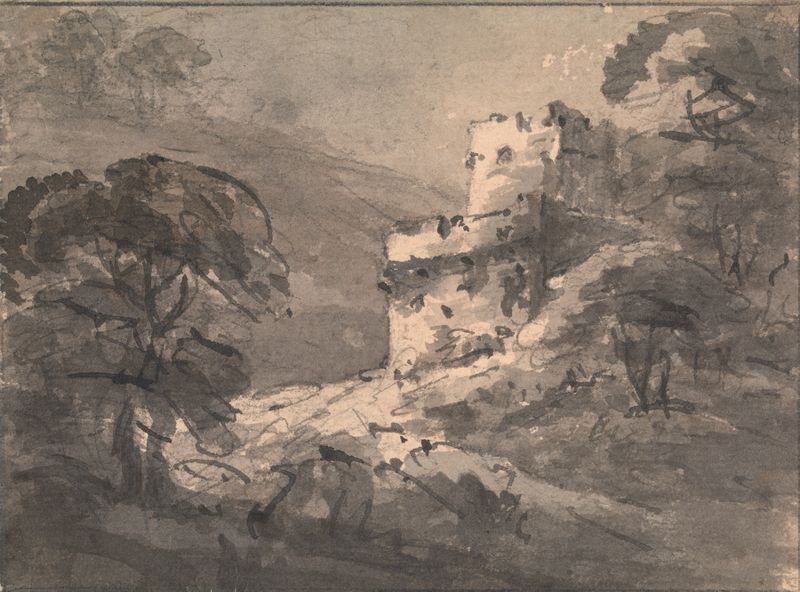
Landscape with a Ruined Castle on the Right
William Gilpin

Mountainous Landscape with Trees – High Crags to the Right
William Gilpin

View of Castle Ruin
William Gilpin
Bridge on the Malton Road from York
William Gilpin

Landscape with Two Trees and Castle
William Gilpin





