
Two Men Walking in a Landscape — History & Facts
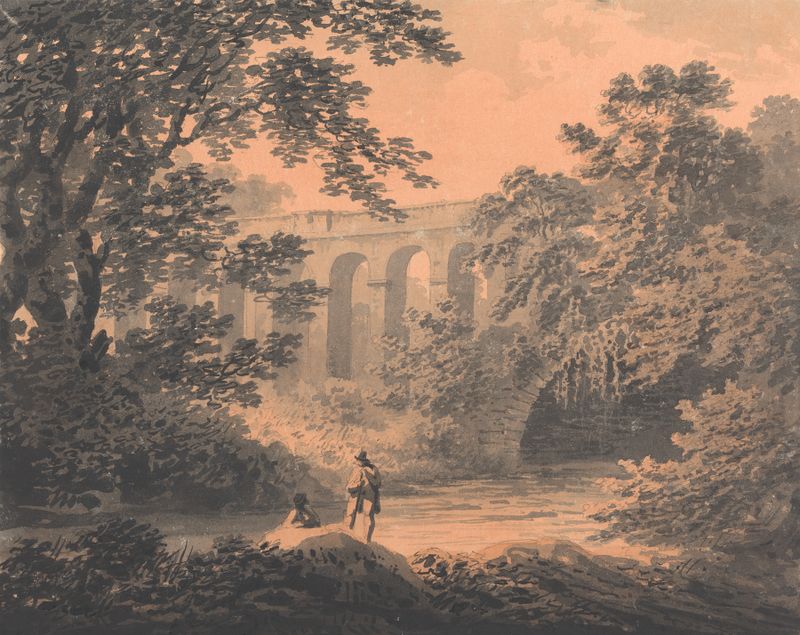
In stillness, an unseen divine presence lingers, urging us to look deeper into the human experience amidst nature's embrace. Focus on the two figures in the foreground, their bodies angled slightly toward one another, engaged in a silent communion. Notice the rich, earthy tones of the landscape that wrap around them, accentuating their connection to the land. Look closely at the subtle play of light across their clothing and the grass, where soft brushstrokes breathe life into the scene, suggesting a gentle breeze that carries whispers of their conversation. The painting invites contemplation on the juxtaposition of man and nature.
The towering trees, verdant hills, and expansive sky allude to the grandeur of the divine, while the men, though diminutive in stature, seem to radiate an inner strength, suggesting that humanity finds its purpose within this greater tapestry. This duality—individuality versus universality—echoes the timeless quest for understanding in a world that can often feel overwhelming. In 1783, at a time when romanticism began to flourish, the artist created this work during a period of exploration and philosophical inquiry. As Gilpin traveled through the English countryside, he sought to capture the beauty of landscapes, while reflecting on man's place within it.
This painting is a testament to his belief in the profound connection between the human spirit and the natural world, revealing glimpses of divinity in their shared existence.
More Artworks by William Gilpin
Browse all →
Bridgnorth Bridge, Shropshire
William Gilpin
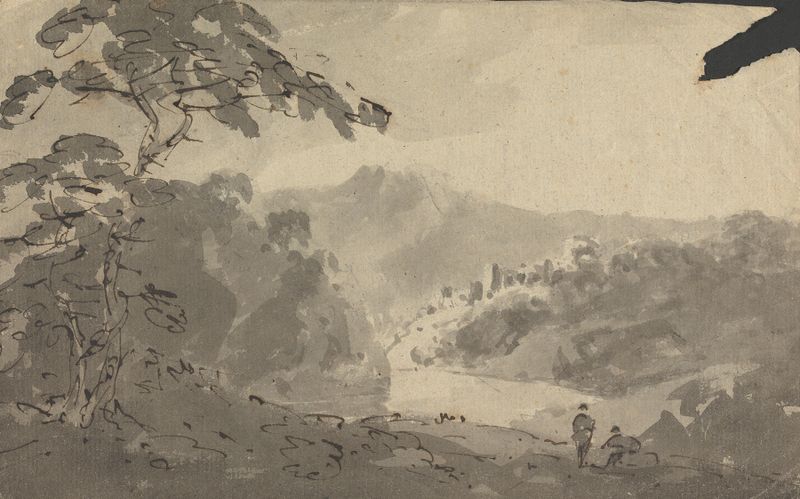
Two Men Looking Into Landscape with Castle, River and Mountain Scene
William Gilpin
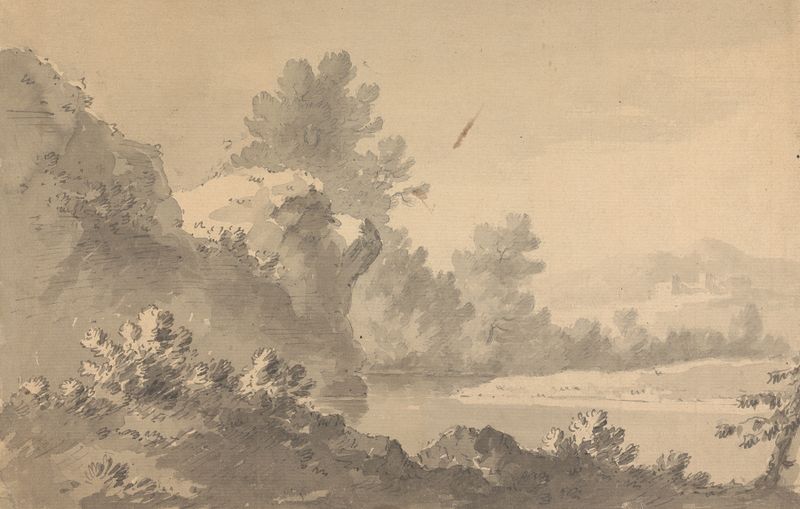
River Landscape with Castle in the Distance
William Gilpin
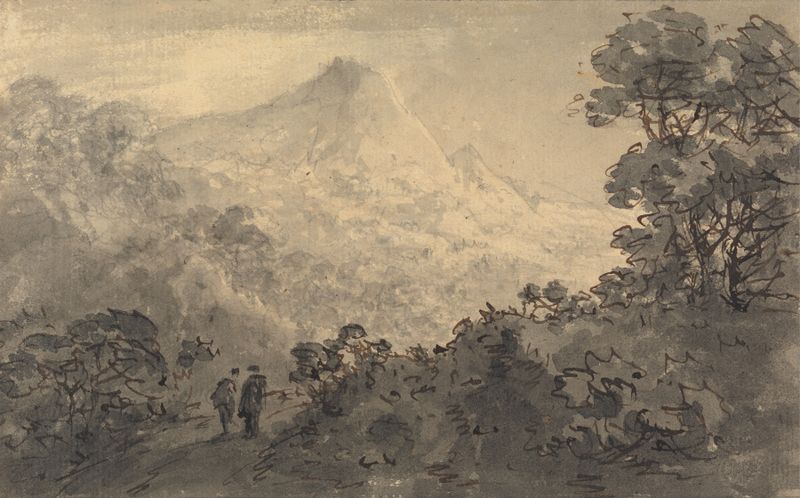
Snowdon
William Gilpin

Hilly Landscape
William Gilpin
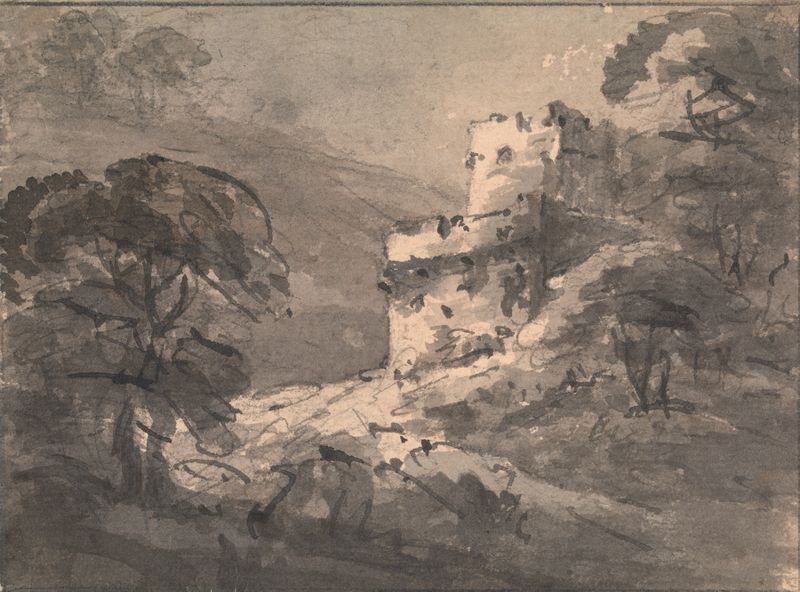
Landscape with a Ruined Castle on the Right
William Gilpin

Mountainous Landscape with Trees – High Crags to the Right
William Gilpin

View of Castle Ruin
William Gilpin
Bridge on the Malton Road from York
William Gilpin

Landscape with Two Trees and Castle
William Gilpin





