
Two Peaches — History & Facts
What draws the eye first in Two Peaches by Adriaen Coorte is not the fruit itself, but the hush of the space around it—a near-velvet darkness that seems to press in, isolating these two forms in a private moment of ripeness. The peaches rest on a ledge, their plump bodies dusted with a bloom of red and gold, their surfaces so tangible you almost feel the fuzz beneath your fingertips. A single leaf, curled and imperfect, clings to one stem and droops over the edge, its battered texture a counterpoint to the peaches’ fullness.
Light pours in from the left, catching the downy skin and making the fruit glow against the void, while the ledge’s sharp edge and the artist’s signature anchor the composition in the here and now. Coorte’s restraint—his refusal to crowd the scene—invites you to linger on the simple drama of ripeness and decay. Painted in 1696, this work belongs to the quiet revolution of late 17th-century Dutch still life, when artists like Coorte turned away from lavish banquet tables to focus on the poetry of a single object or two. Such paintings were often made for private collectors, prized for their intimacy and the meditative pleasure they offered.
Little is recorded about the journey of this specific painting, now documented by the Netherlands Institute for Art History, but it stands as a testament to the era’s fascination with nature’s fleeting gifts and the painter’s hand in capturing them. In a world where abundance was often displayed as spectacle, Coorte’s peaches ask for your attention in a whisper—return to their surface, and see how much can be said with so little.
More Artworks by Adriaen Coorte
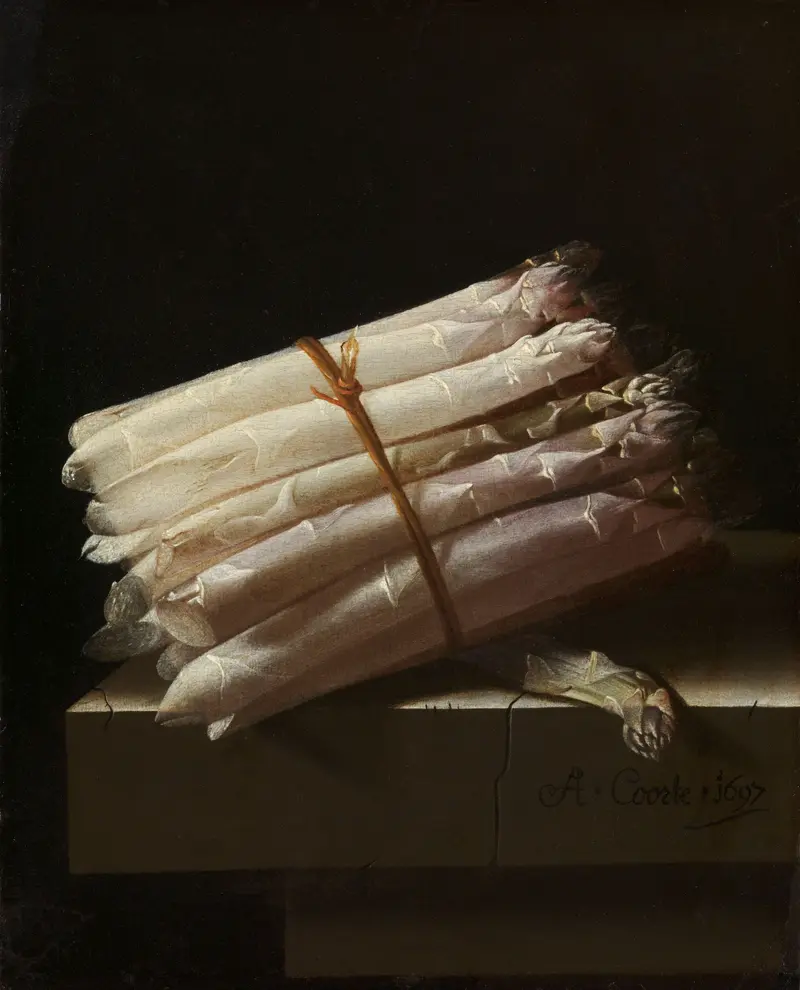
Still Life with Asparagus
Adriaen Coorte
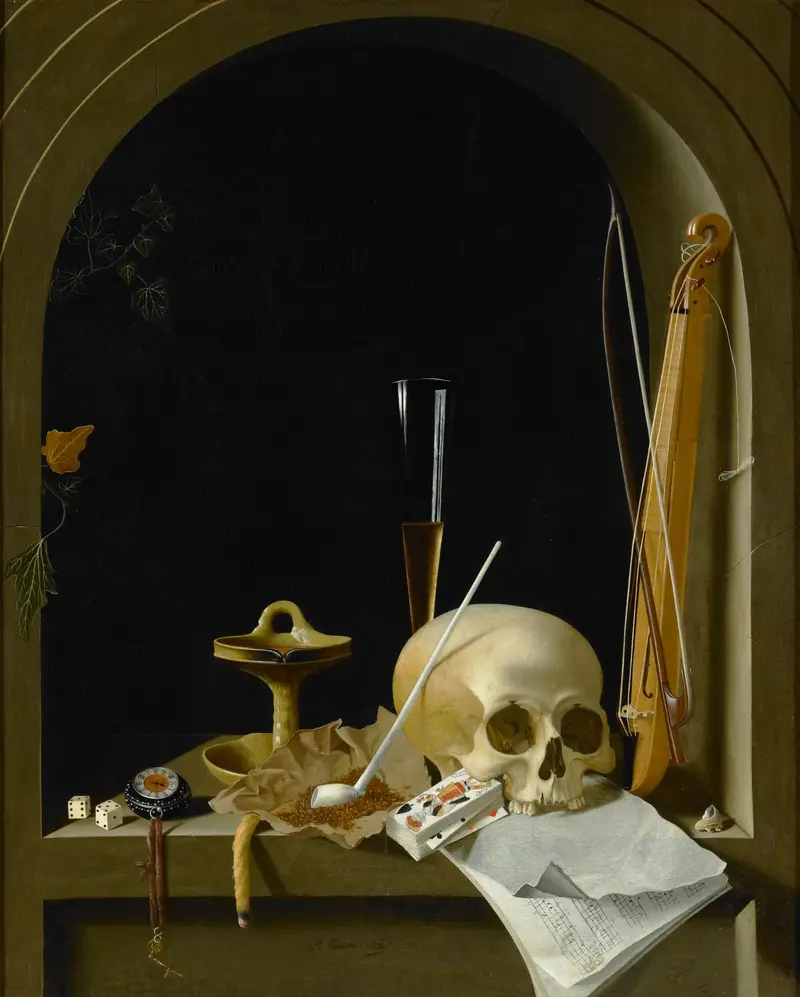
Vanitas still life in a niche
Adriaen Coorte
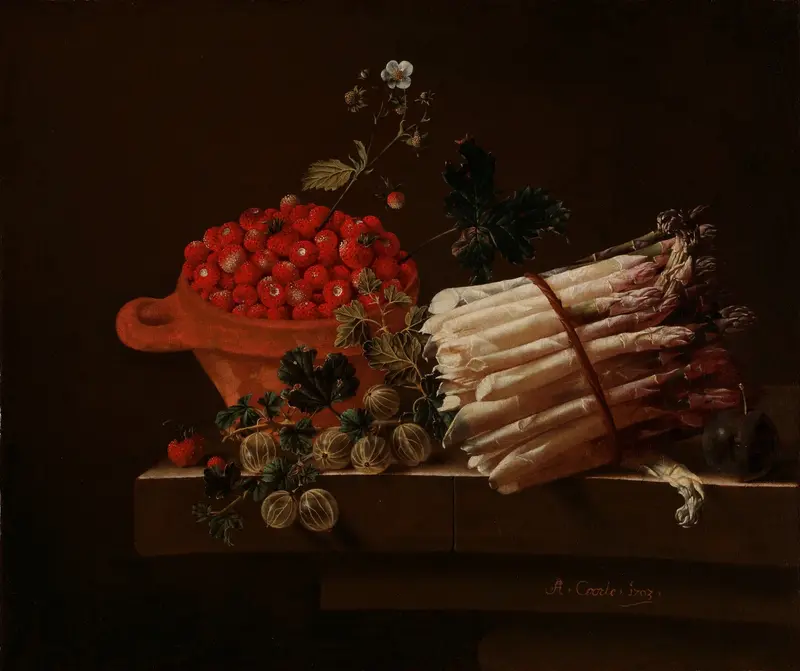
A Pot of Strawberries, Gooseberries, and a Bundle of Asparagus on a Stone Plinth
Adriaen Coorte
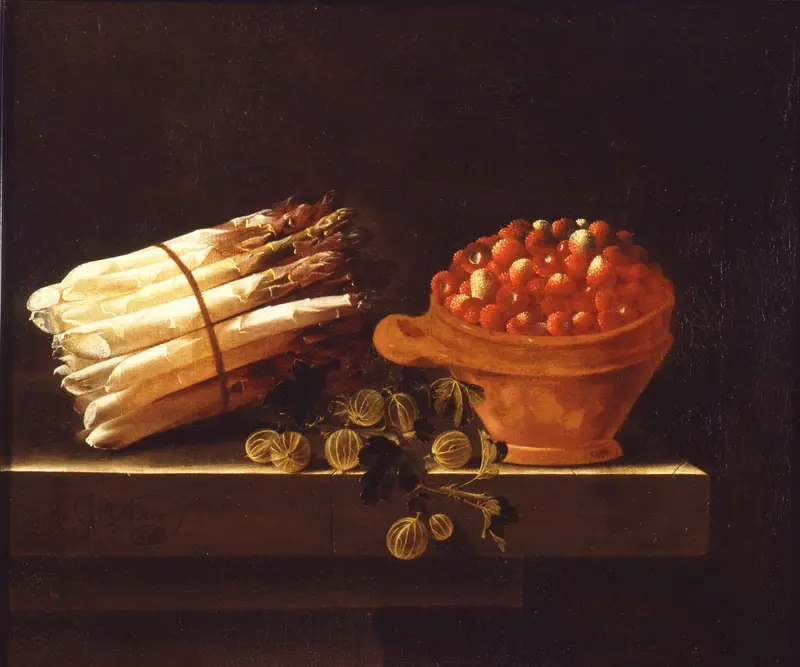
Asparagus, Gooseberries and Strawberries on a Stone Ledge
Adriaen Coorte
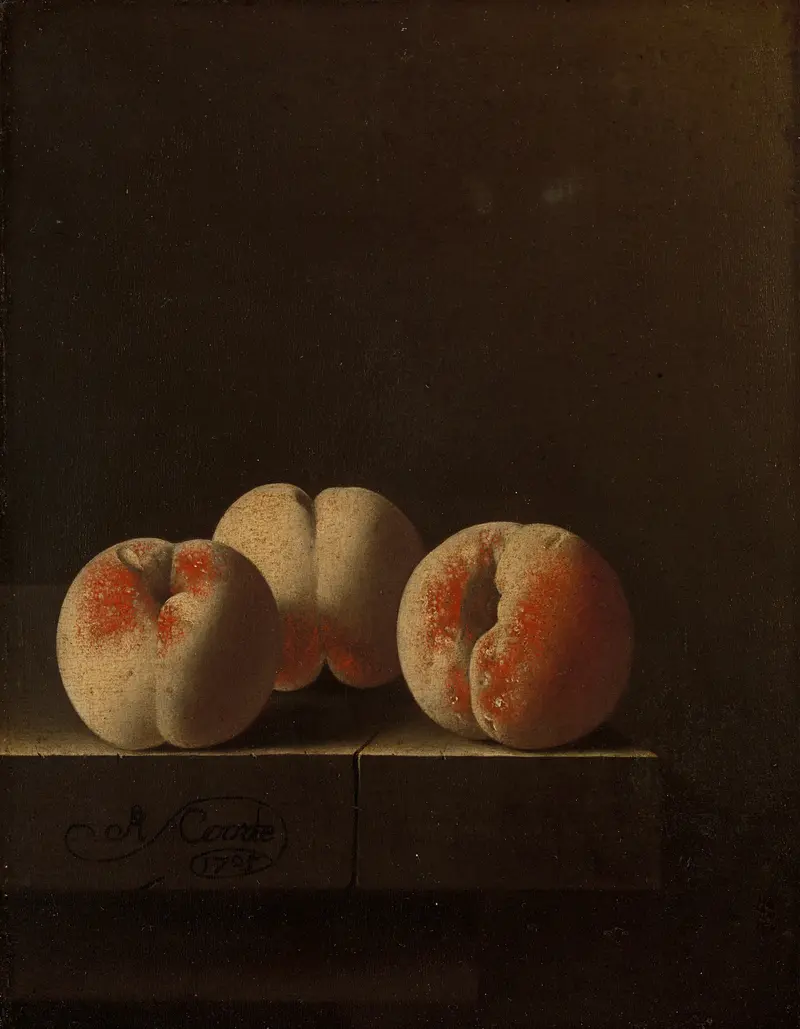
Drie perziken op een stenen plint SK A 5101 Rijksmuseum
Adriaen Coorte
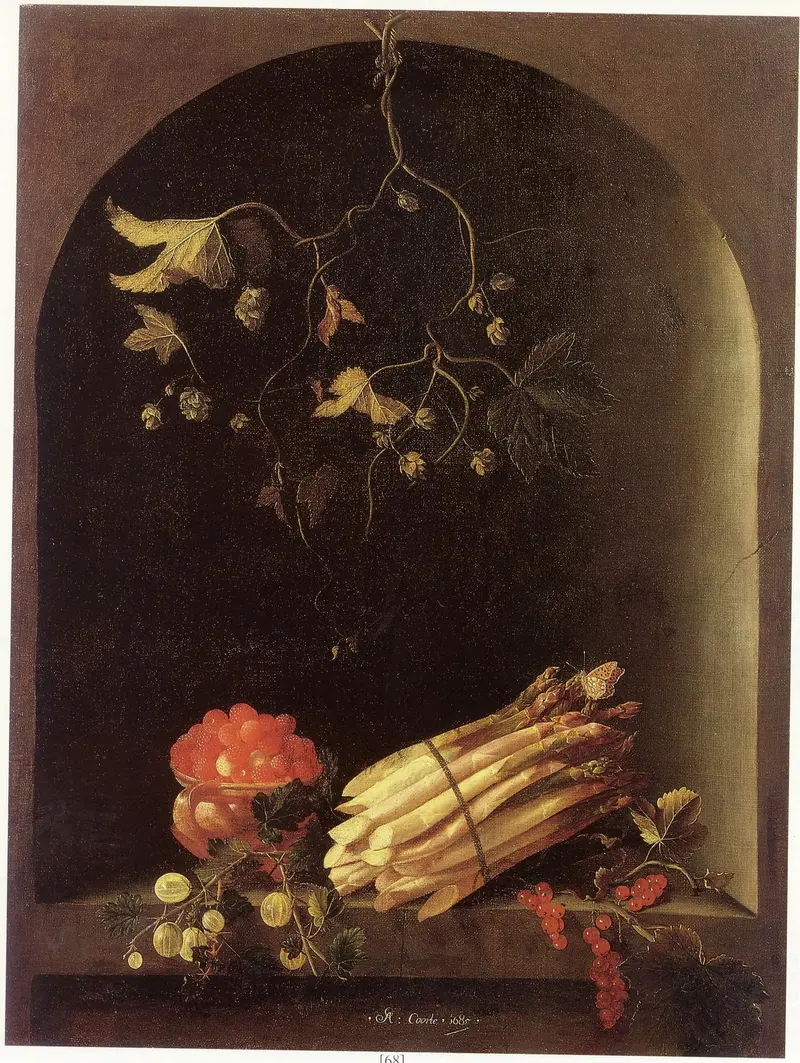
Strawberries, Asparagus, and Gooseberries in a Niche
Adriaen Coorte
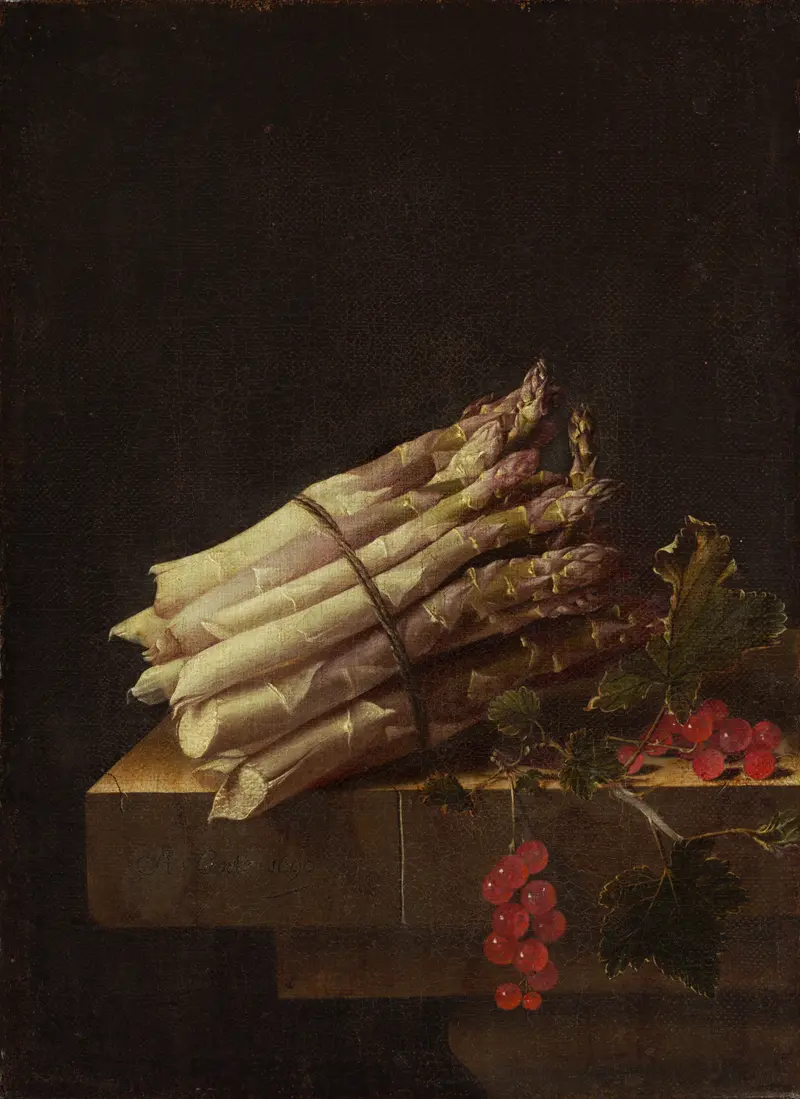
Still Life with Asparagus and Red Currants
Adriaen Coorte
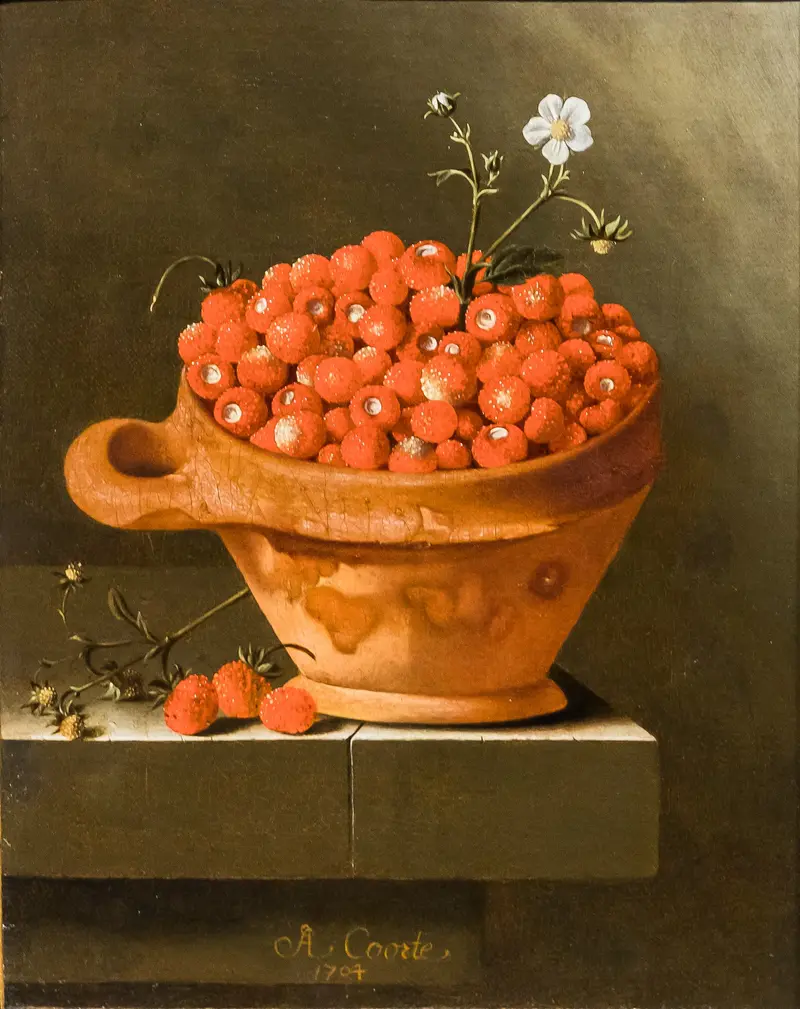
Still life with strawberries in a terracotta pot
Adriaen Coorte
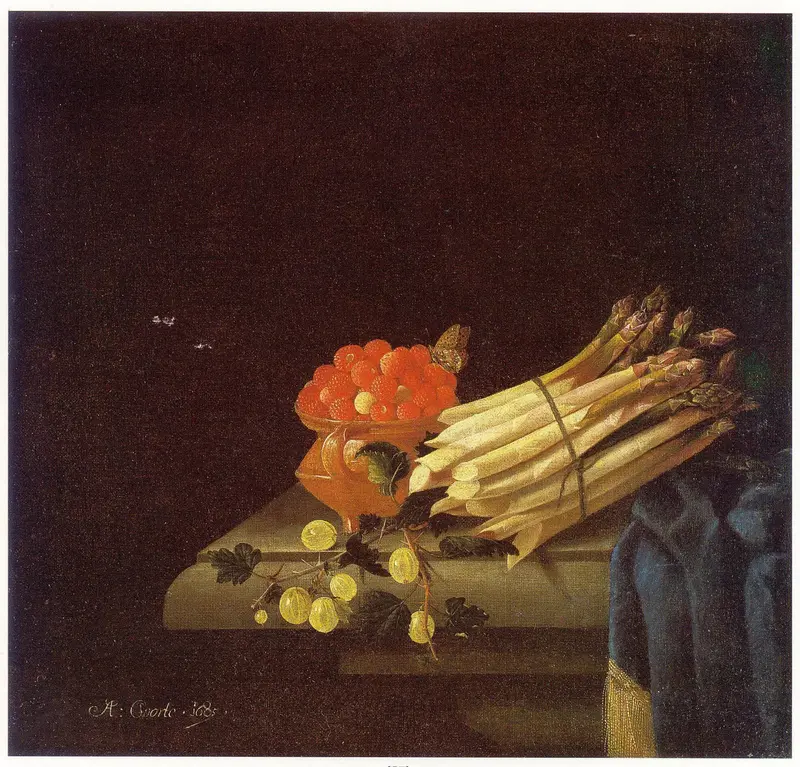
Strawberries, Asparagus, and Gooseberries with a Tablecloth
Adriaen Coorte
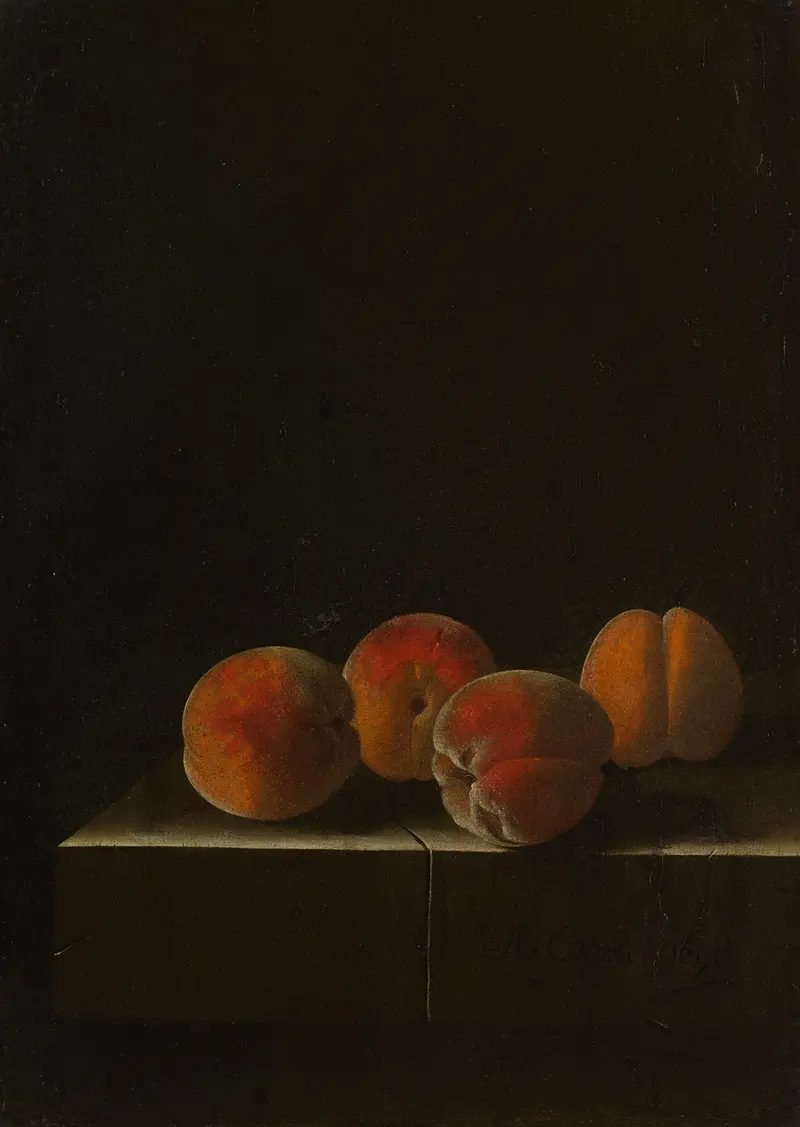
Four Apricots on a Stone Plinth
Adriaen Coorte





