
Two Wrestlers — History & Facts
When Two Wrestlers appeared in 1804, it marked one of the earliest forays of Katsushika Hokusai into the world of physical contest, well before his later fame with Thirty-Six Views of Mount Fuji. What makes this work particularly striking is its rarity: depictions of sumo by major artists were scarce at the time, and Hokusai’s interest in the sport coincided with a renewed popularity of sumo tournaments in Edo. The piece stands out as an early experiment with dynamic human forms, revealing Hokusai’s fascination with movement and anatomy—interests that would define his later prints. The scene captures a moment of tense equilibrium: two sumo wrestlers, locked in a powerful embrace, their muscles straining as they seek an advantage.
Hokusai’s eye lingers on the physical details—the taut limbs, the splayed fingers gripping flesh, the subtle shift of weight in each stance. The wrestlers’ hair is tied in the traditional topknot, and their ceremonial mawashi belts are rendered with careful attention. Unlike the more stylized, almost caricatured sumo prints by Utagawa Kuniyoshi a few decades later, Hokusai’s approach is grounded in observation, emphasizing the raw contest rather than spectacle.
The empty background throws the figures into relief, focusing all attention on the drama of the match. The exact medium of Two Wrestlers remains uncertain, and its early history is not fully documented—a common fate for many works from Hokusai’s prolific career. It is likely that the piece was created for a private patron or as part of an album, reflecting the Edo-period taste for scenes of everyday life and popular entertainment. Today, the work is recognized as a rare glimpse into Hokusai’s evolving style, bridging his early book illustrations and his later iconic landscapes.
Its survival offers a testament to the enduring appeal of both sumo and Hokusai’s restless artistic curiosity.
More Artworks by Katsushika Hokusai

The Great Wave off Kanagawa
Katsushika Hokusai
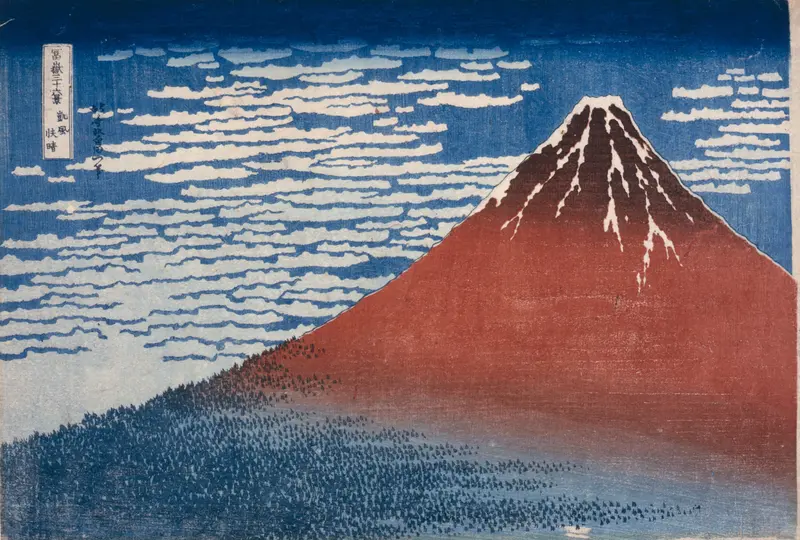
Fine Wind, Clear Morning (Red Fuji)
Katsushika Hokusai
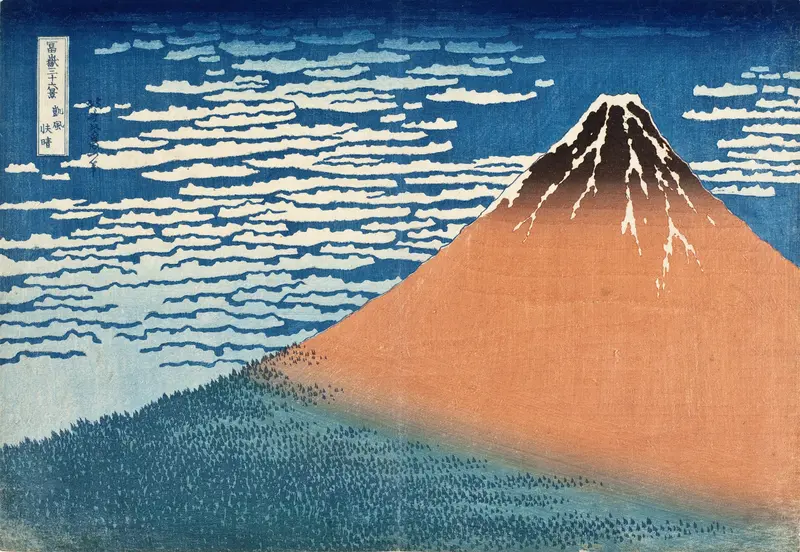
South Wind, Clear Dawn
Katsushika Hokusai
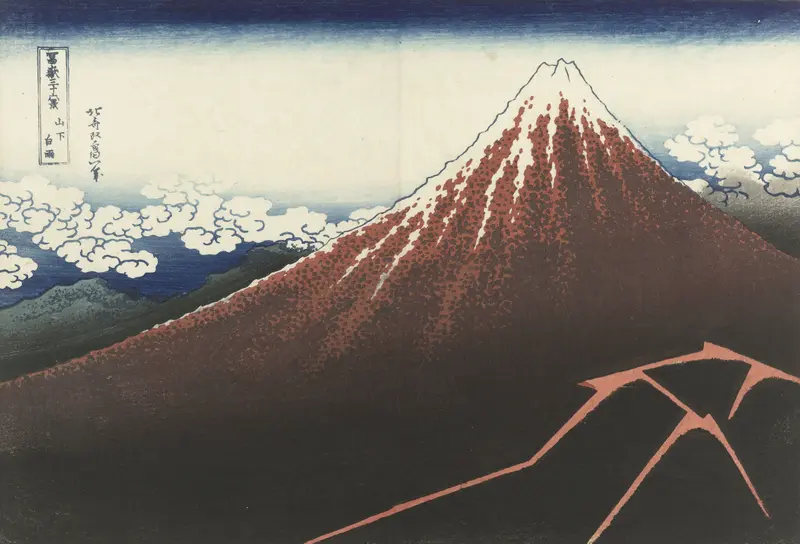
Rainstorm Beneath the Summit
Katsushika Hokusai
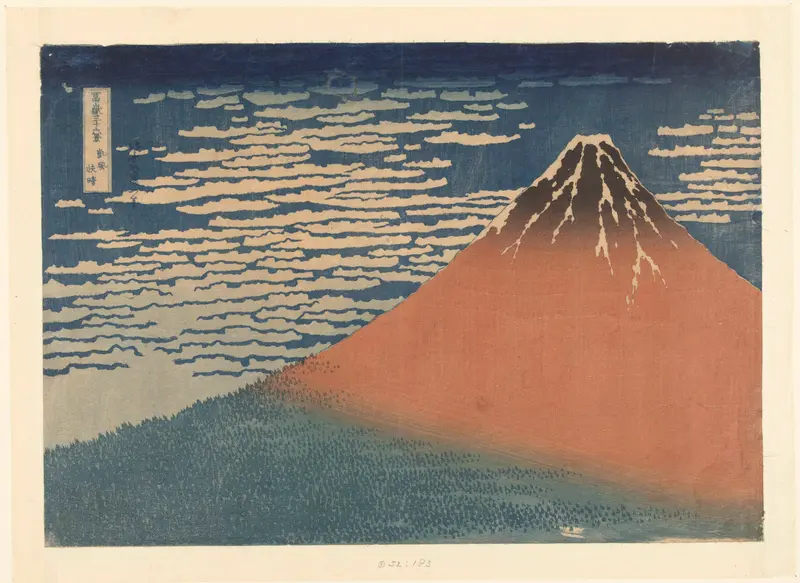
Clear Weather with a Southerly Wind
Katsushika Hokusai
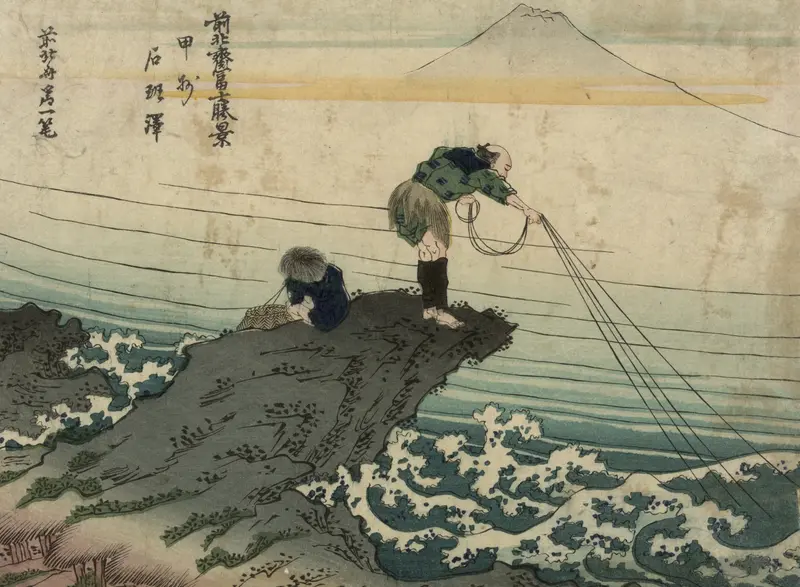
Kōshū kajikazawa
Katsushika Hokusai
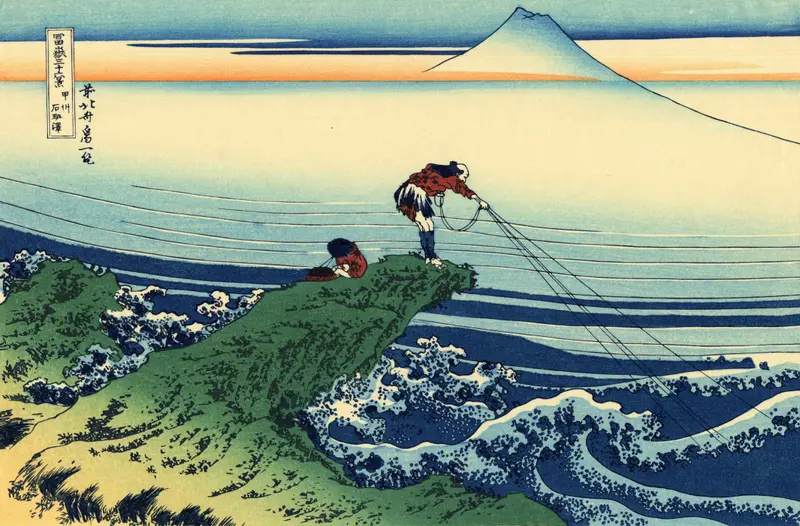
Kōshū kajikazawa 2
Katsushika Hokusai
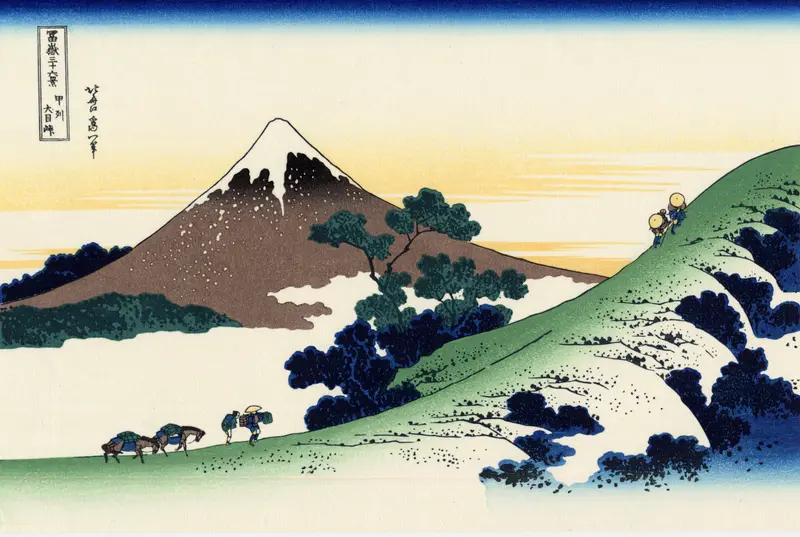
Inume Pass in Kai Province (Kôshû inume-tôge)
Katsushika Hokusai

Yoro Falls in Mino Province (Mino no Yoro no taki), from the series "A Tour of Waterfalls in Various Provinces (Shokoku taki meguri)"
Katsushika Hokusai
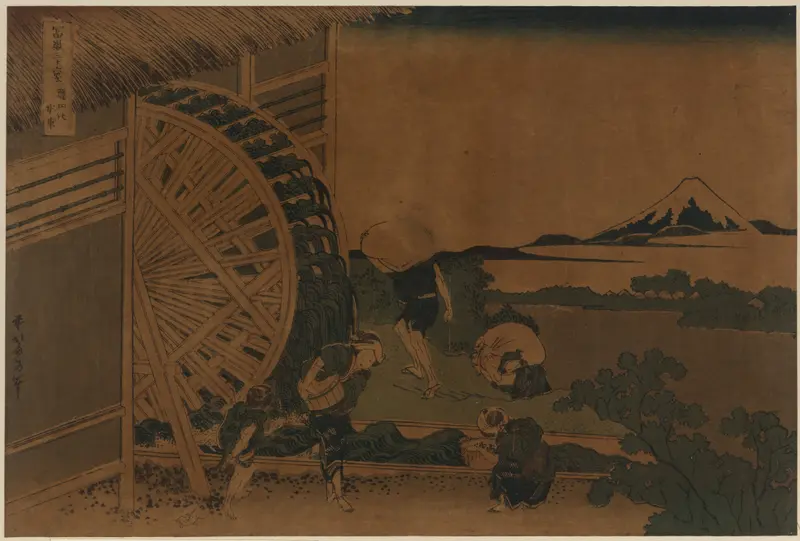
Onden no suisha
Katsushika Hokusai



