Umgebung der Ruine Habsburg — History & Facts
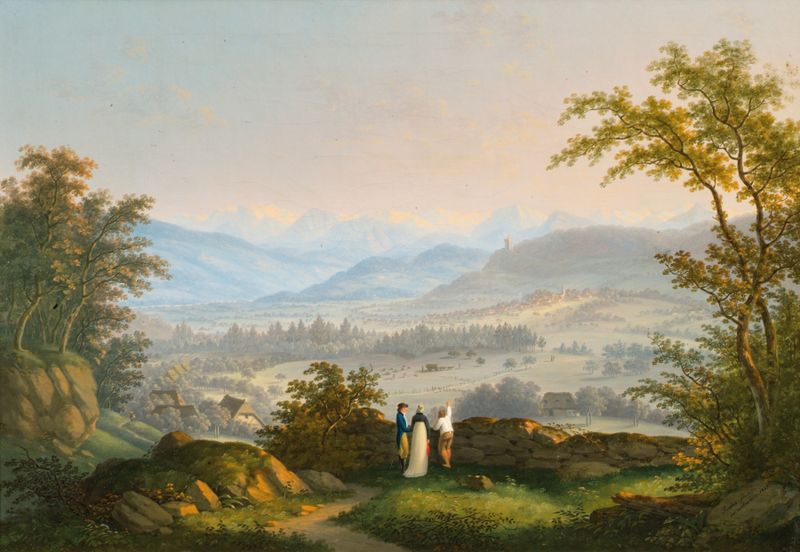
What if beauty was never meant to be finished? In Umgebung der Ruine Habsburg, the viewer is invited into a dreamscape where the remnants of grandeur linger, whispering tales of a forgotten past. Look to the foreground, where the fragmented ruins rise against a backdrop of softly muted hues. Notice how the artist skillfully employs a delicate palette of greens and browns, contrasting the ruin's crumbling structure with the vibrant life of nature encroaching upon it. The light dances across the canvas, illuminating patches of wildflowers that bloom defiantly amongst the decay, drawing the eye to the juxtaposition of life and loss. In the background, a subtle mist envelops the distant hills, hinting at the mysteries that lie beyond the frame.
The serene sky, painted in soft blues and pale grays, evokes a sense of melancholy, suggesting that beauty and tragedy coexist. This dichotomy reflects the passage of time and the inevitable decay of all things, as well as an innate yearning for what has been lost, yet still captivates the imagination. Johann Caspar Rahn painted this piece in 1803, during a period of romanticism in art that celebrated nature and the sublime. Living in Switzerland, where the ruins of castles and fortifications dotted the landscape, he sought to capture the essence of these historical sites.
At a time when artists were increasingly exploring themes of nostalgia and the ephemeral nature of life, this work stands as a poignant reminder of both the beauty and transience of existence.