
Un ruisseau; environs de Beauvais — History & Facts
In the stillness of nature, beauty often conceals a melancholic truth, whispering secrets of time and loss into the ears of those willing to listen. Look to the center of the canvas where a gentle stream meanders, reflecting the dappled light filtering through the leafy canopy above. Soft blues and greens dominate the palette, creating a serene harmony that draws the eye to the water’s surface — a mirror of tranquility. The brushstrokes are delicate yet deliberate, capturing the interplay between shadow and illumination, inviting one to ponder the depths beneath the placid exterior. As you explore the edges of the scene, notice the subtle tension between the vibrant foliage and the subdued, somber tones of the water.
The juxtaposition reveals an underlying sense of solitude; the stream flows silently, navigating through the landscape as if burdened by unspoken memories. Here, nature becomes a vessel for reflection, evoking both serenity and an ache for something lost, wrapped in the embrace of time. In the late 1860s, Jean-Baptiste-Camille Corot was deeply engaged in his exploration of landscape painting, seeking to capture the essence of rural life and the tranquility of nature. Living in France, he was influenced by the changing artistic movements of the time, embracing a more impressionistic approach while remaining true to his roots.
Un ruisseau; environs de Beauvais encapsulates this transition, marking a period when the artist sought to convey emotional depth through his serene depictions of the world around him.
More Artworks by Jean-Baptiste-Camille Corot
Browse all →
View of Genoa
Jean-Baptiste-Camille Corot
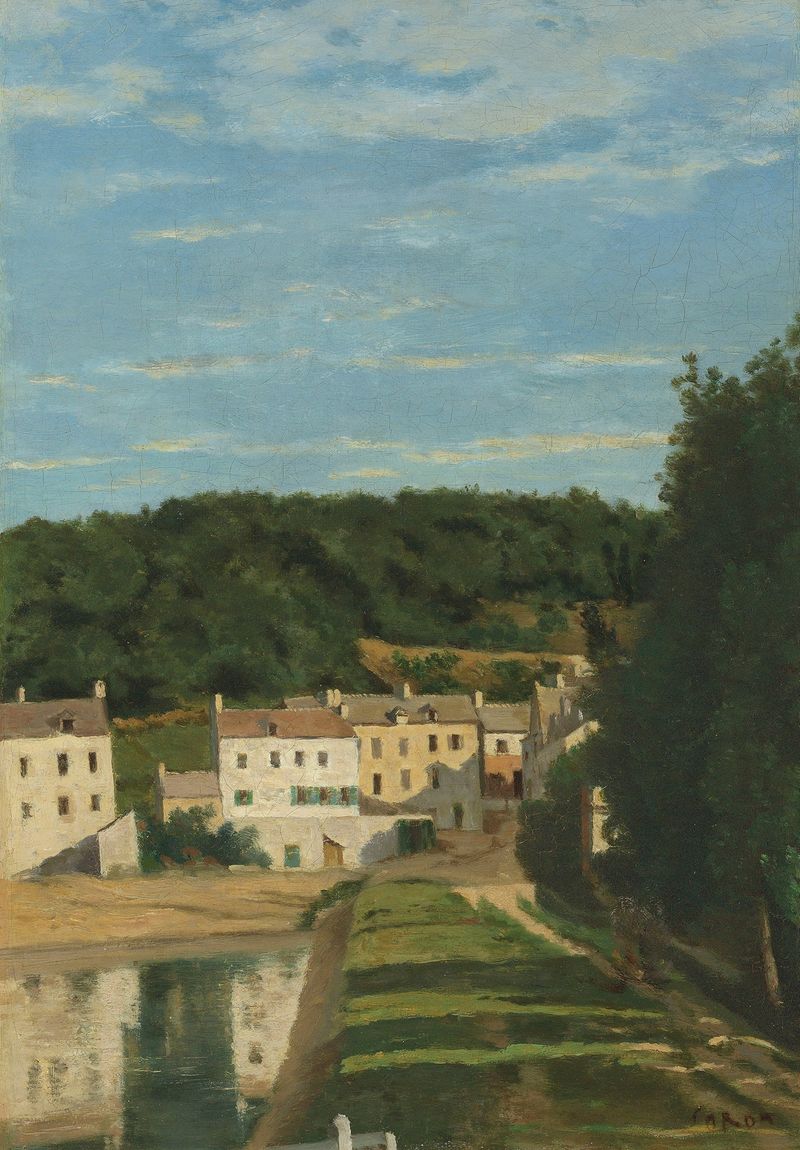
Les Maisons Cabassud À Ville D’avray
Jean-Baptiste-Camille Corot

La solitude. Souvenir de Vigen (Limousin)
Jean-Baptiste-Camille Corot
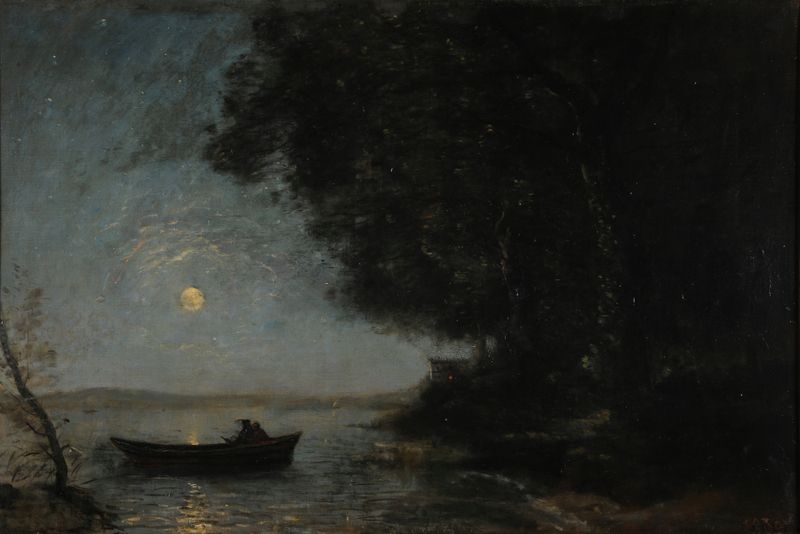
Le lac ; effet de nuit
Jean-Baptiste-Camille Corot
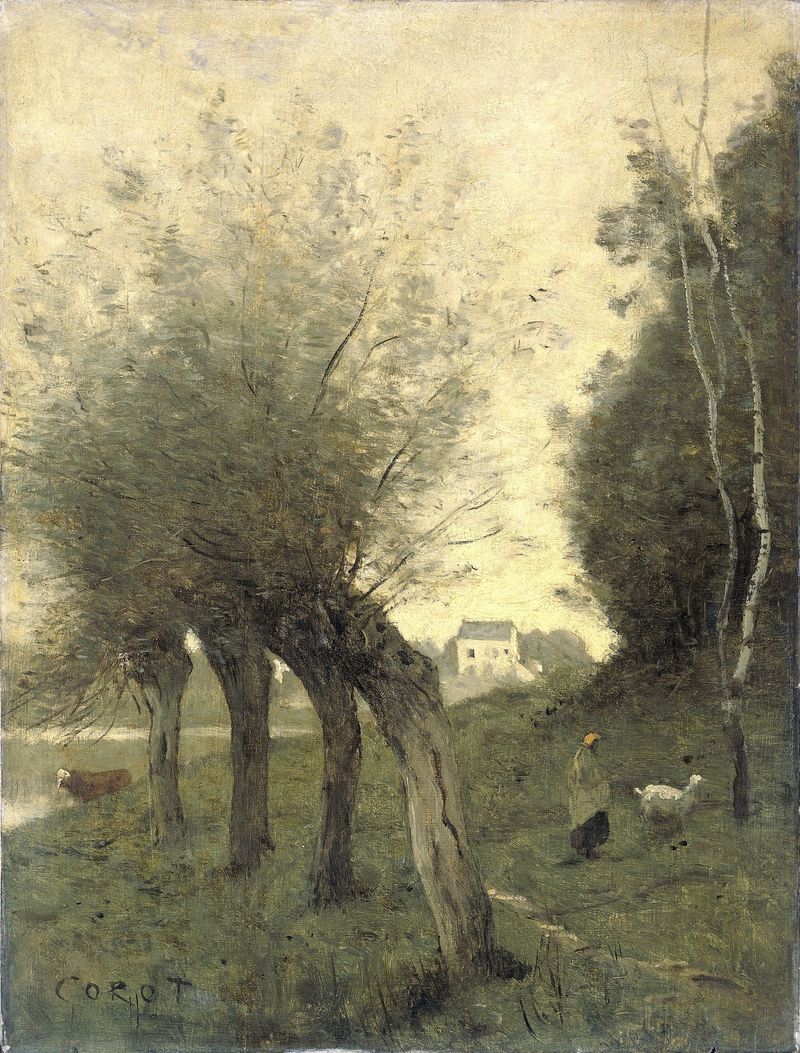
Landscape with Pollard Willows
Jean-Baptiste-Camille Corot
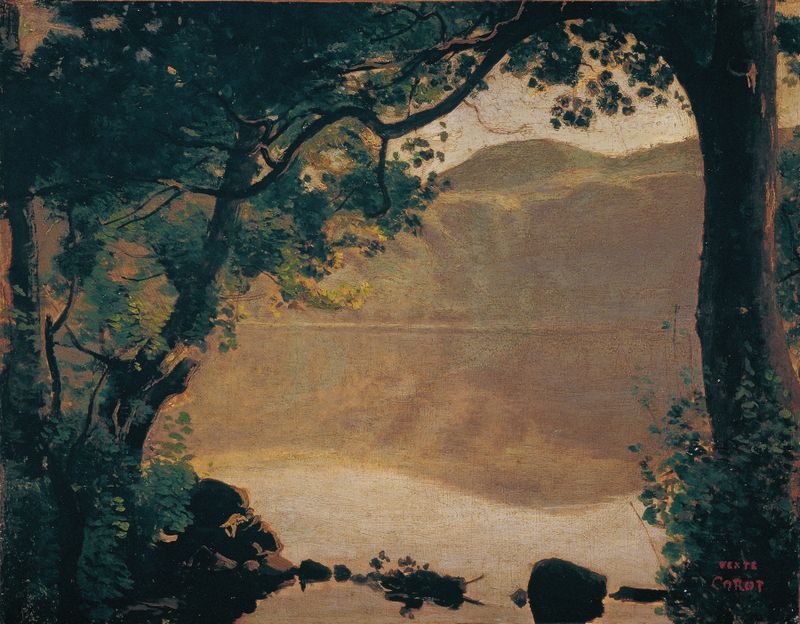
Der Nemisee
Jean-Baptiste-Camille Corot
Les Étangs De Ville D’avray
Jean-Baptiste-Camille Corot
Pond in the Woods
Jean-Baptiste-Camille Corot
Ville D’avray; L’abreuvoir Des Chevaux
Jean-Baptiste-Camille Corot
Le vallon au cavalier
Jean-Baptiste-Camille Corot





