
Vaskeplass ved stranden, Feste — History & Facts
What if beauty was never meant to be finished? In Vaskeplass ved stranden, the artist captures a fleeting moment that lingers in between completion and impermanence, echoing truths that resonate beyond the canvas. Look to the left at the gentle curve of the shoreline, where soft waves caress the sandy beach, creating a seamless horizon. The palette is a delicate interplay of blues and greens, inviting the viewer to trace the light as it dances upon the water's surface. Notice how the figures of women, engaged in their daily washing ritual, are painted with a blend of realism and impressionistic strokes, their forms emerging from the background yet fully immersed in the scene.
This technique draws one's attention to the subtleties, as each brushstroke conveys the rhythm of life and nature. Beneath the surface of this idyllic seaside tableau lies a tapestry of contrasts: the serenity of the moment juxtaposed with the labor of daily chores, the ethereal beauty of the landscape marked by the reality of human toil. The expressions of the women suggest both contentment and resignation, hinting at deeper layers of experience. This artwork invites contemplation on the often-overlooked narratives of ordinary lives, celebrating their quiet resilience amid nature’s grandeur. In 1893, Hans Gude painted this piece in Norway, during a period when the country was experiencing a burgeoning sense of national identity and artistic innovation.
He was deeply influenced by the landscape around him, as well as the shifting artistic movements that sought to merge realism with a romantic appreciation for nature. At this time, the artist was exploring how light and form could convey emotional depth, aiming to capture not just a scene but the essence of truth in everyday life.
More Artworks by Hans Gude
Browse all →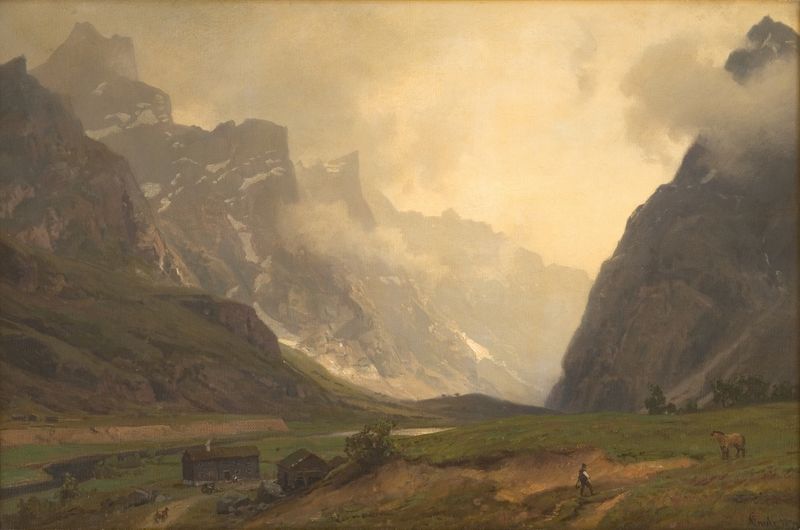
The Troll Peaks in Romsdalen, The Foot of Romsdalshorn to the Right
Hans Gude
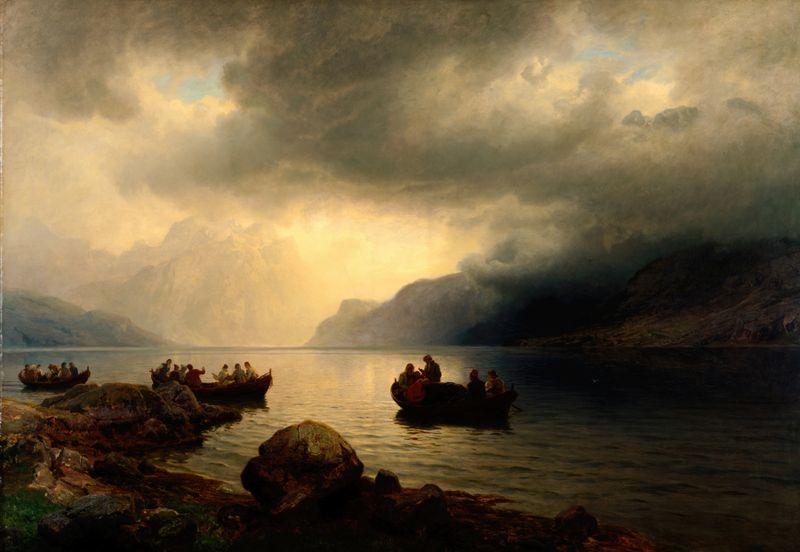
Funeral Procession on the Sogne Fjord
Hans Gude
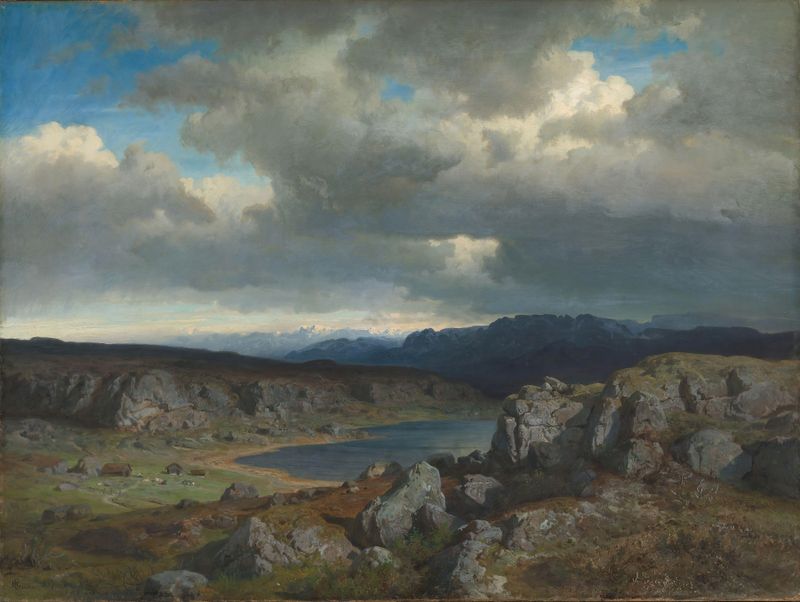
Norwegian Highlands
Hans Gude
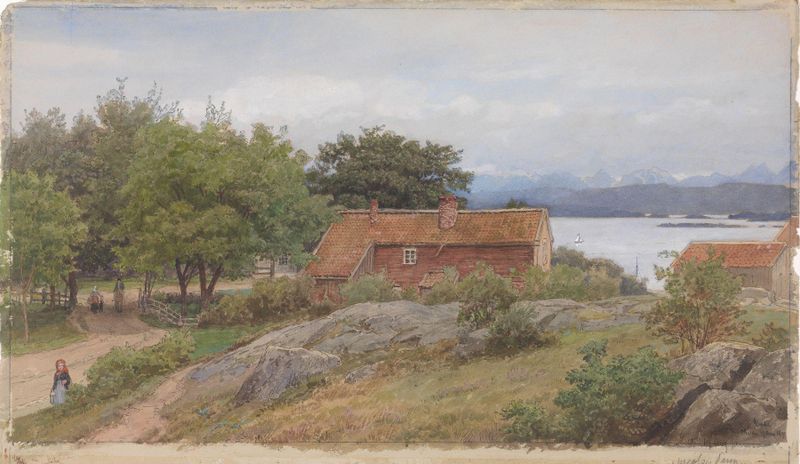
Landskap med bondegård ved Molde
Hans Gude
Mountain Landscape
Hans Gude
Fresh Breeze on the Norwegian Coast
Hans Gude
Norwegian Landscape in Rain
Hans Gude
Landscape by Stavern
Hans Gude
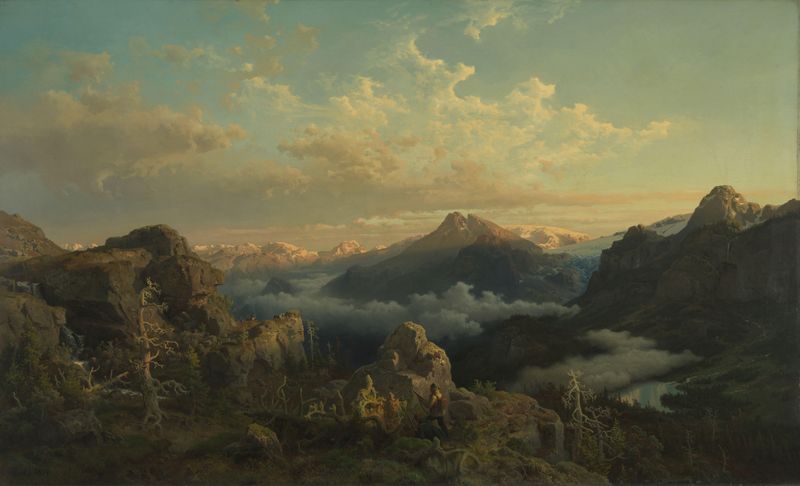
Norwegian Highlands in Sunrise
Hans Gude
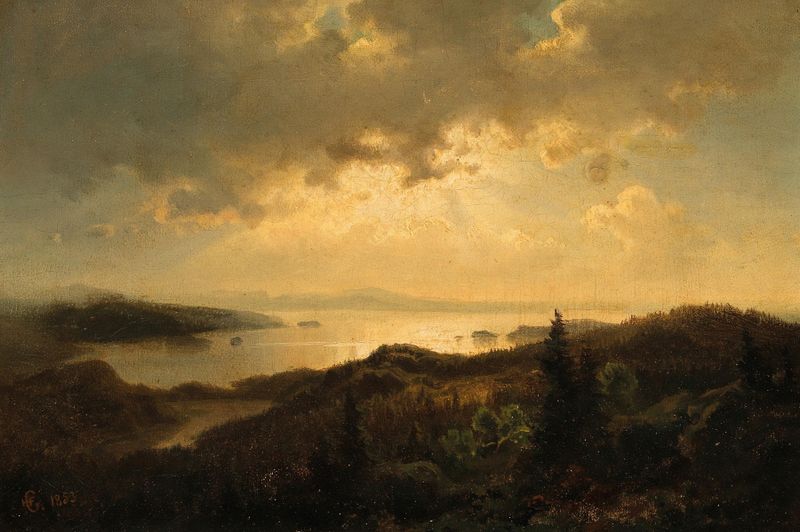
A Scene at Dusk in Norway
Hans Gude





