
Vegetable fields — History & Facts
The first thing that grips the eye in Vegetable fields by August Macke is the bold geometry of the crossroads, a pale fork slicing through a riot of color. The viewer is pulled forward, almost physically, along the creamy path that splits the landscape, inviting a choice: left or right, toward the glowing yellow haystacks that rise like lanterns against the deep blue hills. The fields themselves are a patchwork of purples, oranges, and greens, each section pulsing with its own life.
Macke’s brushwork is broad and confident, the boundaries between earth, crop, and sky outlined in black, as if the world itself has been freshly inked. The fields are not just cultivated—they are celebrated, each cabbage and furrow rendered with the same intensity as the sky above. Painted in 1911, this work stands at the crossroads of Expressionism, a movement that swept through Germany in the early twentieth century. Artists like Macke turned away from photographic realism, instead seeking to capture the emotional truth of a scene through color and form.
These landscapes were rarely commissions; they were personal explorations, responses to a rapidly changing world where rural calm and urban speed collided. The copy before us, documented in a 2009 reproduction from an artbook, is a testament to the enduring fascination with this moment in art history. Looking again, the viewer might sense the optimism and energy of a world on the brink, the crossroads not just of a field, but of an era.
More Artworks by August Macke
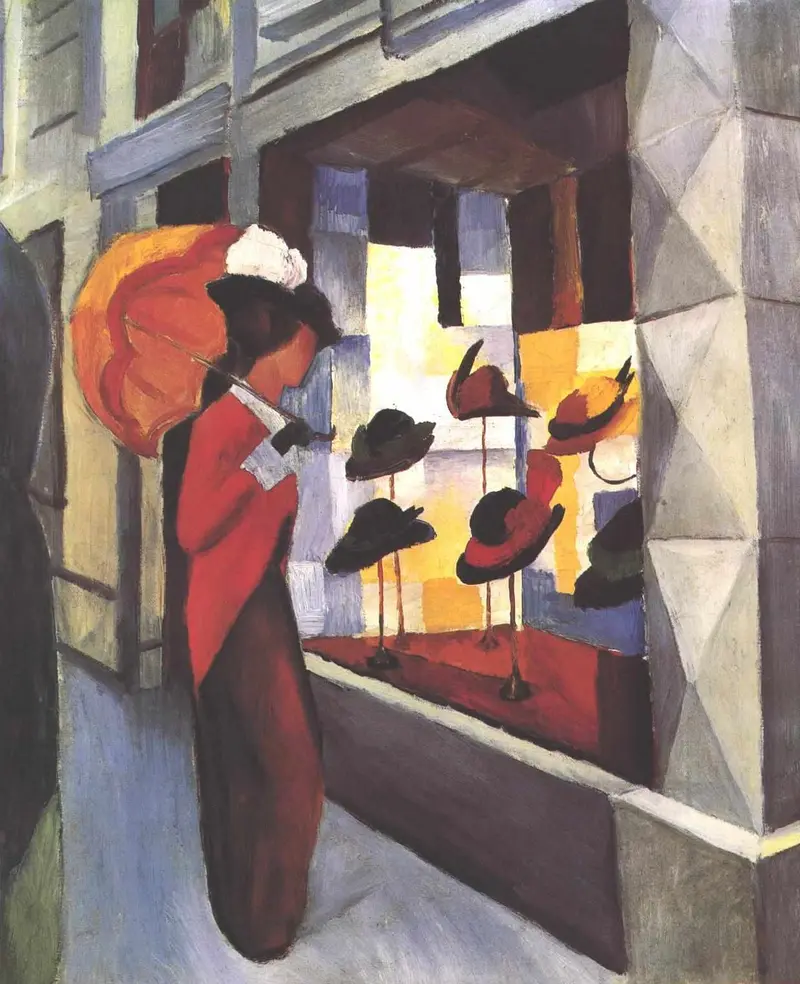
Woman with a Parasol in Front of a Hat Shop
August Macke

Street with Church in Kandern
August Macke
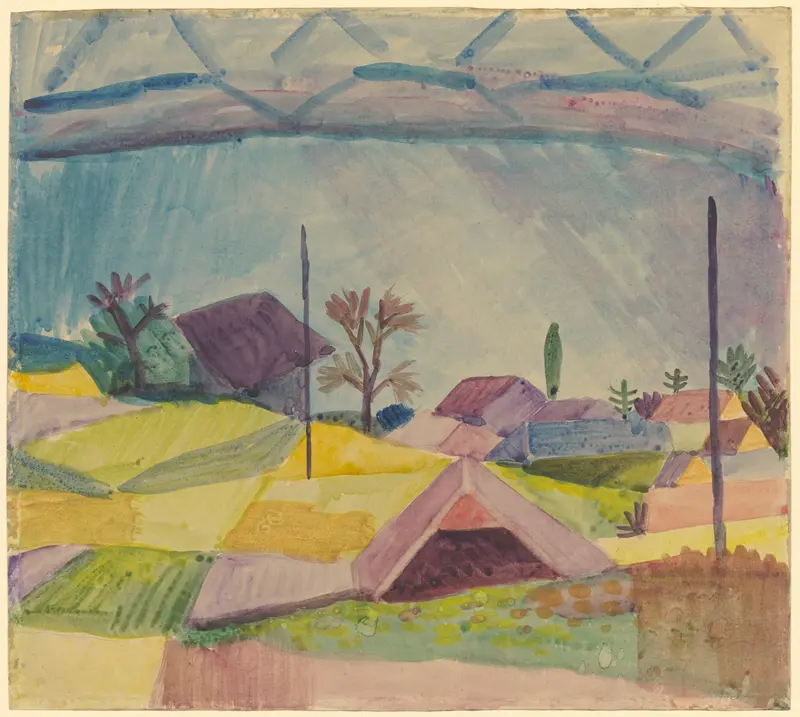
View of Hilterfingen
August Macke

Paar im Nachen
August Macke
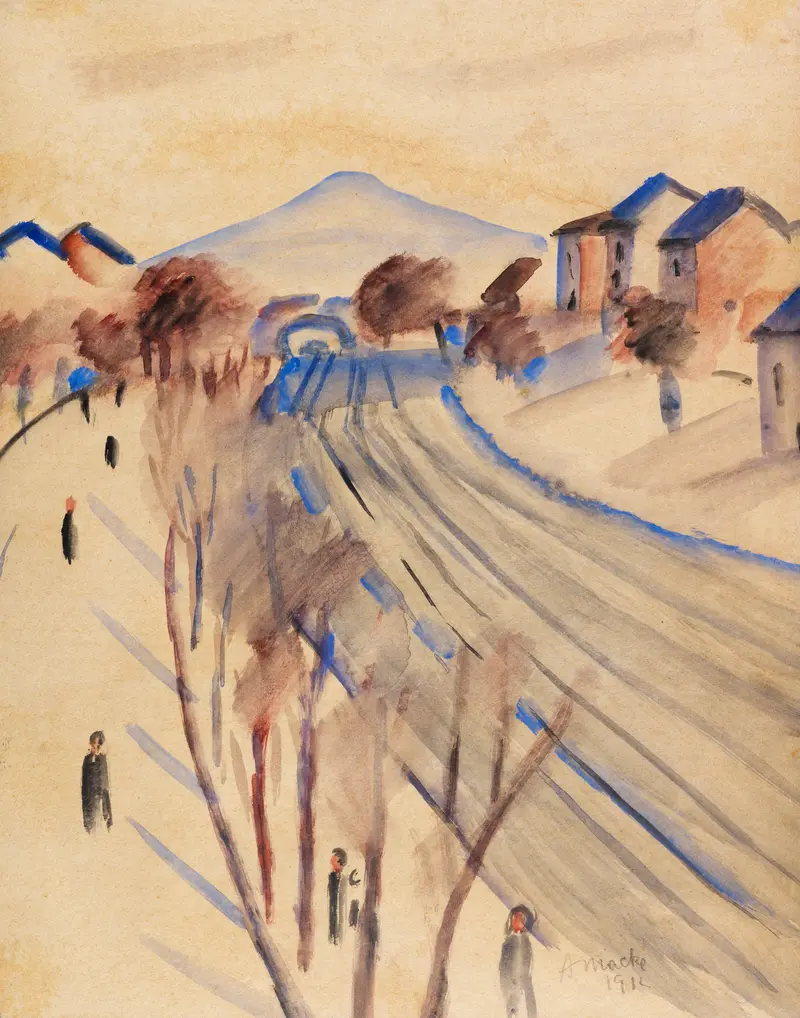
Ölberg mit Bahngleisen II
August Macke
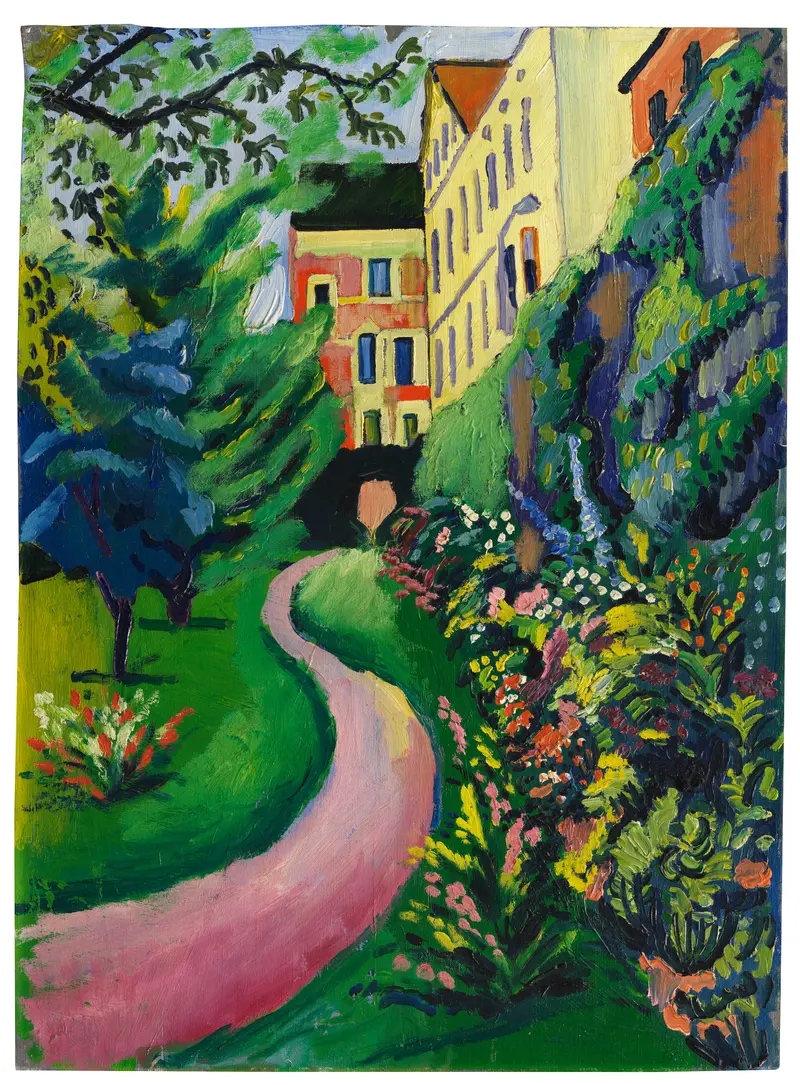
Unser Garten mit blühenden Rabatten
August Macke
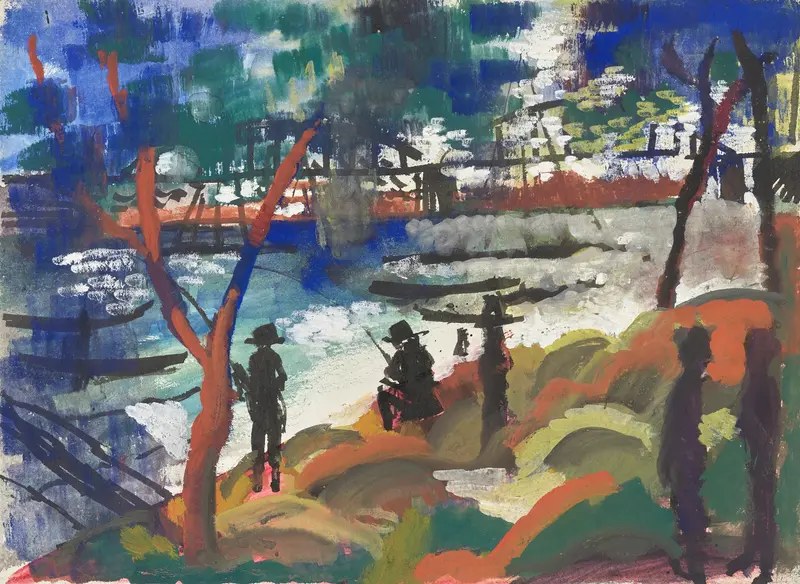
Angler am Fluss
August Macke
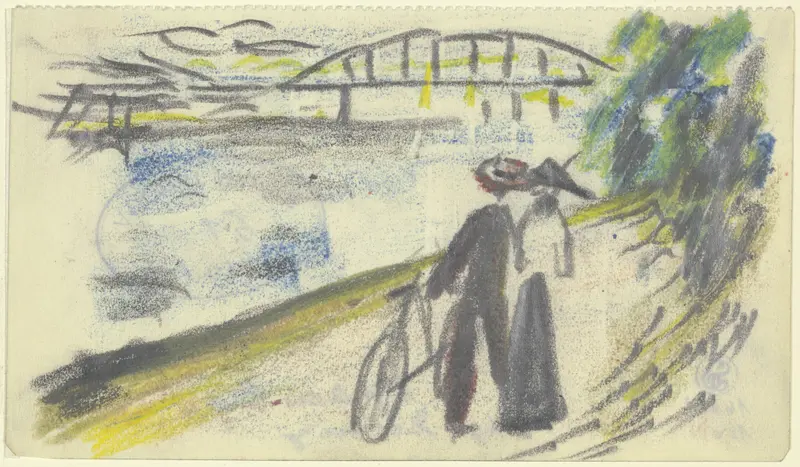
Path at the Rhine
August Macke
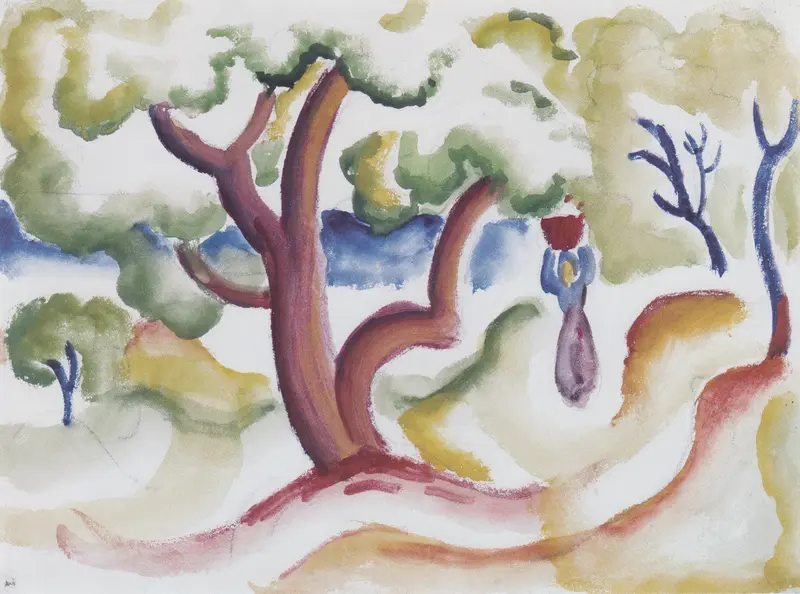
Frau mit Krug unter Bäumen
August Macke
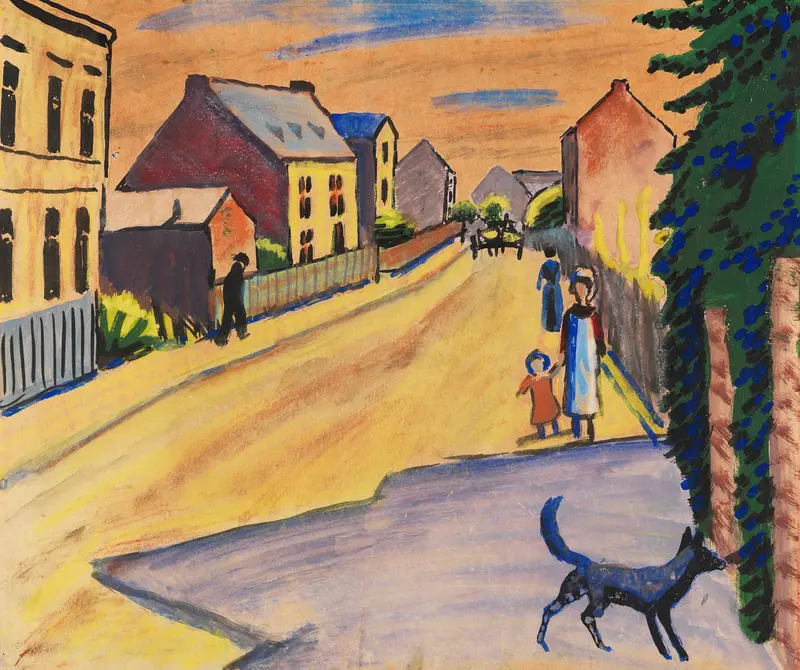
Sonnige Straße mit Hund
August Macke
More Landscape Art

The Starry Night
Vincent van Gogh

View of Delft
Johannes Vermeer

Water Lilies
Claude Monet

The Grand Canal, Venice, looking north-west from the Ca' Corner to the Ca' Contarini degli Scrigni, with the campanile of Santa Maria della Carità
Canaletto

Windsor Castle
Canaletto

The Grand Canal looking North-East from the Palazzo Dolfin-Manin to the Rialto Bridge
Canaletto