
Venetian gondola — History & Facts
What first catches the eye in Venetian gondola is the intimacy of the moment: a gondola glides directly toward the viewer, its prow cutting through the shimmering water, drawing us into the private world inside. The painter, Antonietta Brandeis, places us almost at water level, inviting us to share the perspective of someone waiting on a distant pier or another passing boat. The gondolier stands tall, his oar angled with practiced ease, while the ornate cabin shelters two figures—one in a hat, the other holding a small bouquet—framed by the delicate fretwork of the doors.
The sunlight, pale and diffused, glances off the water and the black lacquer of the boat, setting a gentle, expectant mood. Works like this belong to the flourishing tradition of Venetian vedute, popular among travelers and collectors in the late nineteenth century, when Venice was both a living city and a symbol of nostalgia for a fading era. Artists such as Brandeis catered to a market eager for scenes of everyday life, rendered with both accuracy and affection. Though the exact date of this painting is unknown, and its journey is traced only as far as the Bonhams collection, it stands as a quiet testament to the city’s enduring allure.
The viewer is left with the sense of a fleeting encounter—one that might have been witnessed from the banks of the lagoon, now preserved in paint and memory.
More Artworks by Antonietta Brandeis

Venice, a View of San Giorgio Maggiore
Antonietta Brandeis
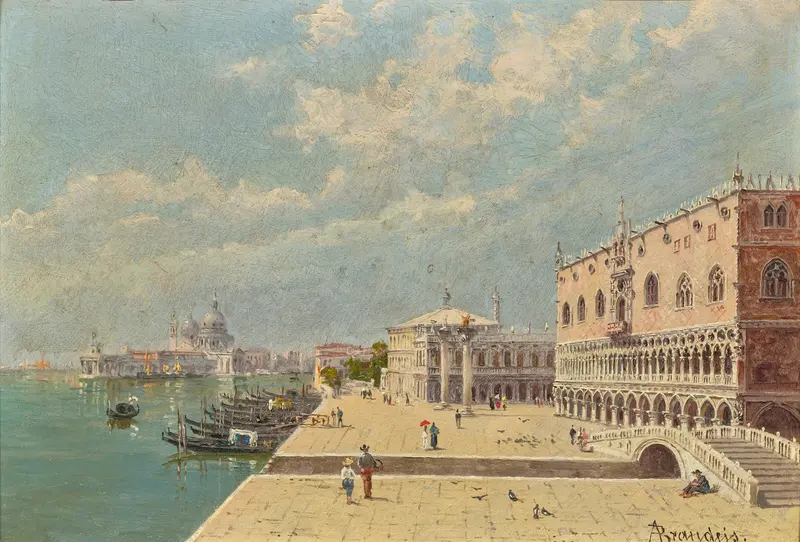
View of Venice; The Palazzo Ducale, The Piazzetta San Marco And The Basilica Santa Maria Della Salute From The Riva Degli Schiavoni
Antonietta Brandeis
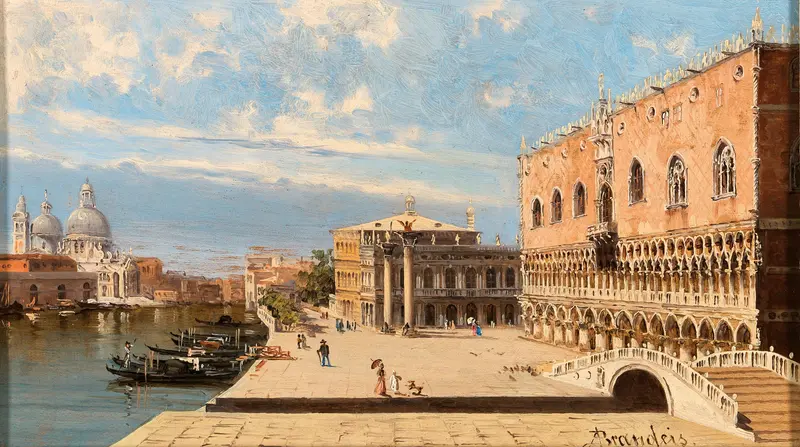
Il Palazzo Ducale Venezia
Antonietta Brandeis

Ca’ Vendramin Calergi from the Grand Canal, Venice
Antonietta Brandeis
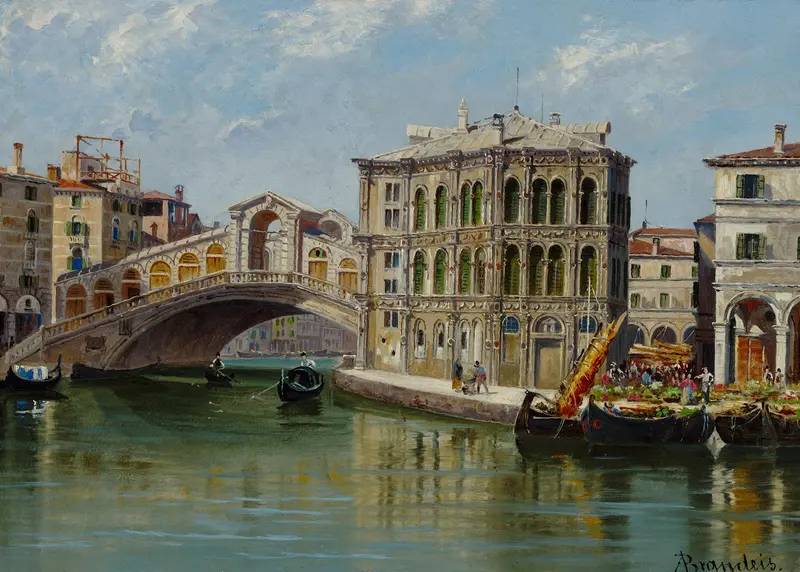
St Mark’s, Venice
Antonietta Brandeis
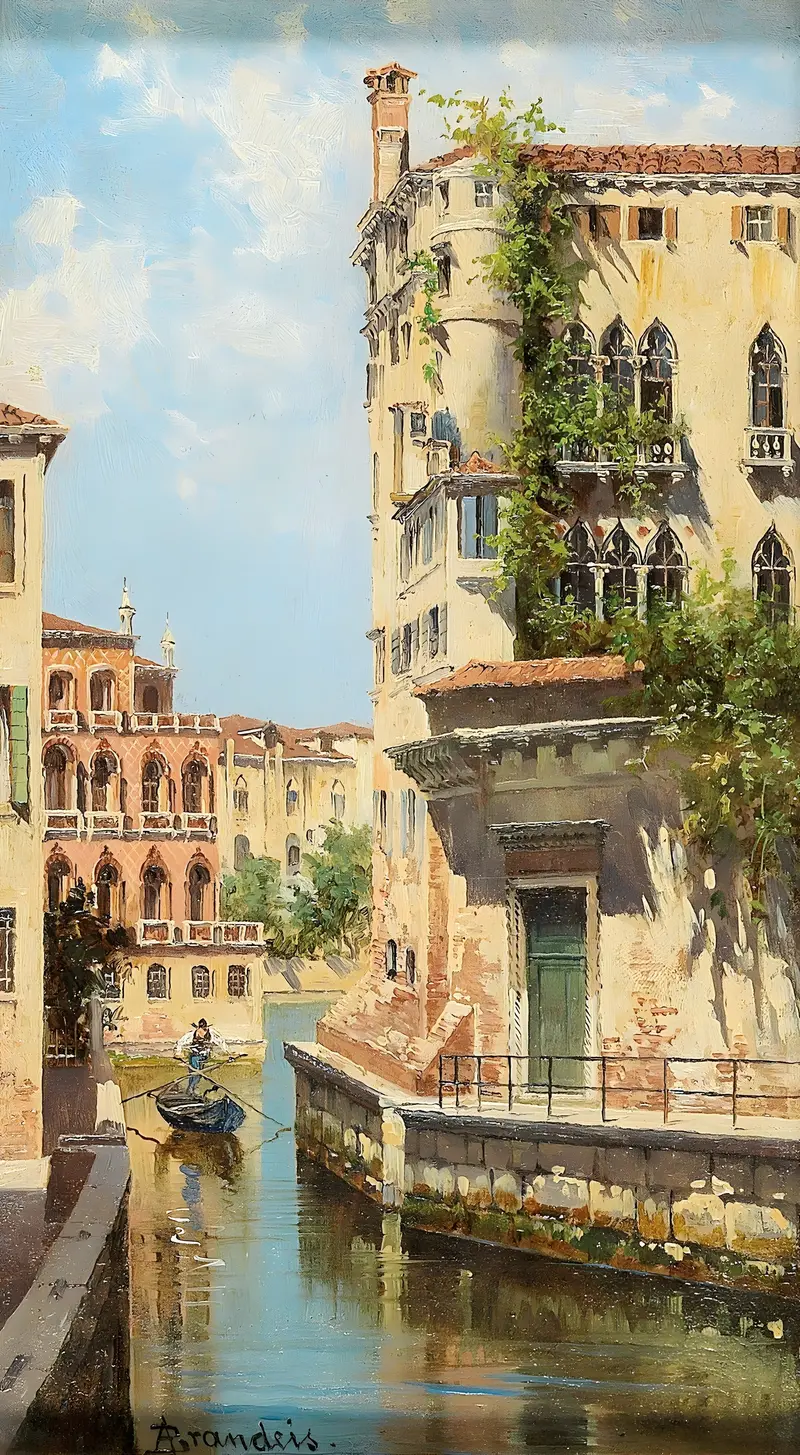
Canal In Venice With View Of The Back Of The Palazzo Rocca
Antonietta Brandeis

The Grand Canal, Venice
Antonietta Brandeis
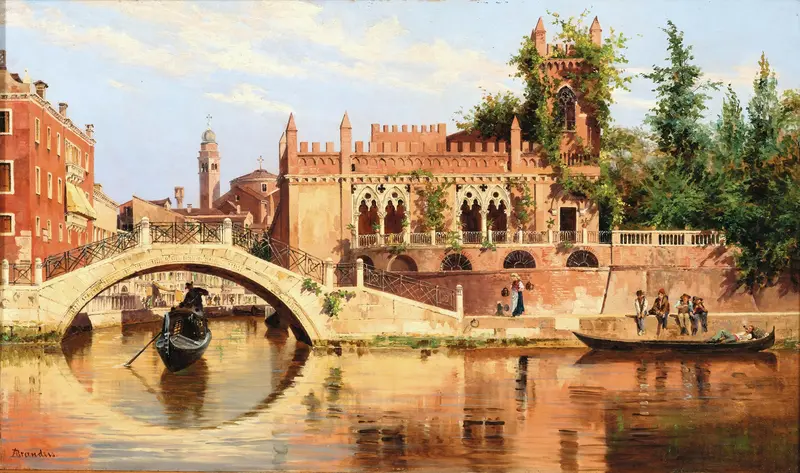
Venice, a View of Ponte de la Calcina on Rio di San Vio
Antonietta Brandeis
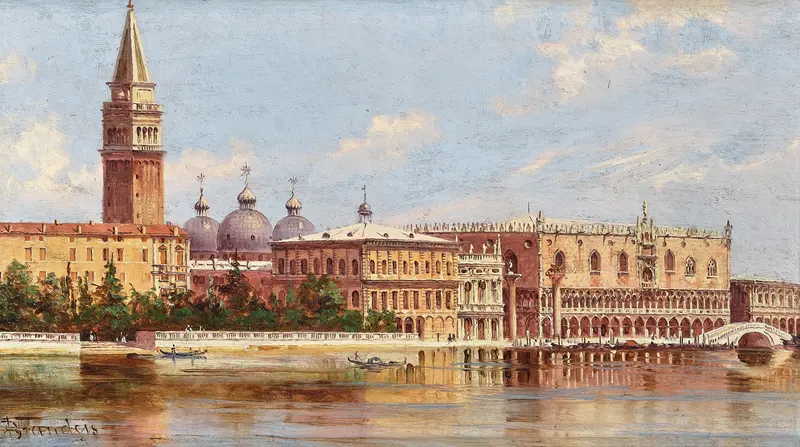
Venice, a View of the Bacino di San Marco
Antonietta Brandeis
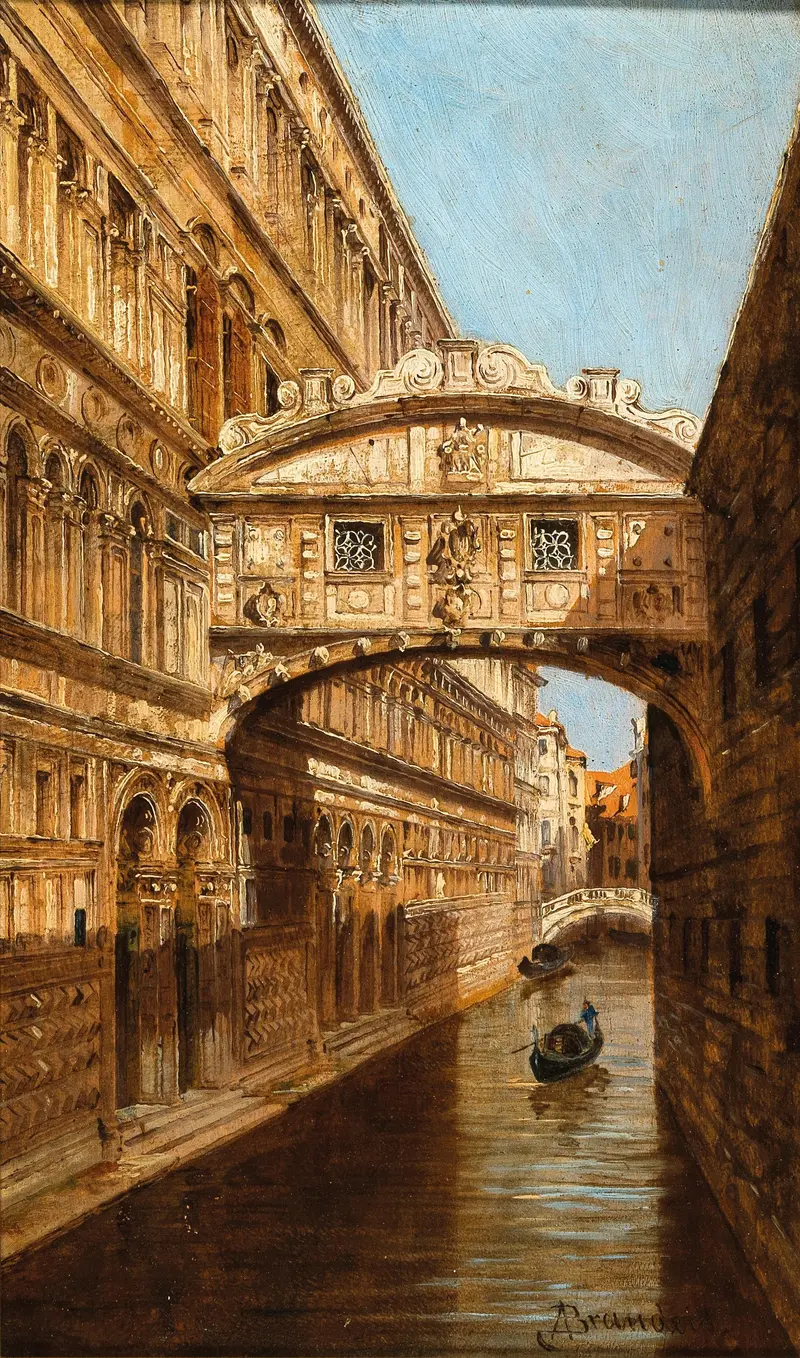
Venice, Le ponte dei Sospiri, Venezia
Antonietta Brandeis





