Venice By Sundown — History & Facts
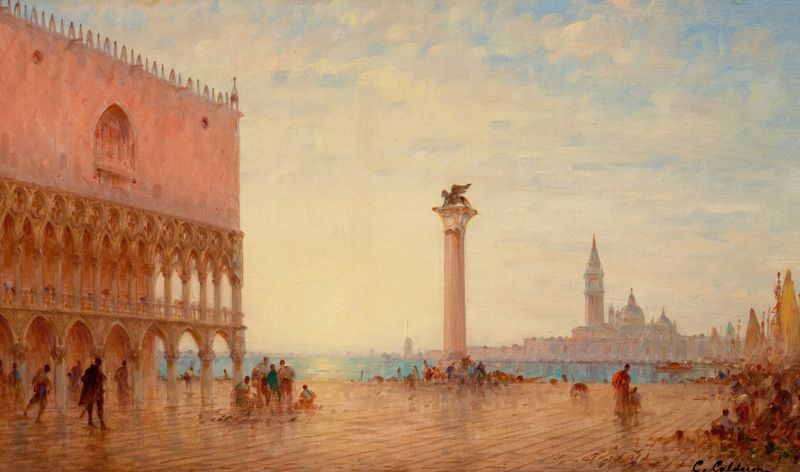
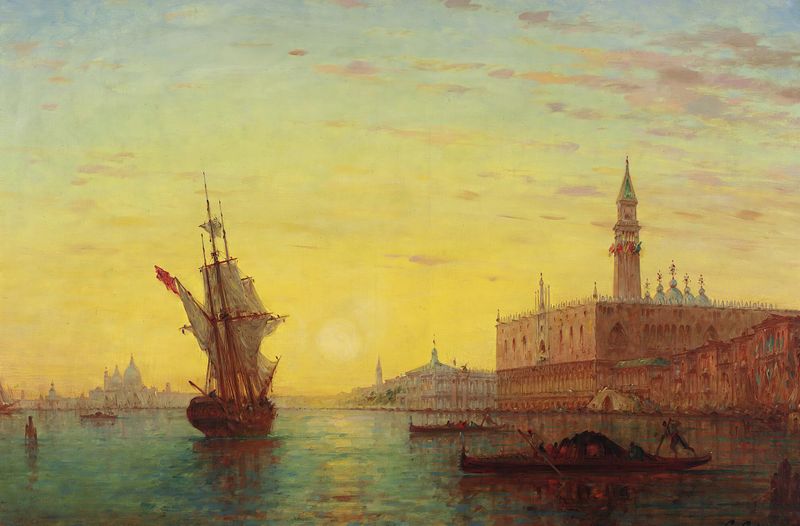
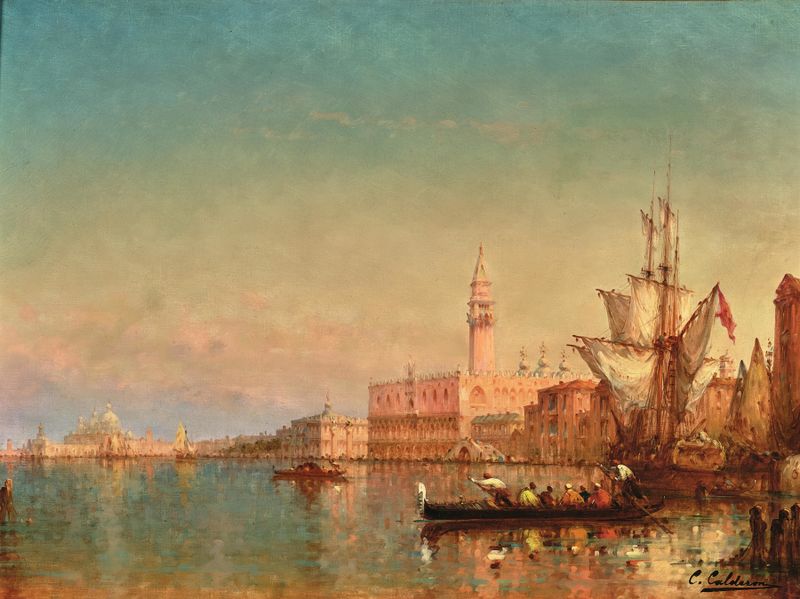
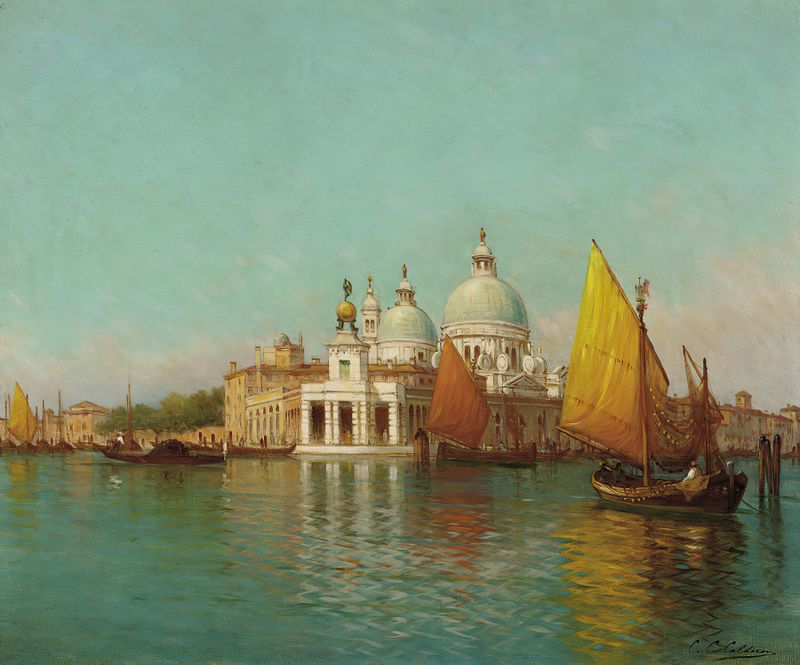
What secret hides in the quiet of the canvas? Beneath its serene surface, the twilight over Venice whispers of mortality, inviting contemplation on the fleeting nature of beauty and time. Look to the soft hues of orange and pink that bleed into the twilight sky, casting a gentle glow over the iconic Venetian architecture. Note how the silhouettes of gondolas drift like shadows upon the water, their graceful forms contrasting with the vibrant colors above. The reflection dances across the surface, merging the real with the ephemeral, creating a mesmerizing interplay that draws the eye deeper into the scene. Beneath this peaceful facade lies a poignant tension — a reminder that even the most picturesque moments are transient.
The fading light encapsulates the essence of life’s brevity, where each brushstroke seems to capture both the vibrancy of existence and the inevitability of loss. The quiet stillness of the landscape echoes an unspoken farewell, encouraging viewers to reflect on what it means to cherish beauty while it lasts. Charles Clement Calderon painted this work during a period marked by both personal exploration and broader artistic movements. The exact date remains uncertain, yet it likely aligns with a time when artists were increasingly drawn to capturing the essence of light and atmosphere in their work, responding to the changing tides of Impressionism.
As the world around him evolved, so too did Calderon’s exploration of momentary beauty and its ephemeral nature, poignantly captured in this tranquil view of Venice.