Venice, the Grand Canal — History & Facts
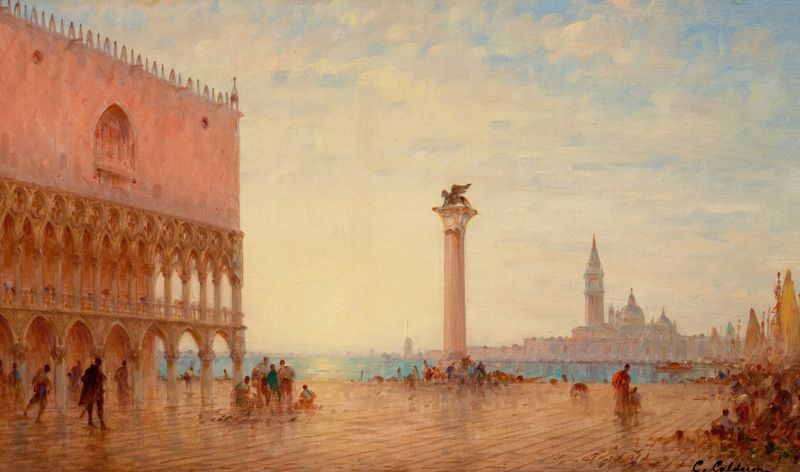
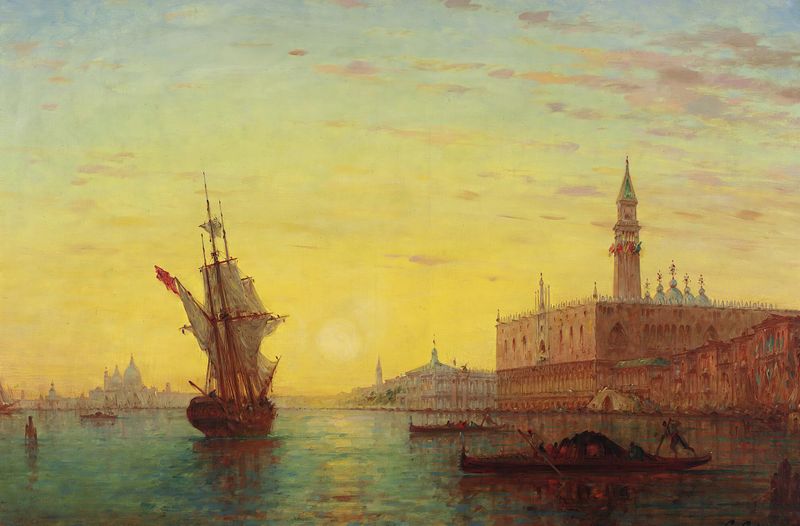
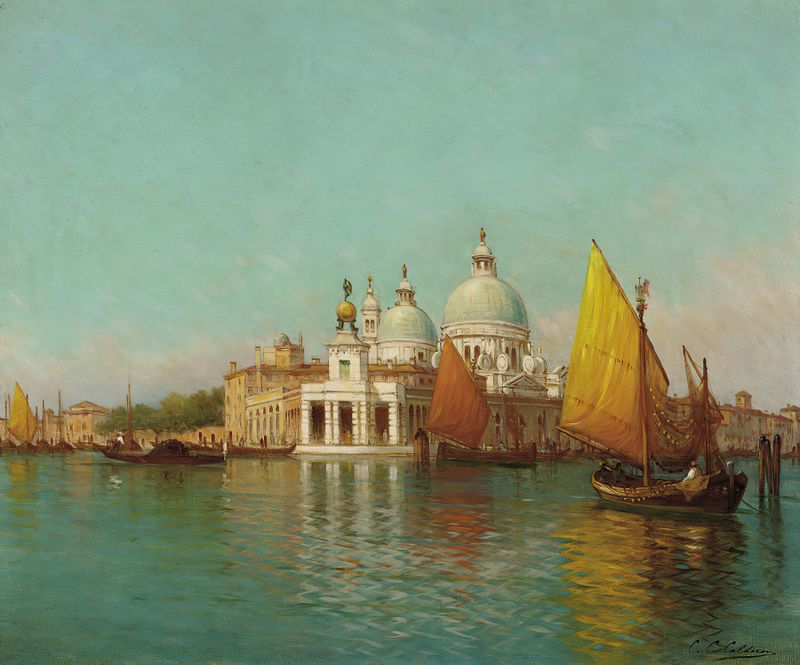
In the stillness of the Grand Canal, a haunting beauty unfolds, echoing the unacknowledged grief of what once was. Each stroke captures the essence of a city clinging to its past, a reminder of impermanence woven into the very fabric of the scene. Look to the left at the soft, muted reflections dancing on the water’s surface, a mirror of the sky that blurs the boundaries between earth and ether. The diagonal lines of the buildings create a dynamic tension, while the subtle palette of blues and ochres draws the eye along the waterway.
Notice how the light spills over the rooftops, illuminating details that invite quiet contemplation amidst muted shadows, suggesting a fleeting moment suspended in time. Yet, hidden beneath this serene façade lies the weight of nostalgia. The gentle ripples hint at disturbances—a sigh from the past, a lingering farewell. Each architectural detail, from the grand facades to the weathered balconies, tells a story of loss, reminding us that even beauty can harbor grief.
The figures along the water’s edge, though mere silhouettes, seem to embody the collective longing for connection, underscoring the transient nature of life. Charles Clement Calderon painted this piece during a time when the art world was shifting towards realism, capturing moments with a delicate touch. Although the exact date remains uncertain, his work reflects the cultural currents of the late 19th century, a period marked by introspection and a profound sense of historical consciousness. In capturing the Grand Canal, the artist not only revived the spirit of Venice but also rendered the melancholy of time itself.