
Venice: The Upper Reaches of the Grand Canal with S. Simeone Piccolo — History & Facts
In the bustling art market of mid-18th-century London, Canaletto became a household name among British collectors, many of whom had never set foot in Venice. Venice: The Upper Reaches of the Grand Canal with S. Simeone Piccolo belongs to a series of Venetian views that the artist produced for this eager clientele, responding to the Grand Tour fever that swept through English aristocratic circles.
These paintings were not only souvenirs but also status symbols, and Canaletto’s reputation for accuracy led to a surge in commissions. By 1740, the year this work was created, he had become so popular in England that imitators and even forgers began to flood the market, prompting debates over authenticity that persist today. The canvas captures a luminous morning on the Grand Canal, with the domed church of S. Simeone Piccolo rising on the right, its neoclassical portico gleaming in the sunlight.
Gondolas and merchant boats glide across the water, their passengers engaged in the everyday rituals of Venetian life—trading, conversing, and ferrying goods. The artist’s meticulous attention to architectural detail serves both as a documentary record and as a celebration of Venice’s grandeur. Unlike the more atmospheric cityscapes of Guardi, Canaletto’s view is precise and orderly, each building rendered with almost mathematical clarity.
The play of light on water and stone, the crisp shadows, and the carefully observed reflections all contribute to a sense of calm prosperity. Although the specific patron of this painting is not recorded, works like this were typically snapped up by British travelers or dealers such as Joseph Smith, the British consul in Venice and one of Canaletto’s most important supporters. Over the centuries, Venice: The Upper Reaches of the Grand Canal with S. Simeone Piccolo has passed through private collections and public exhibitions, admired for its blend of topographical accuracy and painterly skill.
Today, it stands as a testament to the enduring appeal of Venetian vedute and to Canaletto’s pivotal role in shaping how the world sees Venice. The painting’s journey mirrors the city’s own story: a crossroads of commerce, culture, and longing for a place both real and idealized.
More Artworks by Canaletto

The Grand Canal, Venice, looking north-west from the Ca' Corner to the Ca' Contarini degli Scrigni, with the campanile of Santa Maria della Carità
Canaletto

Venice, Bacino di San Marco on Ascension Day
Canaletto

Windsor Castle
Canaletto

The Grand Canal looking North-East from the Palazzo Dolfin-Manin to the Rialto Bridge
Canaletto

Venice: The Campo SS. Giovanni e Paolo
Canaletto

Venice: The Grand Canal from the Rialto to the Palazzo Foscari
Canaletto
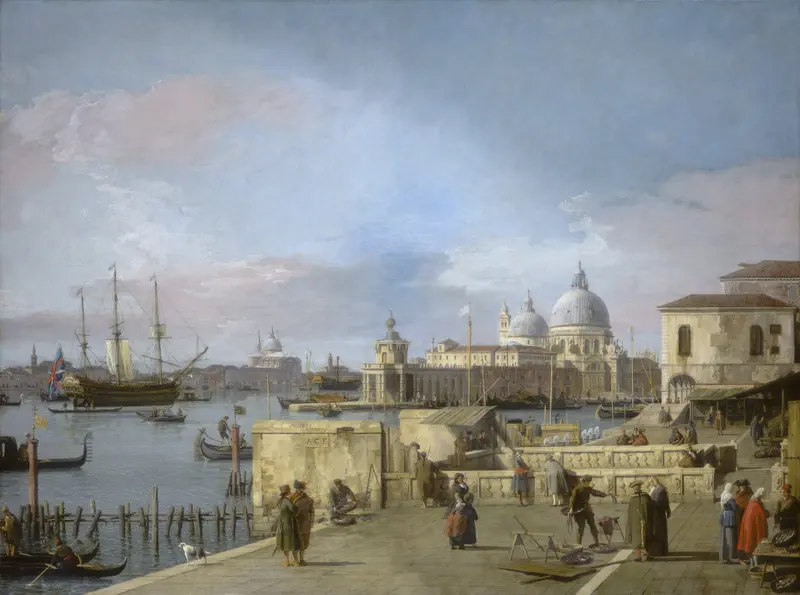
Venice: The Molo towards the Dogana and Santa Maria della Salute
Canaletto

Venice: The Piazzetta
Canaletto
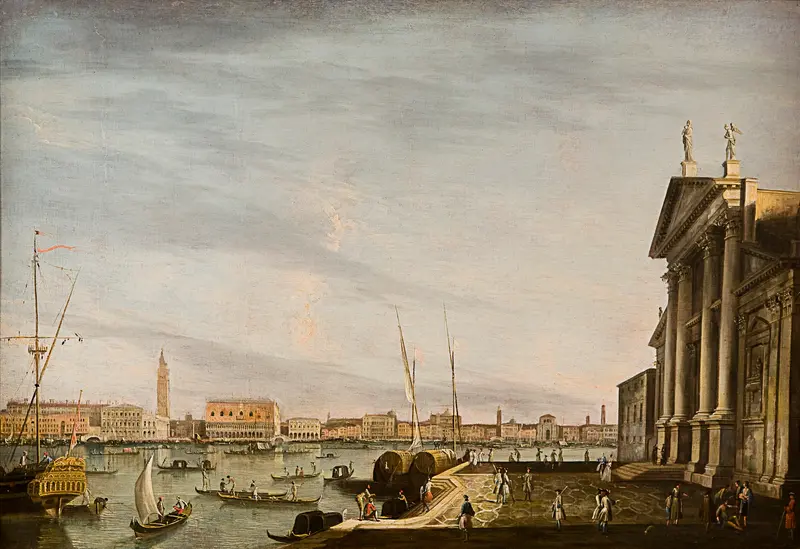
Venice, View of San Giorgio Maggiore
Canaletto

London: The Thames from Somerset House Terrace towards Westminster
Canaletto
More Landscape Art

The Starry Night
Vincent van Gogh

View of Delft
Johannes Vermeer

Water Lilies
Claude Monet
The Grand Canal, Venice, looking north-west from the Ca' Corner to the Ca' Contarini degli Scrigni, with the campanile of Santa Maria della Carità
Canaletto
Windsor Castle
Canaletto
The Grand Canal looking North-East from the Palazzo Dolfin-Manin to the Rialto Bridge
Canaletto