Venice, View of the Rialto Bridge — History & Analysis
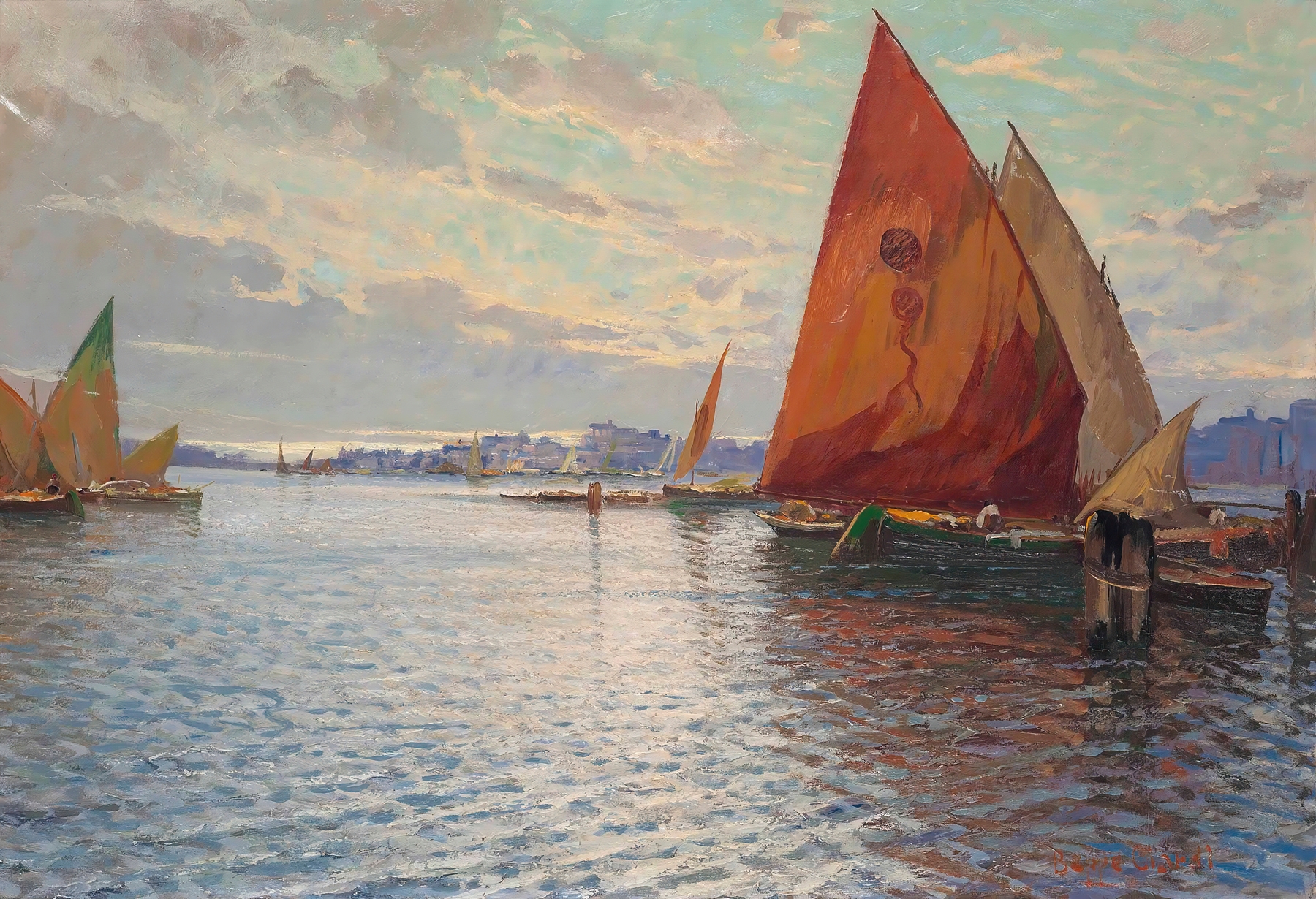
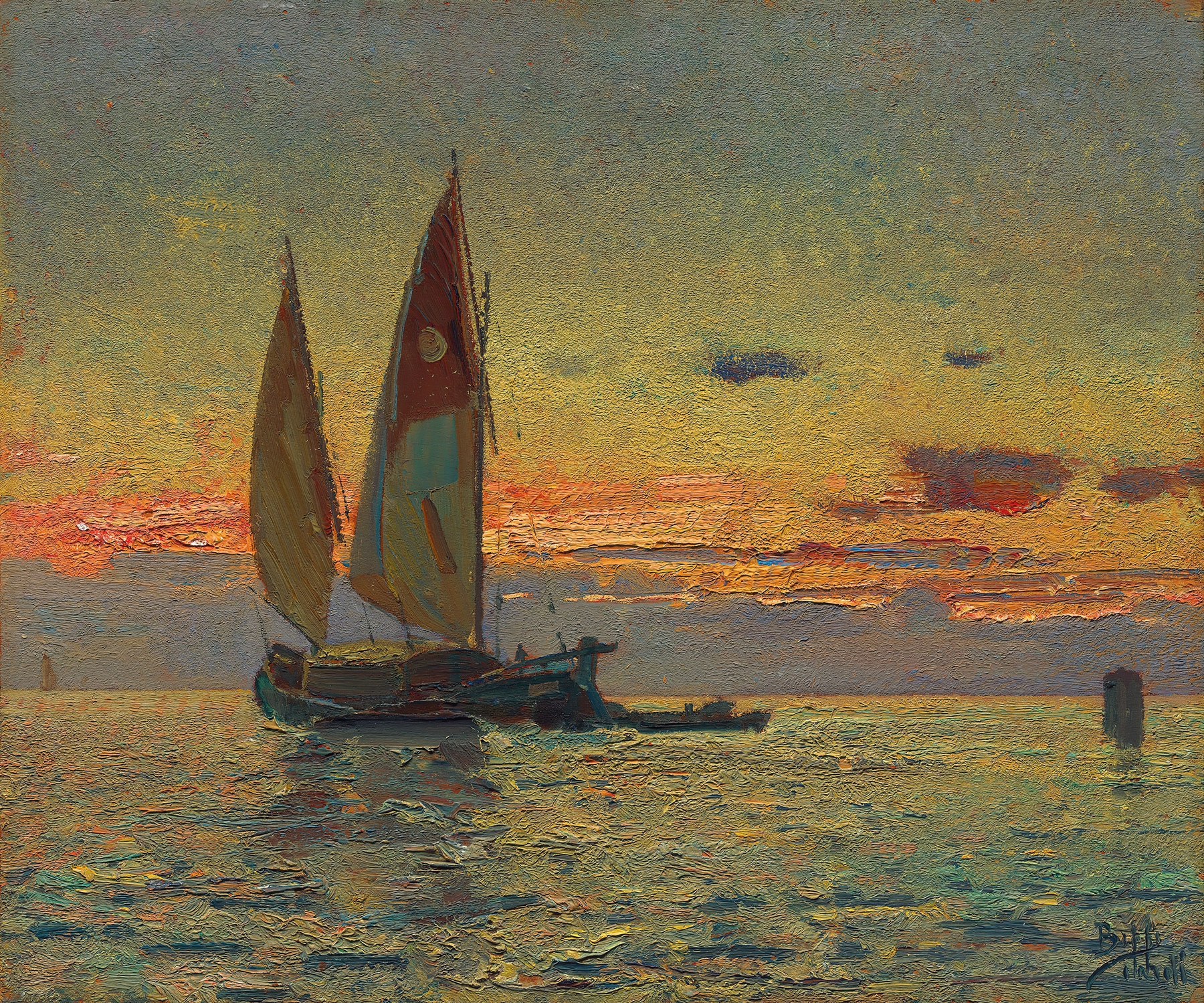
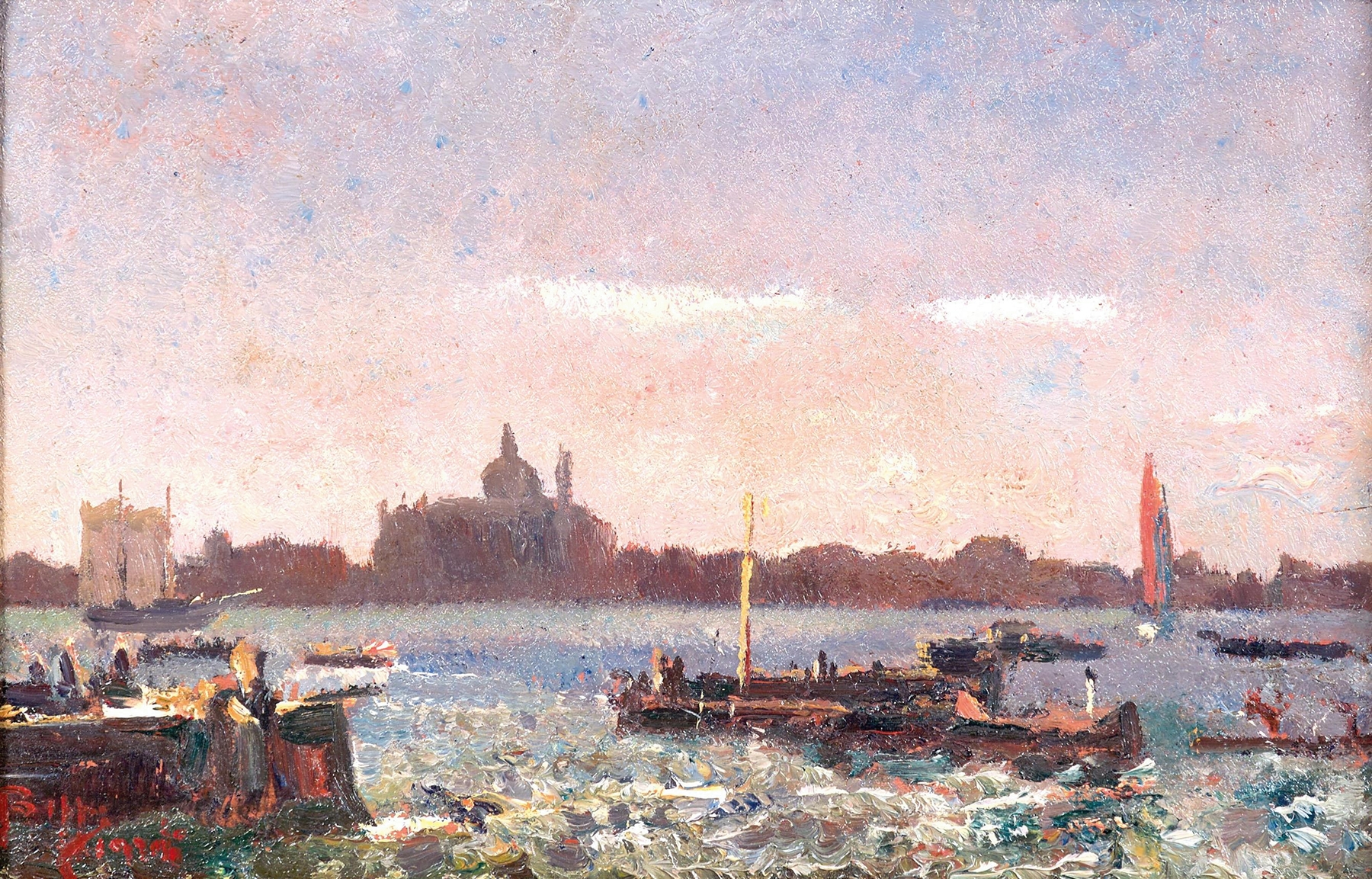
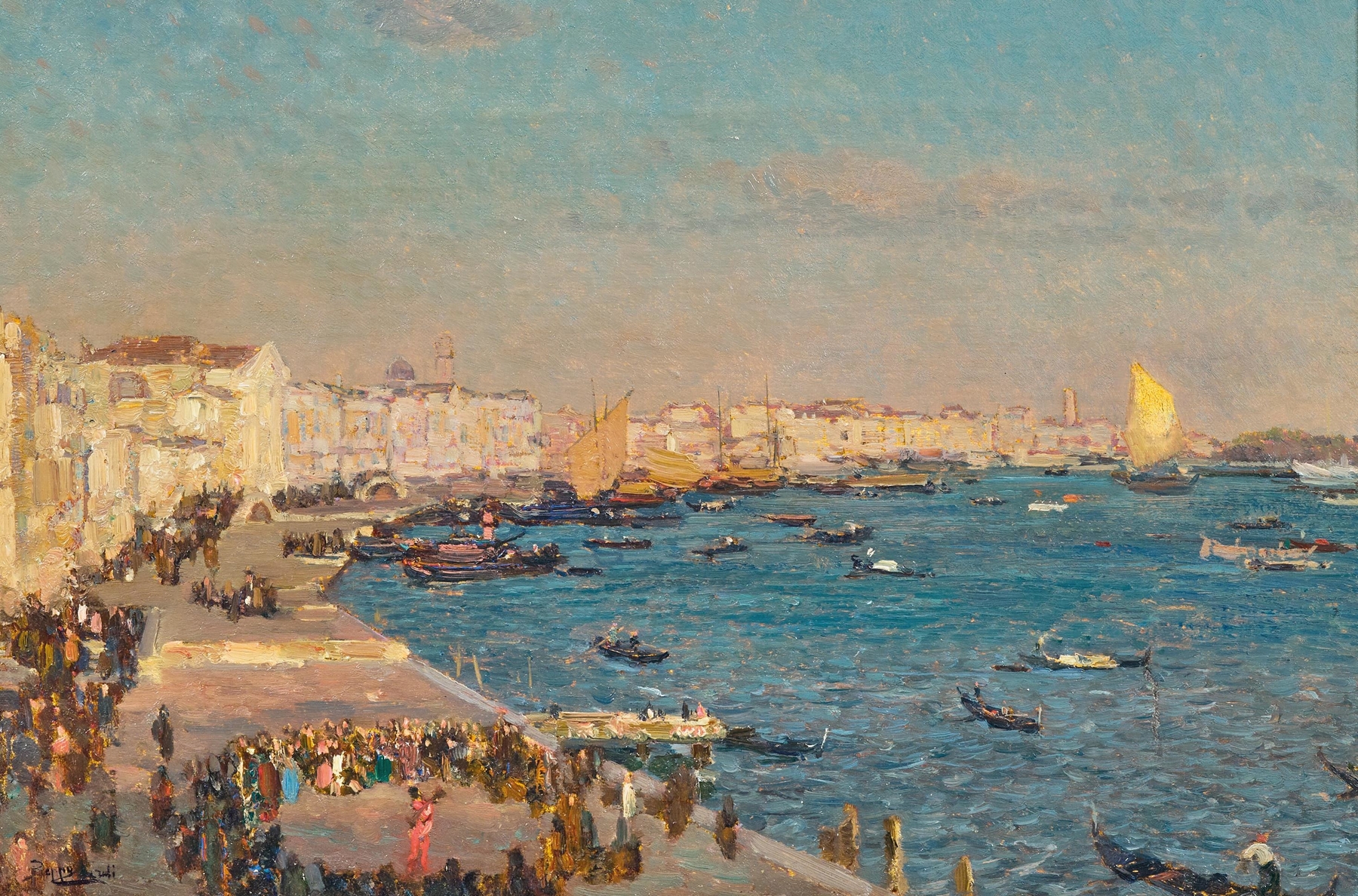
“Under the brush, chaos becomes grace.” A fleeting moment captures the essence of longing—a heartbeat echoing through water and stone, where memories linger long after the day has faded. Look to the left at the shimmering canal, where golden light dances upon the surface, illuminating the romantic architecture that stands sentinel along the banks. The Rialto Bridge arches gracefully above, its form both sturdy and elegant, framed by soft strokes of blue and orange that mimic the sky's embrace at dusk. Observe how the painter's deft brushwork creates movement—rippling reflections and the hurried gestures of gondoliers convey a sense of life intertwined with the tranquil setting.
Beneath the surface, there is a subtle tension between the bustling activity of the gondolas and the stillness of the buildings, suggesting a delicate balance between vibrancy and serenity. The contrasts between light and shadow, warm and cool tones, evoke a yearning for connection, as if each passerby on the bridge holds a piece of a larger narrative. The interplay invites viewers to consider their own relationships with place and time, echoing the whispers of countless souls who have traversed this iconic landmark.
During an undefined period, Ciardi painted this enchanting view of Venice, deeply immersed in the city's rich atmosphere. His work reflects the broader art movements of the early 20th century, where realism began to intertwine with impressionistic techniques. As he captured the essence of this beloved locale, Ciardi found inspiration in both the city's historical depth and its timeless allure, creating a lasting tribute to its beauty.