Vessel at Sea — History & Facts
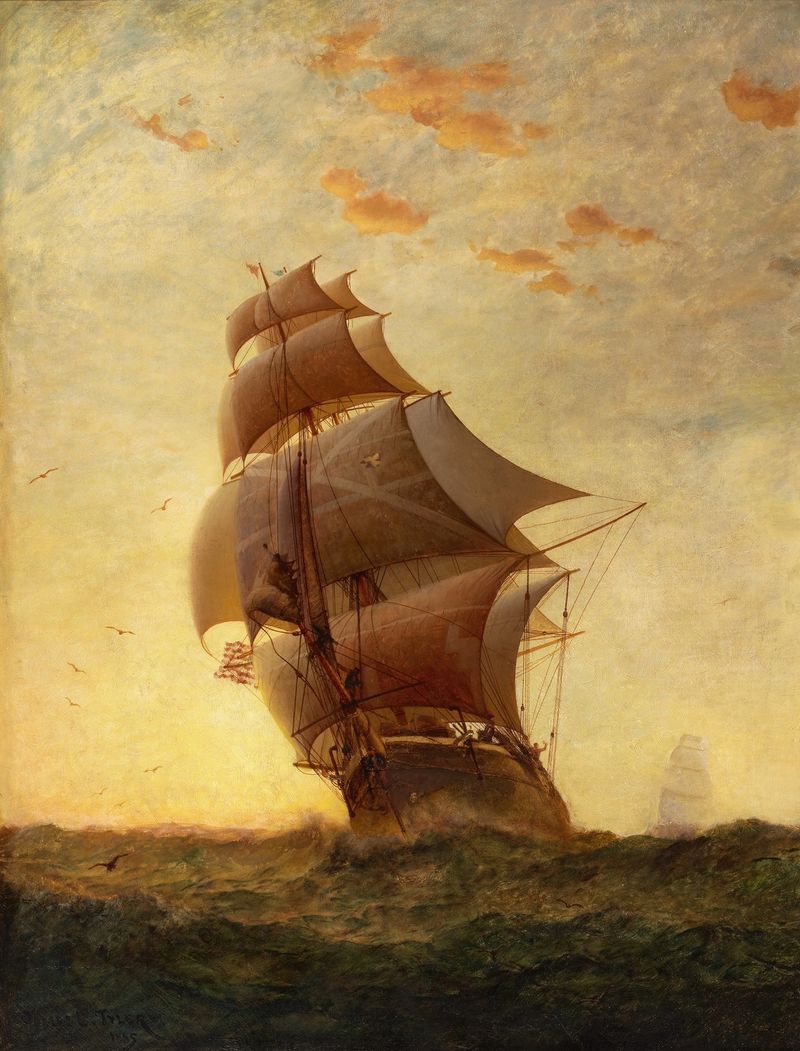
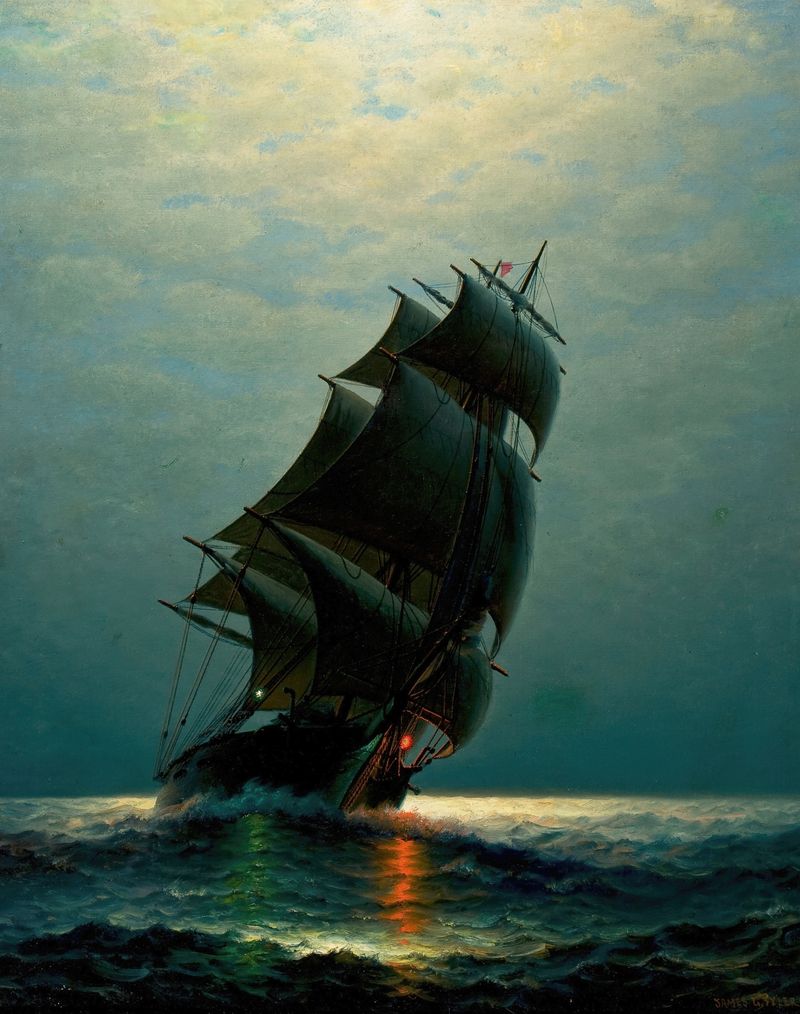
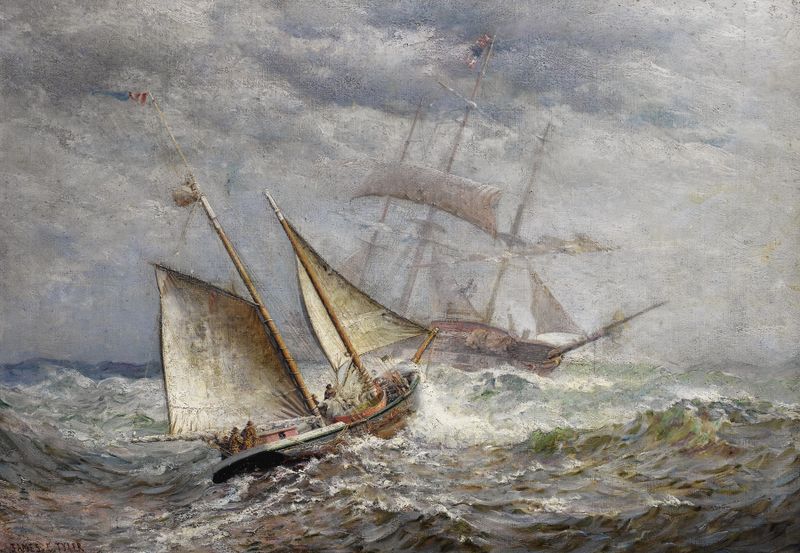
In the depths of loss, we often find our truest selves. Vessel at Sea captures this poignant truth, evoking the quiet ache of bereavement through its careful composition and deliberate brushwork. Look to the center of the canvas, where a solitary boat rests upon the dark, undulating waters. The vessel, rendered in soft blues and muted grays, seems almost to dissolve into its surroundings, a haunting reflection of isolation.
The sky, laden with heavy clouds, hints at an impending storm, casting a somber light that further emphasizes the vessel's vulnerability. The gentle waves lap against the boat's hull, suggesting movement but offering no escape—a powerful choice that speaks to the inescapable nature of grief. Beneath the surface of this tranquil yet tumultuous scene lies a profound tension. The emptiness of the vast sea mirrors the emotional void left by loss, while the boat stands as a fragile reminder of the human spirit's resilience.
The interplay of light and shadow reveals the duality of hope and despair, inviting the viewer to confront their own feelings of solitude. Each brushstroke encapsulates the complexity of navigating life's tempests, where moments of calm are often overshadowed by deeper currents of sorrow. In 1925, James Gale Tyler painted this work during a time of great transformation in the art world. Having established himself as a prominent American painter, he grappled with the changing landscape of modernism while drawing from traditional techniques.
This painting reflects that tension, blending both the old and the new, while also serving as a personal elegy for the connections lost amid life's relentless tide.