Ships at Sea — History & Facts
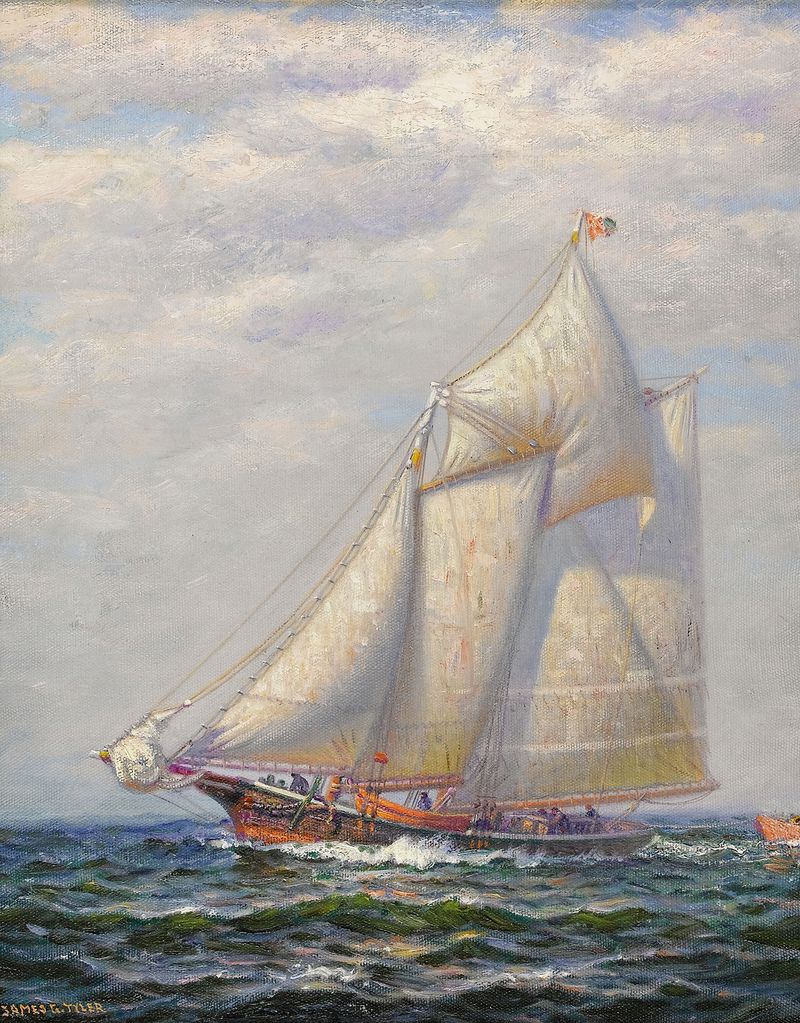
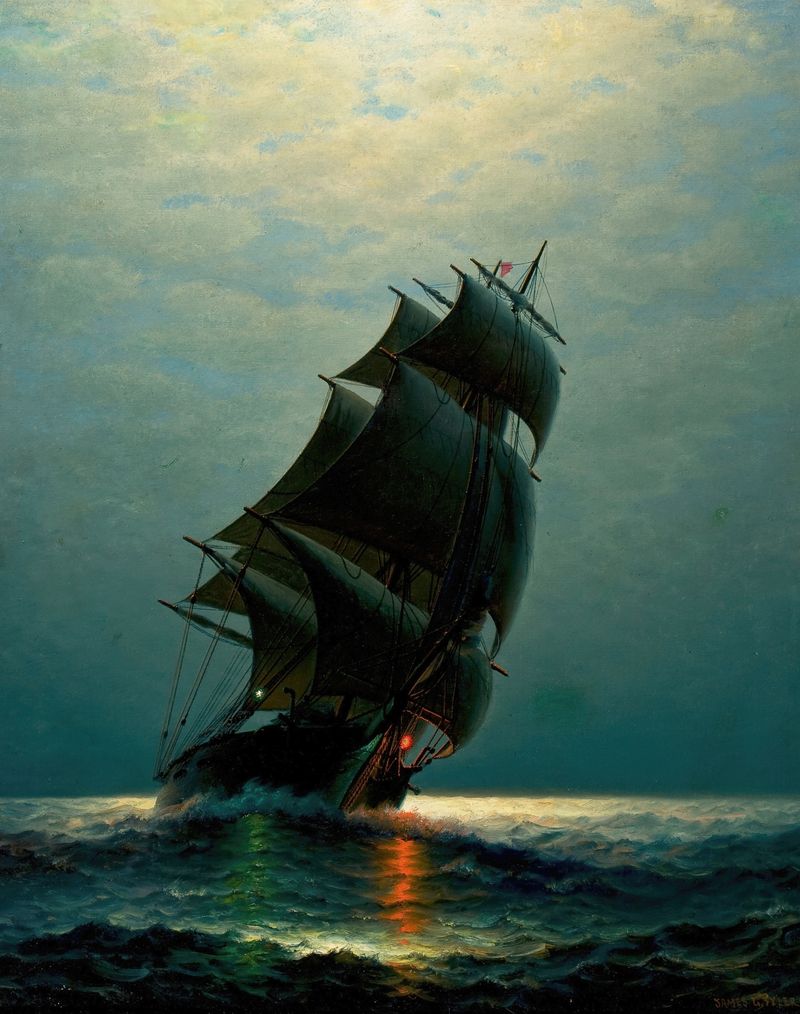
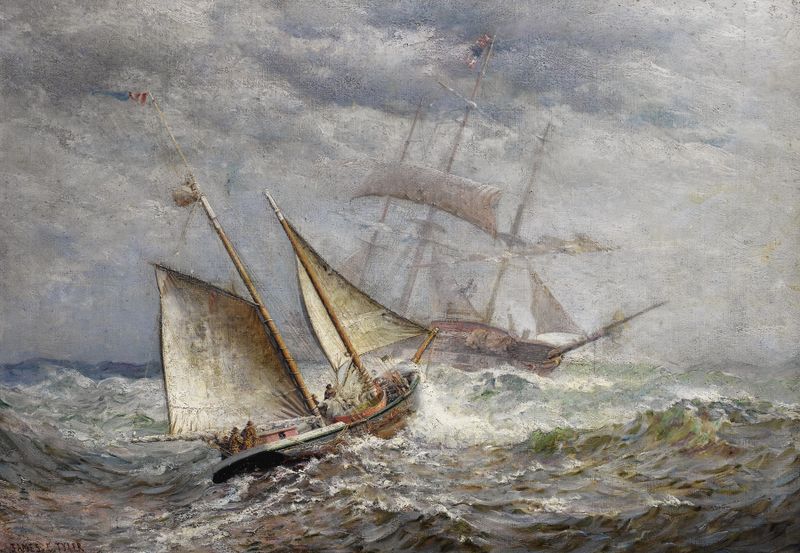
Can beauty exist without sorrow? In Ships at Sea, the viewer is drawn into a delicate balance where nature's majesty and human vulnerability coexist amid shifting horizons. Focus on the expanse of azure waters that stretch across the canvas, a serene yet powerful backdrop for the graceful ships gliding through the waves. Notice how the light dances on the ocean's surface, shimmering with a mix of blue and silver hues, creating a sense of depth and movement. The vessels, rendered with meticulous detail, evoke both adventure and uncertainty, inviting the eye to roam along their masts and sails as they navigate the vastness. Hidden within this tranquil scene lies a poignant tension—the stark contrast between the calm sea and the impending storm lurking in the background, suggesting the fragility of existence.
The interplay of light and shadow serves to highlight this duality, where tranquility is only a heartbeat away from chaos. Each ship represents not just a journey across the waves, but also the inner struggles that accompany the pursuit of dreams, hinting at the burdens carried by those who venture into the unknown. During 1885, when this piece was created, Tyler was immersed in the American Impressionist movement, a period marked by a shift toward capturing atmospheric effects and light. He painted this work while living in the United States, where maritime themes resonated with the burgeoning nation’s identity.
At this time, artists sought to portray both the beauty of nature and the challenges faced by humanity, echoing the very balance portrayed in his artwork.