
Vierwaldstätter See mit Tellskapelle gegen Uri Rotstock — History & Facts
In the embrace of nature, rebirth emerges from the depths of still waters and towering peaks, echoing the eternal cycle of life. Look to the left at the lapping waves, where the surface reflects the vibrant hues of twilight, a palette of blues and greens seamlessly blending into the comforting warmth of amber. Notice how the light dances on the water, capturing a fleeting moment of calm amidst the towering majesty of the mountains. The meticulous detailing of the rocky cliffs draws the eye upwards, leading you toward the delicate architecture of the Tell Chapel, nestled like a secret among the crags, a silent witness to history. Beneath the surface of this tranquil landscape lies a profound interplay of contrasts: the serenity of the lake juxtaposed with the formidable presence of the Uri Rotstock, symbolizing the duality of tranquility and power that defines the human experience.
The soft clouds drift by, suggesting the ephemeral nature of time, while the chapel stands firm, embodying both faith and resilience. It is a testament to a place where legends are born, a sacred cradle where the past merges with the promise of renewal. In 1895, Edward Theodore Compton painted this scene in Switzerland, a country that deeply inspired his work. At that time, Compton was immersed in the Romantic tradition of landscape painting, aiming to capture the sublime beauty of nature.
The world was witnessing a shift towards modernism, but his commitment to the emotional resonance of the landscape remained steadfast, reaffirming a pivotal connection between humanity and the natural world.
More Artworks by Edward Theodore Compton
Browse all →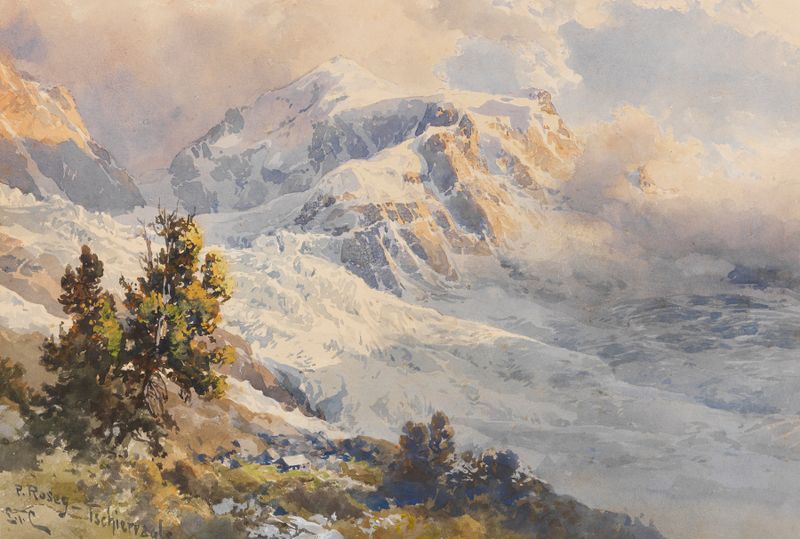
Piz Roseg – Tschiervagletscher
Edward Theodore Compton
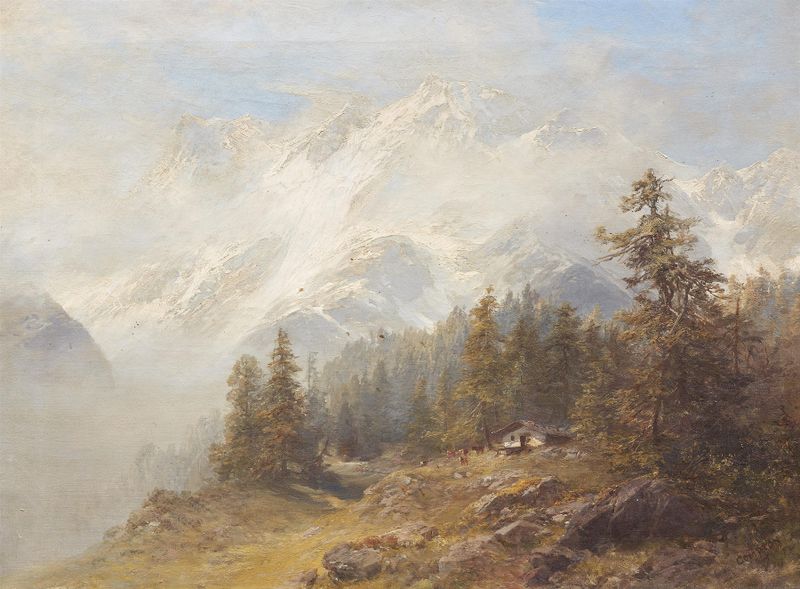
Alpenlandschaft vor schneebedecktem Massiv
Edward Theodore Compton
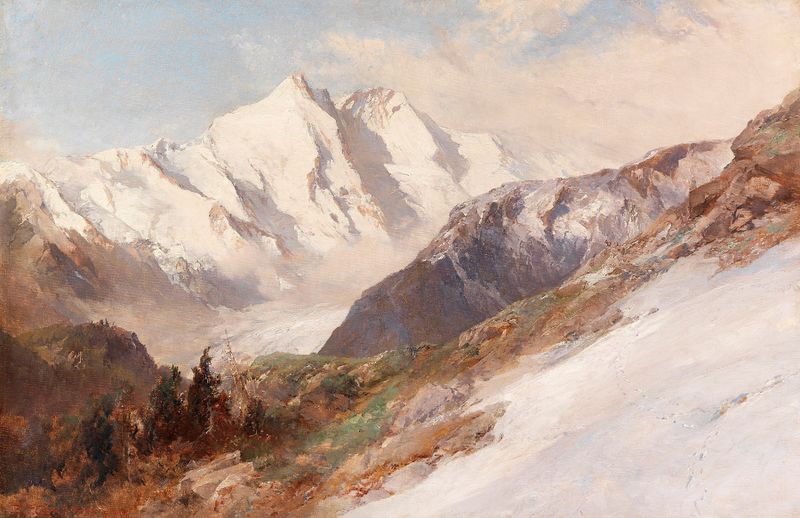
Blick auf die Nordseite des Großglockners
Edward Theodore Compton
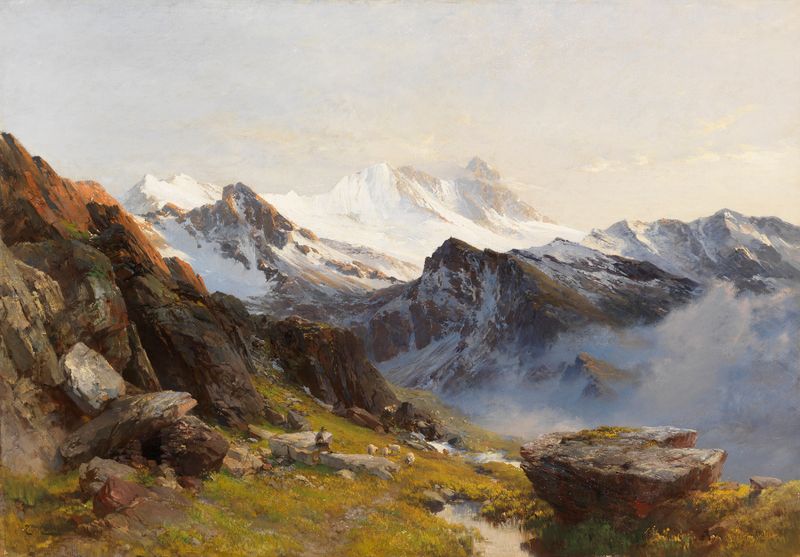
Großglockner von der Prager Hütte aus, früh
Edward Theodore Compton
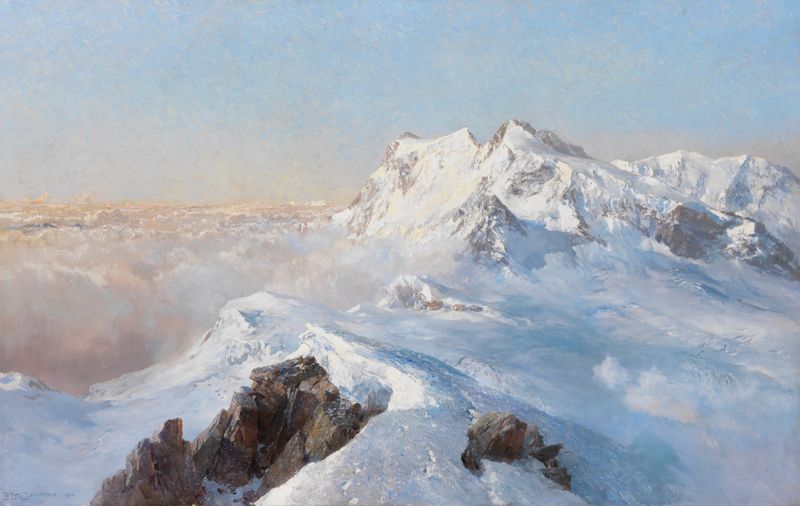
Über dem Nebelmeer (Monte Rosa vom Rimpfischhorn)
Edward Theodore Compton
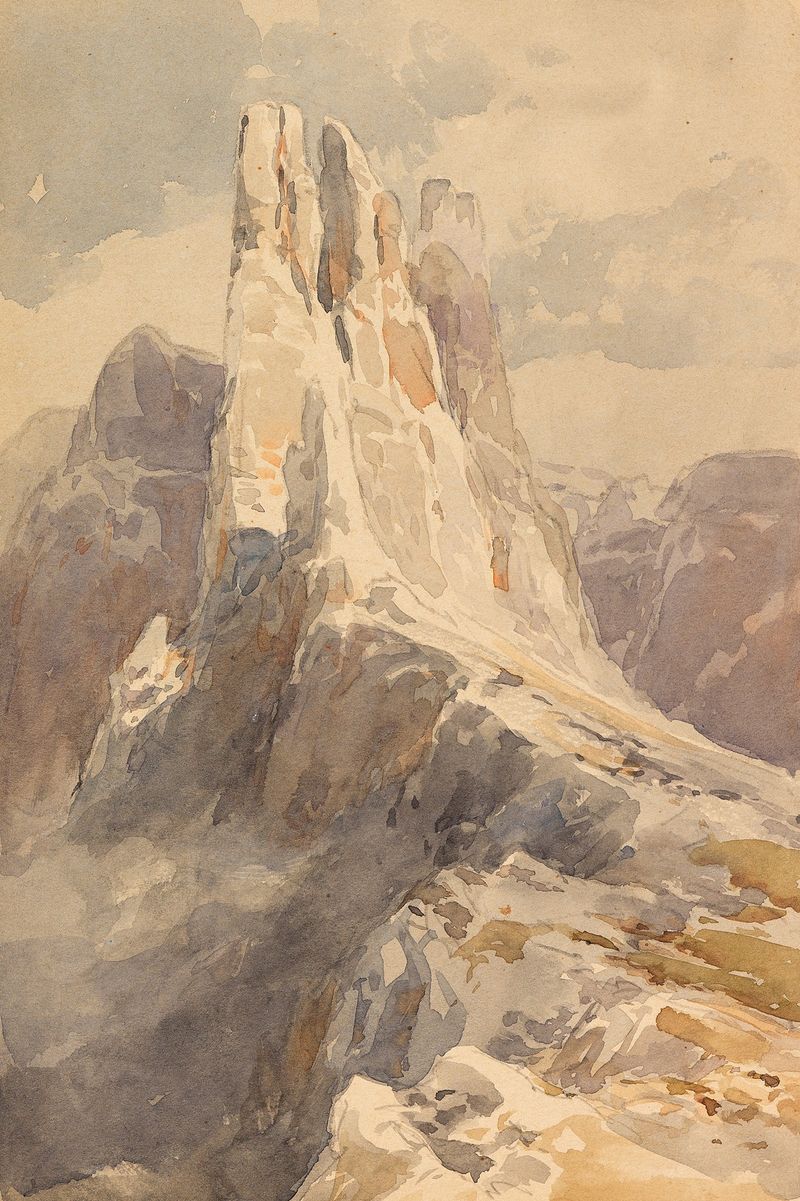
Blick auf die Vajolet-Türme in den Dolomiten
Edward Theodore Compton
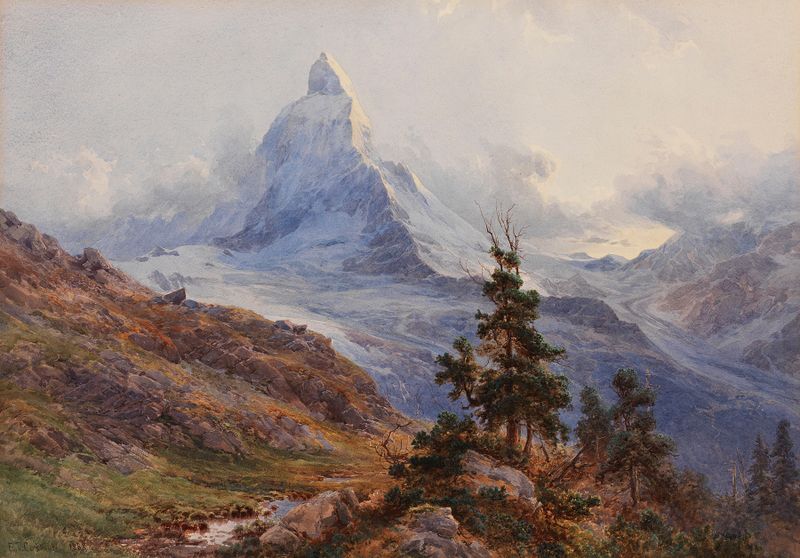
View of the Matterhorn
Edward Theodore Compton
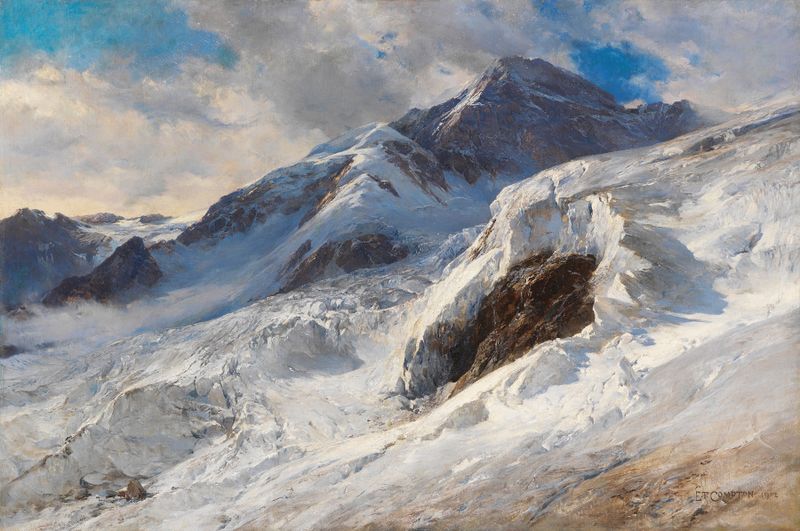
Lyskamm (Monte-Rosa)
Edward Theodore Compton
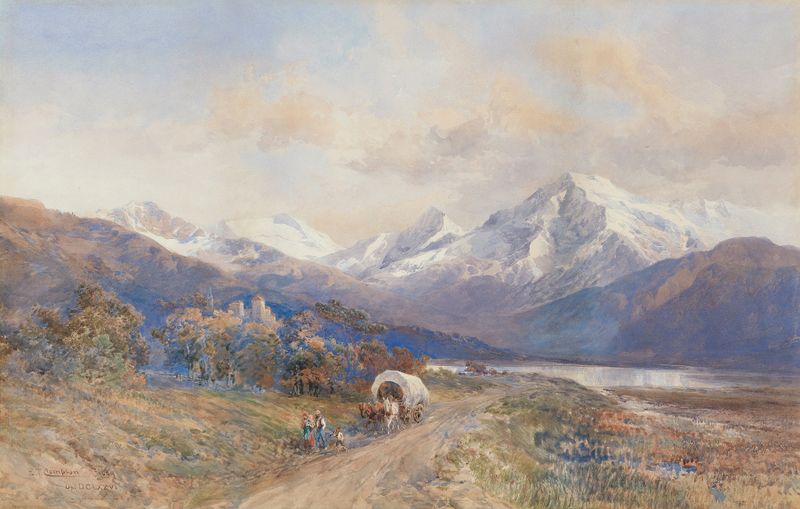
Blick auf den Ortler von St. Valentin
Edward Theodore Compton
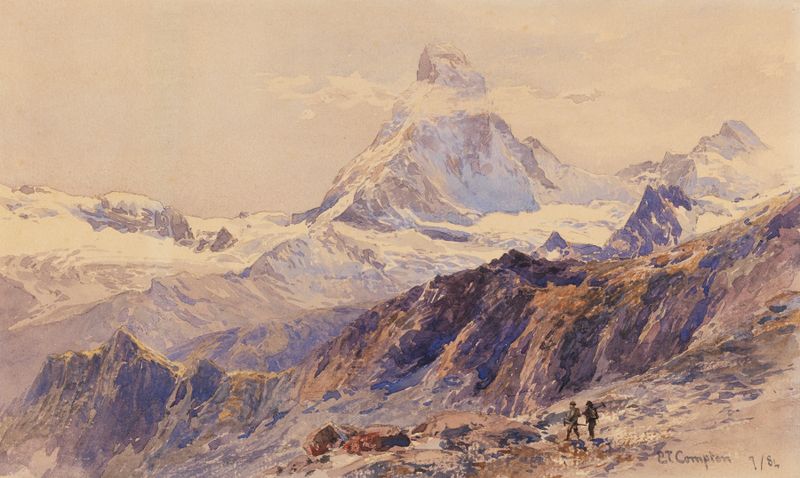
Das Matterhorn von der Triftkumme
Edward Theodore Compton





