
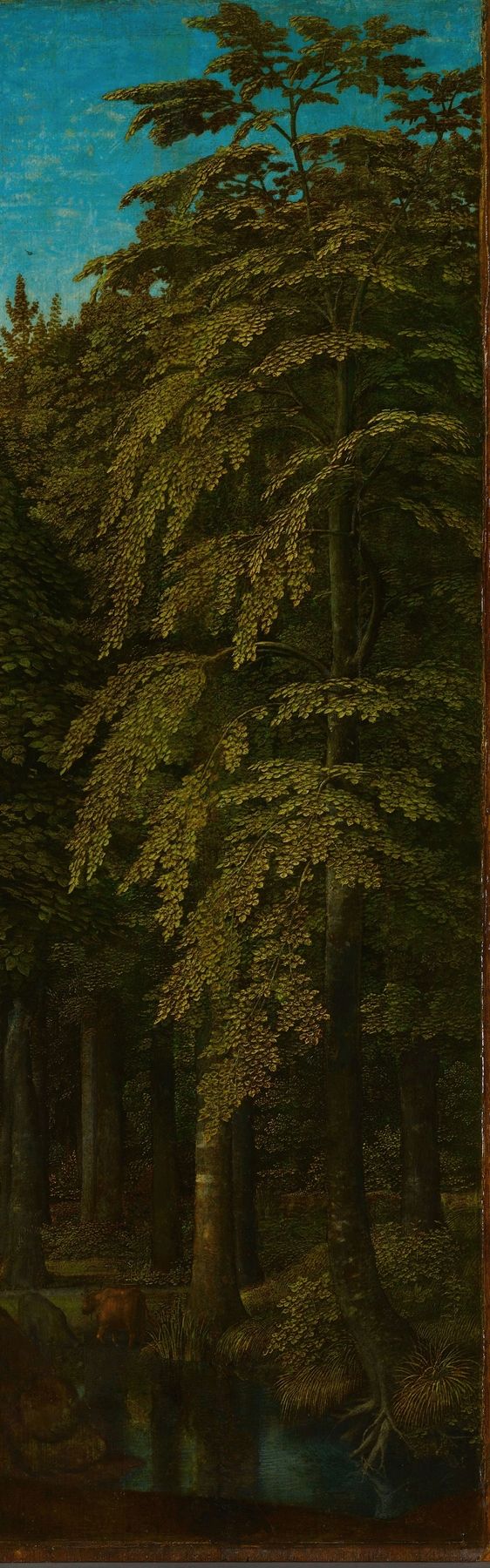
View in a Forest, outer right wing of a triptych — History & Facts
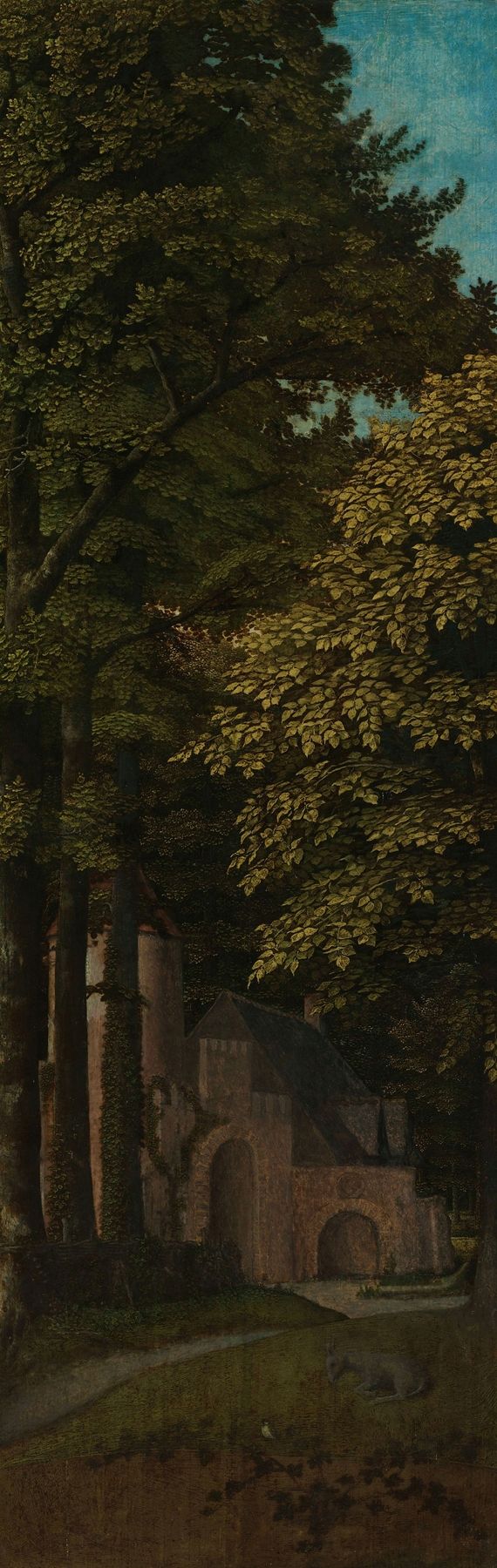
What if beauty was never meant to be finished? In the heart of this serene composition, a glimmer of the ethereal dances on the edge of reality. Look to the right at the delicate interplay of greens and browns that weave through the forest scene; the lush foliage frames the painting's edges. Notice how the sunlight filters through the canopy, casting intricate patterns on the forest floor, creating a gentle symphony of light and shadow. The artist’s meticulous brushwork captures the textures of leaves and bark, inviting viewers to not only see but to feel this tranquil sanctuary. Beneath the surface, a deeper narrative unfolds.
The juxtaposition of light and shade suggests a duality of existence—the known and the unknown, safety and solitude. The pathway that meanders into the forest beckons curiosity, yet hints at the trepidation of venturing into the unfamiliar. Each detail, from the birds perched above to the subtle rustling of unseen creatures, evokes a sense of longing and reflection, as though the viewer is caught between the allure of the beauty and the inevitable passage of time. Gerard David painted View in a Forest around 1505 to 1515 during a period marked by the flourishing of Northern Renaissance art.
Working in Bruges, he was deeply influenced by the changing landscape of art, where naturalism and intricate detail became paramount. This was a time when artists began to explore the interplay of light and nature in their works, capturing not just scenes but emotions, reflecting the transformative power of beauty in every stroke.
More Artworks by Gerard David
Browse all →
Lamentation over the Body of Christ
Gerard David

The Nativity with Donors and Saints Jerome and Leonard
Gerard David
View in a Forest, outer right wing of a triptych
Gerard David

Joos van der Burch and Saint Simon of Jerusalem
Gerard David
The Descent of the Holy Spirit
Gerard David
View in a Forest, Outer Left Wing of a Triptych
Gerard David





