
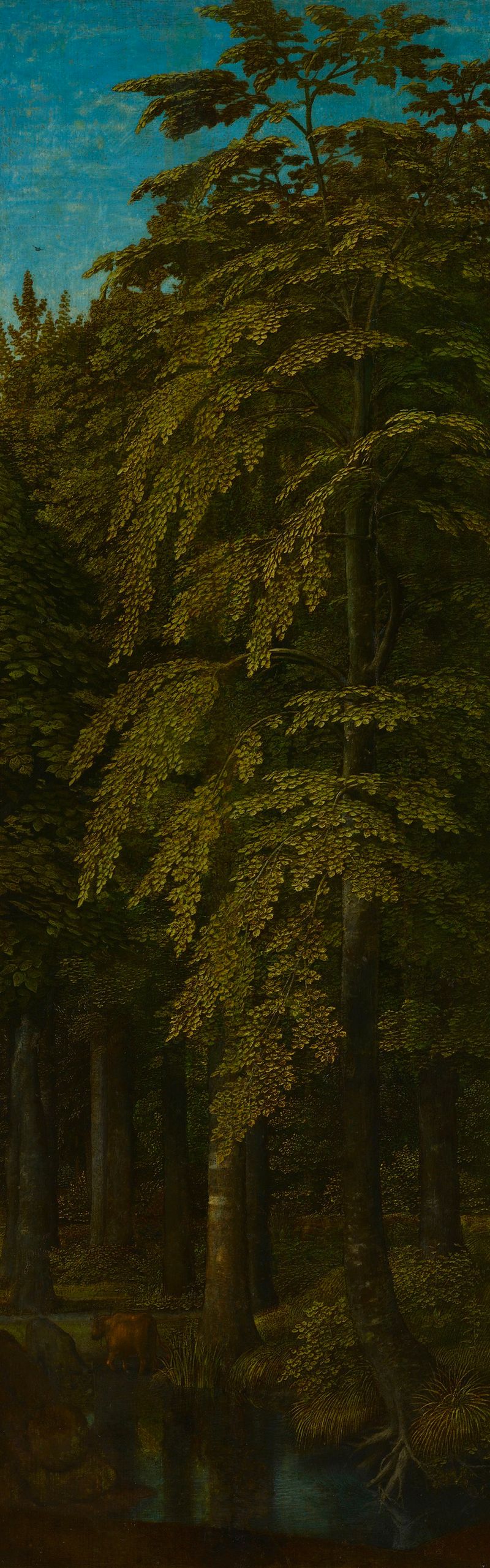
View in a Forest, outer right wing of a triptych — History & Facts
This reflection captures the essence of deeper truths nestled within serene landscapes, often hiding the complexities of faith and struggle beneath their tranquil facades. Look closely at the left side of the composition, where the light filters through the verdant canopy, illuminating a path carpeted in soft moss. The vibrant greens contrast sharply with the muted browns of the rough bark and the textured earth. Notice how the delicate play of light and shadow breathes life into each leaf and branch, guiding your eye deeper into the lush undergrowth.
The painting’s meticulous attention to detail reveals an artist dedicated to capturing nature’s essence, while the subtle vibrancy evokes a sense of quiet reverence for the sacredness of the scene. Beneath the surface beauty lies a narrative of faith intertwined with nature. The forest serves as a metaphorical wilderness—a symbol of spiritual journey and the pursuit of divine connection. The path, though inviting, suggests challenges ahead, embodying the tension between serenity and uncertainty.
The painting's composition invites viewers to reflect on their own quests, as light represents hope amidst the encroaching shadows of doubt and fear. Gerard David created this piece around the early 16th century, a time marked by the Northern Renaissance’s exploration of spiritual themes through art. Working in Bruges, he was influenced by both the early Netherlandish tradition and the emerging Humanist movements, which encouraged artists to infuse their works with personal and emotional depth. In a world grappling with religious transformation, David’s landscapes became a canvas for profound introspection, inviting viewers to navigate their own paths through faith and beauty.
More Artworks by Gerard David
Browse all →
Lamentation over the Body of Christ
Gerard David

The Nativity with Donors and Saints Jerome and Leonard
Gerard David

Joos van der Burch and Saint Simon of Jerusalem
Gerard David
The Descent of the Holy Spirit
Gerard David
View in a Forest, Outer Left Wing of a Triptych
Gerard David
View in a Forest, outer right wing of a triptych
Gerard David





