
View of a Bernardine tower from Żródłowa Street — History & Facts
In the stillness of a moment, serenity is born from the whispers of history and the essence of place. Look to the left at the soft brushstrokes depicting the Bernardine tower, rising with quiet dignity against a pastel sky. Notice how the light gently spills across the cobblestones of Żródłowa Street, each stroke a testament to the artist’s delicate hand. The muted palette evokes a sense of calm, while the slightly blurred edges give the scene a dreamlike quality, inviting the viewer to linger in its embrace. Hidden within the tranquility are contrasts that speak volumes.
The tower’s solid form stands in stark juxtaposition to the ephemeral nature of the surrounding atmosphere. One can sense the passage of time — the tower remains a sentinel of memory, while the streets below reflect the transient lives of those who tread upon them. This interplay between permanence and impermanence captures the essence of life itself. In 1916, during a tumultuous period of World War I, the artist found himself in Poland, where he painted this work as a personal haven amidst chaos.
It was a time when art served as both a refuge and a commentary on the world’s volatility. Jabłczyński's landscape encapsulates not just a physical location, but an emotional landscape, capturing the yearning for peace in a world filled with strife.
More Artworks by Feliks Jabłczyński
Browse all →
Villa Borgia in Rome
Feliks Jabłczyński

Mariensztat Street in Warsaw
Feliks Jabłczyński
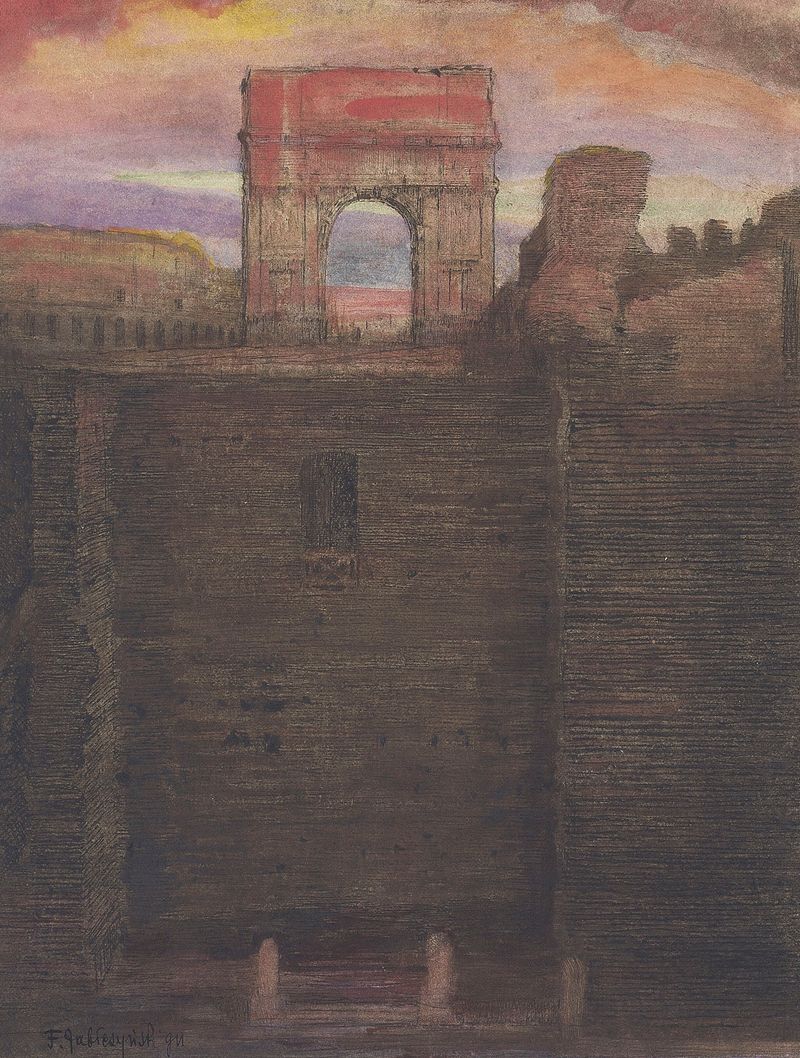
The House of Vestals and the Arch of Titus in the background
Feliks Jabłczyński
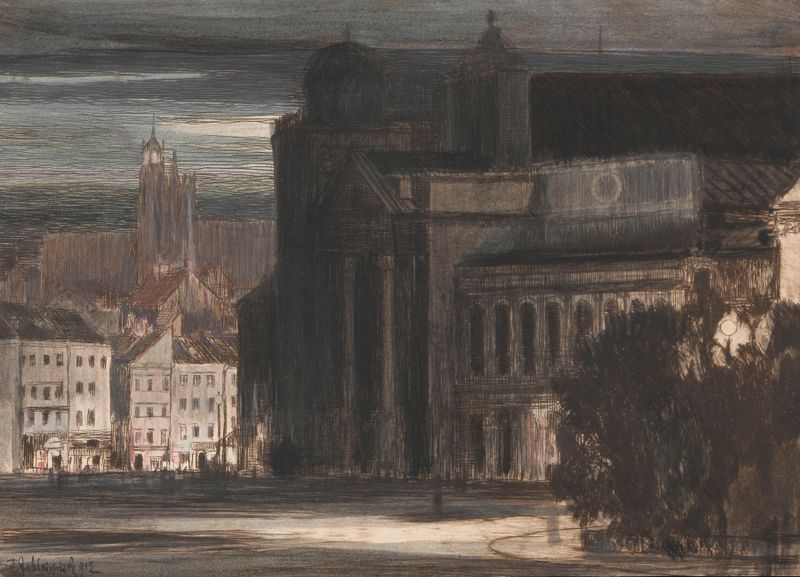
View of the Church of St. Anna and the Castle Square in Warsaw
Feliks Jabłczyński

Kaplica Boimów we Lwowie
Feliks Jabłczyński
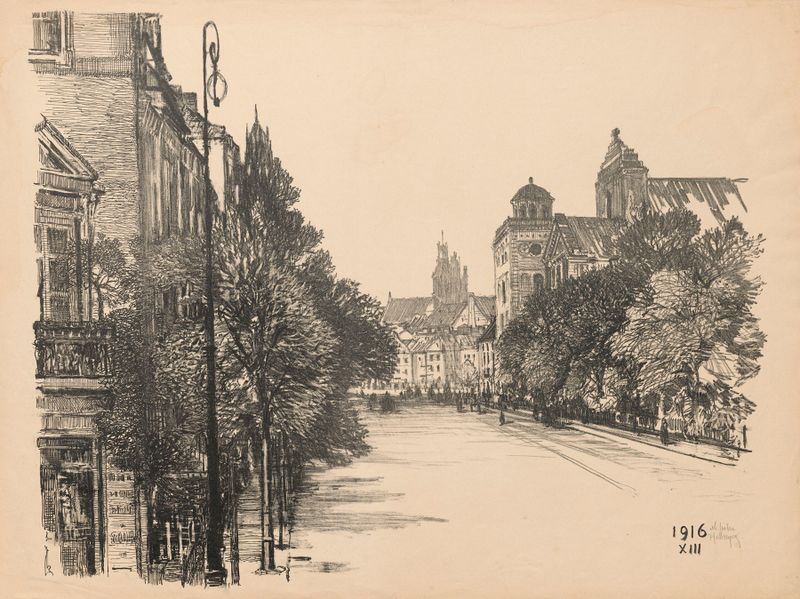
Krakowskie Przedmieście Street
Feliks Jabłczyński
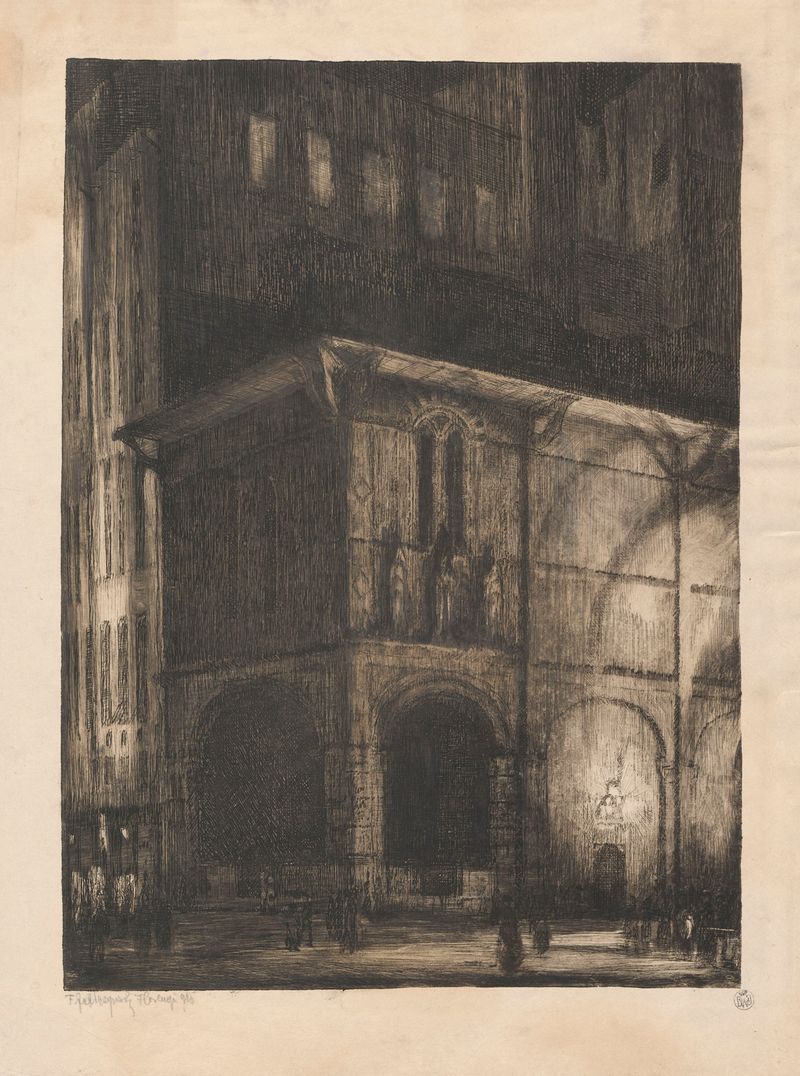
Florence
Feliks Jabłczyński
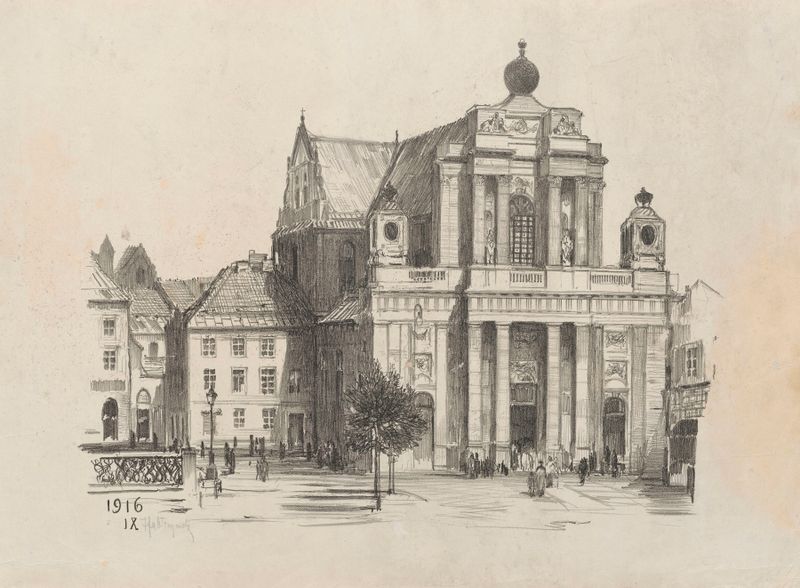
Carmelite Church.
Feliks Jabłczyński

The Visitation Sisters Church
Feliks Jabłczyński
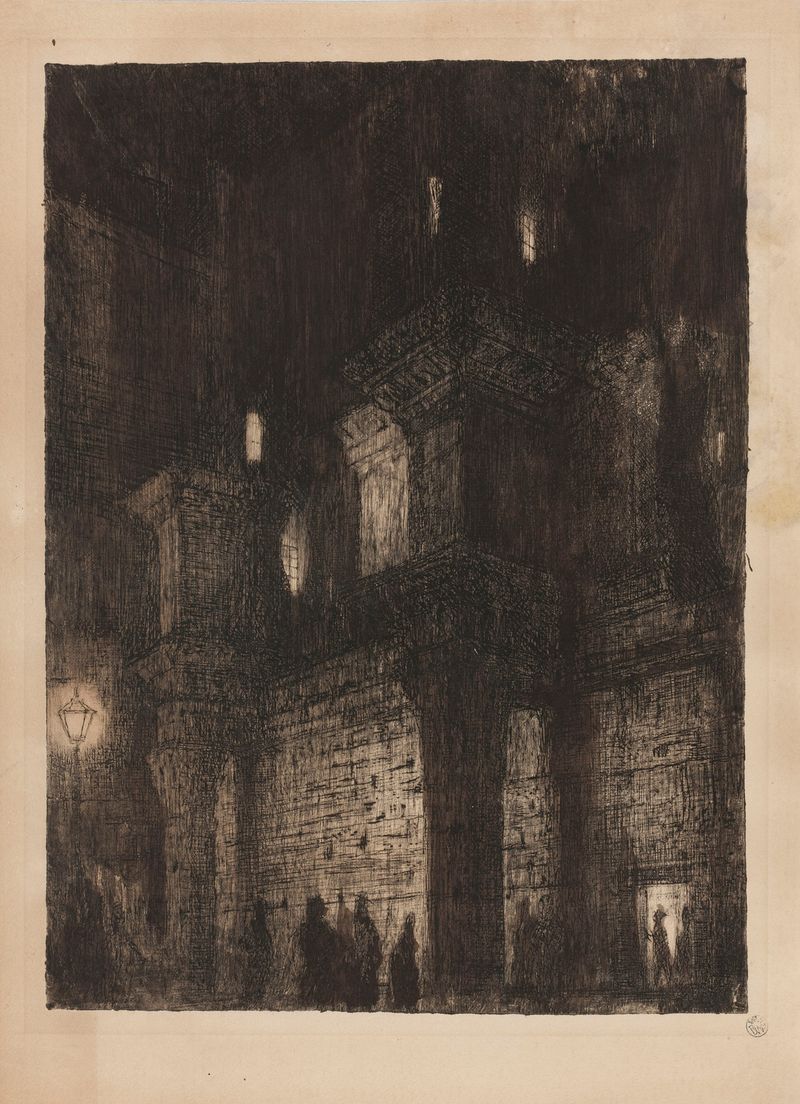
Forum Nervae
Feliks Jabłczyński





