View of a river valley — History & Facts
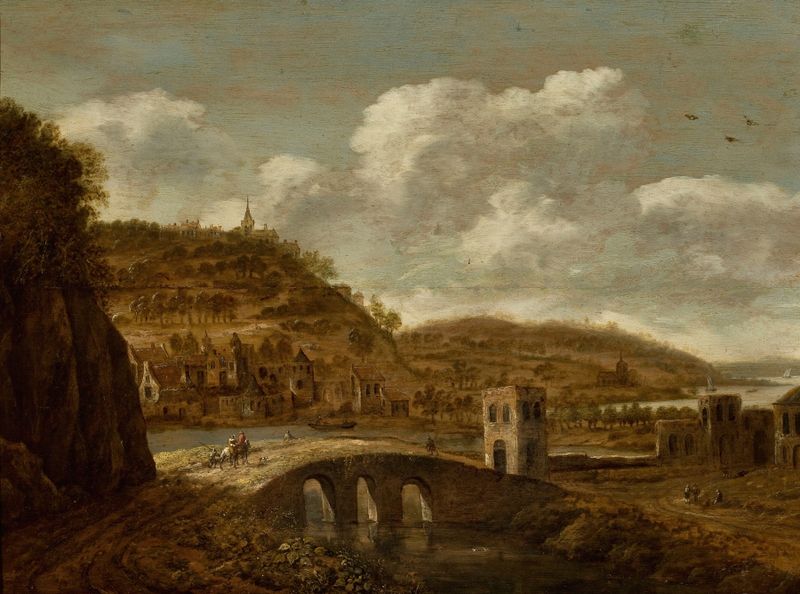
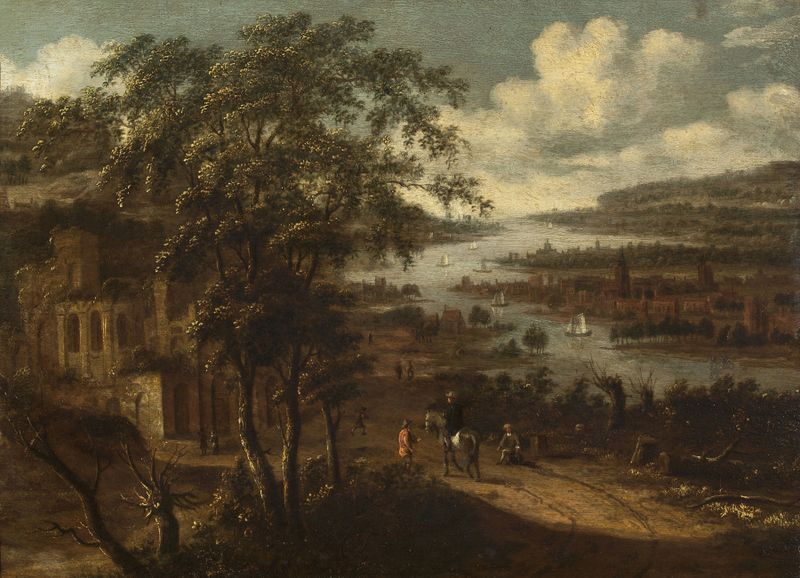
Did the painter know this moment would outlive them? In a world steeped in the cycles of nature, View of a River Valley captures a serene landscape that whispers of renewal and rebirth, inviting viewers to ponder the ephemeral and eternal intertwined. Focus first on the gentle curve of the river as it snakes through the valley, a shimmering ribbon of blues and greens. The artist's brushwork evokes both serenity and motion, capturing the soft ripples that reflect the sky above. Look to the horizon, where the sun casts a warm golden hue, blending seamlessly with the cool tones of the water.
Each stroke reveals the vibrant life that flourishes along the banks, suggesting a harmonious coexistence between land and water. Yet, beyond its tranquil beauty lies a deeper exploration of transience. The juxtaposition of the flowing river against the steadfast hills symbolizes the passage of time and the cycles of life. Small signs of growth, perhaps budding flowers or distant trees, hint at the promise of rebirth, while the sweeping currents remind us of the relentless march of change.
Each detail weaves a narrative of continuity, offering a glimpse into the eternal dance of nature. Dionijs Verburg painted this work during a period when he sought to capture the essence of landscape in a rapidly changing world. Little is known about the exact time, but the interest in natural beauty and the pastoral ideal was burgeoning in the 19th century. This period reflected a burgeoning appreciation for the sublime in nature, suggesting that Verburg, through his landscapes, aimed to connect viewers to a shared experience of the earth's enduring splendor.