
View of Il Castello Farnese in Isola Farnese — History & Facts
What if beauty was never meant to be finished? In the stillness of a serene view, one can sense the divine in the simplicity of nature and architecture entwined. Look closely at the foreground, where the gentle curve of the landscape frames Il Castello Farnese. The earth, painted in soft greens and browns, leads your gaze upwards to the castle's formidable stone walls, standing resilient against a softly fading sky. Notice how the artist employs a palette of muted blues and warm earth tones, harmonizing the elements in a way that suggests both permanence and transience.
The meticulous brushwork captures the texture of the castle’s stones, while the delicate clouds hint at the ethereal, as if the world beyond the canvas invites contemplation. This scene conveys a profound tension between the natural and the manmade. The castle, while robust, appears almost fragile set against the vastness of the sky. The interplay of light and shadow accentuates this duality, suggesting that while human endeavor seeks to cling to permanence, nature's beauty remains ever-elusive and expansive.
The distant mountains echo the castle’s grandeur, yet they embody a sense of timelessness that humans can only aspire to replicate. Arthur Blaschnik painted View of Il Castello Farnese in Isola Farnese in 1857 during a period of personal and professional upheaval. Living in Italy after years of study, he was influenced by the Romantic movement sweeping through Europe. His work, reflective of both admiration for classical beauty and an emerging awareness of nature’s impermanence, marks a pivotal moment in his artistic evolution.
In that era, the dialogue between nature and architecture was profound, with artists seeking deeper meanings in the landscapes they portrayed.
More Artworks by Arthur Blaschnik
Browse all →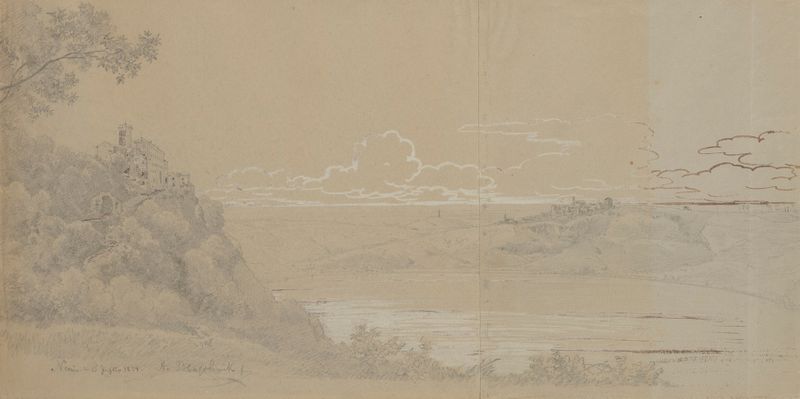
Palazzo Ruspoli by Lake Nemi, in the Distance the Town of Genzano di Roma
Arthur Blaschnik
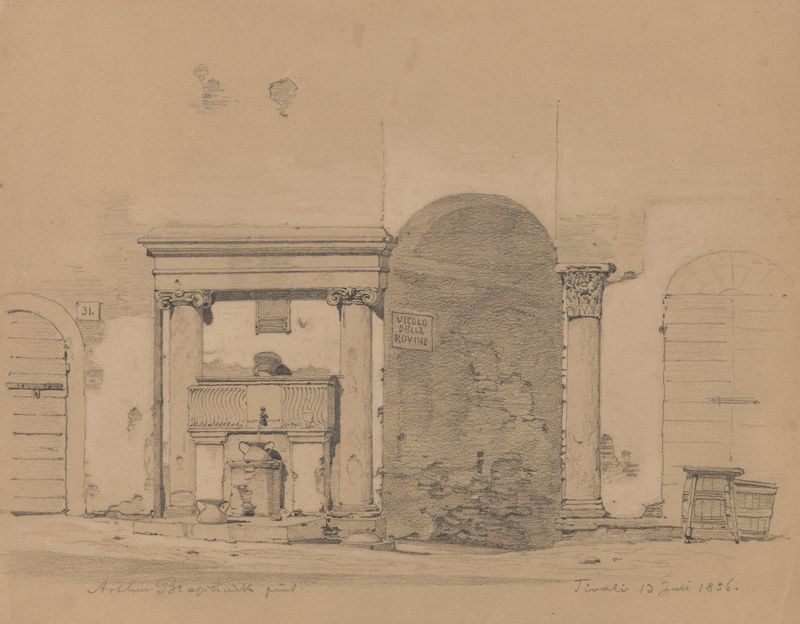
Gate Leading to Vicoli dei Grana near Piazza Palatina in Tivoli
Arthur Blaschnik
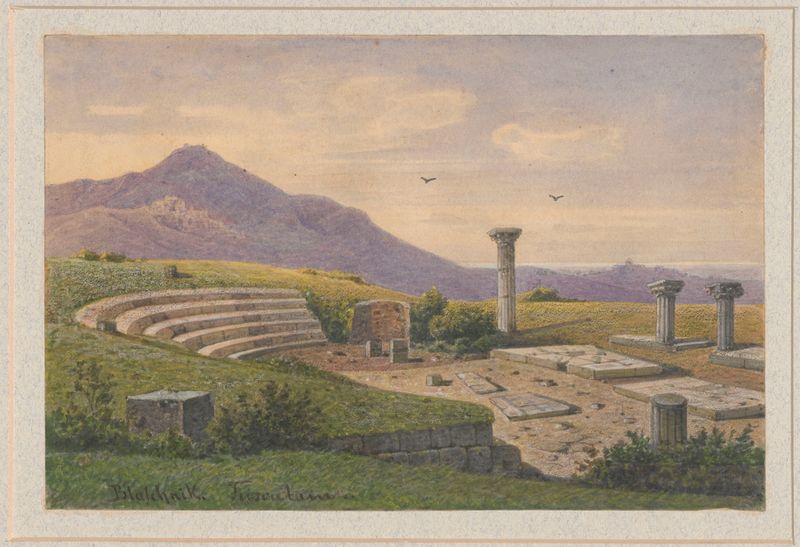
Amphitheatre in Tusculum
Arthur Blaschnik
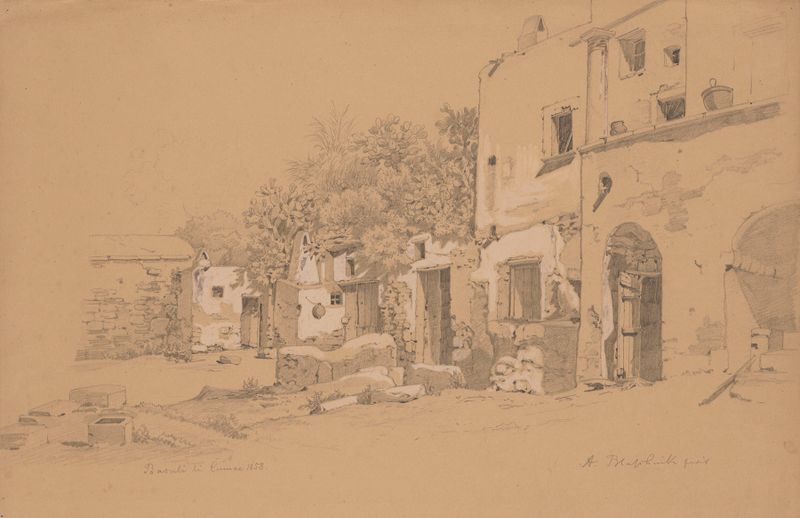
House and Outbuildings in Bacoli
Arthur Blaschnik
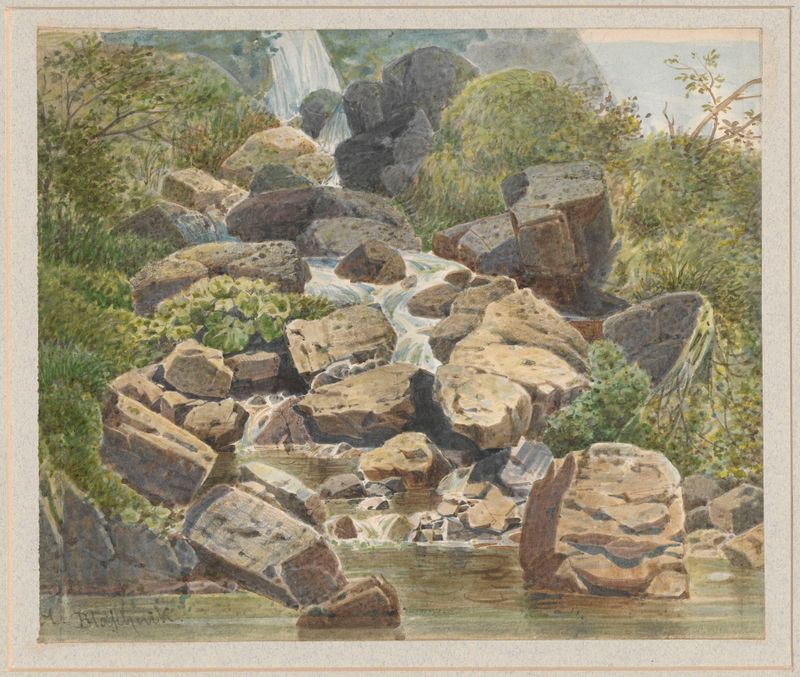
View of a small waterfall near Covigliaio, Tuscany
Arthur Blaschnik
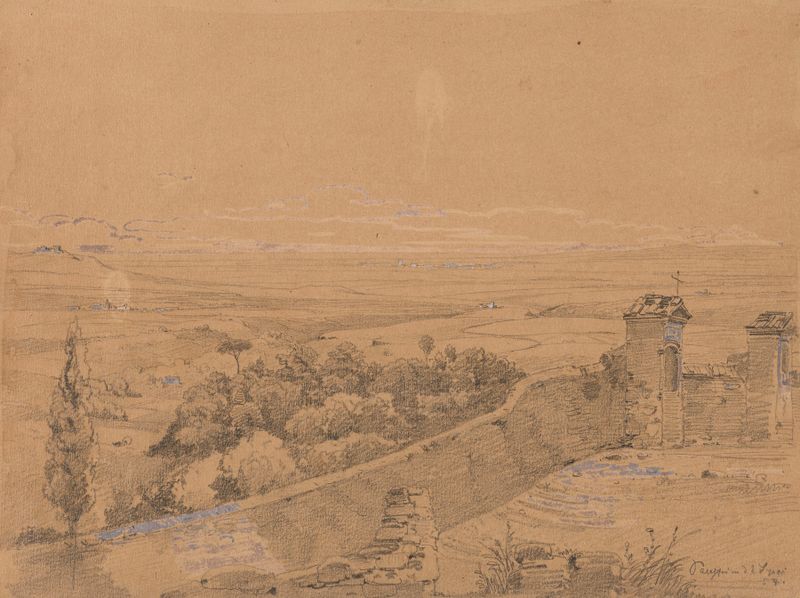
Landscape from the Vicinity of Palestrina
Arthur Blaschnik
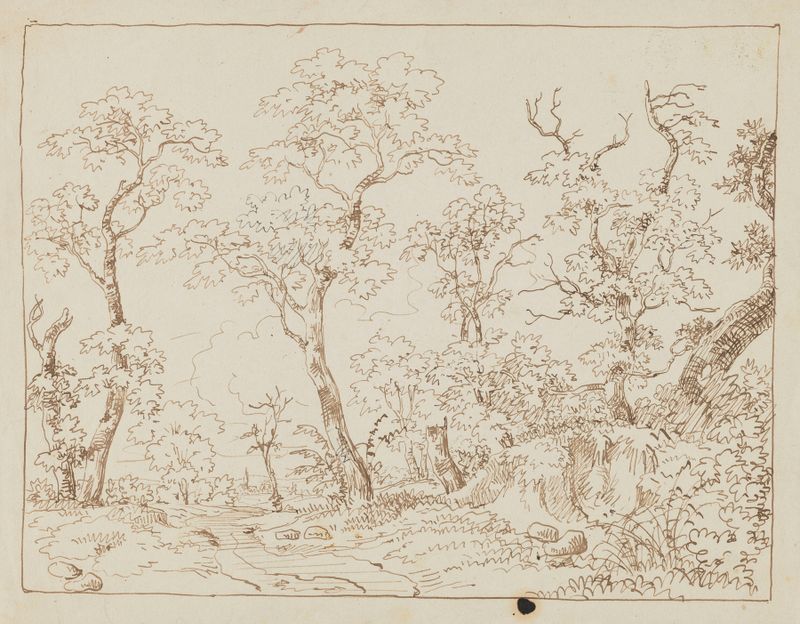
Studies of Trees, Landscape
Arthur Blaschnik
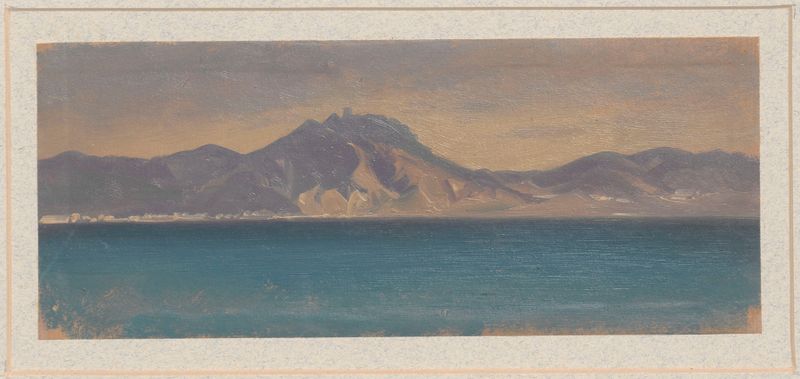
View of the Island of Capri
Arthur Blaschnik
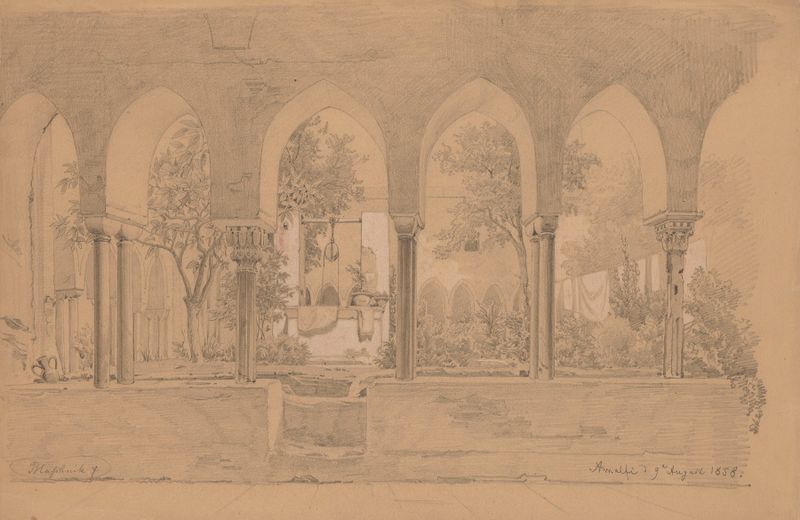
Cloister with Arcade Gallery in Amalfi
Arthur Blaschnik
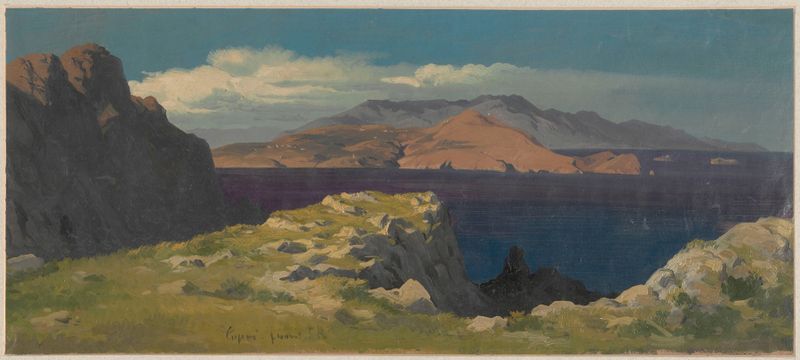
View of Capri
Arthur Blaschnik





