
View of Porta Furba in Rome — History & Facts
Did the painter know this moment would outlive them? In View of Porta Furba in Rome, serenity wraps the landscape like a gentle embrace, inviting viewers to linger in a time frozen on canvas. Look to the left, where the arch stands proudly against the backdrop of soft skies, its structure bathed in the warm glow of the setting sun. Notice the delicate brushwork that captures the foliage swaying in a light breeze, each stroke whispering tales of tranquility. The color palette is a harmonious blend of earthy hues and pastel tones, evoking a sense of peace that invites the observer to breathe deeply and feel the stillness of the moment. In this landscape, contrasts abound — the sturdy architecture of the arch juxtaposes the ephemeral qualities of nature surrounding it.
The vibrant greens of the trees reveal a life that thrives nearby, while the soft blues of the sky suggest a vastness that dwarfs the human experience. This duality highlights the impermanence of life against the backdrop of enduring beauty, encapsulating a silent dialogue between man-made and natural worlds. During the years between 1853 and 1860, Arthur Blaschnik painted this piece in Italy, a time when artists were increasingly drawn to capturing the picturesque landscapes of Rome. The Romantic movement was flourishing, and Blaschnik, influenced by his contemporaries, sought to blend realism with emotional resonance.
This period was marked by a yearning for authenticity in art, a response to the industrializing world, which may explain the profound serenity captured in this work.
More Artworks by Arthur Blaschnik
Browse all →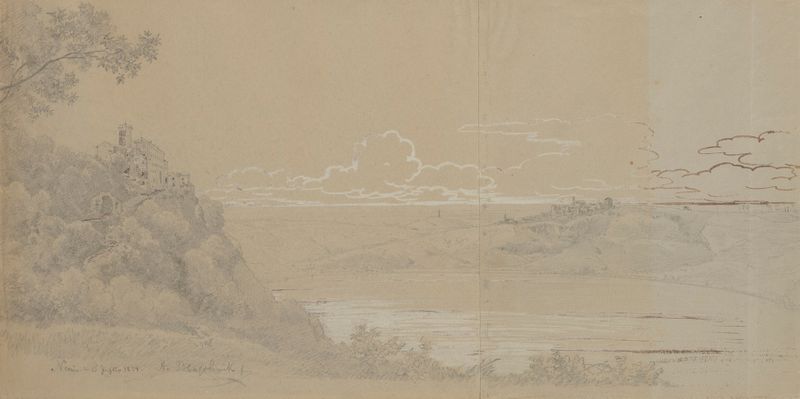
Palazzo Ruspoli by Lake Nemi, in the Distance the Town of Genzano di Roma
Arthur Blaschnik
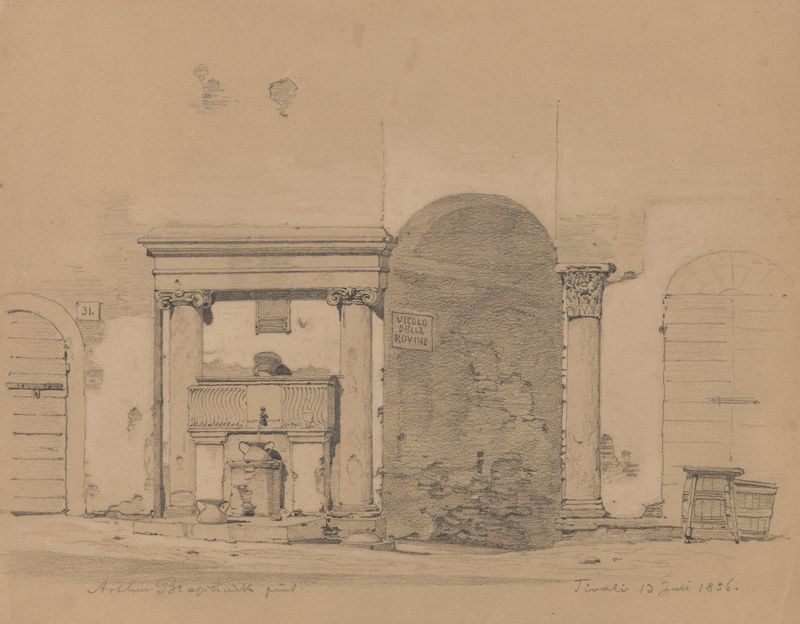
Gate Leading to Vicoli dei Grana near Piazza Palatina in Tivoli
Arthur Blaschnik
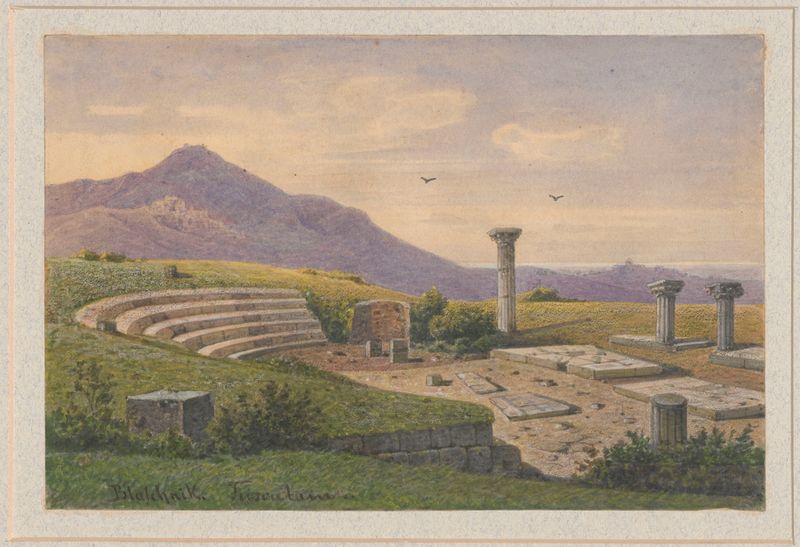
Amphitheatre in Tusculum
Arthur Blaschnik
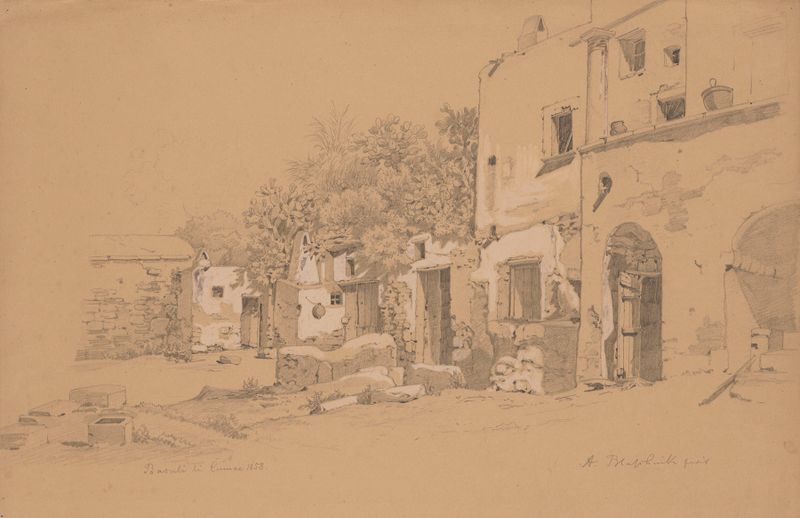
House and Outbuildings in Bacoli
Arthur Blaschnik
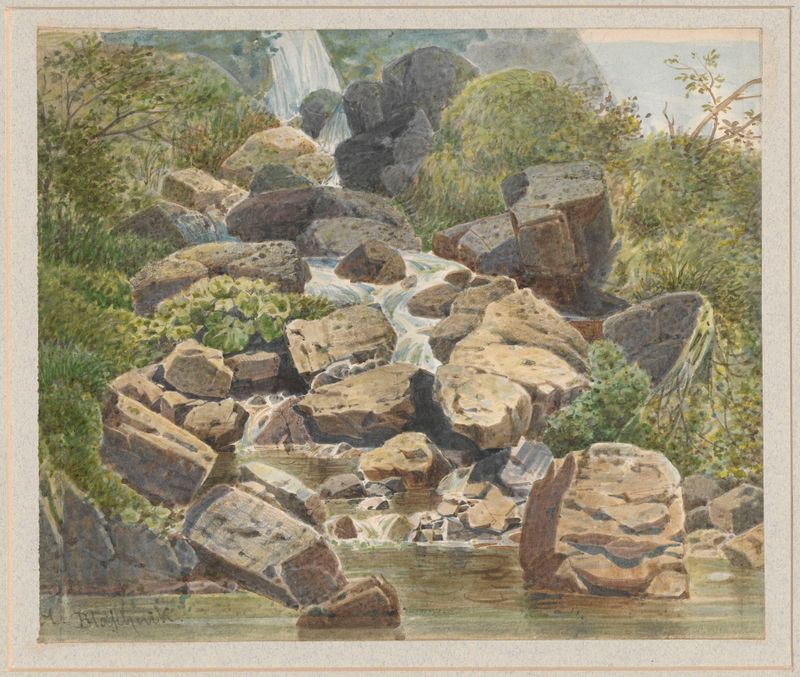
View of a small waterfall near Covigliaio, Tuscany
Arthur Blaschnik
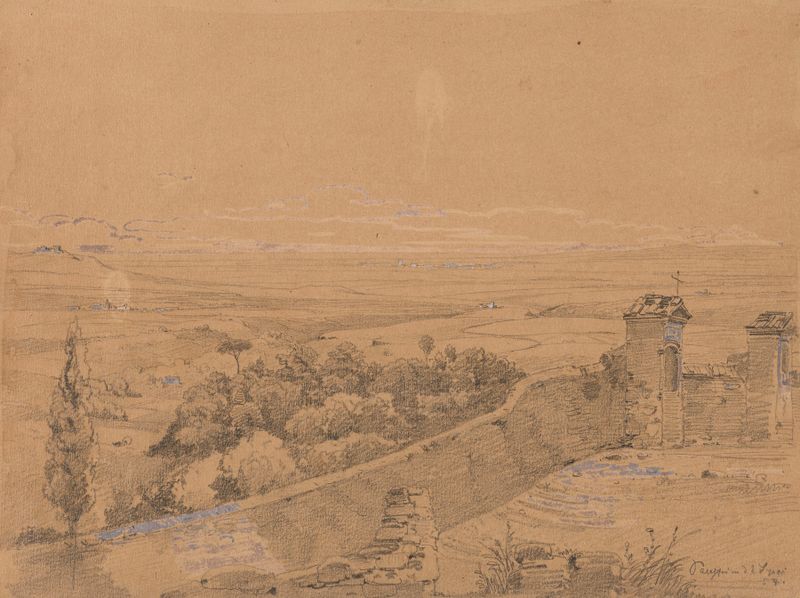
Landscape from the Vicinity of Palestrina
Arthur Blaschnik
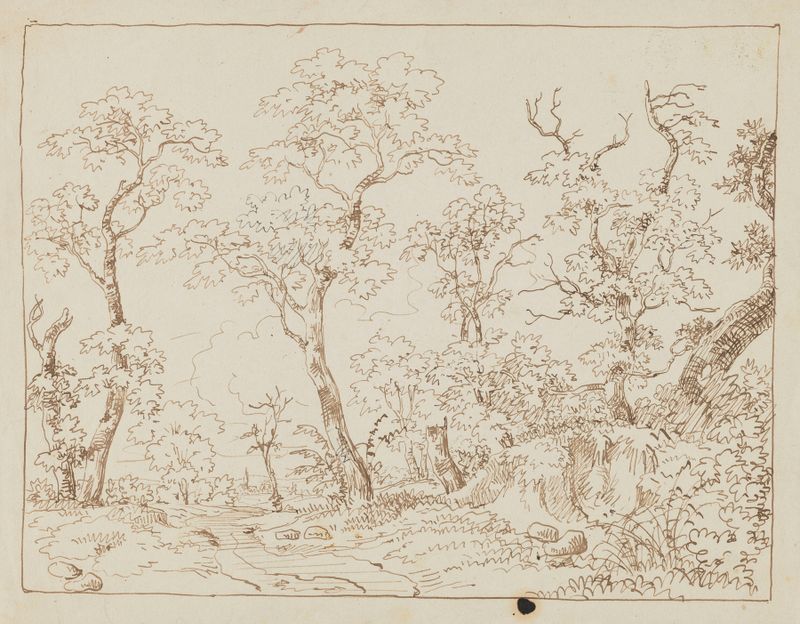
Studies of Trees, Landscape
Arthur Blaschnik
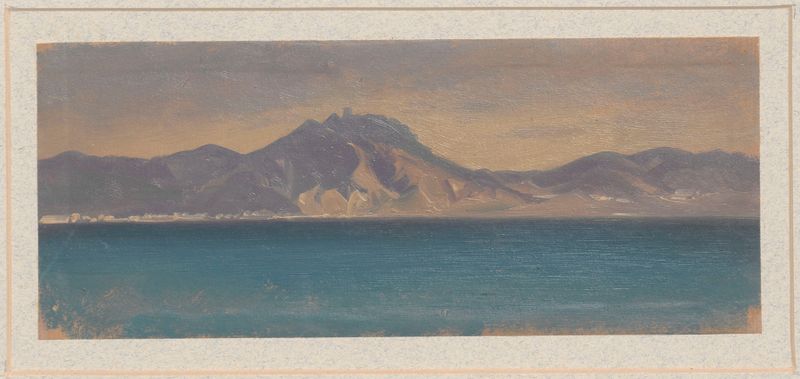
View of the Island of Capri
Arthur Blaschnik
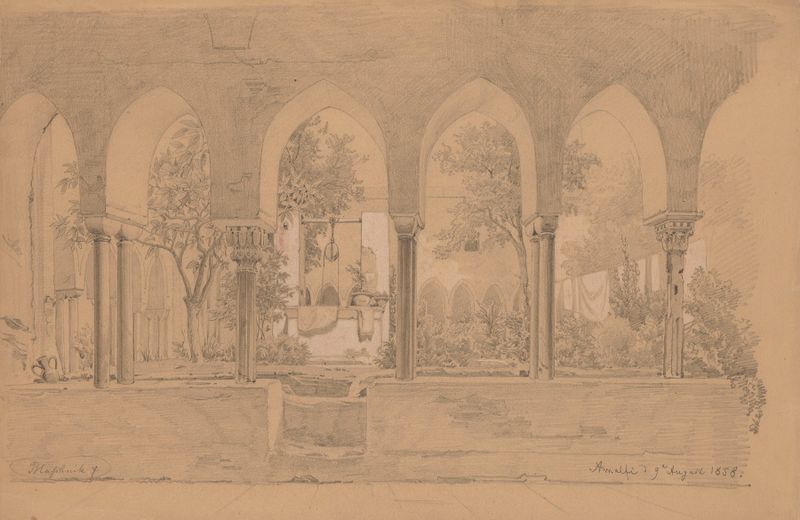
Cloister with Arcade Gallery in Amalfi
Arthur Blaschnik
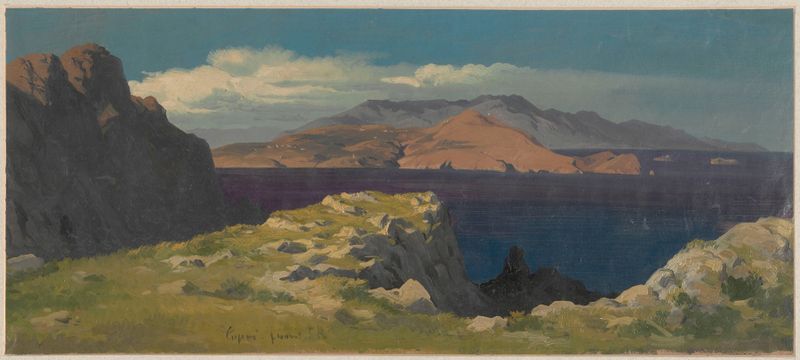
View of Capri
Arthur Blaschnik





