
View of San Giuseppe di Castello — History & Facts
When Canaletto painted View of San Giuseppe di Castello around 1740, Venice was already a mecca for Grand Tour travelers, and his luminous cityscapes had become prized souvenirs among British aristocrats. What makes this work especially notable is that it captures a quieter, less-celebrated corner of the city—far from the bustling Piazza San Marco or the Rialto—suggesting it may have been a special commission or a personal favorite. While many of Canaletto’s Venetian scenes were repeated in multiple versions for eager collectors, this particular view remains relatively rare, with only a handful of known variants.
Its focus on the church of San Giuseppe di Castello, then a parish on the city’s eastern edge, offers a glimpse into the daily rhythms of Venetian life beyond the tourist circuit. The painting draws the viewer into a sunlit canal, where the church’s facade anchors the composition, reflected in the water and framed by rows of modest houses. Gondoliers steer their boats past laundry fluttering from windows, and small groups of figures—fishermen, women with baskets—go about their business along the quayside. The clarity of light and sharpness of architectural detail are signatures of Canaletto, who often used a camera obscura to achieve such precision.
Unlike the grand ceremonial scenes by Guardi, which revel in spectacle, here the drama is understated: the everyday becomes quietly monumental, and the church, though humble, stands as a steadfast presence amid the changing life of the lagoon. The exact circumstances of this painting’s commission are not fully documented, but it likely formed part of a series created for an English patron during the height of Canaletto’s popularity in the 1740s. Works like this traveled far from Venice, finding homes in country houses and collections across Europe, and helping to shape the image of Venice abroad. Over the centuries, View of San Giuseppe di Castello has been attributed, reattributed, and sometimes confused with similar compositions by Canaletto’s nephew, Bellotto.
Today, it stands as a testament to the artist’s ability to find poetry in the city’s overlooked corners, and it remains a favorite among those who seek the quieter side of Venetian life.
More Artworks by Canaletto

The Grand Canal, Venice, looking north-west from the Ca' Corner to the Ca' Contarini degli Scrigni, with the campanile of Santa Maria della Carità
Canaletto

Venice, Bacino di San Marco on Ascension Day
Canaletto

Windsor Castle
Canaletto

The Grand Canal looking North-East from the Palazzo Dolfin-Manin to the Rialto Bridge
Canaletto

Venice: The Campo SS. Giovanni e Paolo
Canaletto

Venice: The Grand Canal from the Rialto to the Palazzo Foscari
Canaletto
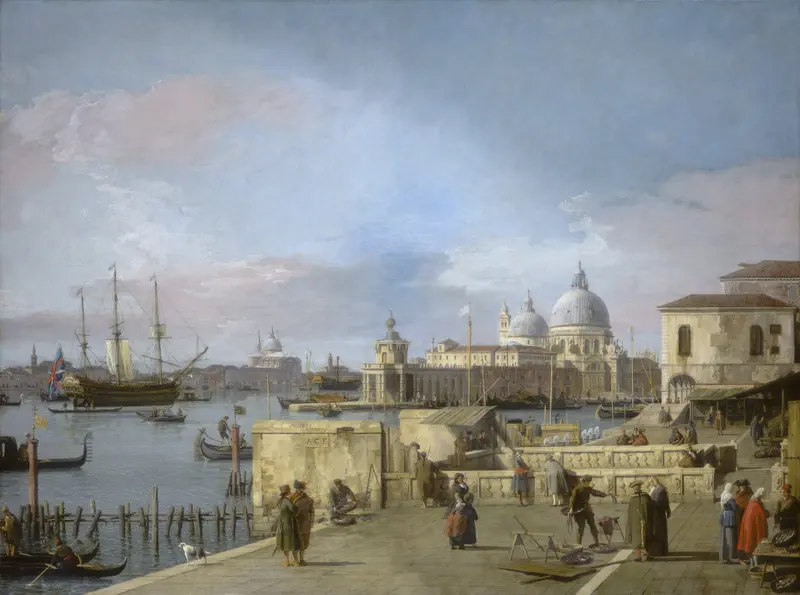
Venice: The Molo towards the Dogana and Santa Maria della Salute
Canaletto

Venice: The Piazzetta
Canaletto
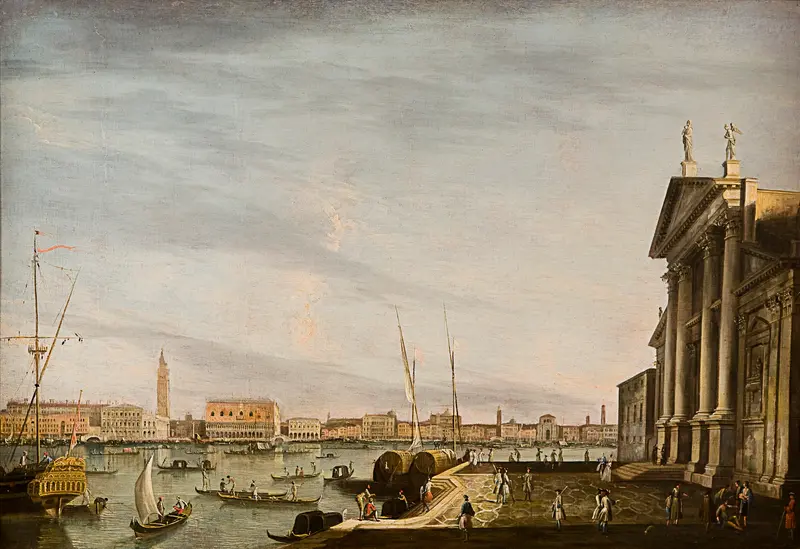
Venice, View of San Giorgio Maggiore
Canaletto

London: The Thames from Somerset House Terrace towards Westminster
Canaletto
More Landscape Art

The Starry Night
Vincent van Gogh

View of Delft
Johannes Vermeer

Water Lilies
Claude Monet
The Grand Canal, Venice, looking north-west from the Ca' Corner to the Ca' Contarini degli Scrigni, with the campanile of Santa Maria della Carità
Canaletto
Windsor Castle
Canaletto
The Grand Canal looking North-East from the Palazzo Dolfin-Manin to the Rialto Bridge
Canaletto