
View on Monmartre — History & Facts
This reflection lingers in the air as one gazes upon the lively, yet haunting scene, where vibrant colors mask a deeper ache. Look to the center, where the iconic windmills of Montmartre stand stoically against a soft, fading sky. The brushwork is loose yet deliberate, inviting your eyes to dance across the canvas. Notice how the warm, golden hues blend seamlessly into cooler shades of blue and gray, creating a sense of twilight—an arresting moment caught between day and night.
Shadows stretch beneath the buildings, hinting at stories concealed within their walls, while the tender interplay of light casts a golden glimmer on the rooftops, transforming the mundane into the sublime. Beneath the surface, the contrast between light and shadow evokes the tensions of urban life, where joy and sorrow coexist. The solitary figures in the foreground suggest a moment of reflection, underscoring the loneliness that can accompany beauty. Each stroke seems to whisper secrets, as if the canvas holds its breath, revealing the complexities of the artist’s own experiences in a rapidly changing world.
The bustling streets are painted with both longing and nostalgia, bridging the gap between the artist's inner turmoil and the external beauty he captures. In 1850, Jongkind was living in Paris, where he was influenced by the emerging Impressionist movement, though he remained somewhat an outsider. His exploration of light and atmosphere was pioneering, as he sought to depict the emotional resonance of landscapes. The city was undergoing significant transformations, and in the midst of this, Jongkind's work captured fleeting moments that reflected both the vibrancy and the melancholy of life, leaving an indelible mark on the art world.
More Artworks by Johan Barthold Jongkind
Browse all →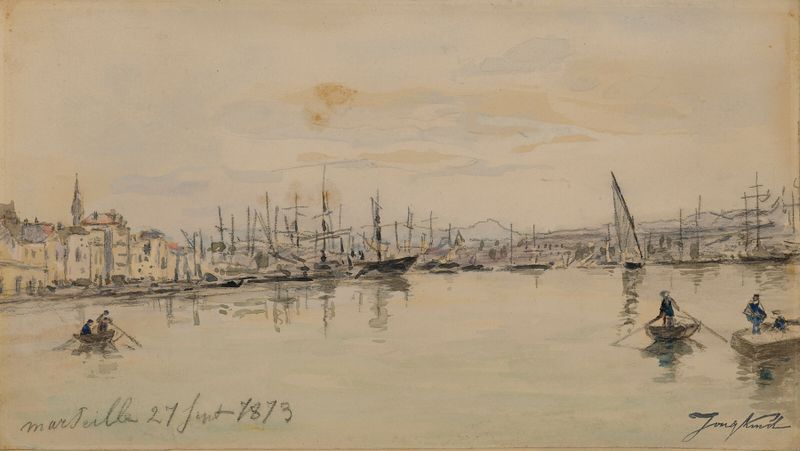
Le Port de Marseille
Johan Barthold Jongkind

Canal Saint-Martin
Johan Barthold Jongkind

Countryside near Brezins, between Grenoble and Vienne
Johan Barthold Jongkind

Notre-Dame vue du quai de la Tournelle
Johan Barthold Jongkind

Environs de Grenoble
Johan Barthold Jongkind

Clair de lune à Overschie (environs de Rotterdam)
Johan Barthold Jongkind

Port de Honfleur
Johan Barthold Jongkind
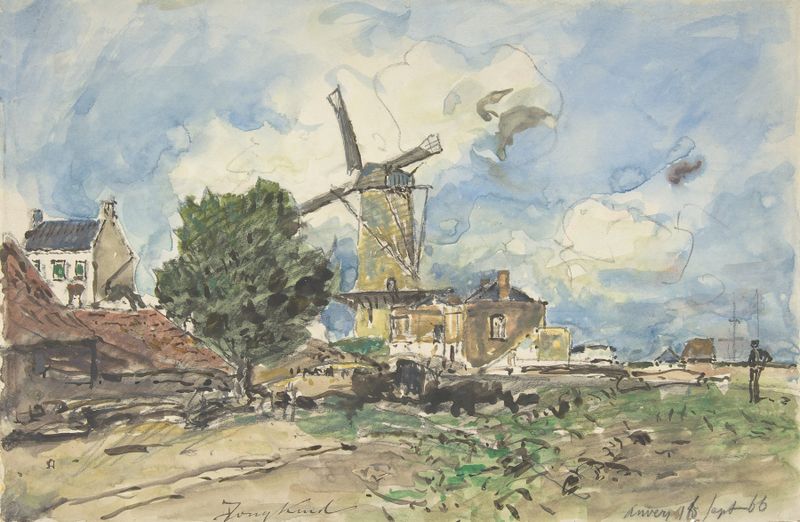
Wind Mill at Antwerp
Johan Barthold Jongkind

Le Havre
Johan Barthold Jongkind

The Church of Overschie
Johan Barthold Jongkind





