
Village of Meule — History & Facts
In the stillness of a forgotten village, destinies intertwine, captured not in motion, but in the lingering echoes of life. Can we ever truly escape the weight of our surroundings? Look to the foreground, where the winding path leads through the village, inviting your gaze deeper into the composition. The muted palette—earthy browns, soft greens, and gentle grays—sets a contemplative mood.
Notice how the light delicately illuminates the thatched roofs, casting long shadows that stretch like whispered secrets across the cobblestones. The brushwork is both precise and flowing, a testament to the artist's mastery of capturing texture and atmosphere. Behind the tranquil façade lies a world of contrasts; the stillness of the village is a stark reminder of the passage of time. The empty doorways and windows suggest stories untold, lives paused in mid-sentence.
Each element—the distant figures, the overgrown foliage—speaks to the inevitability of change and the quiet acceptance of fate. The viewer is left contemplating the fragility of human existence against the backdrop of an ever-turning world. In 1907, Auguste Louis Lepère was immersed in the heart of a burgeoning Impressionist movement, having established himself as a skilled printmaker in France. This period marked a moment of reflection for the artist, as he explored the interplay of light and shadow in rural landscapes.
With an eye for detail, he sought to immortalize the simple beauty of village life, even as the world around him began to shift rapidly toward modernity.
More Artworks by Auguste Louis Lepère
Browse all →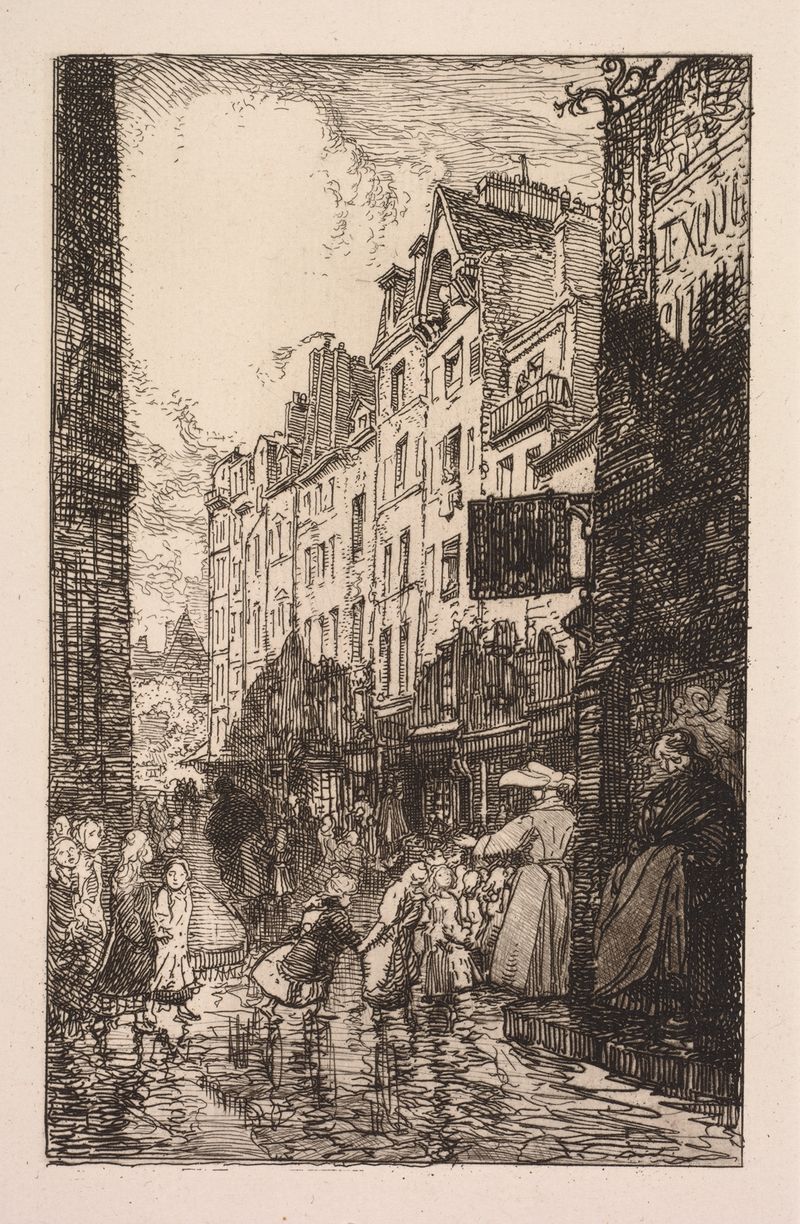
La Rue des Prêtres Saint-Séverin
Auguste Louis Lepère
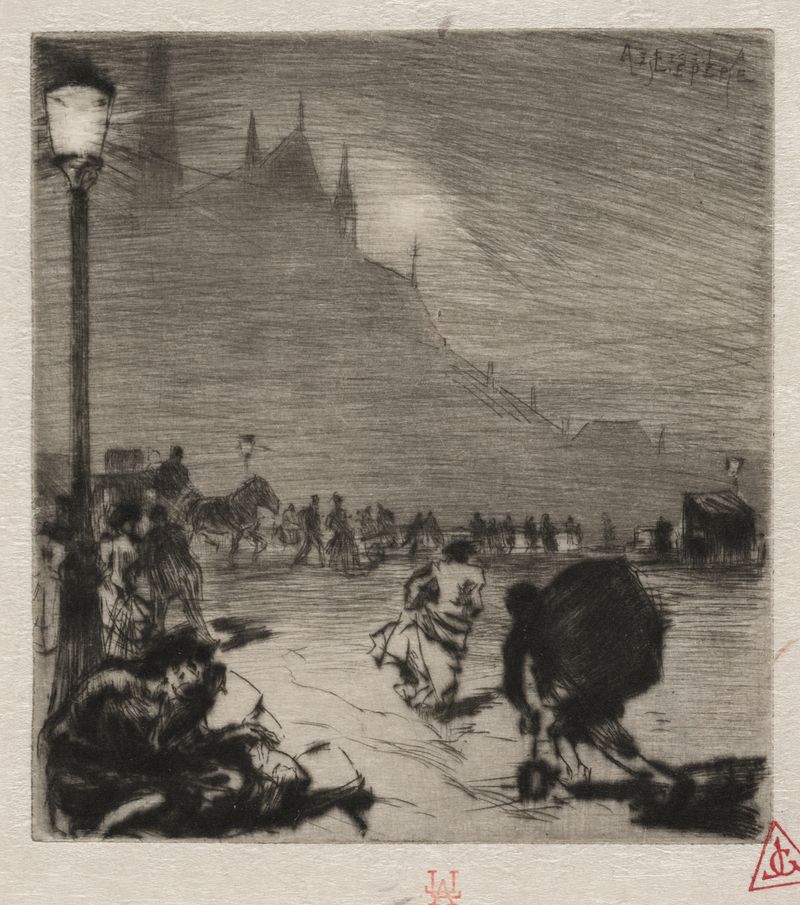
Au Coin du Pont-aux-Doubles
Auguste Louis Lepère
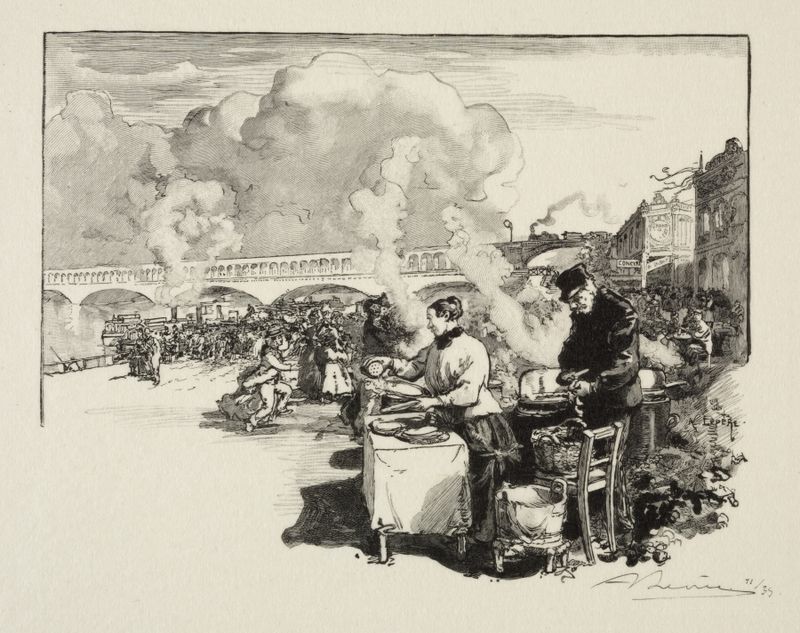
Debarcadère des bateaux-omnibus
Auguste Louis Lepère

La Seine, au quai de la Rapée
Auguste Louis Lepère
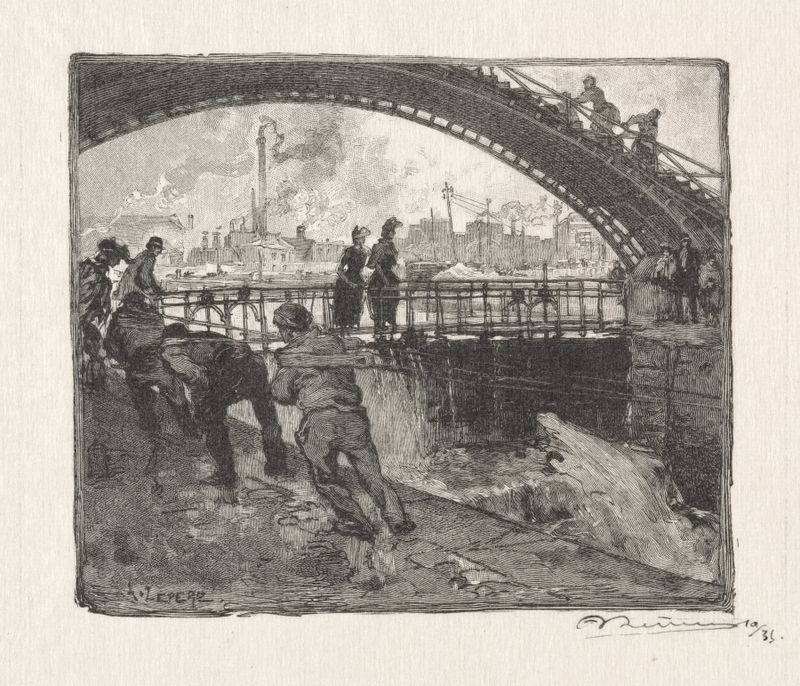
L’Ecluse du Canal St. Martin
Auguste Louis Lepère

Le Boulevard Montmartre, le Soir
Auguste Louis Lepère

Une Chasse au Mont Gérard
Auguste Louis Lepère
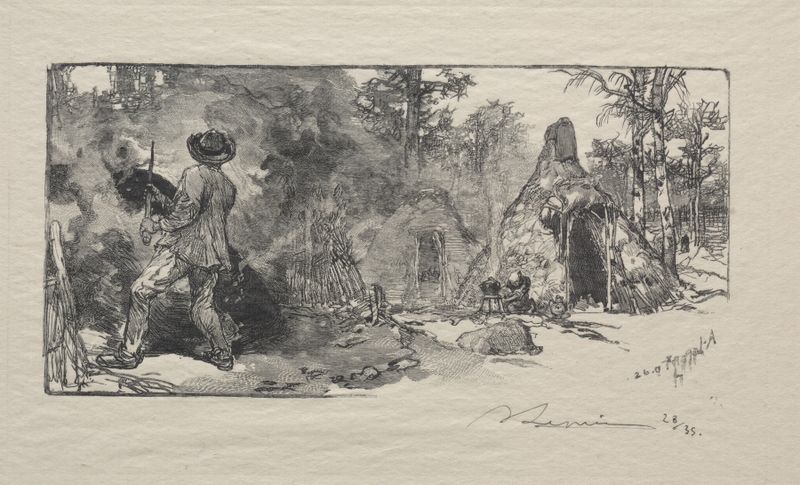
Les Charbonniere
Auguste Louis Lepère
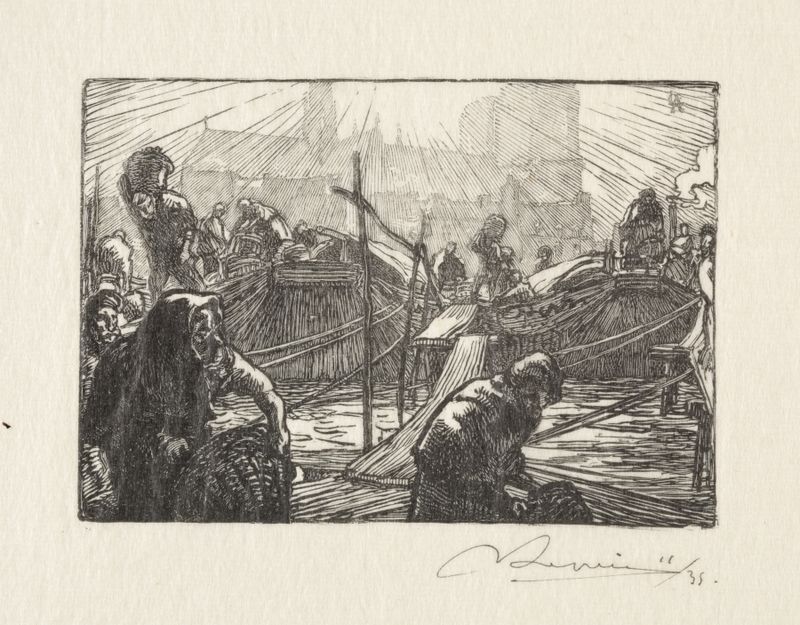
Notre Dame vue du Marché aux pommes
Auguste Louis Lepère

Le Palais des Arts Liberaux, Intèrieur
Auguste Louis Lepère





